Gene Expression Analysis: RT-PCR and RT-qPCR in Biology
Slides about Gene Expression Analysis. The Pdf explores gene expression analysis, focusing on Reverse Transcription PCR (RT-PCR) and RT-qPCR. This University level Biology material explains the reverse transcriptase enzyme and the necessity of reverse transcribing RNA into cDNA.
See more47 Pages


Unlock the full PDF for free
Sign up to get full access to the document and start transforming it with AI.
Preview
Gene Expression Analysis
Reverse Transcription PCR (RT-PCR) and RT-qPCR
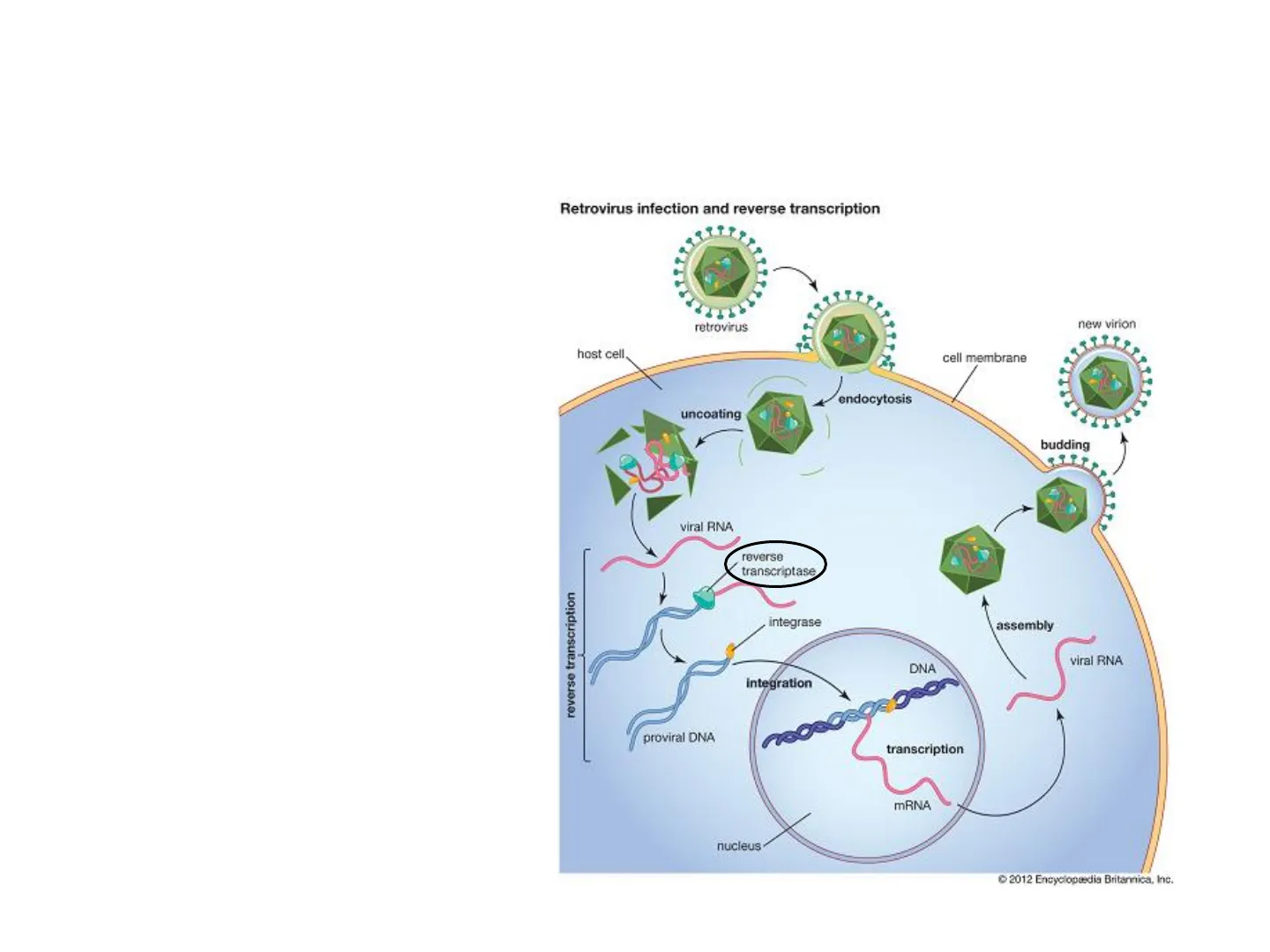
Reverse Transcriptase Enzyme Retrovirus infection and reverse transcription retrovirus new virion host cell, cell membrane endocytosis uncoating budding viral RNA reverse transcriptase integrase assembly viral RNA integration proviral DNA transcription MRNA nucleus 2012 Encyclopædia Britannica, Inc.
Following retrovirus infection, reverse transcriptase converts viral RNA into proviral DNA, which is then incorporated into the DNA of the host cell in the nucleus.
reverse transcription DNAReverse transcriptase, also called RNA- directed DNA polymerase, an enzyme encoded from the genetic material of retroviruses that catalyzes the transcription of retrovirus RNA (ribonucleic acid) into DNA (deoxyribonucleic acid). This catalyzed transcription is the reverse process of normal cellular transcription of DNA into RNA, hence the names reverse transcriptase and retrovirus. Reverse transcriptase is central to the infectious nature of retroviruses, several of which cause disease in humans, including the severe acute respiratory syndrome SARS- CoV-2, which causes COVID-19.
Reverse transcriptase is also a fundamental component of a laboratory technology known as reverse transcription-polymerase chain reaction (RT-PCR), a powerful tool used in research and in the diagnosis of diseases.
lipid envelope Receptor binding proteins RTase viral RNA capsid: core proteins H 25 nmWhy reverse transcription of RNA into cDNA is necessary?
The ability of Reverse Transcriptase to synthesize DNA from RNA has been used in the laboratory.
Because RNA is fragile (due to highly reactive hydroxyl group on C2) and difficult to study, a strand of complementary DNA (cDNA) is synthesized from RNA, using Reverse Transcriptase during the RT-PCR procedure. The cDNA can then be amplified by polymerase chain reaction.
RNA RNA DNA strand strand DNA/RNA heteroduplex 2 DNA strands cDNA reverse transcriptase -- DNA polymerase strands separateWhen the starting material is RNA, it is first transcribed into complementary DNA (cDNA) by reverse transcriptase.
The cDNA is then used as the template for the PCR reaction.
RT-PCR is used in a variety of applications including pathogen detection.
RNA RT · Random Primers VLL 17 Buffer + dNTPs CDNA Sequence-specific Primers RT PCR Two-StepgDNA - mRNA - cDNA DNA/gene Oposce- Guarine Base par Backbone -Proche Suga Transcription Introns 5'UTR 3'UTR Primary MRNA Exons Splicing miRNA mediated silencing 3'UTR 5'UTR cDNA (complementary DNA) Equivalent to mature MRNA Untranslated regions (UTRs) Regulates translation mRNA stabilization Transport LocalizationRT-PCR: One-step vs. Two-step Protocol
- ONE-STEP protocol: Reverse transcription and PCR amplification are performed in the same tube.
- TWO-STEP protocol: Reverse transcription and PCR amplification are performed in separated tubes.
- 1st STEP: When the starting material is RNA, it is first reverse transcribed into complementary DNA (cDNA) by reverse transcriptase. - 2nd STEP: The cDNA is then used as the template for the PCR reaction.
mRNA VLL RT 17 DNA pol · Oligo (dT)s · Random primers · Sequence-specific primers Buffer + dNTPs Sequence-specific primers CDNA Sequence-specific primers RT-PCR RT Step-1 PCR Step-2 One-step Two-step VLL 7One-step Protocol
mRNA RT DNA pol VLL 7 Buffer + dNTPs Sequence-specific primers RT-PCR One-step Reagents:
- RNA template
- Reverse Transcriptase Enzyme
- DNA polymerase Enzyme
- RT master Mix including – Buffer, dNTPs - Random primers or Poly-dT primers – Sequence-specific primers
Two-step Protocol
RNA RT · Random Primers VLL 1> Buffer + dNTPs CDNA Sequence-specific Primers RT PCR Two-Step 1st STEP Reverse Transcription Reagents:
- RNA template
- Reverse Transcriptase Enzyme
- RT master Mix including – Buffer, dNTPs - Random primers or Poly-dT primers 2nd STEP PCR Reagents:
- cDNA template
- DNA polymerase Enzyme
- Master Mix including - Buffer, dNTPs - Sequence-specific primers
RNA Extraction with Phase-Separation Methods
1) Cell lysis can be achieved using buffers or reagents containing chaotropic* agents such as guanidinium isothiocyanate and phenol, which also denature RNases (enzymes that degrades RNA). 2) RNA can be separated from other cellular components by adding chloroform and centrifuging the solution. This separates the solution into two phases: organic and aqueous phases. The aqueous phase contains RNA. 3) RNA is often recovered from the aqueous phase using isopropanol. 4) For long-term storage, RNA should be kept at -80℃ in single-use aliquots.
Homogenization/ Lysis Phase Separation Extraction/ Precipitation Resuspension 1 2 3 4 Chloroform Isopropanol Water/TE Guanidinium- phenol RNA Protein DNA RNA pellet DNase can be used to degrade DNA, while proteinase K can be added to digest proteins. *A chaotropic agent is a compound which disrupts hydrogen bonding in aqueous solution, leading to increased entropy (i.e. "chaos"). Generally, this reduces hydrophobic effects which are essential for three dimensional structures of macromolecules such as proteins and nucleic acids.
RNA Extraction with Purification Columns
x Lytic Buffer Purifying Buffer Washing Buffer Elution Buffer DNA/RNA Sample Spin Column Centrifuge Dry Spin Eluted DNA/RNA
- There are five commercial types of spin column used for nucleic acid extraction, including silica membrane, anion exchange, filter paper, glass fiber, and polyethylene fibers.
- Nucleic acids bind to the membrane, so they can be isolated from other biomolecules, washed and purified prior of being eluted in aqueous solution.
- Advantages: less time consumption, cheap, energy-efficient, automated operation, prevention from cross-contamination, and high yield.
RNase Considerations During Sample Manipulation
RNA PNPase Sem-loop RNase E 5' AAAA ppp (RNase II) Ahr1 Poly(A)-binding proteins 'Cap' 3 5' 7Me-GpppG AAAAAAAAAAAAAAAAAAA 0 DCP1 Dcp2 PARN Exosome core It is often difficult to isolate intact RNA. RNases, a group of enzymes that degrade RNA molecules, are abundant in the environment, including on hands and on surfaces and it is difficult to remove/destroy RNases completely.
RNA isolation therefore requires cautious handling of samples and good aseptic techniques. It is important to use only RNase-free solutions during the extraction, as well as RNase-free pipet tips and glassware.
Genomic DNA Contamination
- Genomic DNA contamination during RNA extraction could represent an issue because it could be amplified by target specific primers, compromising gene expression analysis.
- To avoid gDNA contamination:
- samples could be treated with DNase I, an enzyme that digests and cleaves specifically DNA molecules
- primer design specific strategy could be adopted
1. Primer spans an exon-intron boundary: genomic DNA NO product exon 1 intron exon 2 CDNA exon 1 exon 2 NO product exon 1 long intron exon 2 CDNA exon 1 exon 2 2. Primer flank an intron: genomic DNAPlease, consider the following:
Homogenization/ Lysis Phase Separation Extraction/ Precipitation Resuspension A A B C Protein DNA RNA pellet Homogenization/ Lysis Phase Separation Extraction/ Precipitation Resuspension 1 2 3 4 B RNA Protein RNA pellet Homogenization/ Lysis Phase Separation Extraction/ Precipitation Resuspension 1 2 3 4 C BNA Protein DNA ANA pellet 4 1 2 3 RNA Same volume but different RNA concentration!
Quantification of RNA
Quantification of RNA is used is an essential step prior to RNA-based assays, i.e. gene expression analysis, in order to start with the same amount of RNA in all the samples.
The traditional method for assessing RNA concentration and purity is UV spectroscopy.
DNA & RNA 6.00 € 5.00 10 mm Absorbance 4.00 3.00 Salt Protein 2.00 1.00 0.00 220 230 240 250 260 270 280 290 300 310 320 330 340 350 Wavelength nm Sample ID Sample type RNA Baseline SW nm SW Abs (10mm) 260nm Abs (10mm) 280nm Abs (10mm) 260/280 260/230 Multi Sample Spectrum display Conc. ng/ulCheck RNA Integrity by Gel Electroforesis
RNA could be degraded due to several causes: · Sample storage . RNase activity · Poor purification
Running intact total RNA on a denaturing gel should produce clear 28S and 18S rRNA (ribosomal RNAs) bands with a 2:1 ratio (28S:18S), indicating intact RNA.
Millennium Markers™ Degraded Intact 6 5 <28S 4 3 2.5 2 <18S 1.5 1 0.51st STEP Reverse Transcription: Random Primers
RNA RT . Random Primers VLL 7> Buffer + dNTPs RT N any base Random primers 3' 5' 3' 5' NNNNNN NNNNNN RNA 5' 3'
- Random primers are six to nine bases long; they anneal at multiple points along RNA sequence.
- Good to use if little starting material is available.
- High cDNA yield.
Eukaryotic mRNAs have Poly(A) Tails
RNA-coding sequence DNA Promoter Transcription by RNA polymerase II. Addition of 5' cap when 20-30 nucleotides of pre-mRNA made. Addition of 3' poly(A) tail. Cap Exon Intron Exon Intron Exon Poly(A) tail Pre-mRNA 5' AAAAAAA ... 3' 5' UTR 3' UTR RNA splicing: introns removed Protein-coding sequence mRNA 5' AAAAAAA ... 3'
1st STEP Reverse Transcription: Oligo-dT Primers
RNA RT · Oligo (dT) primers VIL Buffer + dNTPs 17 RT
- Typically, Oligo (dT) primers are a string of 12-20 deoxythymidines that anneal to poly(A) tails of eukaryotic mRNAs.
- These are ideal for constructing cDNA libraries and recommended with reverse transcriptases (RTs).
Standard oligo dT 3' mRNA AAAAAAAAAAAAAAA 5' 3'
2nd STEP PCR: Sequence Specific Primers
DNA Pol Buffer + dNTPs CDNA Sequence-specific Primers PCR
- Custom made primers that target specific cDNA sequence.
- Sequence Specific Primers are used during the amplification through PCR steps.
- Synthesis is limited to one target of interest.
Specific primers 3' 5' ACTTCGAAG TGAAGCTTC cDNA 5' 3'
Summary of Primers
Random hexamers F 5' Gene body PolyA tail 3' Oligo(dT) primers 5' Gene body PolyA tail 3' Region-specific primers 2nd STEP (PCR) 5' Gene body PolyA tail 3' 1st STEP (RT)Several methods are in use to study gene expression at the transcriptional level *.
Among them:
- a northern blot;
- a qPCR;
- a DNA microarray.
*Seeking for their transcribed mRNA following a stimulus
Can’t find what you’re looking for?
Explore more topics in the Algor library or create your own materials with AI.
