Britain in the first decades of the 20th century (1901-1929)
Slides about Britain in the first decades of the 20th century (1901-1929). The Pdf explores the Edwardian Age, social reforms like old-age pensions and unemployment benefits, and social tensions. This High school History document, produced in 1901-1929, also discusses key figures such as Edward VII and David Lloyd George.
See more21 Pages

Unlock the full PDF for free
Sign up to get full access to the document and start transforming it with AI.
Preview
The Edwardian Era and Monarchy
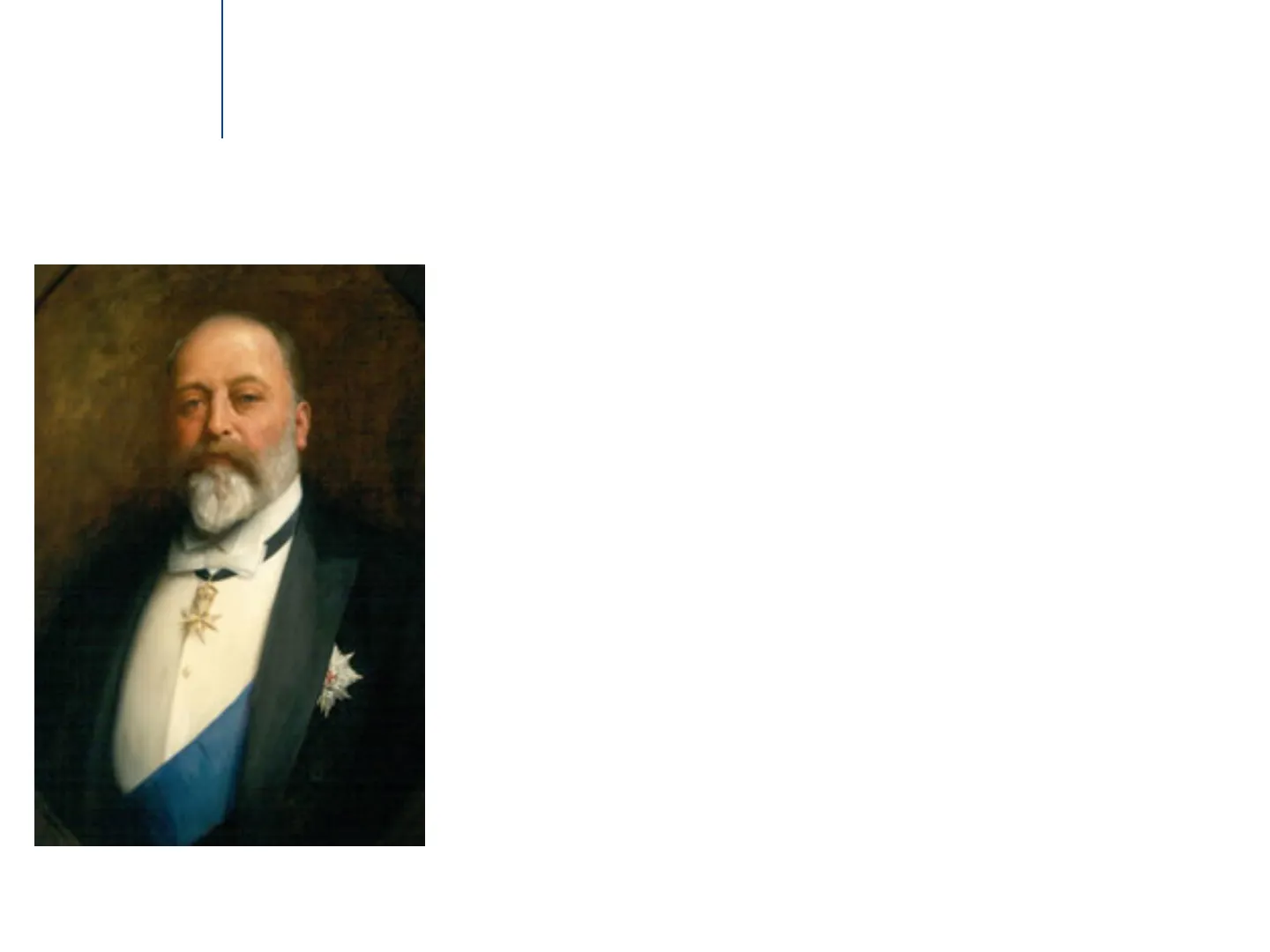
When Queen Victoria died in 1901 her son Edward VII took the Germanic surname of his father Prince Albert of Saxe-Coburg-Gotha. . He brought new energy to the monarchy and, being related to most European royalty, took an active part in foreign policy negotiations.
- He aided in the Anglo-French agreement of the Entente Cordiale with France in 1904.
Edward VII.
Women’s Suffrage Movement
VOTES FOR WOMEN WSPU leaders Annie Kenney (left) and Christabel Pankhurst. . At the beginning of the 20th century only men were allowed to vote. · Educated women had been arguing in favour of voting rights for women since the 1860s.
- In 1903 Mrs Emmeline Pankhurst founded the WSPU (Women's Social and Political Union).
- The Suffragettes, as they were called, protested that women should be able to vote.
2. Suffragettes
The WSPU began a campaign of vandalism to gain publicity for their cause:
- APATRIOT A drawing from the WSPU newspaper in 1909. They chained themselves to railings outside Downing Street and Buckingham Palace; They made arson attacks on public buildings; The Government dealt with the protests harshly and sent many Suffragettes to prison. In prison some women went on hunger strike and prison authorities began force-feeding them.
Political Developments in Edwardian Britain
. The Labour party was founded in 1906. . The Liberals won the general elections in 1906 and proceeded to lay down the first foundations of the Welfare State. · Reforms were introduced concerning:
- old-age pensions;
- sickness and unemployment benefits.
TEN YEARS OF TORYISM THE KHÁCH WHAT TORYISM MEANS. WAKE UP, JOHN AND BE AT THE POLLING BOOTH IN GOOD TIME TO VOTE LIBERAL
WORKER AILY WORKERS NO SUPPRESSORKER PENNY OFF FOR BOURS N.U.W. WAGES NOT A ONOMY MEETINPENNY TAXFEGUARDS SUPPORTINGR KERS TO-DAY ON FOOD EMPLOYED UST STARYE HILLS DAILY WORKER
In spite of these important measures of social improvement, the Edwardian period was a time of: .industrial unrest with strikes; .violent protest against the high prices and low wages.
ROFITS. ILORSİ WINDMI
. The New Liberal David Lloyd George (1863-1945) was Chancellor of Exchequer. · He introduced a People's Budget in 1909 to finance social reform through a land tax and increased income tax, but the budget was rejected by the House of Lords. . This led to a constitutional crisis and an Act reforming the House of Lords. Portrait of Chancellor Lloyd George by Christopher Williams (1911).
World War I Outbreak and Alliances
The Assassination of Archduke Franz Ferdinand.
- In 1914 a Serbian nationalist assassinated Archduke Franz Ferdinand, heir to the Austro-Hungarian throne, in Sarajevo.
War broke out between:
- the Central European Powers (Germany and Austria-Hungary);
- the Triple Entente (Britain and the British Empire, France, Russia and their allies).
. Germany attacked France through Belgium which precipitated Britain's entry into the war as Britain had guaranteed its neutrality. . Britain declared war on Germany on 4th August 1914. . Britain saw the war as a fight for democracy and freedom and was supported by Ireland and the dominions.
Military Technology and Trench Warfare
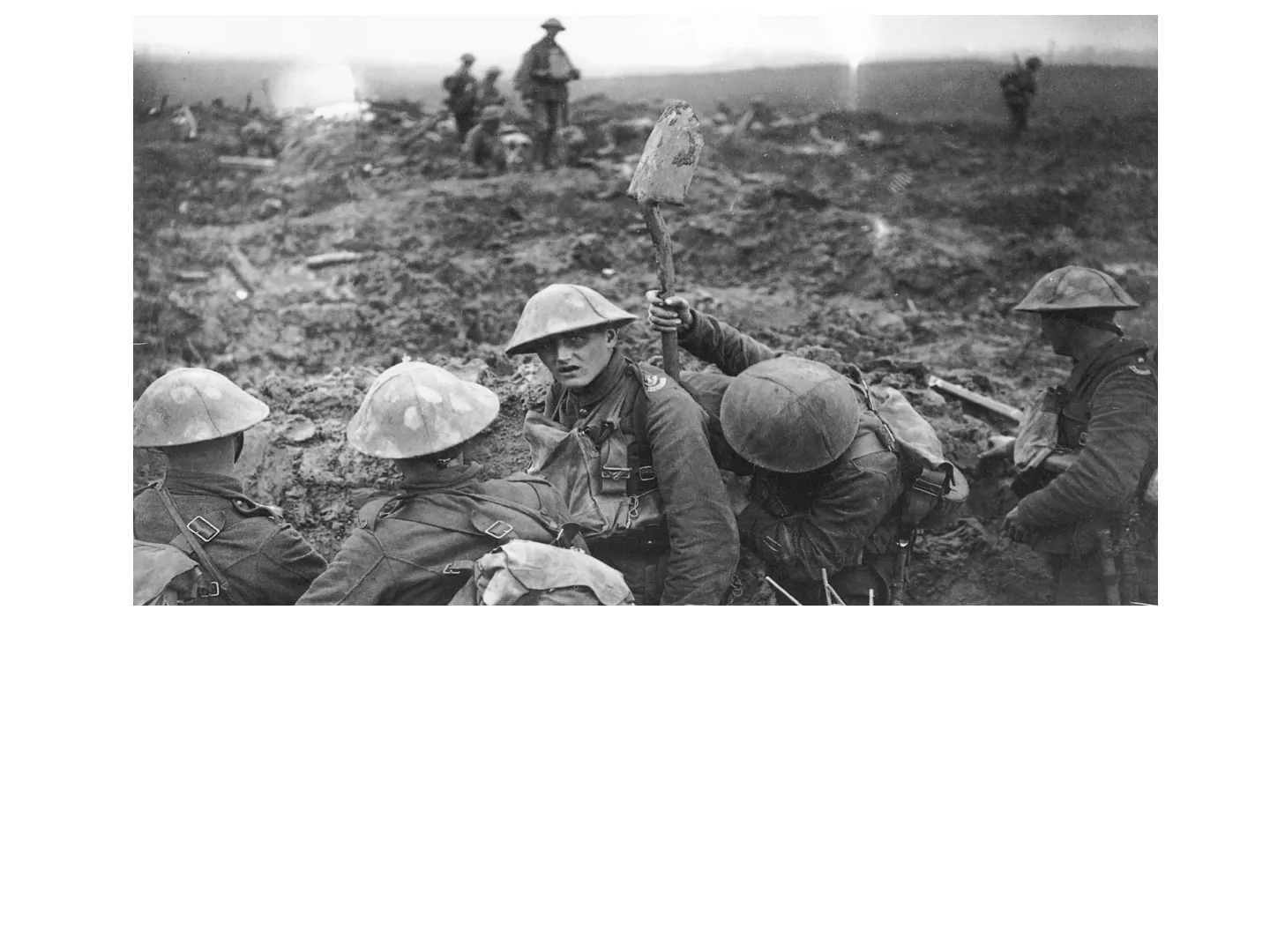
Technology superior to tactics Machine guns vs a human charge New technology = poison gas, tanks, airplanes, submarines Very high death rates Battle of the Somme = 600,000 Allies and 500,000 Germans died for 125 miles of land. Battles were fought not to win strategic objectives or win resources but to kill soldiers and wear down the enemy.
Without the possibility of a quick victory, both sides settled into a war of attrition in lines of trenches. .Life in the trenches: - mud and rats; - lack of hygiene; - boredom; - fear of gas. e. .Shell shock: psychological effect of shell explosions > psychological disorder. .Indecisive battles 'over the top' where thousands died.
1917 America entered the war on the side of the Allies > this accelerated the German defeat. 1918 Germany signed an armistice at 11 o'clock on 11th November. 1919 Versailles Peace Treaty signed by British Prime Minister Lloyd George, Georges Clemenceau of France, American President Woodrow Wilson and Vittorio Orlando of Italy.
League of Nations and Peace Efforts
American President Woodrow Wilson proposed Fourteen Points to work out the peace treaty and prevent future wars. He also proposed a League of Nations but this was rejected by the American Senate. Allied leaders at Versailles.
Armistice Day and Remembrance
At the eleventh hour of the eleventh day of the eleventh month the guns fell silent this was nominated Armistice Day. It is also called 'Remembrance Day' or 'Poppy Day' - as the poppy which was the only flower that grew on the battle fields, has come to represent the dead soldiers. The day is celebrated every year in memory of the many who died. FUSI FERS DAD Compact Performer Shaping Ideas
Irish Independence Movement
Home Rule and Irish Rebellion Against the UK · Home Rule: • Limited self-government for Ireland within the UK. · Caused divisions between Irish nationalists and Ulster Unionists. Ulster Volunteers vs. Irish Volunteers:
- Ulster Unionists opposed Home Rule, formed Ulster Volunteers.
- Irish nationalists supported Home Rule, formed Irish Volunteers.
Easter Rising (1916): • Radical Irish Volunteers staged armed rebellion in Dublin for an Irish Republic. · British Army quickly suppressed the Rising, leading to harsh reprisals.
The Easter Rising
. The Commons had voted Home Rule for Ireland in 1914 but it had been suspended till the end of the war. .In April 1916 there was a rebellion in Dublin. . The rebels seized the General Post Office and other buildings in the centre of the city. . The rebellion was brutally repressed and the leaders executed. General Post Office, Dublin.
Aftermath and War of Independence (1919-1921):
- Sinn Fein's rise after Easter Rising, winning 1918 election.
- War of Independence between Irish republicans, loyalists, and British forces.
Anglo-Irish Treaty (1921) and Irish Civil War (1922-1923):
- Treaty established Irish Free State but led to Civil War over its terms.
- Northern Ireland remained part of the UK, causing ongoing tensions.
1918 Sinn Féin (Ourselves Alone) nationalist party easily won the election. 1919 Elected members refused to go to Westminster and formed their own independent Irish Parliament, the Dail in Dublin. 1919-21 War of Independence initiated by the Irish Republican Army led by Michael Collins. 1921 Anglo-Irish Treaty established the Irish Free State under the leadership of Eamon de Valera. 1922-23 Disagreement over treaty led to 11 months of Civil War.
Economic and Social Changes in the 1920s
Some people in Britain prospered during the war. Manufacturers and those who produced goods for the war became wealthy. Women, who had taken over men's jobs during the war, gained a new economic independence. The change in women was reflected in more masculine fashions and behaviour.
By mid-twenties the post-war prosperity was in decline. Interest rates were high and exports became expensive. The north of England, South Wales and central Scotland became depressed with huge numbers of unemployed.
1926 -> a General Strike was called. 1929 -> the Wall Street Crash affected the international markets dramatically. A global depression followed.
REFEND NOT A PENNY OFF THE DAILY THE WORKERS WOT ONE SUPPRESSEDYRKER WACES DENNY PENNY ON NUWI BOURS NOT A FF THE FOR ONOMY MEETIN PENNY TAXISGUARDS SUPPORTIRKERS TO-DAYON FOOD RIOFIT'S URILORS WINDMI ST STARTE HILLS OLE Workers demonstrating during the General Strike of 1926. WORKER AILY
Decline of the British Empire and Commonwealth Formation
. End of WWI: the Commonwealth (South Africa, Canada, Australia, New Zealand) contributed to WWI'victory. They were represented at the Peace of Conference of Versailles as governing communities. They were therefore treated as separate governing communities and separate members of the League of Nations Birth of the British Commonwealth . India and Pakistan were recognized as dominions from the late 1940s . All of them were then recognized as Commonwealth realms. Workers demonstrating during the General Strike of 1926.
```Can’t find what you’re looking for?
Explore more topics in the Algor library or create your own materials with AI.
