Circulatory System: Blood Vessels and Capillary Exchange
Slides from Mr. Exham about the Circulatory System. The Pdf provides a detailed overview of the circulatory system, including arteries, veins, and capillaries, explaining their roles in nutrient and oxygen exchange for high school Biology students.
See more16 Pages

Unlock the full PDF for free
Sign up to get full access to the document and start transforming it with AI.
Preview
Blood Vessels
Blood vessels - GCSE Biology Mr. Exham
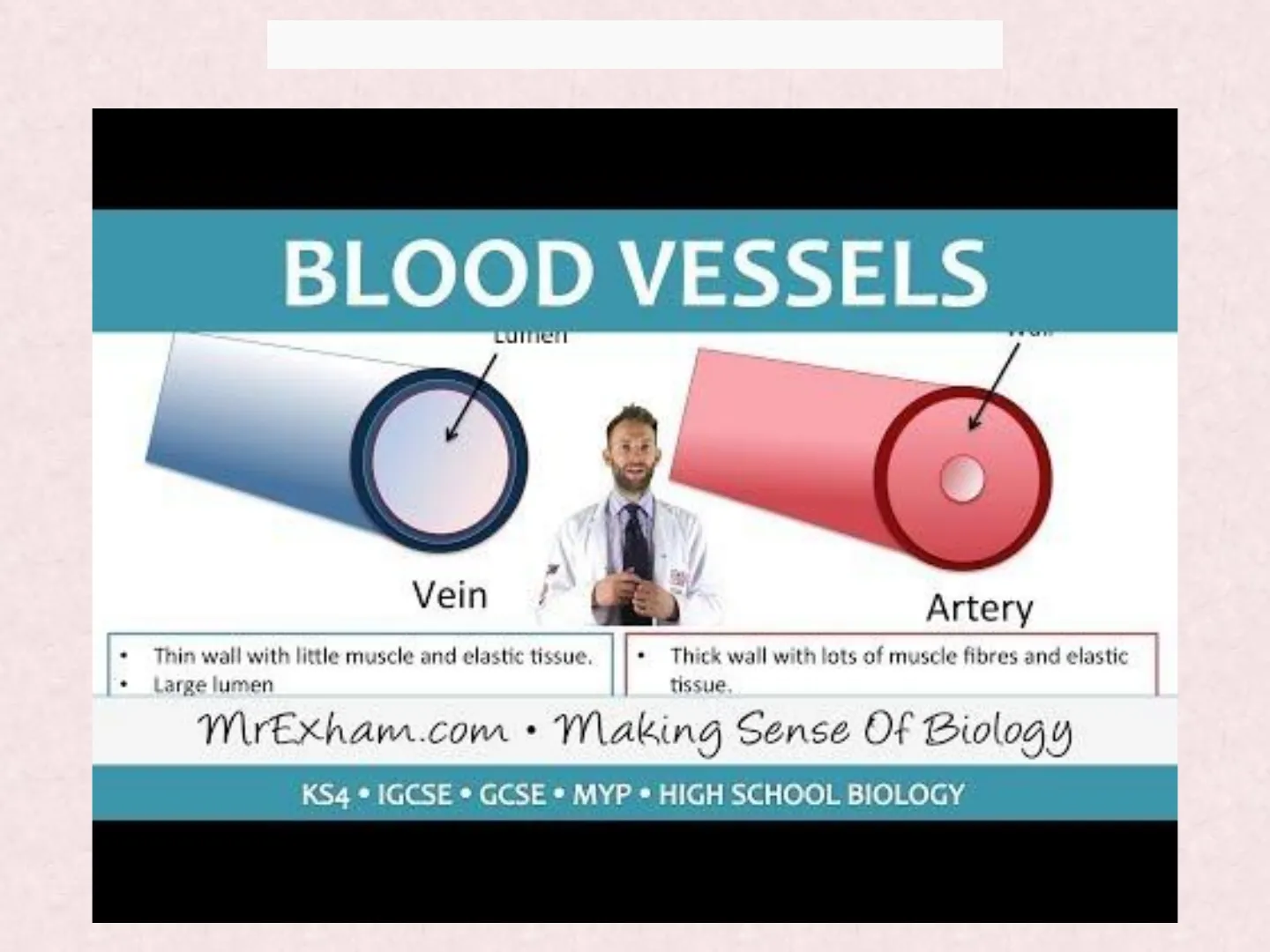
Blood Vessels Overview
Lumen Vein Artery
- Thin wall with little muscle and elastic tissue.
+ Large lumen
- Thick wall with lots of muscle fibres and elastic tissue.
MrExham.com . making Sense Of Biology KS4 . IGCSE . GCSE . MYP . HIGH SCHOOL BIOLOGY
Arteries
- Carry blood AWAY from the heart.
- Thick walled with 3 layers:
- Inner endothelium
- Middle layer of elastic tissue and smooth muscle
- Outer layer of connective tissue
- Walls have a blood supply of their own
- Largest artery is the Aorta (25mm in diameter)
Structure of an Artery
tunica external (some elastic fibres and collagen fibres) lumen (narrow compared to vein) tunica media (elastic fibres, collagen fibres and smooth muscle) tunica intima (collagen fibres and smooth muscle)
Veins
- Carry blood TOWARD the heart.
- Thin-walled with 3 layers:
- Inner endothelium
- Middle layer of elastic tissue and smooth muscle (poorly developed)
- Outer layer of connective tissue
- Some veins have valves which help move the blood toward the heart as well as help to prevent the backflow of blood.
- Largest veins are Superior Vena Cava (20mm in diameter) and Inferior Vena Cava (35mm in diameter)
Structure of a Vein
TUNICA INTERNA Endothelium Basement membrane Internal elastic lamina TUNICA MEDIA External elastic lamina Smooth muscle TUNICA EXTERNA Lumen Cross-Section Thin Outer Wall Thin inner layer of muscle and elastic fibres Endothelium Large central Lumen through which blood flows
Arterioles
(little arteries) Arteriole Smooth muscle cell Endothelium Capillary
- < 0.5mm in diameter
- Carry blood AWAY from the heart.
- Arterioles branch off from arteries and take blood to the capillary beds.
- Thinner walled than arteries but still have 3 layers.
- Smallest arterioles have less smooth muscle but all arterioles are designed to regulate blood flow by dilating or constricting.
Venules
(little veins)
- Carry blood TOWARD the heart
- Have 3 layers but layers are thin and muscle layers are poorly developed.
- Venules drain the capillary beds and merge to form larger veins.
- 7um-1mm in diameter
Venule Structure
VENULE - Endothelium Tunica Intima Basement Membrane Tunica Media Smooth Muscle Rings Tunica Externa Outer Coat BLOOD FLOW TO HEART Blood Pressure Wall Thickness Low Medium High Thin Medium Thick
Arterioles and Venules Connection
Arterioles lead to capillary beds, which are drained by venules Capillaries Arteriole Venule Vein Artery capillaries Tissue cells
Capillaries
- Very small blood vessels with a narrow diameter (8-10um).
- Capillary wall is one layer of endothelium. There is no muscle layer.
- There are over 6000m2 of capillaries in the human body!
Capillary Types
Basement membrane Incomplete basement membrane Endothelial layer Pores Intercellular gaps Continuous Fenestrated Sinusoid
Capillary Function
What happens in the capillaries? 2
- Exchange of nutrients and wastes, and O and CO ..
- Not all capillary beds in the body are "open" (being used) at the same time. A bed may be "closed" when the blood is shunted from the arteriole to the venule directly.
- The capillary beds are opened or closed by sphincter muscles.
- If all the capillary beds in the body were open simultaneously, the body would go into "shock" (low blood pressure)-
Blood Vessel Sections
arteriole venule B Capillary valve inner layer middle layer outer layer A Artery C Vein Figure 9.12. Sections through an artery, capillary, and vein. At any given moment, about 30% of the blood in your systemic circulation will be found in the arteries, 5% in the capillaries, and 65% in the veins.
Detailed Blood Vessel Structure
LARGE VEIN ELASTIC ARTERY Tunica externa Internal elastic membrane Endothelium Tunica intima Tunica media Tunica media Tunica intima Tunica externa Endothelium MUSCULAR ARTERY MEDIUM-SIZED VEIN Tunica externa -Tunica externa Tunica media Tunica media Tunica intima Tunica intima Endothelium Endothelium ARTERIOLE VENULE Smooth muscle cells (tunica media) Tunica externa Endothelium Endothelium Basement membrane Pores CONTINUOUS CAPILLARY FENESTRATED CAPILLARY Endothelial cells Endothelial cells Basement membrane
Circulation in the Body
Pulmonary Circulation
Pulmonary Circulation Blood that moves from the heart, TO the lungs, and back to the heart.
Systemic Circulation
Systemic Circulation Blood that moves from the heart, around the whole body, and then back to the heart.
Major Blood Vessels
- Superior (anterior) Vena Cava
- Inferior (posterior) Vena Cava
- Aorta
- Dorsal Aorta
- Pulmonary Arteries
- Pulmonary Veins
- Coronary arteries
- Jugular veins
- Hepatic Portal Vein
- Hepatic Veins
- Subclavian Arteries & Veins
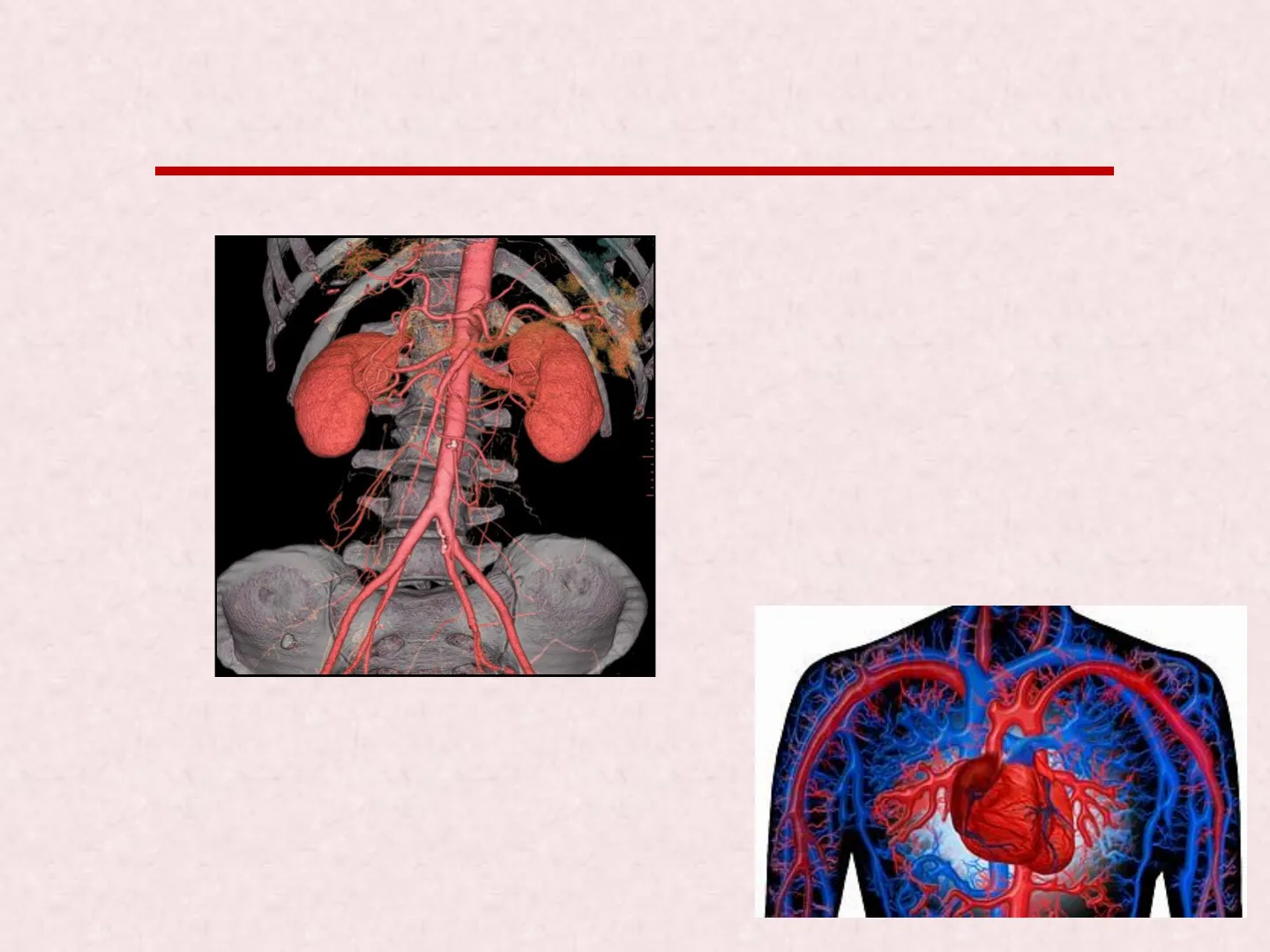
- Renal Arteries & Veins
- Iliac Arteries & Veins
- Mesenteric Arteries
Circulatory System Diagram
The Circulatory System External jugular vein Internal carotid artery External carotid artery Internal jugular vein Subclavian vein Subclavian artery Superior vena cava Pulmonary vein Pulmonary artery. Aorta Inferior vena cava Brachialartery Cephalic vein Renal artery Basilic vein Radial artery Renalvein Ulnar artery Iliac vein Iliac artery Femoral vein Femoral artery Great saphenous vein Small saphenous vein Anterior tibial artery Anterior tibial vein Posterior tibial artery
Blood Vessels: Form and Function
Blood Vessels, Part 1 - Form and Function: Crash Course A&P #27 BLOOD VESSELS part 1 27) FORM AND FUNCTION
Can’t find what you’re looking for?
Explore more topics in the Algor library or create your own materials with AI.