The European Union: an introduction by Iis P. Sraffa
Slides from Iis P. Sraffa about The European Union. The Pdf provides an introduction to the European Union, covering its fundamental data, symbols, and the functions of the Council and European Commission. This High school Civic education material is structured for clear understanding.
See more33 Pages

Unlock the full PDF for free
Sign up to get full access to the document and start transforming it with AI.
Preview
The European Union
Prof. Mariella Brunazzi IIS P. SraffaArea: 4,381,375 sq km Population: 507,025,000 Currency: Euro and some national currencies Europe Day: 9th May Patron Saint: St. Benedict of Nursia Anthem: Ode to Joy from the Ninth Symphony by Ludwig van Beethoven Motto: United in Diversity
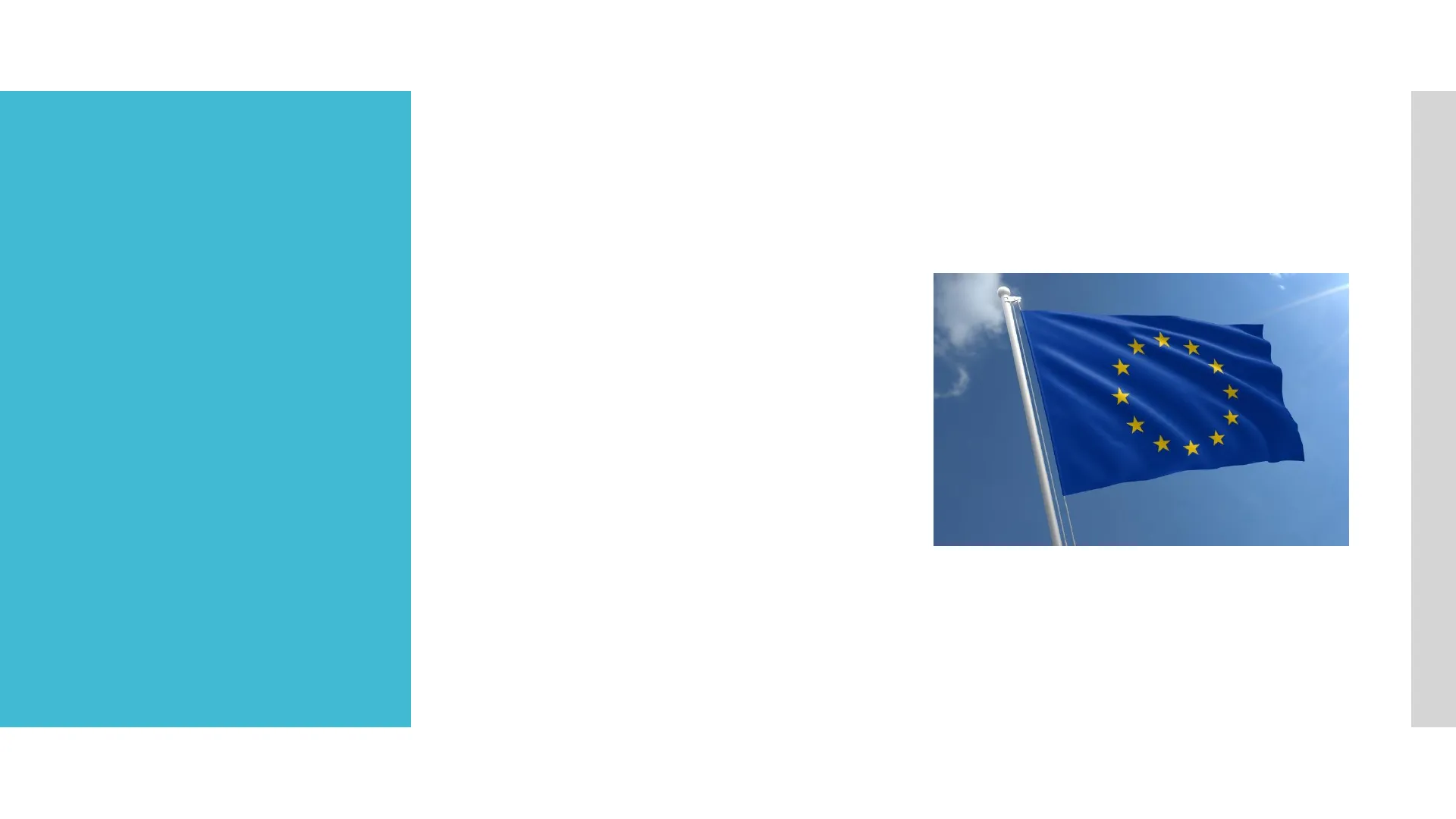
- Flag: the European flag symbolises the European Union. It features a circle of 12 gold stars on a blue background. They stand for the ideals of unity, solidarity and harmony among the peoples of Europe. The number of stars has nothing to do with the number of member countries, though the circle is a symbol of unity.
History of European Integration
The idea of a United Europe is many centuries old, but concrete steps to achieve Euro pean integration were taken after the impact of World War II that stimulated the determination to build a new Europe on stronger principles of cooperation, de mocracy and peace. Since then the European project has been characterized by the passage from merely economic agreements to a more profound political and social union.Here are the key dates and events:
Key Dates and Events: 1948-1949
1948 1949
- Belgium, the Netherlands and Luxembourg form the Benelux Union, an economic union with free movement of people, capital and goods within the Benelux territory.
- The Council of Europe, a forum for the discussion of social, cultural and environmental issues, is established. . Today the Council of Europe is a different organisation and one of the main institutions of the European Union.
Key Dates and Events: 1951
1951
- The French Foreign Minister, Robert Schuman, suggests to pass from cooperation to some form of economic union.
- The proposal is taken up by France, Italy, West Germany, Belgium, the Netherlands and Luxembourg which create the European Coal and Steel Community (ECSC), the nucleus of the EEC.
Key Dates and Events: 1957
1957
- France, Italy, West Germany, Belgium, the Netherlands and Luxembourg sign the Treaty of Rome and the European Economic Community (EEC), also called the Common Market, is set up.
- The Treaty of Rome includes: > a closer union among the peoples of Europe >the improvement of their working and living conditions >the economic and social progress of their countries >the progressive abolition of all barriers and restrictions on trade
Key Dates and Events: 1958
1958 After ratification of the Treaty of Rome the EEC comes into being on 1st January.
Key Dates and Events: 1960
1960
- Britain, Austria, Switzerland, Portugal, Denmark, Sweden, Norway and Finland (1961) form the European Free Trade Association (EFTA) with the purpose of increasing their trade and favouring contacts with the EEC.
Key Dates and Events: 1973
1973
- After difficult negotiations, Great Britain, Denmark and the Irish Republic join the European Community.
Key Dates and Events: 1979
1979 The first election by universal suffrage of the European Parliament is held in June.
Key Dates and Events: 1981
1981 . Greece becomes the tenth member nation of the EEC.
Key Dates and Events: 1985
1985
- The Schengen Agreement is signed. It introduces: > freedom of circulation for people and goods >abolishment of checks at the borders between the member countries.
Key Dates and Events: 1986
1986 Spain and Portugal join the EEC.
Key Dates and Events: 1989-1991
1989 1991
- The fall of the Berlin Wall leads to deep changes in Eastern Europe, the end of the Cold War and the beginning of a new era in European history.
- In December the representatives of the EEC countries meet at the Maastricht Summit in Holland and reach an agreement on a Treaty on European Union which partly revises the Treaty of Rome.
Key Dates and Events: 1992
1992 The Treaty on European Union (the Maastricht Treaty) is signed in Maastricht. It aims at: creating a closer political union among the peoples of Europe reinforcing EMU (Economic and Monetary Union) > creating a European Central Bank adopting a single European currency by 1999
Key Dates and Events: 1993-1995
1993 1995
- The Single European Market comes into force.
- The EEC changes its name into the European Union (EU) according to the Maastricht Treaty.
- Since 1995 new countries have joined the Union which now has 27 members.
Key Dates and Events: 1997
1997 The Treaty of Amsterdam increases the EU Commission's powers.
Key Dates and Events: 1998-1999
1998 1999
- A group of European countries including Italy officially decide to adopt the Euro as from (a partire da) 1st January 1999 and the European Central Bank is established.
- The Euro is officially introduced to the world financial market.
Key Dates and Events: 2002
2002 The Euro is put into circulation and replaces former national currencies.
Key Dates and Events: 2004
2004
- A European Constitution is signed in Rome, but it is not ratified because of its rejection by French and Dutch voters in referendums in 2005.
Key Dates and Events: 2007
2007
- The Lisbon Treaty is signed. Its aims include: amending the existing treaties and replacing the rejected constitution creating the post of long- term President of the European Council instead of the six-month rotation by the member states > including a European charter of human and legal rights > strengthening the Union's decision-making powers.
Key Dates and Events: 2009
2009 The Lisbon Treaty comes into force.
Key Dates and Events: 2010
2010
- The European Financial Stability Facility (EFSF) is set up. It has the function of preserving the financial stability of the EU by providing temporary financial assistance to the EU member states in difficulty.
Key Dates and Events: 2012
2012
- The EFSF is replaced by the European Stability Mechanism (ESM) , the permanent crisis resolution mechanism for the countries of the Euro area.
Key Dates and Events: 2016-2017
2016 - 2017 The United Kingdom leaves the European Union. Following a UK-wide referendum in June 2016, in which 52% voted to leave and 48% voted to remain in the EU, the British govern ment formally announced t he country's withdrawal in March 2017, beginning the Brexit (British + exit) process.
Key Dates and Events: 2020
2020
- The breakup is official: on January 31, 2020, at 11 pm CET, the United Kingdom leaves the European Union.
Organization of the EU
The main institutions of the European Union are: the EUROPEAN PARLIAMENT the COUNCIL OF THE EUROPEAN UNION the EUROPEAN COMMISSION the EUROPEAN COURT OF JUSTICE
The European Parliament
The European Parliament is elected by the people of the member states every five years. It has 705 members who sit in the meeting room according to political groups rather than nationality. The Parliament has its official seat in Strasbourg. It is a consultative and legislative body and shares legislative power with the Council of the European Union.
Functions of the European Parliament
FUNCTIONS THE EUROPEAN PARLIAMENT adopts or rejects the budget expresses an opinion on legislation proposed by the European Commission (the executive body) has the power to reject the legislation proposed by the European Commission must give its assent to international agreements
The Council of the European Union
It consists of ministers of the national governments. Every Council meeting is attended by the ministers from each member state responsible for the subjects under discussion (foreign policy, agriculture, industry ... ). The Council, which has its official seat in Brussels, is the EU's main decision-making body. It makes Union laws sharing legislative powers with Parliament. It is also responsible for cooperation between member states on the most important issues regarding the Union as a whole.
The European Commission
The European Commission is the EU's executive body and has its official seat in Brussels. It consists of one commissioner for each member state, plus a president and two vice-presidents. The commissioners are appointed for a five-year renewable term and each is responsible for a specific area. European Commissioners are entirely independent of their countries, that is they serve the EU as a whole.
Functions of the Commission
FUNCTIONS THE COMMISSION ensures that the regulations and directives adopted by the Council and the Parliament are put into effect proposes new legislation to the Council and the Parliament spends EU funds
The European Court of Justice
The Court of Justice, located in Luxembourg, is the EU's main judicial organ. The Court is made up of one judge from each member country. Judges are appointed for a six-year renewable term.
Functions of the Court of Justice
THE COURT OF JUSTICE ensures that Union laws and treaties are interpreted correctly and applied in all member states settles disputes between member states and EU institutions checks whether EU legislation respects the fundamental rights of EU citizens
Other EU Institutions
The EUROPEAN COUNCIL is composed of the heads of state or government of the member states and the President of the European Commission and meets four times a year to discuss major European and world problems. The EUROPEAN CENTRAL BANK is responsible for the EU's monetary policy. Its main aim is to maintain price stability in the Eurozone so that inflation can't damage the economy of the member states. Its headquarters are in Frankfurt, Germany.
The Court of Auditors
The COURT OF AUDITORS is composed of one member from each EU country. It checks that the EU budget has been managed in a proper way and reports on the use of public funds.
The Committee of Regions
The COMMITTEE OF REGIONS is concerned with specific problems relating to the various regions inside the Union.
European Legislation
European legislation falls into two categories:
- primary legislation (the treaties)
- secondary legislation (regulations, directives and recommendations)
Treaties
The EU treaties are binding agreements between EU member countries. They set out EU objectives, rules for EU institutions, and the relationship between the EU and its member countries. Treaties can be amended to make the EU more efficient and introduce new areas of cooperation.
Regulations
are legislative acts which become law in all member states. If a regulation conflicts with national rules, it invalidates domestic law.
Directives
require member states to achieve the results outlined in the directive, but the states are free to choose how to achieve those results.
Recommendations
are not binding on member states, although they are generally accepted by national governments.
International Organizations
The United Nations Organization
After World War II the Charter of the United Nations Organization (UNO) was signed on 26th June 1945. The UNO now has 193 members states and has its headquarters in New York City. The Organization aims at:
- preventing wars
- defending fundamental human rights
- establishing respect for international law
- promoting better standards of life and freedom
Can’t find what you’re looking for?
Explore more topics in the Algor library or create your own materials with AI.
