Plasma Membrane I: Structure, Composition, and Functions
Slides from Universidad Europea about Plasma Membrane I. The Pdf, a presentation for university-level Biology students, covers the structure, composition, transport, and communication of the plasma membrane, illustrating the fluid mosaic model and defining anabolism versus catabolism.
See more44 Pages

Unlock the full PDF for free
Sign up to get full access to the document and start transforming it with AI.
Preview
UNIT 3 Plasma Membrane I
1. Structure of the membrane 2. Composition of the membrane 3. Membrane transport 4. Cell communication 5. Specializations
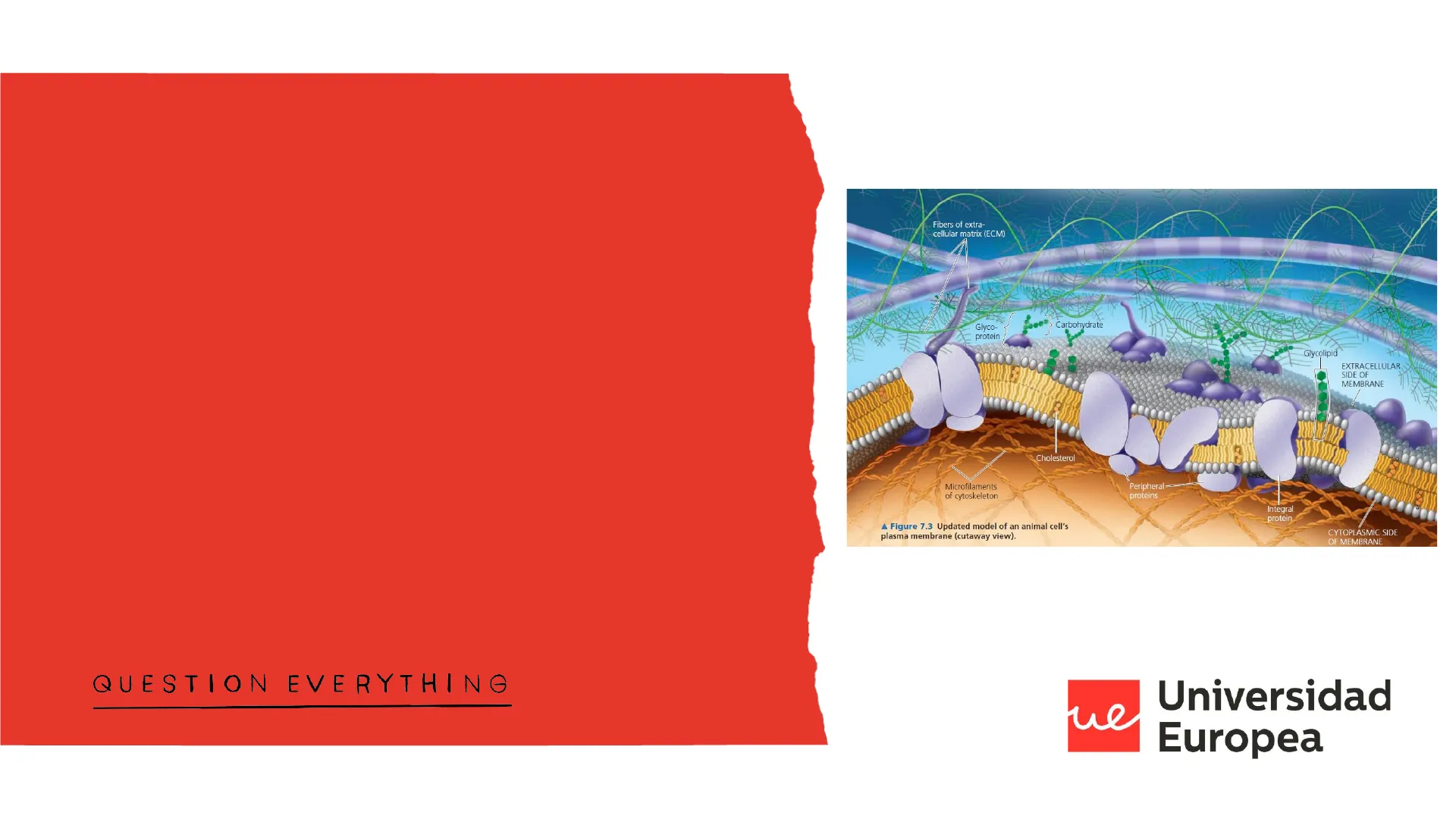
Fibers of extra- cellular matrix (ECM) Carbohydrate Glyco- protein Glycolipid EXTRACELLULAR SIDE OF MEMBRANE Cholesterol Microfilaments of cytoskeleton Peripheral = proteins Integral protein A Figure 7.3 Updated model of an animal cell's plasma membrane (cutaway view).
CYTOPLASMIC SIDE OF MEMBRANE
QUESTION EVERYTHING ue Universidad Europea
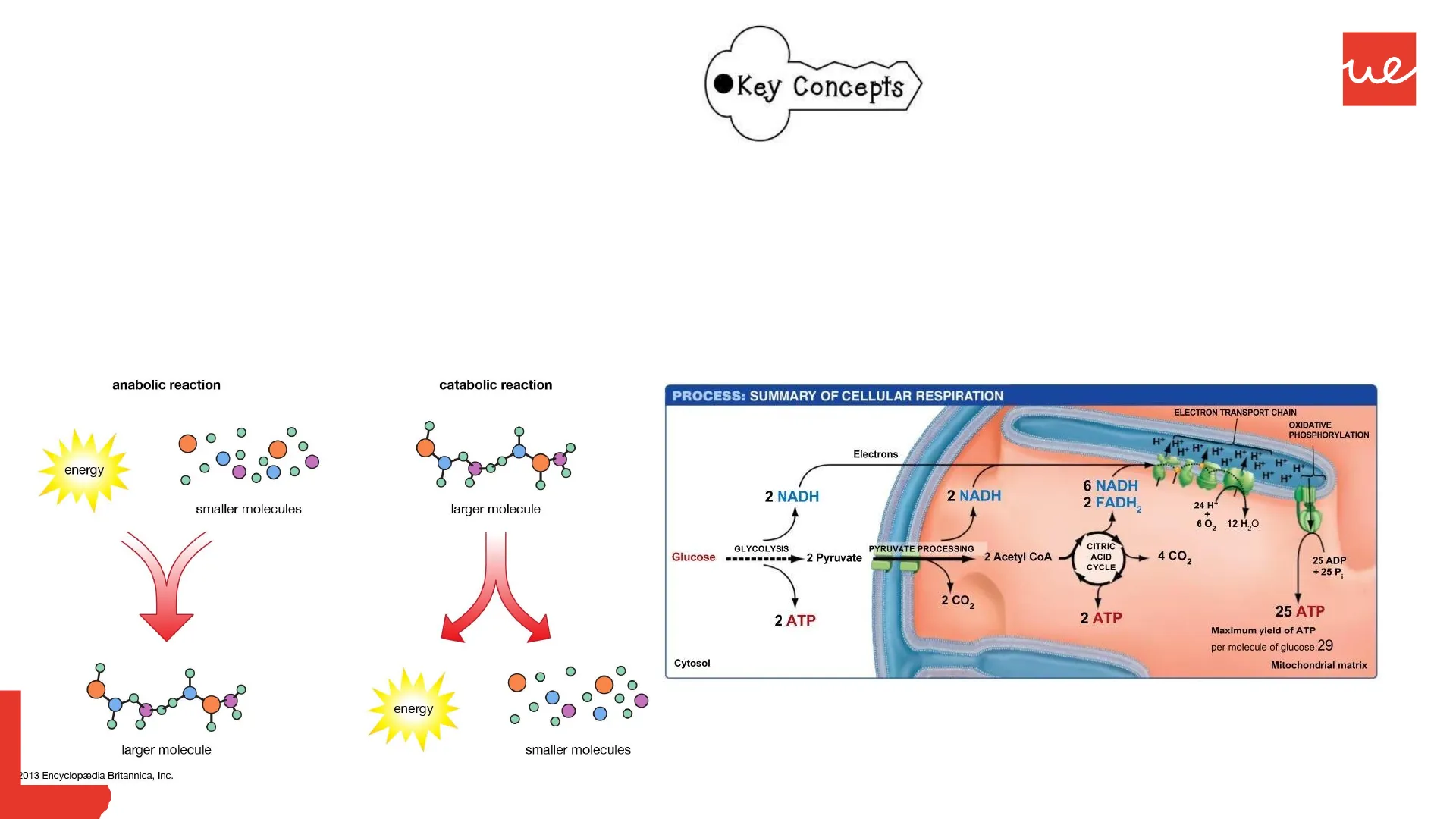
Anabolism vs Catabolism
C Key Concepts ue Catabolism It is the process of breaking down complex macromolecules into simple molecules, such as carbon dioxide, water, and ammonia. Produces energy (as ATP, NADH, etc) Anabolism is the process of building up complex macromolecules from smaller units, such as nucleic acids, proteins, polysaccharides, and lipids. Consumes energy (ATP)
anabolic reaction energy smaller molecules larger molecule smaller molecules
Summary of Cellular Respiration
PROCESS: SUMMARY OF CELLULAR RESPIRATION ELECTRON TRANSPORT CHAIN H H H+ H H H+ H H+ H+ H 2 NADH 2 NADH 6 NADH 2 FADH2 24 H 6 02 12 H,O PYRUVATE PROCESSING Glucose GLYCOLYSIS .......... + 2 Pyruvate 2 Acetyl COA CITRIC ACID CYCLE 4 CO2 25 ADP + 25 P. 2 CO2 2 ATP 2 ATP 25 ATP Maximum yield of ATP per molecule of glucose:29 Cytosol Mitochondrial matrix Example: Glycolysis is the breakdown of glucose into CO 2, H2O and ATP (catabolism 2013 Encyclopædia Britannica, Inc. catabolic reaction OXIDATIVE PHOSPHORYLATION Electrons H+ H+ H+ larger molecule energy
Metabolism and Macromolecules
ue Metabolism Energy delivering nutrients Low-energy endproducts · carbohydrates · CO2 · lipids · H2O · proteins · NH3 ADP + HPO42- NAD+ ATP NADH NADP+ NADPH Macromolecules of the cell Precursors · Proteins · Amino acids · Polysaccharides · Sugars Anabolism · Lipids · Fatty acids · Nucleic acids · Nitrogenous bases Catabolism
Major Biological Molecules: Chemical Blocks of Life
ue The 4 main families of organic molecules: They assemble the cell. Some are also energy sources.
Categories and Building Blocks
Category Carbohydrates Proteins Lipids (fats) Nucleic acids DNA RNA ABONUCLEIC ACIDS Building blocks (monomers) Monosacharide Aminoacids Fatty acids Nucleotides O 0-P-0 -O Phosphate group Pentose sugar Nitrogenous base Larger units (polymers) Polysacharide Peptides and proteins Fat molecules (like phospholipids) DNA/RNA strands Peptide, a chain of amino acids Protein, a longer amino acid chain with secondary structure
Carbohydrates: Monosaccharides
ue Monomer (Subunit) Polymer (many subunits together) Energy source/ structural molecules CARBOHYDRATES Monosaccharide - Polysaccharide (Sugars) CHCH CHỊCH 0 0 0 OH HO HI H H CH H HO CH H H H H CH CH H Fructose HOCH, CH HOCH, CH H H H [) Pontosis Monosaccharide CH,OH HO CHJOH
Carbohydrates: Disaccharides
ue Monomer (Subunit) Polymer (many subunits together) Energy source/ structural molecules CARBOHYDRATES Monosaccharide Disaccharide (Sugars) Sucrose (Glucose-fructose) Lactose (Galactose glucose CHOH UH ITH Maltose ( Glucose-glucose) H OH Disaccharide
Carbohydrates: Polysaccharides
ue Monomer Polymer (many (Subunit) subunits together) Energy source/ structural molecules CARBOHYDRATES Monosaccharide - Polysaccharide (Sugars) Starch Cellulose Glycogen Source Plant Plant Plant Animal Subunit ß-glucose a-glucose a-glucose a-glucose Diagram 0 O 0 0 Shape Polysaccharide
Lipids: Fatty Acids and Fat Molecules
ue Monomer (Subunit) Polymer (many subunits together) LIPIDS Fatty acids Fat molecules Energy storage molecules (Fats) structural formula space-filling model generic simplified depiction phospholipid (phosphatidylcholine) O phospholipid molecule 0- CH CH2 O=P-O CH CH2 hydrophilic (polar) head CH3 CH2 -O I C CH3-N+-CH2 1 fatty acid tail lipid bilayer O 0 CH2 CH2 CH2 CH2 CH2 CH2 >CH2 CH2 CH2 CH2 CH2 CH2 >CH2 CH2 >CH2 CH2 >CH2 CH3 fatty acid molecule fatty acid molecule hydrophilic (polar) head CH3 hydrophobic (nonpolar) fatty acid tail micelle fatty acid (stearic acid) phospholipid molecule >CH2 hydrophobic (nonpolar) CH3 CH2 CH2 CH2 CH2 CH2 CH2 CH2 CH2 CH2 CH2 CH2 CH2 CH2 CH2 CH2 CH2 CH2 CH2 >CH CH2 >CH2 CH2 CH2 CH3 CH2 CH2 C 2014 Encyclopædia Britannica, Inc.
Lipids as Precursors of Biological Molecules
ue CH20H C=0 HBC HO. -OH H3C 0 CH3 Pregnenolone OH H3C HO Testosterone OH H3C H&C H3C 0 CH20H Ċ=0 HO H3C 0 LIPIDS “H (Fats) H Some lipids act as precursor of H H HO biological molecules Cholesterol CH& Progesterone C=0 H3C 0 Cortisol Aldosterone O=U> Estradiol H3C H3C HO
Carbohydrates and Lipids in Cell-Cell Recognition
ue CARBOHYDRATES + LIPIDS (Sugars) (Fats) Cell-cell recognition (antigen blood groups) glucose QH CH2OH OH CH2OH N-acetylglucosamine galactose N-acetylgalactosamine fucose OH CH2OH O OH HO- HO Blood group O OH O m H3C OH OH Blood group B 1 carbohydrate chains lipid bilayer Chemistry Views A B HỒ OH Blood group A HO OH CH2OH H3C -OH 0 HaC~ OH CH2OH OH inside of red blood cell HO- AcNH O 0
Proteins: Amino Acids and Polypeptides
ue Monomer (Subunit) Polymer (many subunits together) Polypeptide Protein PROTEINS O NH2 O HẠN O OH H_N OH NH NH. ÑH. NH2 NH2 0 asparagine aspartic acid cysteine O O OH HIN OH NH. NH2 NH_ NH_ glycine A histidine isoleucine o acid O H3N OH OH OH NH NH2 lysine NH2 NH leucine OH O O OH OH NH2 OH NH2 threonine NH2 HO NH2 serine tryptophan valine O OH .acidic · aliphatic hydroxyclic . basic . with sulfur .amidic .aromatic The 20 amino acids Amino acids AMINO ACIDS PEPTIDE PROTEIN Enzymes, defense, transport, motion, regulation O OH HON OH OH glutamic glutamine OH OH methionine phenylalanine proline O OH HỒ NH tyrosine OH OH HS OH alanine arginine
Nucleic Acids: Nucleotides, DNA, and RNA
ue NUCLEIC ACIDS Monomer (Subunit) Nuleotide Polymer (many subunits together) DNA (deoxyribonucleic acid) RNA (ribonucleic acid) Genetic information O H.C NH Uracil NH O I NH, NH Helix of sugar-phosphates Cytosine Cytosine HẸN HẸN N N 2 H N O Guanine NH Guanine NH NH, I NH, Nucleobases of RNA Nucleobases of DNA Nucleobases RNA Ribonucleic Acid 0 0-P-0- Phosphate group C Pentose sugar Nitrogenous base Ribose (RNA) DeoxiRibose (DNA) Adenine Adenine ZI DNA Deoxyribonucleic acid Thymine Base pair O
Chemical Bases of Life: Solubility in Water
Solution in water Molecules can be defined based on whether they dissolve in water or not:
Hydrophilic, Hydrophobic, and Amphipathic Molecules
HYDROPHILIC POLAR . They form H bridges with water · Dissolve in water Partial negative charge Electrons are pulled toward oxygen. 1 H - H 8+ 8+ Partial positive charge HYDROPHOBIC/APOLAR . Do not form H bridges with water · Insoluble in water . They form aggregates Po AMPHIPATHIC · Part of the molecule is hydrophilic and part hydrophobic HYDROPHILIC/POLAR HYDROPHOBIC/APOLAR ue
Polarity and Solubility
ue "Like dissolves like" Polar compounds dissolve best in polar solvents and nonpolar compounds dissolve in nonpolar solvents. As water is polar, it will mainly dissolve polar compounds, also called hydrophilic compounds. (-) H H (+) Nonpolar substances, such as many oils and fats, can dissolve in each other, but they do not dissolve in polar solvents such as water, which is why they are called hydrophobic. Hey oil! Wanna hang out ? I can't mix - with you guys. Hydrophobe! science fried art. 2013.
Biological Membranes
ue The cell membrane is a complex structure that defines the cell and separates the inside from the outside. Eukaryotic cells also contain internal membranes (organelles)
Cell and Organelle Membranes
plasma membrane enclosing cell molecules outside cell internal membrane enclosing an intracellular compartment molecules inside cell molecules inside the intracellular compartment Mitochondrion Vesicle Outer| Mitochondrial Inner membranes Matrix Intermembrane space Golg Exoplasmic face Lysosome Endoplasmic reticulum Cytosolic face Plasma membrane Nucleus Cytosol Exterior Inner Outer Nuclear membranes Intermembrane space (A)
Plasma Membrane Structure
1. STRUCTURE ue EXTRACELLULAR FLUID Phospholipid Hydrophilic head Glycolipid Membrane-spanning protein Glycoprotein Hydrophobic tail Cell membrane Cholesterol CYTOPLASM Phospholipid bilayer . Common structure: lipid bilayer and protein molecules embedded · Defines cell's boundaries (extracellular vs cytosol) . In eukaryotic cells: defines cell's organelles (internal membranes) and their boundaries (cytosol out/ lumen in) · Semipermeable (selective permeability) . 5 nm thick (nano=one-billionth of a meter, a sheet of paper is 100000 nm)
Functions of Cell Membranes
1. STRUCTURE ue Why do we need cell membranes? Two major cell compartments: nucleus and cytosol Functions of membranes: • Form separated compartments · Regulation of transport (in/out) . They regulate the composition inside a given compartment · Allow specialization (i.e. mitochondria membrane - ATP production) . They participate in cell-cell communication . They can receive signals from outside and carry out responses in the cell. · Help determine cell identity (i.e., blood group) Cell Membrane Cytoplasm Nucleus
Fluid Mosaic Model
Key Concepts FLUID MOSAIC MODEL (Singer and Nicholson 1972) MOSAIC: lipidic bilayer with proteins embedded in it, and sugars on the outer monolayer ue - Extracellular matrix protein Glycoprotein Glycolipid- - Integral proteins Glycoprotein Cholesterol Actin filaments of cytoskeleton Peripheral protein Intermediate filaments of cytoskeleton FLUID: lipids and proteins can move in the plane of the membrane (horizontally). The structure is fluid and dynamic. Rotation Transverse diffusion ("flip-flop") Copyright 2005 Pearson Education, Inc. publishing as Benjamin Cummings
Asymmetry of the Plasma Membrane
FLUID MOSAIC MODEL Asimmetry ue Lipids Proteins Carbohydrates EXTERIOR Oligosaccharide chains of glycoproteins Oligosaccharide chains of glycosphingolipids Lipid- anchored protein Peripheral membrane protein Peripheral membrane protein CYTOSOL Integral membrane protein Integral membrane proteins Figure 9.21 Structure of a typical eukaryotic plasma membrane. A lipid bilayer forms the basic matrix of biological membranes, and proteins (some of which are glycoproteins) are associated with it in various ways (Section 9.10). The oligosaccharides of glycoproteins and glycolipids are on the exterior surface of the membrane.
Can’t find what you’re looking for?
Explore more topics in the Algor library or create your own materials with AI.
