Molecular Biology: DNA Replication, Transcription, and Protein Synthesis
Outlines about molecular biology, focusing on DNA replication, transcription, and protein synthesis. The Summaries provide detailed diagrams and descriptions of these processes in eukaryotic and bacterial cells, suitable for University-level Biology students. This material, produced digitally, offers a clear and useful didactic content for autonomous study.
See more57 Pages

Unlock the full PDF for free
Sign up to get full access to the document and start transforming it with AI.
Preview
Replication and Transcription: Core Concepts
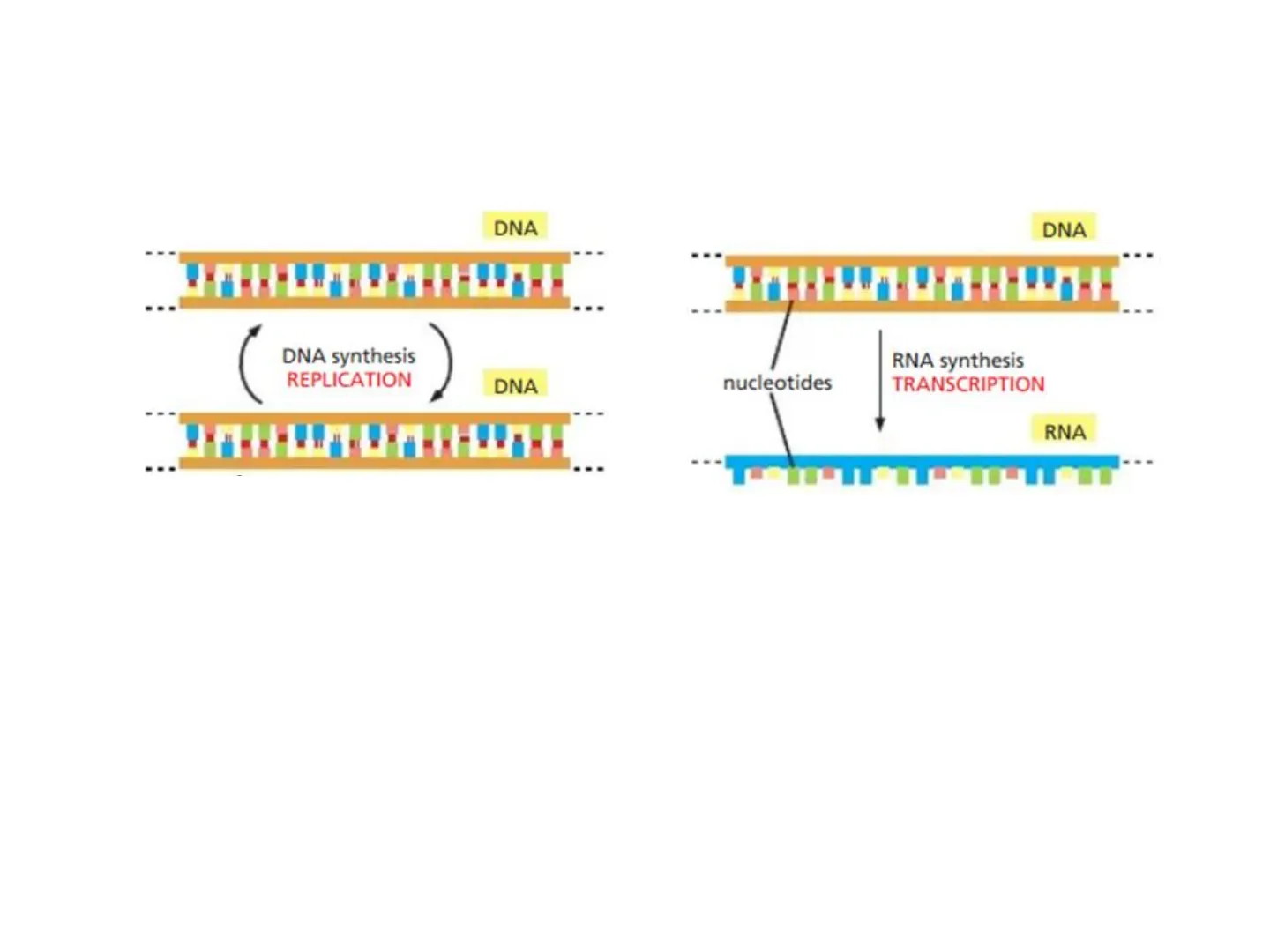
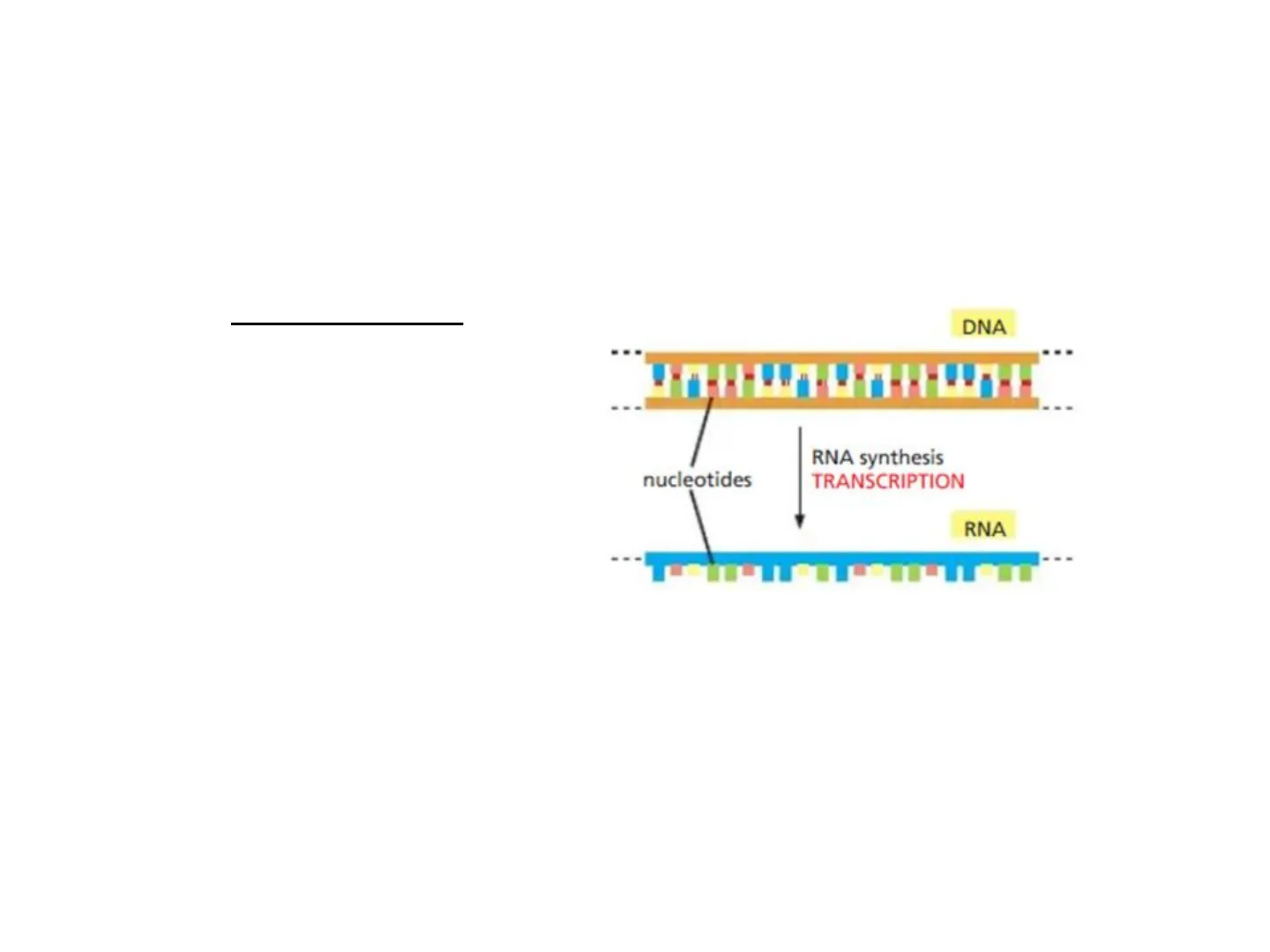
Replication Transcription DNA ( DNA synthesis REPLICATION DNA DNA replication represent a unique event during a cell's life. Its purpose is to propagate a genome through generations. DNA nucleotides RNA synthesis TRANSCRIPTION RNA DNA transcription involves copying selected functional sequences (genes) in single stranded RNA strips that are exported from the nucleous of a mammalian cells in order to be translated into a protein, the end-point biologically active molecular device.Transcription is the first step in gene expression, the process of making use of the information stored within a gene sequence. It involves copying a gene's DNA sequence to make an RNA molecule. DNA nucleotides RNA synthesis TRANSCRIPTION RNAReplication similarity Transcription DNA DNA ( DNA synthesis REPLICATION RNA synthesis TRANSCRIPTION DNA nucleotides RNA
- Both processes use DNA as a template;
- Phosphodiester bonds are synthesized between nucleotides;
- Both synthesis direction are from 5' to 3'
Replication and Transcription: Key Differences
Replication difference Transcription DNA ( DNA synthesis REPLICATION DNA DNA .. nucleotides RNA synthesis TRANSCRIPTION RNA
Template Substrate Primer Enzyme Product Base pairing Double strand dNTPs Needed DNA polymerase Double strand A-T; C-G Single strand NTPs Needless RNA polymerase Single strand A-U; C-G
DNA Maintenance and Usage
DNA mainteinance VS. - replication - repair DNA usage - gene expression = transcription transcription & translation DNA ( DNA synthesis REPLICATION DNA nucleotides RNA synthesis TRANSCRIPTION RNA protein synthesis TRANSLATION PROTEIN amino acids
RNA Polymerase Action in Transcription
DNA - -polymerase movement RNA polymerase rewinding of DNA coding strand unwinding of DNA Ʒ 5' in 5 template strand nucleotide being added to the 3' end of the RNA mRNA 5' free RNA nucleotides RNA-DNA hybrid region Transcription is performed, in the cell nucleus of mammalian cells, by enzymes called RNA polymerases, which link nucleotides to form an RNA strand (using a DNA strand as a template).
Gene Structure Elements
Gene structure Gene Promoter +1 RNA-coding sequence Terminator 5' 3' 3' Nontemplate strand DNA 5' Template strand Transcription initiation site Transcription termination site - Upstream of gene Downstream of gene
Gene Regulator Elements: Promoter and Terminator
Some gene regulator elements PROMOTER (start signal) -35 -10 +1 5' -TAGTGTATTGACATGATAGAAGCACTCTACTATATTCTCAATAGGTCCACG-3' DNA 3' -ATCACATAACTGTACTATCTTCGTGAGATGATATAAGAGTTATCCAGGTGC-5' start site template strand TERMINATOR (stop signal) stop site 5' -CCCACAGCCGCCAGTTCCGCTGGCGGCATTTTAACTTTCTTTAATGA- 3' 3' -GGGTGTCGGCGGTCAAGGCGACCGCCGTAAAATTGAAAGAAATTACT- · 5' DNA template strand
RNA Polymerases and Transcription Direction
RNA polymerases Start of transcription Direction of transcription RNA polymerase Nontemplate strand 5' 3' 5' Promoter RNA-DNA hybrid Template DNA strand
Gene Transcription Overview
Gene transcription in a nutshell Start site V Gene Stop site > 5' 3' 3' 5' Promoter Template DNA RNA polymerase In Initiation 5' 3' 5' RNA transcript I Elongation 5' 3' 3' 5' RNA transcript I Termination 5' 3' RNA transcript 5' 3' 3' 5' DNA Terminator 3'
Transcription Initiation
Initiation PROMOTER (start signal) 35 10 7- I 5' -TAGTGTATTGACATGATAGAAGCACTCTACTATATTCTCAATAGGTCCACG-3' ]DNA 3' -ATCACATAACTOTACTATCTTCGTGAGATGATATAAGAGTTATCCAGGTGC-5' start site template strand Promoter - RNAcoding sequence RNA polymerase Closed promoter complex 5 3 o factor As initiation continues, RNA polymerase binds more tightly to the promoter at the -10 region, accompanied by a local untwisting of the DNA in that region. At this point, the RNA polymerase is correctly oriented to begin transcription at +1. -35 region -10 región + Initiating nudeotide 5 3 Open promoter complex 3 5' PPP 5
Initiation in Eukaryotes
Initiation in eukaryotes TATA box (A) TEP TFIID B) TFIIA TFIB TFHF TFIIE TFIH (D) UTP. ATP CTP. GTP PPP ANA
Transcription Elongation
Elongation +1 Direction of transcription RNA polymerase 3' 5' 3 5 Template DNA strand RNA-DNA hybrid o factor released As the RNA polymerase elongates the new RNA chain, the enzyme untwists the DNA ahead of it, keeping a single-stranded transcription bubble spanning about 25 bp. About 9 bases of the new RNA are bound to the single-stranded DNA bubble, with the remainder exiting the enzyme in a single-stranded form. 5' 5 RNA elongation Promoter RNA coding sequence Open promoter complex 5 3 3 3' 5'
Growing RNA Strand and Phosphodiester Bond Formation
Growing RNA strand DNA template strand 5' 3' 5' 3' 0 0 H C 0-P-O-P-O-P=0 "0-P-O-P-O-P=0 0- 0- -0- A T CH. H.C H,C -0 Ò o=P-0- 0=P-O- 0 HO O HO 1 I 0-P=0 0-P=0 -O-C 0 RNA polymerase -O- 0 G=C CH. HJC 0 O 1 O=P-0- 0=P-O- CH OH 0 OH H I 3' 0-P=0 o=0-8 o=a-b o=a-b U A U A CH- H.C O 0 O=P-O- HO CH H 0 3' Incoming ribonucleoside triphosphate CH, G CH- 0 5'-to-3' direction of chain growth O=P-0" O=P-O- H 0 Chain growth + 0 0 CH2 0-P-O-P-OH 1 O=P-0- O=P-O- I 0 '5' 0 I P O-P-O-P-O-P-O-CH. CH2 O=P-0- CH OH H -O 0 G 0 0 H T CH 0 - 0-0-0-00 = b-a 0=0-8 0 0 b-0 H O 1-0-0 0 A T CH, 0 0 -C H 0 H Formation of phosphodiester bond H.C G= C CH, 72 H 0 T
Gene Regulator Elements: Promoter and Terminator Revisited
Some gene regulator elements PROMOTER (start signal) -10 +1 -35 1 1 5' -TAGTGTATTGACATGATAGAAGCACTCTACTATATTCTCAATAGGTCCACG-3 3' -ATCACATAACTGTACTATCTTCGTGAGATGATATAAGAGTTATCCAGGTGC-5' DNA start site template strand TERMINATOR (stop signal) stop site 5' -CCCACAGCCGCCAGTTCCGCTGGCGGCATTTTAACTTTCTTTAATGA 3' -GGGTGTCGGCGGTCAAGGCGACCGCCGTAAAATTGAAAGAAATTACT-5' -3 DNA template strand
Transcription Termination
Termination Two fold symmetry Template 5' CCCAGCCCGCCTAATGAGCGGGCTTTTTTTTGAACAAAA 3' (DNA) 3' GGGTCGGGCGGATTACTCGCCCGAAAAAAAACTTGTTTT 5' Transcript (RNA) 5' CCCAGCCCGCCUAAUGAGCGGGCUUUUUUUU-OH3' Transcript folded to form termination hairpin A A U G C A C-G G-C C_G C_G C-G G-C 5'-CCCA -UUUUUUUU-OH 3'
Gene Expression and Efficiency
Gene expression (transcription) gene A gene B DNA Transcription Transcription messenger RNA (mRNA) A messenger RNA (mRNA) B Genes can be expressed with different efficiencies. In this example, gene A is transcribed much more efficiently than gene B.
Gene Expression and Template Strands
Gene expression RNA transcripts DNA gene a gene d gene e 3' 3' gene b gene c gene f gene g 5' 5000 bp Some genes are transcribed using one DNA strand as a template, while others are transcribed using the other DNA strand. The direction of transcription is determined by the promoter* at the beginning of each gene (green arrowheads). The genes transcribed from left to right use the bottom DNA strand as the template; those transcribed from right to left use the top strand as the template. see after 5'
Gene Transcription: Prokaryotes vs. Eukaryotes
Gene transcription: Prokaryotes vs. Eukaryotes Bacterium Eukaryote DNA Nucleus RNA polymerase Precursor mRNA (pre-mRNA) 3 -RNA polymerase Processing (5' cap, 3' poly(A). intron removal) AAA .. AAA mRNA AAA 5 Polypeptide being synthesized Cytoplasm Ribosome
Gene Expression Control Mechanisms
Gene expression control inactive mRNA NUCLEUS CYTOSOL mRNA degradation control 4 RNA transcript DNA mRNA mRNA 1 transcriptional control 2 RNA processing control 3 RNA transport and localization control translation control 5 protein activity control inactive protein 6 protein active protein
Transcriptional Level Control
Gene expression control (transcriptional level) NUCLEUS CYTOSOL RNA transcript mRNA DNA mRNA 1 transcriptional control 2 RNA processing control 3 RNA transport and localization control
Eukaryotic vs. Prokaryotic Gene Expression Control
Gene expression control (transcriptional level) EUCARYOTES cytoplasm nucleus introns exons DNA L transcription unit "primary RNA transcript" TRANSCRIPTION 5' CAPPING RNA SPLICING 3' POLYADENYLATION RNA cap MRNA AAAA EXPORT MRNA AAAA PROCARYOTES DNA TRANSCRIPTION mRNA TRANSLATION protein
mRNA Processing: Cap, Tail, and Splicing
RNA-coding sequence DNA Promoter Transcription by RNA polymerase II. Addition of 5' cap when 20-30 nucleotides of pre-mRNA made. Addition of 3' poly(A) tail. Cap Exon Intron Exon Intron Exon Poly(A) tail Pre-mRNA 5' AAAAAAA ... 3' 5' UTR RNA splicing: introns removed 3' UTR Protein-coding sequence mRNA 5' AAAAAAA ... 3' Translation Polypeptide 31 31 32 105 106 147 ß-Globin genomic DNA 1 Start site for RNA synthesis Poly(A) site 3' Primary 5' RNA transcript m7Gppp 3' cleavage and addition of poly(A) tail Exon Intron (A), (3' poly(A) tail) UTR (A)n on 1 Splicing (A)n ß-Globin mRNA 1 31 105 147
Biological Relevance of Molecular Details
The molecular detail about the biological targets we discuss has dual importance. On one hand it has a biological, some times biomedical, relevance. A primary transcript alternatively spliced might give rise to multiple variant proteins:
gene 5' 3' DNA 3' 5' exons introns I TRANSCRIPTION, SPLICING, AND POLYADENYLATION 5' 3' striated muscle mRNA 5' 3º smooth muscle mRNA 5' 3' fibroblast mRNA 5' 3' fibroblast mRNA 5' 3' brain mRNA On the other hand, working in a laboratory to detect specific mRNAs, we use specific probes to "fish" them, and we need to be aware that these probes have to look for existing exon sequences, under penalty of the risk of false negative results.
Methods to Study Gene Expression
Several methods are in use to study gene expression at the transcriptional level. Among them:
- a northern blot;
- a qPCR;
- a DNA microarray;
RNA Molecules and Structure
- DNA nucleotides RNA synthesis TRANSCRIPTION RNA We are familial with single stranded linear RNA molecules: the messenger RNAs transcribed as gene products ...Although RNA is a single-stranded molecule, researchers soon discovered that it can form double-stranded structures, which are important to its function. Single-stranded RNA can also form many secondary structures in which a single RNA molecule folds over and forms hairpin loops, stabilized by intramolecular hydrogen bonds between complementary bases. Such base-pairing of RNA is critical for many RNA functions. 420022 AAA GGGA TOU (A) (B) (C)
Types of RNA in Organisms
Many types of RNA are present in all organisms (eukaryotes, bacteria and archaea). Total RNA Coding RNA 4% of total Non-coding RNA 96% of total Pre-mRNA (hnRNA) Pre-rRNA Pre-tRNA snRNA snoRNA SCRNA tmRNA and various other types mRNA ERNA tRNA KEY All organisms Eukaryotes only Bacteria only
Roles of RNA in Gene Expression
Several forms of RNA play pivotal roles in gene expression-the process responsible for manifesting the instructions stored in the sequence of DNA nucleotides in either RNA or protein molecules that carry out the cell's activities Messenger RNA (mRNA) is particularly important in this process. mRNA is primarily composed of coding sequences; that is, it carries the genetic information for the amino acid sequence of a protein to the ribosome, where that particular protein is synthesized. Ribosomal RNA (rRNA) molecules to manufacture the large number of ribosomes required by a cell. They were initially characterized by how rapidly they would "sink" in a centrifuge tube, they were described by their sedimentation velocity as measured in Svedberg (S) units. Transfer RNA (tRNA) molecules serve as molecular adaptors that bind to mRNA on one end and carry amino acids into position on the other. Most types of cells possess approximately 30 to 40 different tRNAs, with more than one tRNA corresponding to each amino acid. tRNAs fold into a cloverleaf structure held together by the pairing of complementary nucleotides.
Can’t find what you’re looking for?
Explore more topics in the Algor library or create your own materials with AI.
