Chap. 10: Aphasia, Dyslexia and Language, University Notes
Document about Chap. 10: Aphasia, Dyslexia and Language. The Pdf explores aphasia, dyslexia, and language, introducing 19th-century neurological models and current theories. This Psychology material for University students details phonological and surface dyslexia through case studies, discussing the Dual Route Model and its limitations.
See more14 Pages


Unlock the full PDF for free
Sign up to get full access to the document and start transforming it with AI.
Preview
Introduction to Language and Aphasia
If asked, most people would think of language simply as our ability to speak. However, speaking (or speech) is just one mode which allows us to express our linguistic abilities to communicate with others. Therefore, someone who loses their speech does not necessarily lose their language or ability to communicate. It merely means that they lose their ability to communicate using the spoken modality.
This demonstrates therefore that rather than being a single ability, language is a complex system that is used in many different ways to communicate. This complex system allows us to use symbols (letters, sounds and words) and rules (grammar and syntax) to organize and convey information between individuals.
Given the complexity of language, when it fails, it affects not only the person's ability to speak or communicate, but also affects them on cognitive, emotional, behavioral and social levels.
Nineteenth Century Neurologists and the Box and Arrow Model
Up until the nineteenth century, it was believed language was distributed across the brain. However, in the mid-1800s a giant shift in thinking was made when areas of the brain were identified and linked with specific language processes.
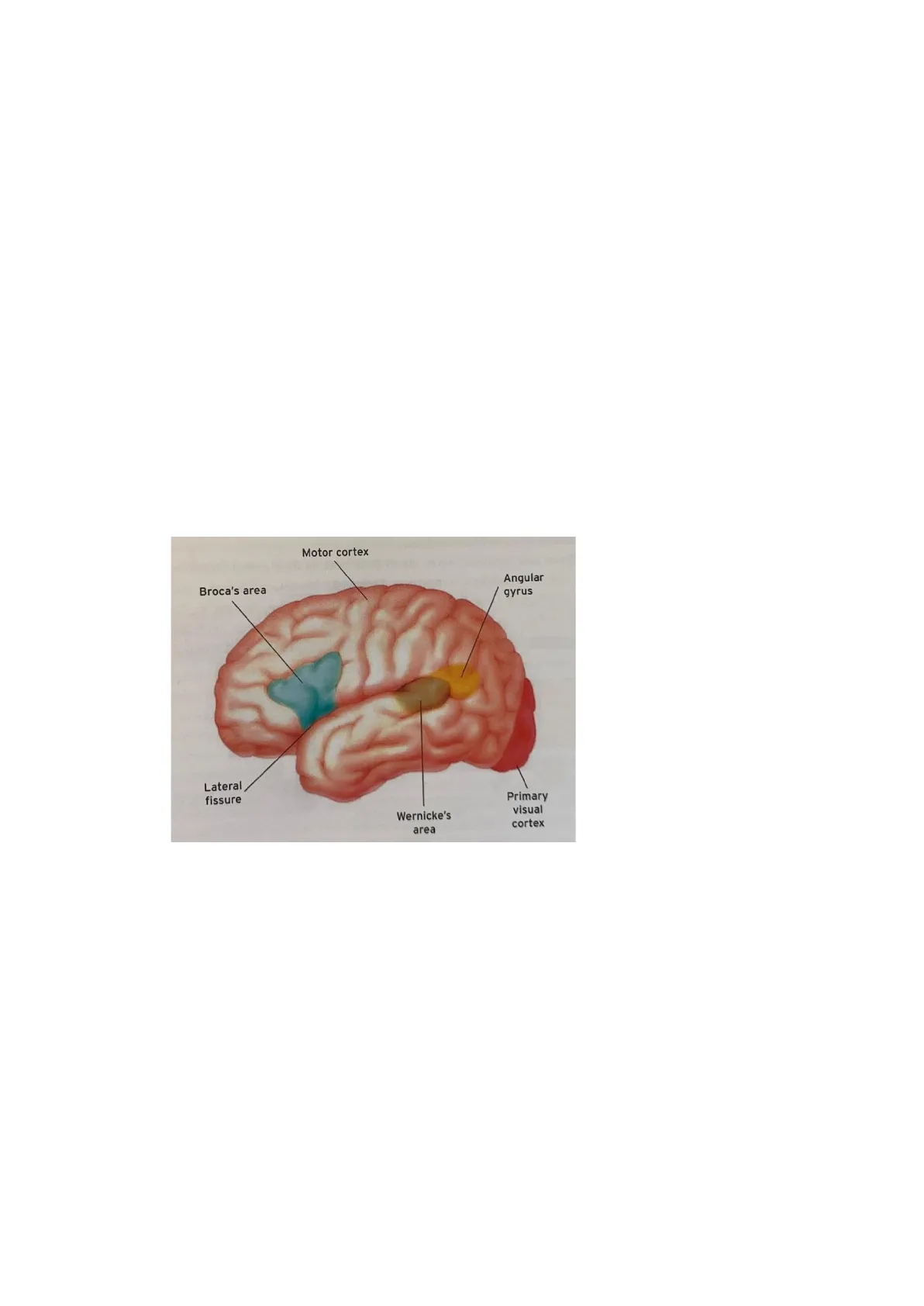
Following Paul Broca's seminal work in 1861 on his patient Tan, it was seen that there were at least two different aspects to language, since Tan could receive and understand language but could not create speech, so this was the first dissociation that was documented.
- Following Tan's death, Broca completed an autopsy of his brain, and found a lesion on the surface of the left frontal lobe. This area was required for speech production.
- Broca suggested that this area held 'motor images for the words that we are able to physically say, and therefore, in addition to being known as Broca's aphasia, at different points in history, a disorder in being able to speak fluently has been known as motor aphasia.
- It is interesting to note that the motor images of words that one can say are analogous to the visuokinesthetic engrams which are the physical movement actions that someone is able to perform
Carl Wernicke found the complete opposite pattern to that seen in Tan in two of his patients.. This time, these patients had no difficulty with their articulation (motor movements of their speech muscles) but they spoke rapidly and their speech was often nonsensical.
- Furthermore, they were also unable to comprehend the speech of others; therefore this was a double dissociation with Tan
- A post-mortem of Wernicke's patients revealed damage in the posterior left temporal region of the brain which subsequently became known as Wernicke's area.
It was suggested that this area was able to recognize the spoken word forms that a person hears as well as provide the spoken word forms when you are speaking yourself.
- As the disorder involves bringing in sensory information from the outside world (hearing what someone is saying) and recognizing it, in addition to Wernicke's aphasia, a difficulty in comprehension was also sometimes known as sensory aphasia.
- It is interesting to note that the 'sensory images of sounds are analogous to the face recognition units for faces that someone has encountered before
Motor cortex Angular gyrus Broca's area Lateral fissure Primary visual cortex Wernicke's area
These two regions of the brain, Broca's and Wernicke's areas, became accepted as critical for speech production and speech comprehension respectively.
- More importantly, it demonstrated that understanding and producing language were two distinct processes that appeared to occur in two separate areas of the brain.
Importantly, the two areas of the brain are anatomically linked through a fiber tract known as the arcuate fasciculus.
- Wernicke proposed that damage to this would disconnect the two areas from one another.
- In addition to not being able to communicate information between the two areas, Wernicke predicted that this damage would result in a third type of language problem or aphasia.
- The patient would be able to receive and comprehend speech because Wernicke's area was intact and the patient would also be able to create speech since Broca's area was intact.
- However, the patient would not be able to repeat what someone else said to them because to do this requires communication between hearing what someone says, understanding what they said (within Wernicke's area) and finding the words to copy the heard sound and then getting the speech mechanism to actually say, the word (within Broca's area).
-> A pattern that allows a patient to comprehend and create language but not to repeat what is said to them is known as conduction aphasia;
3 Word concept store
Transcortical motor aphasia Transcortical sensory aphasia
B C 1 2 Speech production (Broca's area) A Speech comprehension (Wernicke's area) Conduction aphasia
Motor output Auditory input
Figure 10.5 A representation of the Lichtheim-Wernicke model of language input and output showing three important centres and pathways between them which help to explain five different forms of language disorders
Ludwig Lichtheim took Wernicke's ideas and presented them as abstract diagrams; these original diagrams only had arrows linking different anatomical structures, but this idea caught on and subsequent thinkers started adding boxes to these diagrams. Over time, this evolved into the box and arrow movement that made this field take over.
While Lichtheim's model simply brought together Wernicke's ideas in a visual form, it was important for two reasons.
- First of all, he added a system for word meaning to the model which holds the concepts that we understand (kind of our dictionary of words).
- Second, similar to how Wernicke was able to predict the existence of conduction aphasia when he suggested the link between the speech and comprehension areas, Lichtheim's model was able to predict several new syndromes in addition to the three types of aphasia that had already been documented.
Three Types of Aphasia
- Within this Lichtheim-Wernicke model, transcortical motor aphasia occurs when
there is damage between the area that holds the word concepts and Broca's area.
- The result is that with the arcuate fasciculus (pathway A) between Broca's area (1) and Wernicke's area (2) intact, it is possible to repeat words; however, due to damage to pathway B, spontaneous speech is poor since it is necessary to have fluid and constant access to the word store to speak continuously and fluently.
- Transcortical sensory aphasia is caused by a disconnection between the word
concept area and the 'sensory images' in Wernicke's area in pathway C.
- The result is that with pathway A intact, spontaneous speech is OK but the damage to pathway C makes both comprehension and repetition of what is heard difficult.
Norman Geschwind, who coined the term behavioral neurology, used evidence from brain-damaged patients and neuroimaging to add more detail to this model.
- His work showed that the angular gyrus, an area at the front of the parietal, is involved in transferring information from the visual areas to Wernicke's area to allow us to 'translate' the squiggles that you see on a page or screen into a sound that you hear and understand in your mind.
- In addition, he identified Heschl's gyrus, an area within the auditory cortex , as being involved in the transfer of sounds to Wernicke's area where meaning can be extracted to allow us to comprehend what we are hearing.
Arcuate fasciculus Motor cortex Angular gyrus Broca's area Primary visual cortex Facial motor area Written input Primary auditory cortex Spoken input Wernicke's area Heschl's gyrus
Classification of Language Disorders
Eventually, a system was developed for how to classify patients with language disorders. A key divide in this system is whether speech production is fluent or non-fluent. This classification enables the explanation of aphasias where a patient has suffered damage toseveral cortical areas which therefore give rise to mixed or global aphasia that does not neatly fit into one of the five types described above.
Types of Aphasia
Fluent? Is speech fluent? Comprehends? No Can the person comprehend spoken messages? Yes Repeats? Can the person repeat words or phrases? Global aphasia Mixed transcortical aphasia Broca's aphasia Transcortical motor aphasia Wernicke's aphasia Transcortical sensory aphasia Conduction aphasia Anomic aphasia
Figure 10.7 Classification of different types of aphasia based on fluency of speech, comprehension of spoken language and ability to repeat words or phrases Source: Aphasia Definitions from Aphasia.org
Demise of Neurobiological Models
However, there are a number of reasons that eventually this approach proved unsatisfactory.
- As language was the first cognitive function to be documented and then
systematically codified by neurologists, there has been a lot more development of
the field than with many other aspects of cognition.
- Given that clinical observations are happening around the world by different people trained in different systems, there has possibly been a lack of a common language for how to document and talk about the disorders.
- Second, due to the system of arteries that feed different parts of the brain, damage
that affects the language areas is not uncommon, especially in older age.
- As a result, at least clinically, many more cases are seen of language disorders, and this allows more research and documentation than for example, cases of pure prosopagnosia which is incredibly rare.
- Language is an incredibly complex system and there will therefore be multiple ways in which it can break down.
- Finally, all of the research and theorizing before Geschwind was conducted before
the information processing revolution.
- This way of seeing cognitive functions and the new field of cognitive neuropsychology freed researchers from the prevailing methodology, giving them a new method for thinking about language.
Can’t find what you’re looking for?
Explore more topics in the Algor library or create your own materials with AI.
