Glands: Endocrine System, Hormone Production and Homeostasis
Slides about Glands. The Pdf explores the endocrine system, focusing on major glands and hormone production. The Presentation details the functions of the thyroid gland, hormone regulation, and their actions. It also includes a Q&A section on hormonal functions and pituitary glands, covering topics like homeostasis, hGH release, oxytocin, and ADH in Biology for University students.
See more24 Pages


Unlock the full PDF for free
Sign up to get full access to the document and start transforming it with AI.
Preview
Glands of the Endocrine System
Glands
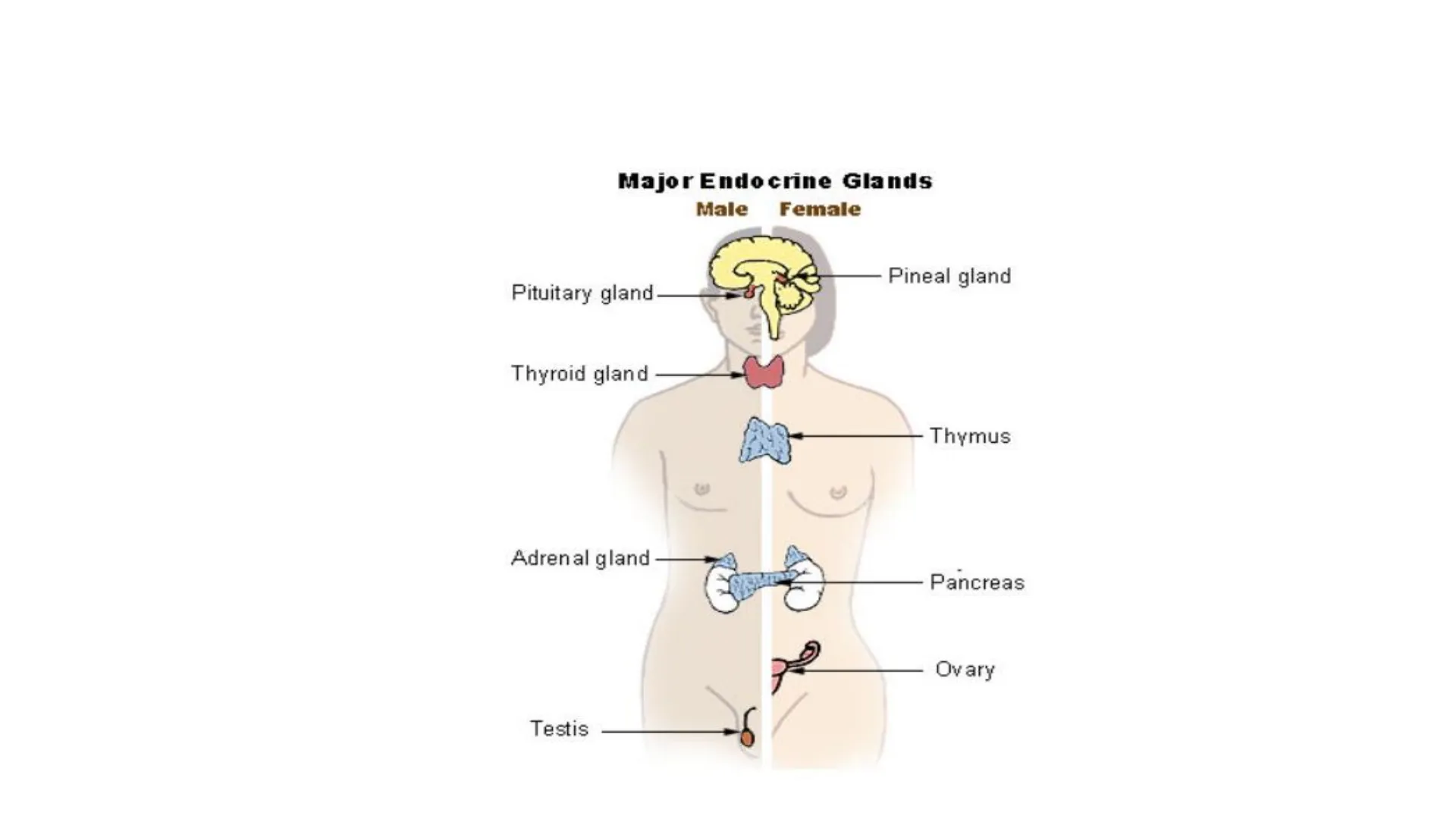
Major Endocrine Glands
Male
Female
- Pineal gland
- Pituitary gland
- Thyroid gland
- Thymus
- Adrenal gland
- Pancreas
- Ovary
- Testis· Thyroid Gland and Hormone Production
. The thyroid gland consists of 2 lobes connected by an isthmus and is relatively large in size. It is located caudal to the larynx, adherent to the front of the trachea, and is able to concentrate iodine from the bloodstream.
. The histology of the thyroid gland consists of follicles (acinus) which are sacs of stored hormone (colloid) surrounded by acinar cells that produce iodine-containing thyroid hormones: Thyroxine (T4) and Triiodothyronine (T3).
. The production of thyroid hormone involves the following steps: trapping iodide by follicular cells, synthesis of glycoprotein thyroglobulin (TGB), iodination of tyrosine in the colloid, formation of T3 & T4 by coupling, and secretion of thyroid hormone into the blood.
. The control of thyroid hormone secretion is regulated by Thyrotropin-releasing hormone (TRH) from the hypothalamus and Thyroid-stimulating hormone (TSH) from the anterior pituitary which stimulates the release of T3 and T4 depending on blood levels and metabolic rate.
. The actions of thyroid hormones include increasing basal metabolic rate, stimulating synthesis of Na+/K+ ATPase, increasing body temperature (calorigenic effect), and stimulating protein synthesis.
Thyroid Gland Actions
Thyroid Gland
Actions of Thyroid Hormones
- TRH, carried by hypophyseal portal veins to anterior pituitary, stimulates release of TSH by thyrotrophs
- TSH released into blood stimulates thyroid follicular cells
- Elevates basal metabolic rate
- Stimulates synthesis of Na+/K+ ATPase
- Increases body temperature (calorigenic effect)
- Stimulates protein synthesis
- Low blood levels of T3 and T3 or low metabolic rate stimulate release of Hypothalamus
- Elevated T3inhibits release of TRH and TSH (negative feedback)
- T3 & T4 cause an increase in metabolic rate, protein synthesis, breakdown of fats, and use of glucose for ATP production
- Calcitonin from the parafollicular cells is responsible for building of bone
- Administration of thyroid hormones increases basal metabolic rate (BMR) in adults
- Concentration of circulating thyroid hormones is relatively constant and essential for normal growth and development
- Effects on nerves, carbohydrates, growth & development, skeletal muscle, heart muscle, and cholesterol lowering
- Thyroid secretes mostly T4 (80 µg/d) in adult human, while T3 is more active with faster turnover and better T3 receptor binding
- T3 activates T3 receptor in cell nucleus, turning on protein synthesis
- T4 is largely a prohormone and is easily converted to T3 in outside organs such as the liver, kidney, and spleen•
Thyroid Hormones and Disease States
Thyroid Hormones and Thyroid Disease
.Thyroid hormones include T3 and T4
Properties of T3
- T/2 in blood: 2 days
- Start of action (nucleus): 4h
- Maximum effect: 2-3 days
- % bound in blood: 99.8
- Free level in plasma: 0.4 ng/dl
Properties of T4
- T/2 in blood: 6 days
- Start of action (nucleus): 24h
- Maximum effect: 10 days
- % bound in blood: 99.98
- Free level in plasma: 2 ng/dl
.02 consumption in humans 3-5x effect of T4 on a molar basis
Thyroid Disease Symptoms
- Decreased BMR
- Slow pulse
- Feeling cold, wanting extra clothing
- Weight gain
- Sluggishness
- Coarse skin
- Myxoedema symptoms
Hypothyroidism Goitre
- Thyroid is dependent upon constant supply of dietary iodide
- In iodine deficiency, gland swells in response
Causes of Hypothyroidism
- Common, mainly in females
- Common causes include simple goitre, autoimmune attack on the thyroid, acquired hypothyroidism, and congenital hypothyroidism
- Replacement therapy includes Levothyroxine sodium (T4) and Liothyronine sodium (T3)
Causes of Hyperthyroidism
- Overactivity of thyroid gland, typically resulting from Graves' disease or thyroid toxic adenoma
Signs and Symptoms of Hyperthyroidism
- Increased BMR
- Goitre
- Weight loss
- Anxiety, irritability
- Heat intolerance
.Treatment of hyperthyroidism involves antithyroid drugs and aims to block coupling of thyroid hormones and TGB synthesis
Thyroid Diseases and Treatment Options
Thyroid diseases and treatment options
- Radioactive lodine is the preferred treatment for older patients and is the first line treatment in the USA, with a single dose of 131I by mouth being administered (up to 90% respond). It destroys the thyroid, takes 6 months for full effect, and can lead to long-term hypothyroidism. However, it is not for pregnant women.
- Surgery is recommended for severe hyperthyroidism or a large goitre, with partial thyroidectomy being performed after an ultrasound scan and pretreatment with carbimazole. Beta blockers are also used to manage symptoms.
- Thyroid hormone synthesis and secretion are measured using various tests, including plasma T4 & T3 (free & total), plasma TSH (low indicates high T4 & T3), and measuring TRH to establish where the defect comes from.
- The diagnosis of thyroid disorders involves distinguishing between hyperthyroidism and hypothyroidism based on different cardiovascular, CNS, muscle, metabolic, skin, hair, voice, goitre, and eye symptoms.
- Thyroid diseases can manifest as functioning adenoma of the thyroid gland, causing atrophy of the left lobe with a protruding tumour and possible hypertrophy of the right lobe. This can lead to thyrotoxicosis, independent of TSH.
- The main thyroid hormones are Triiodothyronine (T3) and Thyroxine (T4). They affect metabolism and growth, and are controlled via the pituitary and hypothalamus. Hypothyroidism can be treated with T4, while hyperthyroidism can be treated with antithyroid drugs, radioactive iodine, or surgery..
Thyroid Gland Hormone Production and Regulation
The thyroid gland, located below the larynx, is a large endocrine gland responsible for producing thyroid hormones, including thyroxine (T4) and triiodothyronine (T3). These hormones are synthesized within the follicles, sac-like structures containing stored hormones and iodine. Follicular cells produce and release thyroid hormones into the bloodstream, with 80-90% being T4 and 10-20% being T3. Control of thyroid hormone secretion is regulated by the hypothalamus and anterior pituitary through the release of thyrotropin-releasing hormone (TRH) and thyroid- stimulating hormone (TSH).
Thyroid Hormones in Protein Synthesis and Metabolism
Protein synthesis is stimulated by thyroid hormones, which increase the basal metabolic rate, stimulate Na+/K+ ATPase synthesis, and raise body temperature. T3 and T4 are released into the blood by thyroid follicular cells, and low blood levels of these hormones or a low metabolic rate stimulate their release. TRH, carried by hypophyseal portal veins to the anterior pituitary, stimulates the release of TSH by thyrotrophs, which in turn stimulates thyroid follicular cells. Elevated T3 inhibits the release of TRH and TSH through negative feedback.
Thyroid Hormones Impact on Metabolic Rate and Treatment
Thyroid hormones T3 and T4 have different effects on basal metabolic rate, with T3 having a stronger effect. Hypothyroidism and hyperthyroidism are caused by various factors, including iodine deficiency, autoimmune diseases, and genetic defects. Treatment options involve replacement therapy, monitoring blood hormone levels, and using antithyroid drugs to block hormone production or uptake.
Thyroid Treatment and Diagnosis Insights
Insight into Thyroid Treatment and Diagnosis
Radioactive iodine is a preferred treatment for older patients with hyperthyroidism, while surgery is considered for severe cases. Antithyroid drugs like carbimazole can be used as pretreatment before surgery. Various tests are used to diagnose thyroid disorders, including plasma T4, T3, and TSH levels. Hypothyroidism and hyperthyroidism exhibit different symptoms and signs, and can be treated with T4 and antithyroid drugs respectively. Thyroid hormones are controlled by the pituitary and hypothalamus.·
Thyroid Gland Location and Histology
- Thyroid Gland
. An endocrine gland located caudal to the larynx and adherent to the front of the trachea.
- What is the histology of the thyroid gland?
· The thyroid gland is comprised of 2 lobes connected by an isthmus.
- Histology of the Thyroid Gland
· The thyroid gland is composed of follicles (acinus) which are sacs of stored hormone surrounded by acinar cells that produce iodine-containing thyroid hormones.
- What is the process of iodination of tyrosine residues by the thyroperoxidase- H202 complex?
. The production of thyroid hormones involves the iodination of tyrosine residues within the structure of thyroglobulin by the thyroperoxidase-H202 complex.
- Synthesis of Thyroid Hormones
· Thyroid hormones are formed within the structure of thyroglobulin (TGB) through a process of iodination of tyrosine residues and the formation of T3 and T4 by coupling.
- What controls the secretion of thyroid hormones?
The secretion of thyroid hormones is controlled by thyrotropin- releasing hormone (TRH) from the hypothalamus and thyroid- stimulating hormone (TSH) from the anterior pituitary.
- Actions of Thyroid Hormones
Thyroid hormones increase the basal metabolic rate, stimulate the synthesis of Na+/K+ ATPase, increase body temperature, and stimulate protein synthesis.
- What are the importance of thyroid hormones?
Thyroid hormones are essential for normal growth and development, affect the metabolism and functioning of various body tissues, and have a calorigenic effect.
- Properties of Thyroid Hormones
Thyroid hormones mostly secrete T4, with T3 being the more active hormone that activates T3 receptors in the cell nucleus, turning on protein synthesis.
- What are the symptoms of hypothyroidism?
Symptoms of hypothyroidism include slow pulse, feeling cold, weight gain, sluggishness, coarse skin, and myxoedema.·
Goitre and Hyperthyroidism Causes
- Goitre
. Goitre is characterized by the gross enlargement of the thyroid gland in iodine deficiency, which can be treated with iodine in the diet.
- What are the causes of hyperthyroidism?
. Overactivity of the thyroid gland, usually due to Graves' disease, an autoimmune disease, or thyroid toxic adenoma, is the main cause of hyperthyroidism.
- Treatment of Hyperthyroidism
. Treatment of hyperthyroidism aims to block coupling or inhibit thyroid peroxidase, block the conversion of T4 to T3, and block TGB synthesis using antithyroid drugs, radioactive iodine, or surgery.
- How is the diagnosis of thyroid disorders conducted?
· Diagnosis of thyroid disorders involves testing plasma T4 & T3, TSH levels, and TRH to establish the source of the defect.
- Cardiovascular Symptoms in Thyroid Diseases
. Thyroid diseases can lead to irregular, increased heart rate and cardiac output in hyperthyroidism, and a low heart rate and cardiac output in hypothyroidism.
- What are the symptoms of hyperthyroidism?
Symptoms of hyperthyroidism include increased basal metabolic rate, heat intolerance, anxiousness, weight loss, and goitre.
- Functioning Adenoma of the Thyroid Gland
A functioning adenoma of the thyroid gland is characterized by atrophy of the left lobe with a protruding tumor and can cause thyrotoxicosis independent of TSH.
- What are the main thyroid hormones and their effects?
The main thyroid hormones are triiodothyronine (T3) and thyroxine (T4), which affect metabolism and growth and are controlled via the pituitary and hypothalamus.
- Thyroid Hormone Synthesis and Secretion
The synthesis and secretion of thyroid hormones can be measured using various tests such as plasma T4 & T3 levels, TSH levels, and TRH to establish the source of the defect.
- What are the symptoms of hypothyroidism?
Symptoms of hypothyroidism include increased basal metabolic rate, excess sweating, heat intolerance, excess eating, and weight loss.
Can’t find what you’re looking for?
Explore more topics in the Algor library or create your own materials with AI.
