Session 2: Dealing with Technical Document, Efa Torrealedua Tsidmn Presentation
Slides from Efa Torrealedua Tsidmn about Session 2: Dealing with Technical Document. The Pdf focuses on technical English, covering food vocabulary, technical documentation, and comparative/superlative adjectives for high school Languages students.
See more15 Pages


Unlock the full PDF for free
Sign up to get full access to the document and start transforming it with AI.
Preview
STEPS TO CREATE TECHNICAL DOCUMENTATION
SESSION 2: DEALING WITH TECHNICAL DOCUMENT
A: IIN
Food. Healthy food pyramid. Eating disorders. Comparative and superlative adjectives. Have something done. Understanding and producing written documents. Describing a chart.
EFA TORREALEDUA · TSIDMN · INGLÉS TÉCNICO II 2023/24A= =Z
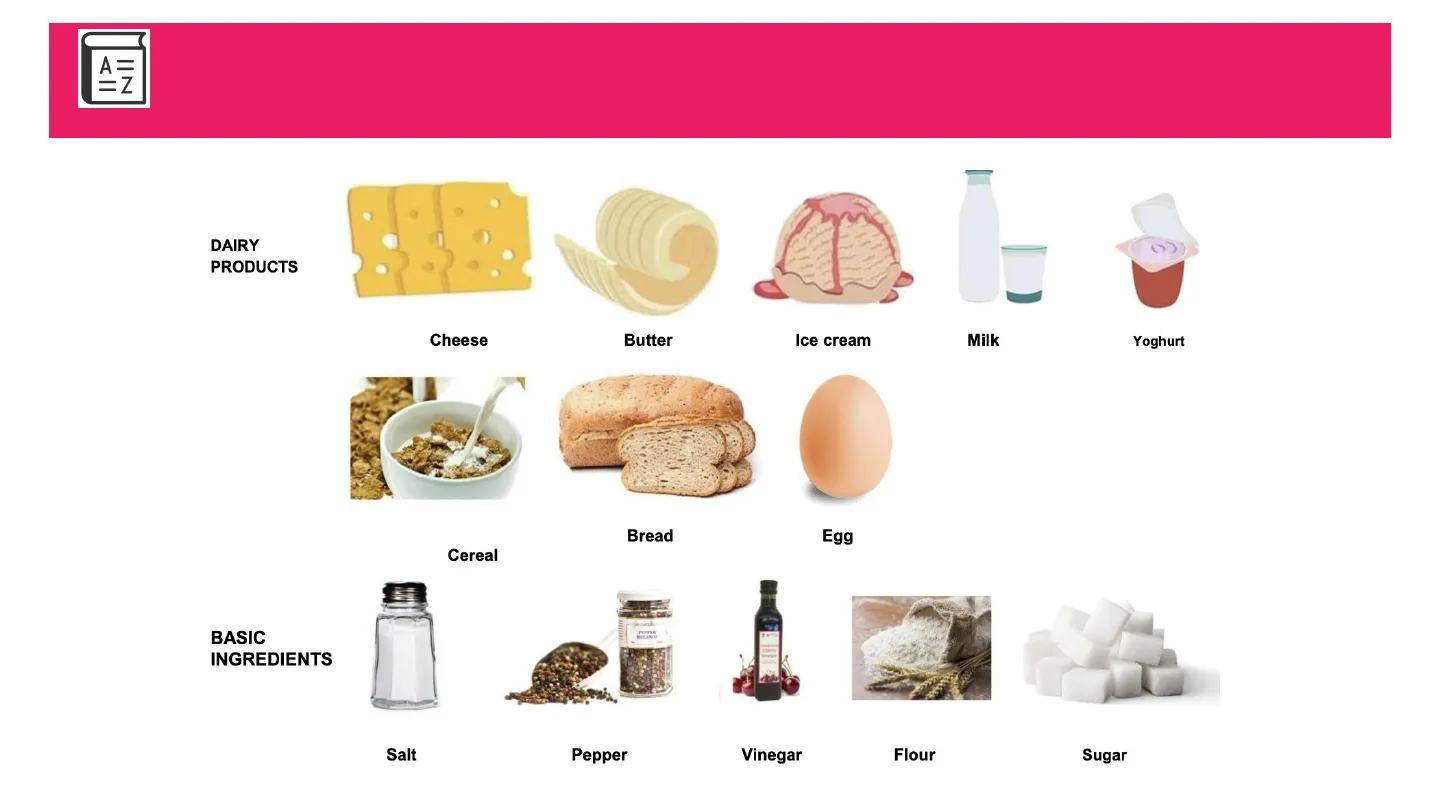
VOCABULARY FOOD
DAIRY PRODUCTS
- Cheese
- Butter
- Ice cream
- Milk
- Yoghurt
BASIC INGREDIENTS
- Bread
- Egg
- Cereal
- Cherry
- Salt
- Pepper
- Vinegar
- Flour
- SugarA= =Z
FOOD. VEGETABLES
EFA TORREALEDUA . TSIDMN · INGLÉS TÉCNICO II
- Peas
- Mushrooms
- Pumpkin
- Cauliflower
- Raddish
- Onion
- Celery
- Artichoke
- Carrot
- Potato
- Lettuce
- Tomato
- Eggplant
- Brussels sprout
- Zucchini
- Cabbage
- Corn
- Asparagus
- Beetroot
- Broccoli
- Pepper
- Sweet potato
- Cucumber
- Green beans
VOCABULARY FOOD. FRUIT
EFA TORREALEDUA . TSIDMN · INGLÉS TÉCNICO II
- Orange
- Raspberries
- Banana
- Plum
- Coconut
- Strawberry
- Cherry
- Pear
- Quince
- Lemon
- Lime
- Papaya
- Watermelon
- Peach
- Nectarine
- Blueberry
- Peach
- Apple
- Pineapple
- Lychee
- Kiwi
- Grape
- Blackcurrant
- Blackberries
VOCABULARY HEALTHY FOOD PYRAMID
EFA TORREALEDUA . TSIDMN · INGLÉS TÉCNICO II
The Food Pyramid
For adults, teenagers and children aged five and over
Not needed for good health.
Foods and drinks high in fat, sugar and salt
NOT every day !
Most people consume snacks high in fat, sugar and salt and sugar sweetened drinks up to 6 times a day (Healthy Ireland Survey 2016). There are no recommended servings for Top Shelf foods and drinks because they are not needed for good health.
Fats, spreads and oils
In very small amounts
Use as little as possible. Choose mono or polyunsaturated reduced-fat or light spreads. Choose rapeseed, olive, canola, sunflower or corn oils. Limit mayonnaise, coleslaw and salad dressings as they also contain oil. Always cook with as little fat or oil as possible - grilling, oven-baking, steaming, boiling or stir-frying.
Meat, poultry, fish, eggs, beans and nuts
2 Servings a day
Choose lean meat, poultry (without skin) and fish. Eat oily fish up to twice a week. Choose eggs, beans and nuts. Limit processed salty meats such as sausages, bacon and ham.
Milk, yogurt and cheese
3 Servings a day
5 for children age 9-12 and teenagers age 13-18
Choose reduced-fat or low-fat varieties. Choose low-fat milk and yogurt more often than cheese. Enjoy cheese in small amounts. Women who are pregnant or breastfeeding need 3 servings a day.
Wholemeal cereals and breads, potatoes, pasta and rice
3-5* Servings a day
Up to 7" for teenage boys and men age 19-50
Wholemeal and wholegrain cereals are best. Enjoy at each meal. The number of servings depends on age, size, if you are a man or a woman and on activity levels. Watch your serving size and use the Daily Servings Guide below .*
Vegetables, salad and fruit
5-7 Servings a day
Base your meals on these and enjoy a variety of colours. More is better. Limit fruit juice to unsweetened, once a day.
Needed for good health. Enjoy a variety every day.
VOCABULARY EATING DISORDERS
EFA TORREALEDUA . TSIDMN · INGLÉS TÉCNICO II
An eating disorder is when you have an unhealthy attitude to food, which can take over your life and make you ill. It can involve eating too much or too little, or becoming obsessed with your weight and body shape. Men and women of any age can get an eating disorder, but there are treatments that can help, and you can recover from an eating disorder.
Types of eating disorders
The most common eating disorders are:
- Anorexia nervosa - when you try to keep your weight as low as possible by not eating enough food, exercising too much, or both.
- Bulimia - when you sometimes lose control and eat a lot of food in a very short amount of time (binging) and are then deliberately sick, use laxatives (medication to help you poo), restrict what you eat, or do too much exercise to try to stop yourself gaining weight.
- Binge eating disorder (BED) - when you regularly lose control of your eating, eat large portions of food all at once until you feel uncomfortably full, and are then often upset or guilty.
- Other specified feeding or eating disorder (OSFED) - when your symptoms don't exactly match those of anorexia, bulimia or binge eating disorder, but it doesn't mean it's a less serious illness.
OSFED is the most common, then binge eating disorder and bulimia. Anorexia is the least common.
GRAMMAR COMPARATIVE AND SUPERLATIVE ADJECTIVES
EFA TORREALEDUA . TSIDMN . INGLÉS TÉCNICO II
- Comparative adjectives -> compare two things. Compara dos cosas/personas.
- Lisa is older than Clara = Lisa es mayor que Clara.
- Superlative adjectives -> make a comparison between more than two things. They compare one thing in a group with all the other things in that group. Compara algo que destaca dentro de un grupo.
- Lisa is the fastest runner = Lisa is the corredora más rápida.
- Which cake is the biggest? = ¿ Cuál es la tarta más grande?
- This book is the most interesting I've ever read. = Este es el libro más interesante que me he leído.
GRAMMAR COMPARATIVE AND SUPERLATIVE ADJECTIVES
EFA TORREALEDUA . TSIDMN . INGLÉS TÉCNICO II
| Adjective | Comparative | Superlative |
|---|---|---|
| Adjetivos que tienen una sílaba o terminan con -y | ||
| Long | My book is longer than yours. = Mi libro es más largo que el tuyo. | This book is the longest. = Este libro es el más largo (de todos). |
| Big (CVC) | Tiger is bigger than a cat. = El tigre es más grande que el gato. | The elephant is the biggest animal. = El elefante es el animal más grande. |
| Dry (-y) | These sheets are drier than those ones. = Estas sábanas están más secas que esas. | You are the craziest person I know. = Eres la persona más alocada que conozco. |
| Adjetivos de dos sílabas o más | ||
| Interesting | The movie is more interesting than the book. = La película es más interesante que el libro. | This movie is the most interesting one. = Esta película es la más interesante (de las que he visto). |
| Adjetivos irregulares | ||
| Good | Harry is better than Voldemort. = Harry es mejor que Voldemort. | Harry P. is the best character. = Harry P. es el mejor personaje (de la película). |
| Bad | Voldemort is worse than Harry. = Voldemort es peor que Harry. | Voldemort is the worst character. = Voldemort es el peor personaje. |
*CVC = consonante + vocal + consonante (hot, big, thin). *En las oraciones comparativas, siempre añadimos than (que) detras del adjetivo. Y en las superlativas, siempre añadimos the delante del adjetivo.
GRAMMAR COMPARATIVE AND SUPERLATIVE ADJECTIVES
EFA TORREALEDUA . TSIDMN · INGLÉS TÉCNICO II
Comparativo de igualdad
-> No diferenciamos por sílabas. Una única norma para todos los adjetivos.
- This sofa is as long as yours. = Este sofá es tan largo como el tuyo. (1 sílaba)
- This movie is as interesting as its book. = Esta película es tan interesante como su libro. (2 sílabas o más)
- This work is as good as the previous one. = Este trabajo es tan bueno como el anterior. (Irregular)
- This sofa is not as long as yours. = Este sofá no es tan largo como el tuyo. (1 sílaba)
- This movie is not as interesting as its book. = Esta película no es tan interesante como su libro. (2 sílabas o más)
- This work is not as good as the previous one. = Este trabajo no es tan bueno como el anterior. (Irregular)
GRAMMAR COMPARATIVE AND SUPERLATIVE ADJECTIVES
EFA TORREALEDUA . TSIDMN · INGLÉS TÉCNICO II
SUMMARY
| Comparative | Superlative |
|---|---|
| adjective + er + than | the + adjective + est |
|
|
| more + adjective + than | the most + adjective |
|
|
Si un adjetivo ya termina con "e", no hace falta añadirle otra "e" al sufijo. Es decir, safe (seguro) en su forma comparativa es safer y en su forma superlative safest. NO safeer, NO safeest.
GRAMMAR HAVE SOMETHING DONE
ORREALEDUA . TSIDMN · INGLÉS TÉCNICO II
Cuando alguien hace algo por nosotros, en este caso, un profesional, en inglés usamos la forma "have something done" para expresarlo. Por ejemplo, cuando nos cortamos el pelo, es una peluquera o un peluquero quien lo hace; cuando pintamos nuestra casa es un pintor o una pintora quien realiza la acción por nosotros; o cuando llevamos el coche a reparar, es un mecánico o una mecánica quien nos lo arregla.
Estructura presente: sujeto + have/has + object + past participle (-ed / 3ª columna)
- I have my hair cut once a month. = Me corto el pelo una vez al mes.
- He has his bike fixed every week. = Arregla su bici todas las semanas.
Estructura pasado: sujeto + had + object + past participle (-ed / 3ª columna)
- I had my hair cut last Friday. = Me corte el pelo el viernes pasado.
- They had their house painted. = Se han pintado la casa.
- Sarah had her roof repaired. = Sara reparo su techo.
COMMUNICATION UNDERSTANDING WRITTEN DOCUMENTS
EFA TORREALEDUA . TSIDMN · INGLÉS TÉCNICO II
STRUCTURE (listing points)
- I will begin by stating ...
- First of all
- Secondly,
- Now,
- Moving on to ... ,
- Finally,
INTRODUCTION
- I would like to present you the results of our research into ...
- When we first began to look into the question of ... , we thought ...
GENERALIZING
- It is well known that ...
- Many studies have shown that ....
- ... has established clearly that ...
EMPHASIZING
- I'd like to emphasize ...
GIVING EXAMPLES
- For instance.
- such as.
CONTRASTING
- On the other hand, ...
- In contrast, ...
- However, ...
CONCLUDING
- So, ...
- In conclusion,
- To sum up, ...
- Finally, ...
- ... we can see ...
- I'd like to say ...
- these studies show ...
COMMUNICATION RESEARCH ARTICLES
EFA TORREALEDUA . TSIDMN · INGLÉS TÉCNICO II
STRUCTURE
Introduction: contains background information.
- Includes previous studies.
- Explains what has not been investigated previously.
- Statement of the objective/purpose of the research.
- We assessed whether ...
- The aim of our study was to determine whether ... We investigated the ...
- This study evaluated the ...
Methods:
- Gives details of the people who were studied (the participants).
- Information about any intervention carried out (medication, advice, operations) Gives details of the steps taken
- Information about statistical analysis.
Results: tells the findings of the study.
- We have shown that ...
- Our study confirmed that ...
Discussion:
- Contains explanations.
- These findings provide strong evidence that ... These results suggest that ...
- This study failed to show that ...
- It may list limitations or parts of the study which were unsatisfactory
Conclusion
Acknowledgements: thank people who have helped in the research.
References: books and articles which the authors have used.
Can’t find what you’re looking for?
Explore more topics in the Algor library or create your own materials with AI.
