The Endocrine System: Hypothalamus and Pituitary Functions
Slides from Professor Jerome Swinny about The Endocrine System. The Pdf, a university-level Biology presentation, explores the general functions of hormones, comparing the nervous and endocrine systems, and detailing oxytocin and ADH.
See more25 Pages

Unlock the full PDF for free
Sign up to get full access to the document and start transforming it with AI.
Preview
The Endocrine System
Hypothalamus and Pituitary
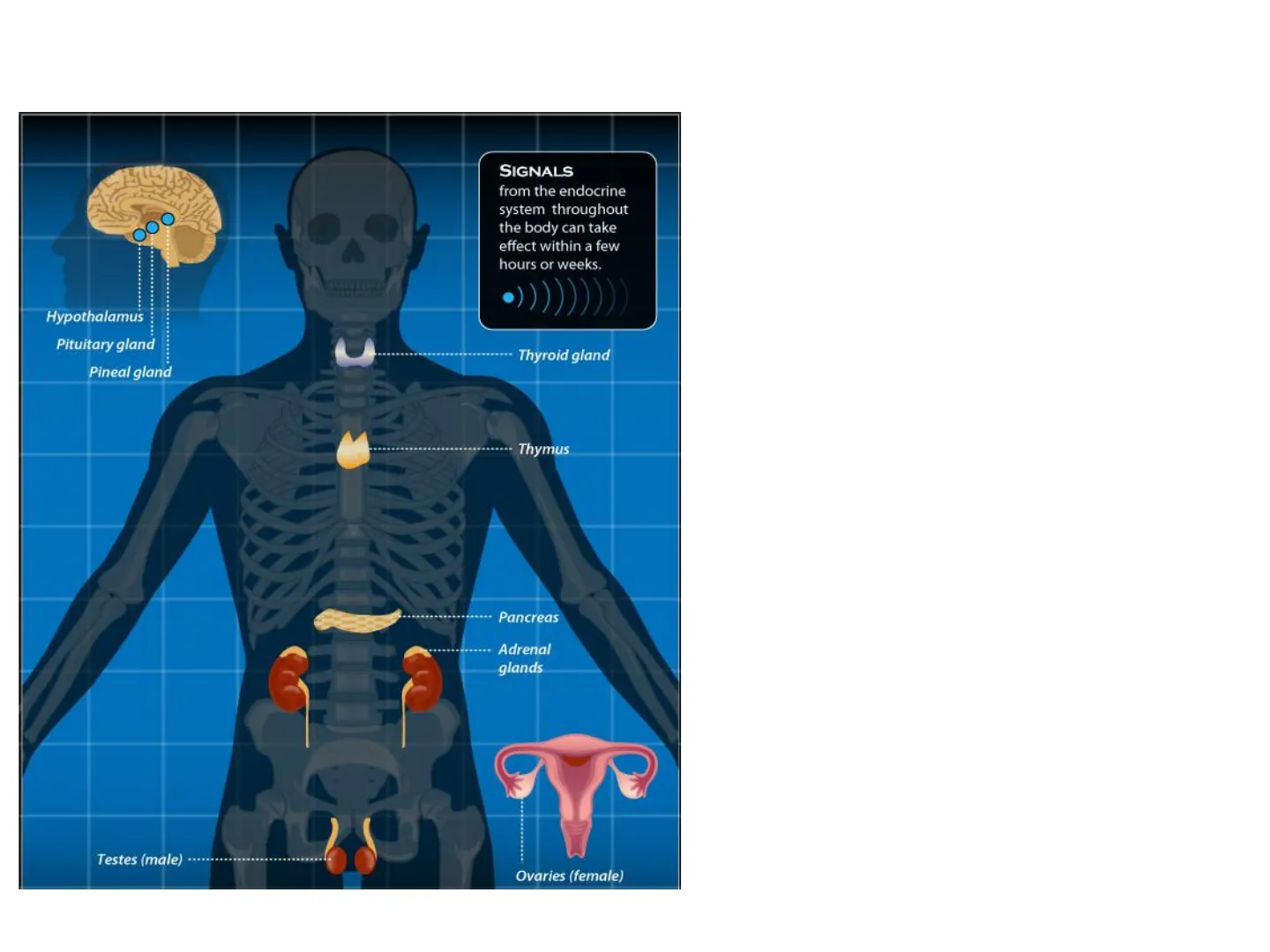
Endocrine System Signals
SIGNALS from the endocrine system throughout the body can take effect within a few hours or weeks.
Glands of the Endocrine System
Hypothalamus Pituitary gland Thyroid gland Pineal gland Thymus Pancreas Adrenal glands Testes (male) Ovaries (female)
Learning Objectives/Outcomes
- Compare and contrast the roles of the nervous and endocrine systems in homeostasis
- Describe the connection of the anterior/posterior pituitary gland to the hypothalamus
- List and describe the functions of the major hormones secreted by the hypothalamus and anterior/posterior pituitary gland and any drugs used to treat disorders
Professor Jerome Swinny
Nervous and Endocrine Systems
- Act together to coordinate functions of all body systems
- Nervous system
- Nerve impulses/ Neurotransmitters
- Faster responses, briefer effects, acts on specific target
- Endocrine system
- Hormone - mediator molecule released in 1 part of the body but regulates activity of cells in other parts
- Slower responses, effects last longer, broader influence
General Functions of Hormones
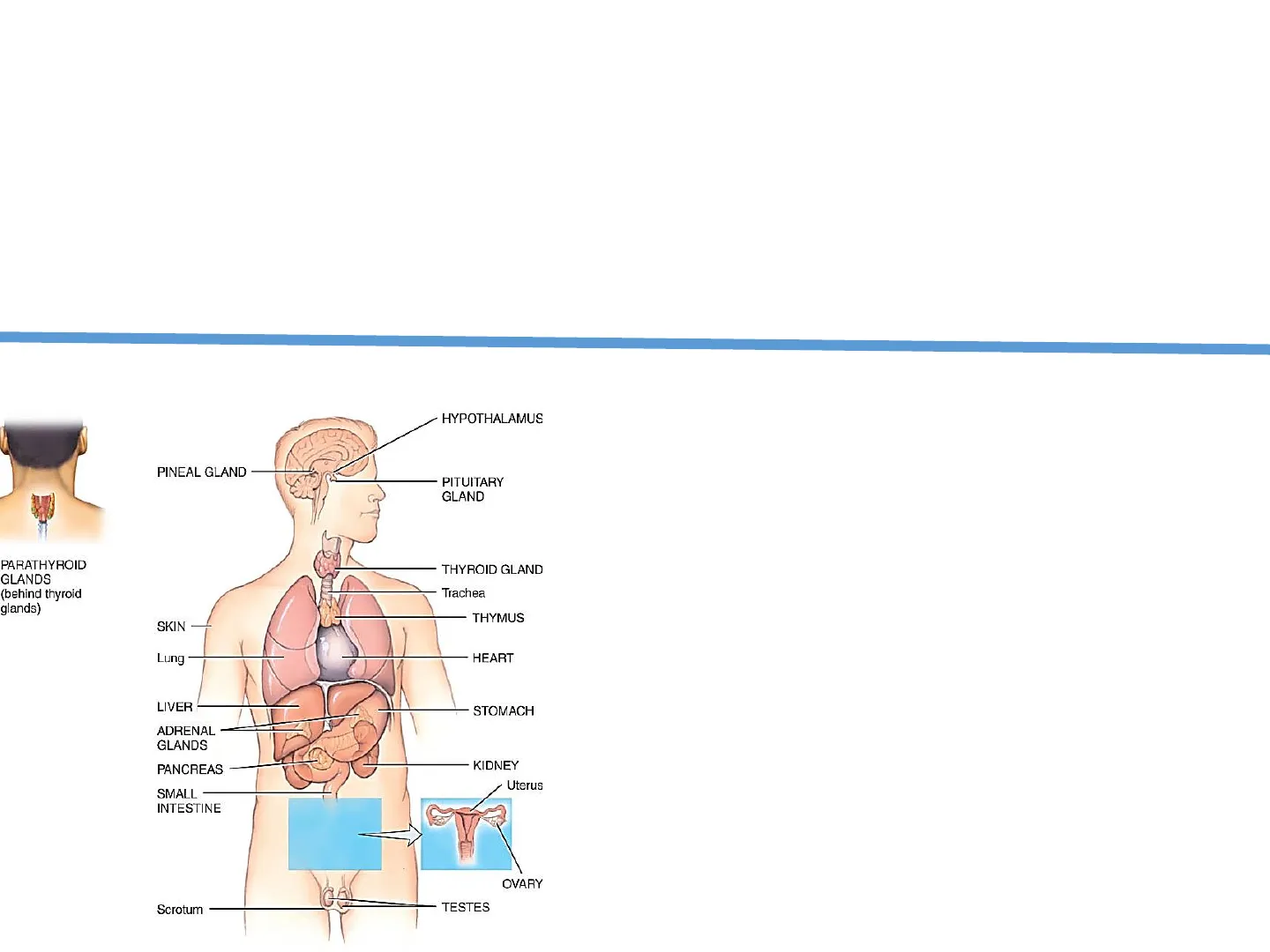
HYPOTHALAMUS PINEAL GLAND PITUITARY GLAND THYROID GLAND Trachea THYMUS SKIN Lung HEART LIVER STOMACH ADRENAL GLANDS PANCREAS Uterus SMALL INTESTINE OVARY Scrotum TESTES
- Help regulate:
- extracellular fluid
- metabolism
- biological clock
- contraction of cardiac & smooth muscle
- glandular secretion
- some immune functions
- Growth & development
- Reproduction
- Hormones have powerful effects when present in very low concentrations.
PARATHYROID GLANDS (behind thyroid glands) KIDNEY
Types of Glands
2 kinds of glands
- Exocrine - secrete products into ducts which empty into body cavities or body surface e.g. sweat, oil, mucous, & digestive glands
- Endocrine - ductless
- Secrete products (hormones) into interstitial fluid, diffuse into blood
- Endocrine glands include
- Pituitary, thyroid, parathyroid, adrenal and pineal glands
- Hypothalamus, thymus, pancreas, ovaries, testes, kidneys, stomach, liver, small intestine, skin, heart, adipose tissue, and placenta not exclusively endocrine glands
Hormone Receptors
Endocrine cell Blood capillary Circulating hormone Hormone receptor Distant target cells
- Hormones only affect target cells with specific membrane proteins called receptors
Regulation of Receptor Number
- Receptors constantly synthesized and broken down
Down-regulation
excess hormone leads to a decrease in number of receptors. Receptors undergo endocytosis and are degraded decreases sensitivity of target cell to hormone
Up-regulation
deficiency of hormone leads to an increase in the number of receptors target tissue becomes more sensitive to the hormone
Types of Hormones
- Hormone types
- Circulating hormones - circulate in blood throughout body
- Local hormones - act locally
- Paracrine - act on neighboring cells
- Autocrine - act on the same cell that secreted them
Endocrine cell Blood capillary Circulating hormone Hormone receptor Distant target cells (a) Circulating hormones Paracrine receptor O O O Paracrine Paracrine cell Nearby target cell Autocrine receptor Autocrine cell Autocrine (b) Local hormones (paracrines and autocrines) Figure 18.02 Tortora - PAP 12/e Copyright @ John Wiley and Sons, Inc. All rights reserved.
Chemical Classes of Hormones
- Lipid-soluble - use transport proteins
- Steroid
- Thyroid
- Nitric oxide (NO)
- Water-soluble - circulate in "free" form
- Amine
- Peptide/ protein
- Eicosanoid
Mechanisms of Hormone Action
- Response depends on both hormone and target cell
- Lipid-soluble hormones bind to receptors inside target cells
- Water-soluble hormones bind to receptors on the plasma membrane
- Activates second messenger system
- Amplification of original small signal
- Responsiveness of target cell depends on
- Hormone's concentration
- Abundance of target cell receptors
- Influence exerted by other hormones
- Permissive (steroid priming of hypothalamus/pituitary)
- Synergistic (glucagon and epinephrine
- Antagonistic effects (insulin and glucagon)
Lipid-soluble Hormones
Free hormone Blood capillary Transport protein 1 Lipid-soluble hormone diffuses into cell 2 Activated receptor-hormone complex alters gene expression Nucleus Receptor DNA Cytosol mRNA 3 Newly formed mRNA directs synthesis of specific proteins on ribosomes Ribosome New protein 4 New proteins alter cell's activity Target cell
- Hormone diffuses through phospholipid bilayer & into cell
- Binds to receptor turning on/off specific genes
- New mRNA is formed & directs synthesis of new proteins New protein alters cell's activity
Water-soluble Hormones
Blood capillary Water-soluble hormone 1 Binding of hormone (first messenger) to its receptor activates G protein, which activates adenylate cyclase Receptor Adenylate cyclase Second messenger G protein ATP CAMP - 2 Activated adenylate cyclase converts ATP to CAMP Protein kinases 6 Phosphodiesterase inactivates cAMP 3 CAMP serves as a second messenger to activate protein kinases Activated protein kinases Protein ATP 4 Activated protein kinases phosphorylate cellular proteins ADP Protein - P 5 Millions of phosphorylated proteins cause reactions that produce physiological responses Target cell
Can not diffuse through plasma membrane Hormone receptors are integral membrane proteins
❑ act as first messenger The hormone binds to the membrane receptor. The activated receptor activates a membrane G-protein which turns on adenylate cyclase. Adenylate cyclase converts ATP into cyclic AMP which activates protein kinases. Protein kinases phosphorylate enzymes which catalyze reactions that produce the physiological response.
Control of Hormone Secretion
- Regulated by signals from nervous system, chemical changes in the blood or by other hormones.
- Negative feedback control (most common)
- decrease/increase in blood level is reversed
- Positive feedback control
- the change produced by the hormone causes more hormone to be released
- Disorders involve either hyposecretion or hypersecretion of a hormone
Hypothalamus and Pituitary Gland
HYPOTHALAMUS PINEAL GLAND PITUITARY GLAND HYPOTHALAMUS Lateral Medial Hypo- thalamus Periven- tricular Third ventricle Neuroscience: Exploring the Brain, 3rd Ed. Bear, Connors, and Paradiso Copyright @2007 Lippincott Williams & Wilkins
Hypothalamus and Pituitary Glands Overview
- The hypothalamus is the major integrating link between the nervous and endocrine systems.
- Hypothalamus receives input from cortex, thalamus, limbic system & internal organs
- Hypothalamus controls pituitary gland with 9 different releasing & inhibiting hormones
- The hypothalamus and the pituitary gland (hypophysis) regulate virtually all aspects of growth, development, metabolism, and homeostasis.
- Pituitary attached to hypothalamus by infundibulum
- Anterior pituitary or adenohypophysis
- Posterior pituitary or neurohypophysis
HYPOTHALAMUS Peptidergic and dopaminergic neurons Hypothalamic- hypophyseal tract Artery Intermediate lobe Long portal vessels 4 Secondary capillary plexus O 10 · o o POSTERIOR PITUITARY (neurohypophysis) ANTERIOR PITUITARY Artery Venous outflow Venous outflow @ Elsevier. Rang et al: Pharmacology 6e - www.studentconsult.com
Summary of Connection between Hypothalamus and Pituitary
- Hypothalamus to Anterior Pituitary => Hormones transported via blood.
- Hypothalamus to Posterior Pituitary => Hormones transported via axons of hypothalamic neurons and then stored in posterior pituitary
Primary capillary plexus color
Interaction between the Hypothalamus and the Pituitary
Hypothalamus Releasing hormones turn ON) 11 Inhibiting hormones turn OFF) Anterior Pituitary Systemic target organs
Anterior Pituitary Hormones
Hypothalamus Hormone Secreted by Releasing Hormone (Stimulates Secretion) Inhibiting Hormone (Suppresses Secretion) Human growth hormone (hGH) or somatotropin Somatotrophs. Growth hormone-releasing hormone (GHRH), also known as somatocrinin. Growth hormone-inhibiting hormone (GHIH), also known as somatostatin. Thyroid-stimulating hormone (TSH) or thyrotropin Thyrotrophs. Thyrotropin-releasing hormone (TRH). Growth hormone-inhibiting hormone (GHIH). Follicle-stimulating hormone (FSH) Gonadotrophs. Gonadotropin-releasing hormone (GnRH). Luteinizing hormone (LH) Prolactin (PRL) Gonadotrophs. Gonadotropin-releasing hormone (GnRH). Lactotrophs. Prolactin-releasing hormone (PRH); TRH. Corticotrophs. Corticotropin-releasing hormone (CRH) Adrenocorticotropic hormone (ACTH) or corticotropin Melanocyte-stimulating hormone Corticotrophs. Corticotropin-releasing hormone (CRH). - - Prolactin-inhibiting hormone (PIH), which is dopamine. - Dopamine.
Hormones of the Anterior Pituitary
Human Growth Hormone (hGH) or Somatotropin
- Human growth hormone (hGH) is the most plentiful anterior pituitary hormone.
- Produced by cells in the pituitary called somatotrophs
- Released following the binding of HGH Releasing Factor to receptors on somatotrophs
- It acts indirectly on tissues (liver, skeletal muscle, cartilage and bone) by promoting the synthesis and secretion of small protein hormones called insulin-like growth factors (IGFs).
- IGFs stimulate general body growth and regulate various aspects of metabolism.
- Various stimuli promote and inhibit hGH production
- One symptom of excess hGH is hyperglycemia.
Regulation of hGH
1 Low blood glucose (hypoglycemia) stimulates release of 6 High blood glucose (hyperglycemia) stimulates release of GHRH GHIH 2 GHRH stimulates secretion of hGH by somatotrophs 7 GHIH inhibits secretion of hGH by somatotrophs hGH Anterior pituitary 3 hGH and IGFs speed up breakdown of liver glycogen into glucose, which enters the blood more rapidly 8 A low level of hGH and IGFs decreases the rate of glycogen breakdown in the liver and glucose enters the blood more slowly - 4 Blood glucose level rises to normal (about 90 mg/100 mL) 9 Blood glucose level falls to normal (about 90 mg/100 mL) 5 If blood glucose continues to increase, hyperglycemia inhibits release of GHRH 10 If blood glucose continues to decrease, hypoglycemia inhibits release of GHIH
- Low blood sugar stimulates release of GHRH from hypothalamus
- anterior pituitary releases more hGH, more glycogen broken down into glucose by liver cells
- High blood sugar stimulates release of GHIH from hypothalamus
- less hGH from anterior pituitary, glycogen does not breakdown into glucose
Can’t find what you’re looking for?
Explore more topics in the Algor library or create your own materials with AI.
