Metal Fatigue: Mechanisms of Crack Growth and Failure in Materials
Slides from University of Liverpool about Metal Fatigue. The Pdf provides a detailed explanation of fatigue failure, covering macroscopic and microscopic views, and includes examples like road vehicle stub axles and bicycle pedal cranks. This university-level material is ideal for students studying Technology.
See more27 Pages


Unlock the full PDF for free
Sign up to get full access to the document and start transforming it with AI.
Preview
UNIVERSITY OF LIVERPOOL
MATS105 Introduction to Engineering Materials
Maulik Patel maulik@liverpool.ac.uk
Metal Fatigue
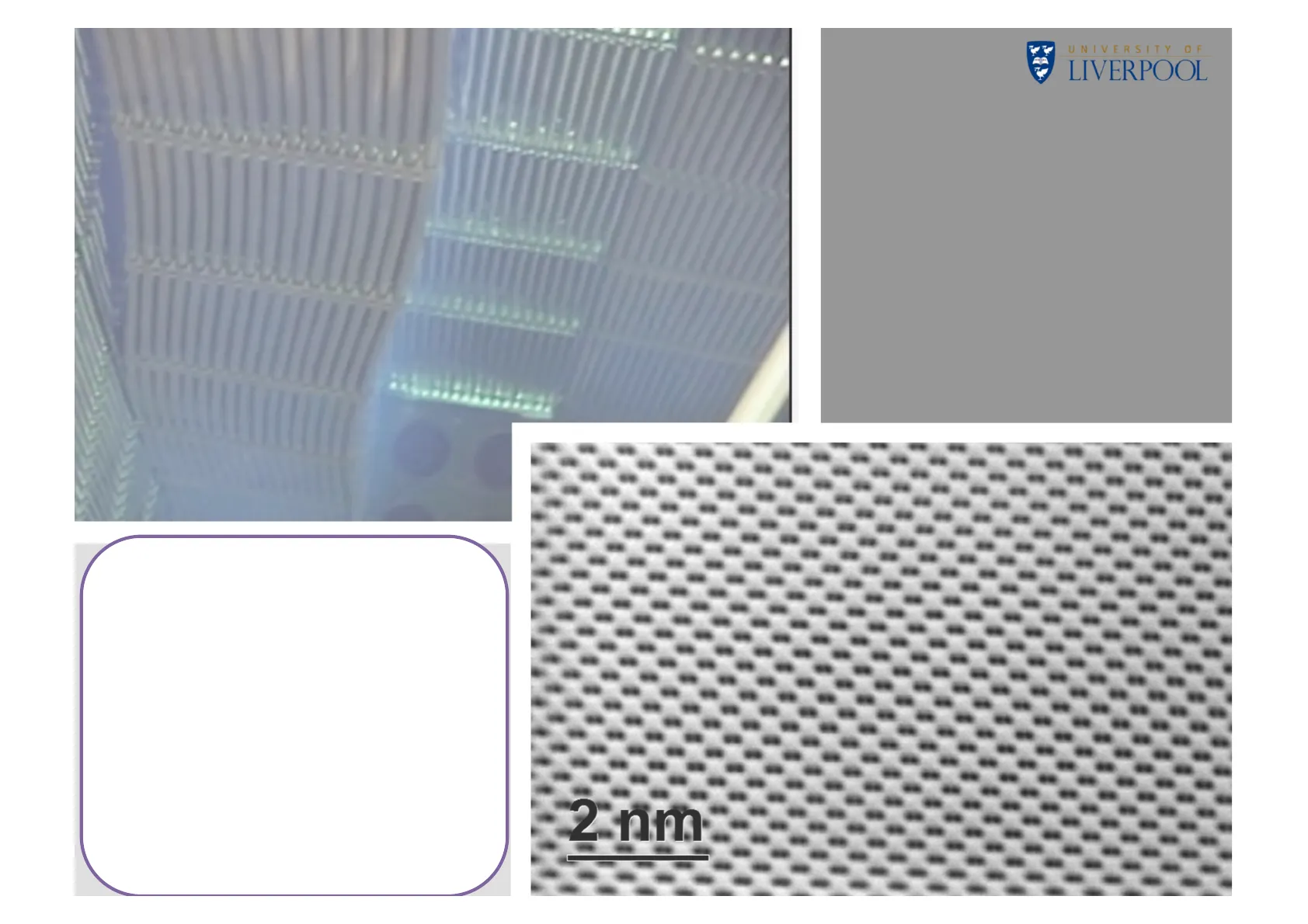
2 nmMetal FatigueComet Jet Airliner
- World's first jet air liner (launched May 1952)
- British design & manufacture
- Revolutionary pressurised cabin
Comet launch 1949 (5mins): http://www.youtube.com/watch?v=Kd9Qy4q73-M Comet launch 1959 (1min20s): http://www.youtube.com/watch?v=TgTMSk9Q MP8&feature=player_embedded
- Three disasters within first two years
of service
- March 1953, Canadian Pacific comet crashed during take off from Calcutta (11 dead)
- January 1954 British Airways jet crashes in Mediterranean (35 dead)
- April 1954 South African Airways jet crashes en route Rome - Johannesburg (21 dead)
- Aircraft withdrawn from service.
DIRECTION OF PROPAGATION OF MAIN FAILURES
SECONDARY FAILURES AND FOLD MADE DURING SALVAGE
B PORTION OF BLUE BAND WHICH MADE IMPACT MARK ON WING (FIG.16) FIG. 12. PHOTOGRAPH OF WRECKAGE AROUND ADF AERIAL WINDOWS-G-ALYP. News story: http://news.bbc.co.uk/onthisday/hi/dates/stories/october /19/newsid_3112000/3112466.stm
- Recovered fuselage from Mediterranean: showed signs of fatigue cracking
- Repeated pressure testing of cabin lead to rupture due to fatigue cracking
- Cracks initiated at the corners of square windows (used to avoid the appearance of a passenger liner (ship))
Real Machines and Components
Real machines and components and structures often experience random sinusoidal sequences of loading and unloading, putting components under tension and compression well below the yield stress
15 10 - tension stress (MPa) 5 Ū compression -5 - 10 - - 15 time
but tensile stress amplitude can be sufficiently high to open-up and propagate cracks during each cycle. which can lead to eventual sudden catastrophic failure.
Fatigue Failure Characteristics
- Fatigue crack growth can take place slowly over many weeks/months/years in structures subjected to dynamic and fluctuating cyclic stresses - at cyclic stress levels well below the ultimate tensile strength !! , with final failure often occurring suddenly and without warning.
- ~ 90% of metal component failure (in e.g. aircraft, machines, bridges) is due to fatigue !!
Cyclic Loading and Crack Nucleation
Cyclic loading Crack nucleation Mechanism: (i) A crack nucleates (usually at a surface scratch or other stress concentration point) (ii) The crack advances across the component (usually perpendicular to the applied tensile stress) in a series of small increments, usually one advance with each cycle of stress. (iii) At each advance the crack temporarily halts producing microscopic striations. Macroscopic visible beachmarks are also often produced (seasonal variations). (iv) Final failure very rapid at critical crack size
Macroscopic and Microscopic Appearance
Macroscopic appearance Microscopic view Origin of fracture Clamshell marking An example of beachmarks or "clamshell pattern" associated with stress cycles that vary in magnitude and time as in factory machinery An example of the striations found in fatigue fracture. Each striation is thought to be the advancement of the crack. There may be thousands of striations between each beachmark
Examples of Fatigue Failure
Road vehicle stub axle This is the classic reverse bending fatigue of a steel stub axle from a road vehicle. Notice cracks have grown from 8 o'clock upwards and to a lesser extent from 2 o'clock downwards. The rough central region is the final ductile rupture.
Steel bolt This high tensile steel bolt failed under low-stress high cycle conditions with a fatigue crack running from 9 o'clock as shown by the beach marks.
Bicycle pedal crank failure A fatigue crack caused one crank to fail and unseat the rider. the fracture surface shows a blackened slow growing crack that finally triggered a fast fracture. The manufacturers considered this to be an acceptable product life span and offered no recompense..
and most serious of all (nearly!) 8 Oct 2014 GSH TREKKING ANT REKKING
Fatigue Testing
. Apply a fluctuating (axial, flexural or torsional) stress, with cyclic stress amplitude +/- Oa about a mean stress om (NB often om=0).
Stress Omak + Oa tension Om 0 - Oa time compression Omir
· Measure the number of stress cycles for the sample to fail, Nf: 1/2
S-N Curves: Cyclic Stress Amplitude vs. Log of Cycles to Failure
S-N curves: oa vs. log(Nf) i.e. amplitude of cyclic stress vs. log of number of cycles before failure (a) Typical for Al, Cu and Mg alloys:
Oa e.g. 107 cycles fatigue strength 7 log N
. Nf decreases continuously as the cyclic stress amplitude (oa) increases. · Fatigue failure can occur at any cyclic stress amplitude. · The higher the oa, the sooner the component fails · Endurance (or Fatigue) strength: e.g. "10' cycles endurance strength " = stress amplitude at which Nr = 107 cycles.
(b) Typical for some steels:
Oa Fatigue Limit log NA
. For cyclic stress amplitudes (oa) above the fatigue limit, steels behave as other metals. · For oa below this limit, fatigue failure will NOT occur; i.e. guaranteed safe operation · Endurance (or Fatigue) limit: The value of oa below which fatigue does NOT occur. Typically 35-60% of the OUTs.
S-N Curve for Brittle Aluminum
S-N CURVE FOR BRITTLE ALUMINUM WITH A UTS OF 320 MPA
Oa 350 300 250 Stress (MPa 200 150 - 100 50 O 1.0E+01 1.0E+02 1.0E+03 1.0E+04 1.0E+05 1.0E+06 1.0E+07 Life (cycles) log Nf
34 30 Stress, in 103 psi 0 26 22 18 14 Fatigue strength 10- 6L 10€ 10ª 10€ 107 10# Cycles
Fatigue Testing, TWI (8mins) http://www.youtube.com/watch?v=DykiHVrVkKg [Note: fatigue experiments produce lots of scatter in data, and sample-to-sample variation!] 0
Additional Fatigue Testing Resources
Fatigue Testing, TWI (8mins) http://www.youtube.com/watch?v=DykiHVrVkKg Covair Wing Fatigue Testing (10mins - historical) http://www.youtube.com/watch?v= 8-ERdjufEc Possible consequence of turbine blade failure by fatigue in a Jet Engine Test http://www.youtube.com/watch?v=5-8_Gnbp2JA Nothing to do with fatigue, but interesting: Boeing 777 wing tested to destruction, finally breaking at 154% of the designed limit load: http://www.youtube.com/watch?v=Ai2HmvAXcU0
Fatigue Question 1
Fatigue Question 1 Using the S-N curve for aluminium (with UTS 320MPa), how much longer would the fatigue life be for an aluminium component experiencing cyclical stresses of amplitude one quarter of its tensile strength, compared with operation at cyclical stresses of amplitude one half its tensile strength?
Oa 350 300 250 Stress (MPa 200 150 100 50 O 1.0E+00 1.0E+01 1.0E+02 1.0E+03 1.0E+04 1.0E+05 1.0E+06 1.0E+07 Life (cycles) log Nf
350 300 250 Stress (MPa 200 150 100 50 O 1.0E+00 1.0E+01 1.0E+02 1.0E+03 1.0E+04 1.0E+05 1.0E+06 1.0E+07 Life (cycles)
The Goodman Relation
The Goodman relation: "the effect on fatigue life of having a non-zero mean stress, om i.e. Fatigue testing is often done at zero mean stress (i.e. Om=0). But what happens if Om#0? If we measure the cyclical stress amplitude oa for failure after a specific number of cycles, such as Nf =107 cycles, as we vary the mean (tensile) stress om we find:
Oa Cyclic stress amplitude at zero mean stress, Og(0) UNSAFE conditions (i.e failure in < N, cycles) SAFE conditions Note: om = OUTS, when oa= 0 0 OUTS Mean (tensile) stress, om 0m=0
. The cyclical stress amplitude og which results in failure after Nf (say 107) cycles decreases as the mean (tensile) stress om increases. . Goodman's law is the equation for this (near-linear) line: Oa= Oa(0).[1-(om/OUTS)"] where n = 1 for a linear relationship. [Note: "o2(0)" = "ga when om=0"]
Common Real-Life Fatigue Conditions
Two common/typical real-life conditions for fatigue: 1. A cyclic stress (under both tension and compression for equal times) which oscillates with a cyclic stress amplitude oa between -oa and +o2 about a zero mean stress (om=0). 2. A cyclic stress (always under tension or zero) which oscillates with a different cyclic stress amplitude oa between 0 and a maximum stress omax equal to 20a different !!!
Stress Omax=2 x Oa(when Om Oa) Omax Oa(when om=0) Oa(when Om=Oa) Oa(when om=0) tension) 0 time -Oa (when om=0) [When Om=Og then stress cycles between 0 and Omax= 202= 20m ]
Fatigue Question 2 (Goodman's Relation)
FATIGUE QUESTION 2 (use of Goodman's relation) Q. For a steel specimen it is found that Oa = Oa (0).[1- (om/Outs)] where outs is the metal's tensile stress (375MPa), and the 107 cycle fatigue limit at zero mean stress (om=0) is oa(0)=168.8 MPa (approx. 0.450uts). If instead the specimen is cycled repeatedly between 0 stress and a peak stress (rather than toa either side of om=0), what would be the cyclic stress amplitude oa in that case (when on=On) if failure in < 107 cycles is to be avoided?
Cyclic Stress Amplitude and Fatigue Limit
Two common/typical real-life conditions for fatigue: 1. A cyclic stress (under both tension and compression for equal times) which oscillates with a cyclic stress amplitude oa between -oa and +o2 about a zero mean stress (om=0). 2. A cyclic stress (always under tension or zero) which oscillates with a different cyclic stress amplitude og between 0 and a maximum stress equal to 20g different !!!
Stress What is this? Omax=2 x Oa(when Om Oa) Omax=Oa(when om=0)}- Oa(when Om=Oa) O2(when om=0) tension) 0 This is 168.8 MPa at 107 cycle fatigue limit time -Oa (when om=0) "Og (0) ~ 168.8 MPa is the 107 cycle fatigue limit at zero mean stress (om=0)."
Calculating Cyclic Stress Amplitude
FATIGUE QUESTION 2 Goodman's equation: Oa = Oa (0).[1- (om/Outs)] Outs is the metal's tensile stress (375MPa), Ta (0) ~ 168.8MPa is the 107 cycle fatigue limit at zero mean stress (om=0). What is cyclic stress amplitude oa if failure in < 107 cycles is to be avoided if the specimen is cycled repeatedly between 0 stress and a max peak stress when om on (rather than toa either side of om=0)? i.e. What is on when om=Og?
Miner's Law
Miner's Law or, "what happens if the amplitude of the cyclic stress o, changes during fatigue?" Answer: The fractions of fatigue life at each stress amplitude (i.e. the number of cycles that have been used as a fraction of N, at each cyclic stress amplitude oa) add cumulatively until failure:
. A component is cycled n1 times at oa = 1 ; then n2 times at o2; then n3 times at 3 ..... . For each cyclic stress amplitude we can find Ne at that value of o2 from its S-N curve. [NOTE: Ne will be different for each cyclic stress amplitude!] . Calculate n1/Nf at oa = O1 ; n2/Nf at oa = O2 ; n3/Nf at Oa = O3 ... . The fraction n;/Ne at each stress amplitude oa is the fraction of total fatigue life used up . Failure should occur when the sum of all these fractions adds up to 1 example
Can’t find what you’re looking for?
Explore more topics in the Algor library or create your own materials with AI.
