The Hydrosphere: Water's Crucial Role on Earth by Collegedunia
Slides from Collegedunia about The Hydrosphere. The Pdf explores the hydrosphere and the crucial role of water on Earth, covering its presence in living organisms, photosynthesis, and chemical-physical properties. This High school Science material also illustrates how water influences climate and modifies terrestrial relief through erosion, transport, and sedimentation.
See more16 Pages

Unlock the full PDF for free
Sign up to get full access to the document and start transforming it with AI.
Preview
The Water on Earth
Where is the Water?
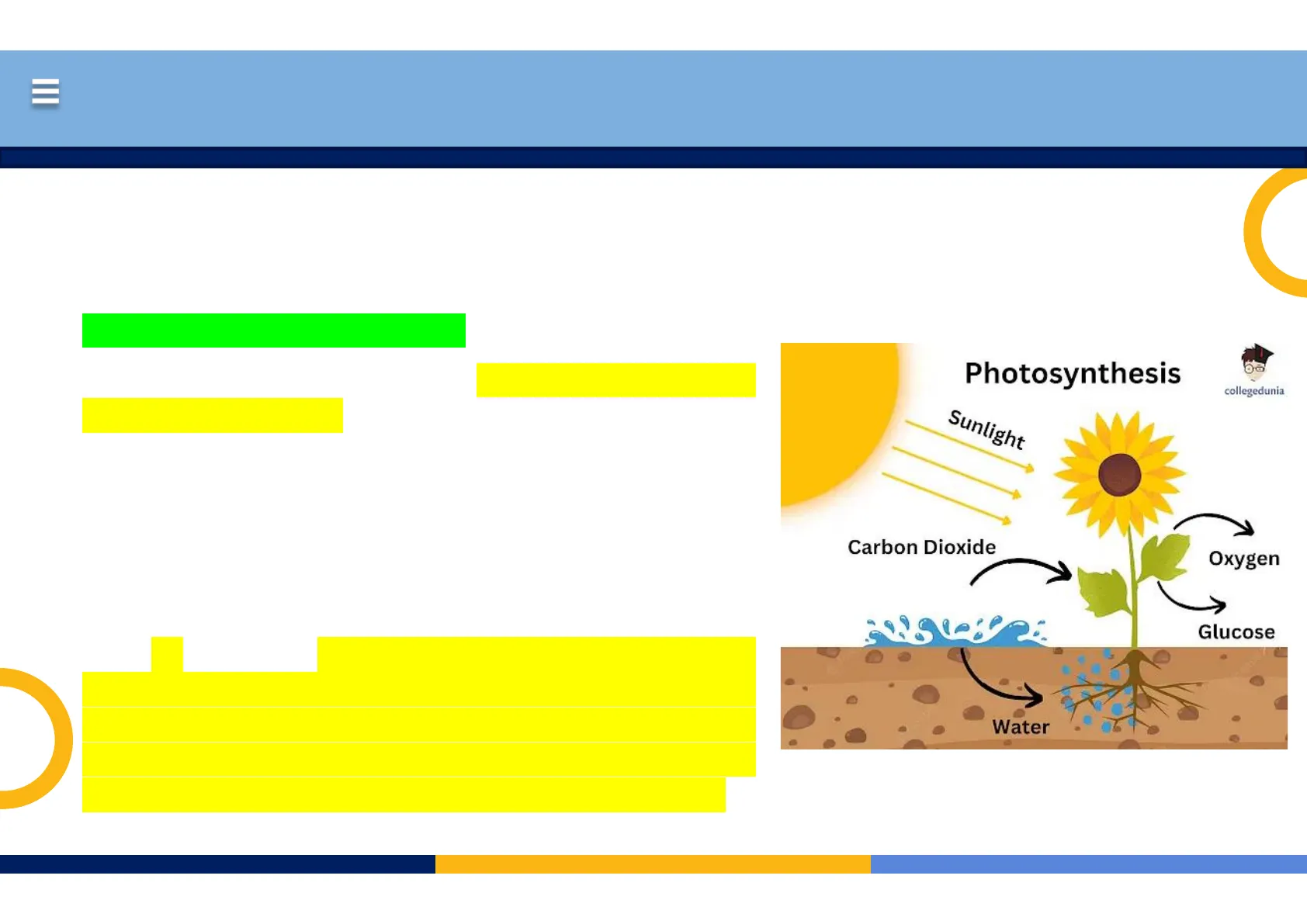
Is there water in living things? Life developed in water, and all living things are composed of water, between 50 and 90% of their mass. Life is sustained by a reaction, photosynthesis. In photosynthesis, plants use light, mineral salts and water to synthesise the molecules from which living matter is built. In the case of humans, water is present in a high proportion in all body fluids, such as blood, urine and sweat. Nutrients travel dissolved in the blood and waste products are eliminated through urine. Sweat regulates body temperature by cooling the skin as it evaporates. Photosynthesis collegedunia Sunlight Carbon Dioxide Oxygen Glucose Water
Why is Water so Important?
The Properties of Water
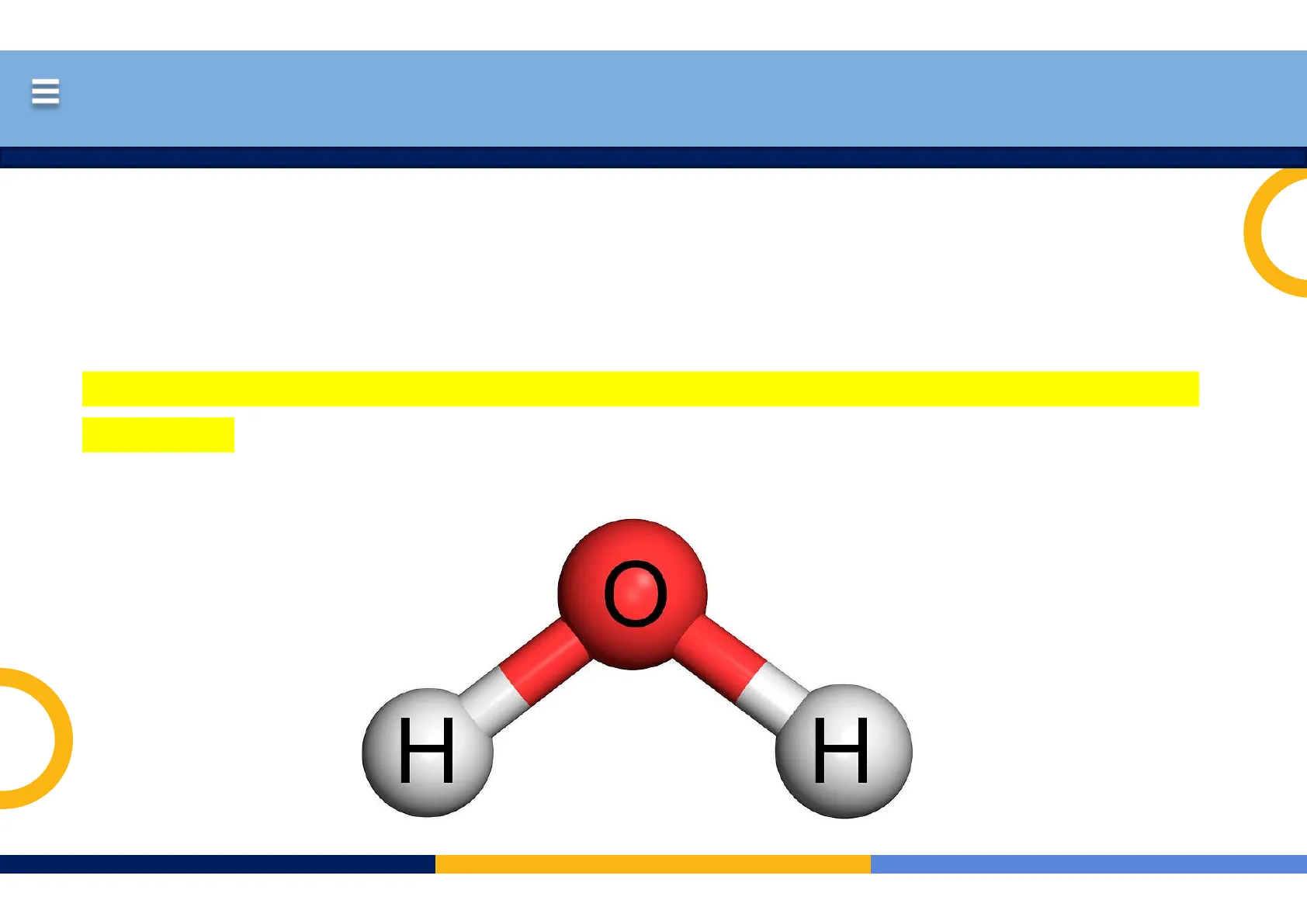
Water is a molecule formed by the combination of two hydrogen atoms and one oxygen atom (H2O). Water has the following physical and chemical properties in its pure state. H H
The Properties of Water Characteristics
- It is colourless, odourless and tasteless.
- It freezes at 0 ℃ and boils at 100 ℃
- Therefore, its density in the solid state is lower than in the liquid state, and ice floats on water.
- It requires a lot of heat to raise its temperature.
- Their molecules form strong bonds with each other
- (cohesive forces).
- It is a good solvent.
Water Influences Climate
As you know, climate refers to the temperature and precipitation conditions of an area over many years. To know the climate it is necessary to make measurements of these parameters over a long period of time.
Water Influences Climate Factors
Both temperature and precipitation are influenced by the presence of water in the atmosphere, which in turn depends on the water cycle:
- If there is water in the atmosphere, sudden temperature changes are avoided, due to the water vapour that absorbs heat during the day and gives it away at night. Similarly, in coastal areas the climate is milder due to the influence of the large oceanic water masses.
- Precipitation in an area depends on the amount of water in the atmosphere and the temperature. Evaporation during the water cycle is essential for this precipitation to occur. Due to the movement of air within the atmosphere, the water that falls over an area is the water that evaporated hundreds or thousands of kilometres away.
Water Changes the Relief
Relief is the set of geographical features that make up the surface of the earth's crust. The forms of relief are the result of the action of erosive agents such as wind, temperature, living beings and, of course, water. Water transforms the relief through the processes of erosion, transport and sedimentation. Therefore, it can be said that water is responsible for the formation and change of a landscape, as it is continuously modelling the relief. Sediment Transport Flow Bed Change Infiltration Erosion Runoff Suspended Load Sedimentation River Flow Settlement Uplift Bed Road Groundwater Flow Recharge Discharge
Water in Living Things Importance
Water is very important for living organisms for the following reasons:
- It remains liquid at the average temperature of the planet.
- It is the most abundant component of living things.
- Ice floats on liquid water, so only the surface of large bodies of water freezes, allowing life under these conditions.
Water in Living Organisms
Water is very important for living organisms for the following reasons:
- It serves as the internal skeleton of many organisms such as invertebrate animals or plants.
- It circulates against gravity (capillarity). Through this phenomenon, plants can transport water easily, using very thin conductive vessels, to whose walls the water adheres.
Water in Living Organisms Functions
Water is very important for living organisms for the following reasons:
- Great capacity to dissolve substances. It serves as a means of transporting substances within organisms and can dissolve nutrients in the soil.
- It serves as a regulator of the temperature of living beings (sweat).
- Water provides hydrogen for the photosynthetic processes of plants and algae.
How Does Water Circulate on the Planet?
The movement of water is cyclical, i.e. water moves from one tank to another through a change of state and returns, sooner or later, to the tank from which it started. The water cycle, or hydrological cycle, is the sequence of processes by which water passes from the earth's surface (oceans or continents) to the atmosphere in the form of vapour and returns to the surface in liquid or solid form. The sources of energy that drive the water cycle are, on the one hand, the sun and, on the other, the force of gravity. condensation precipitation to land evaporation from precipitation evaporation from water surface transpiration- from vegetation surface runoff evaporation from soil evaporation from ocean evaporation from reservoir water table precipitation to ocean infiltration surface outflow subsurface flow percolation (deep) groundwater outflow ocean saltwater intrusion soil moisture groundwater Encyclopædia Britannica, Inc. ocean covers 71 percent of Earth's surface 196,950,000 sq mi (510,000,000 sq km)
Phases of the Water Cycle
- 1.Evaporation: solar radiation causes the change of state and continuously promotes the formation of water vapour. Evapotranspiration: water from the soil can evaporate back into the atmosphere either by evaporation.
- 2.Condensation: water vapour cools in the upper layers of the troposphere, condenses back to a liquid state and forms clouds. 3.Precipitation: when the water particles that form clouds from droplets fall by gravity, giving rise to precipitation (rain, hail or snow). condensation precipitation to land evaporation from precipitation evaporation evaporation from water surface transpiration-> from land from vegetation surface runoff evaporation from soil evaporation from ocean evaporation from reservoir water table precipitation to ocean infiltration surface outflow subsurface flow percolation (deep) groundwater outflow ocean saltwater intrusion soil moisture Encyclopædia Britannica, Inc. groundwater ocean covers 71 percent of Earth's surface 196,950,000 sq mi (510,000,000 sq km)
Phases of the Water Cycle Continued
- 4.Surface runoff: most of the water flows over the surface and concentrates in watercourses that aggregate to form streams. The streams flow into rivers, and the rivers eventually flow into the sea or lakes.
- 5.Infiltration: 1/3 of precipitation penetrates into the ground, soaking the soil with water and forming aquifers.
- 6. Groundwater runoff: this is water that reaches deeper, or underground, areas by gravity. condensation precipitation to land evaporation from precipitation evaporation evaporation from water surface transpiration-> from land from vegetation surface runoff evaporation from soil evaporation from ocean evaporation from reservoir water table precipitation to ocean infiltration surface outflow subsurface flow percolation (deep) groundwater outflow ocean saltwater intrusion soil moisture Encyclopædia Britannica, Inc. groundwater ocean covers 71 percent of Earth's surface 196,950,000 sq mi (510,000,000 sq km)
Phases of the Water Cycle Activity
9. Think about an activity you commonly do, such as taking a shower, washing your clothes or watering your plants. Describe how this activity is related to the water cycle. What happens to the water during and after you do this activity? How do you think your actions can influence the water cycle and its availability on our planet?
Water Circulation in the Oceans
The ocean surface is in constant motion. It is agitated by winds, generating waves. The attraction of the moon and the sun causes tides and there are also surface currents. The density of sea water depends on the temperature and the amount of salt it contains. Saltier and colder waters are denser and are in deeper layers than warmer and less salty waters. Temperature Salinity Water density Water depth Thermocline Halocline Pycnocline Halocline Pycnocline
Water Circulation in the Oceans Thermohaline Current
The thermohaline current is the internal circulation in the deep ocean caused by differences in the density of the water masses. This slow, giant current runs through all the oceans and is a conveyor belt of heat that influences the climate and transports nutrients and minerals from the seabed to the surface waters. Thermohaline circulation Arctic Ocean Cold water heat released to air Warm water heat released to air Atlantic Ocean Pacific Ocean shallow warm current Indian Ocean Southern Ocean heat released to air deep current cold and saline Source: Hugo Ahlenius, UNEP/GRID-Arendal, http://maps.grida.no/go/graphic/world-ocean-thermohaline-circulation1
Uses of Water
Is There Water for Everyone?
Water is considered a natural resource, as we take it from nature to satisfy our vital, food, energy or leisure needs. Water resources are defined as the body of water present in an area. in nature.
Can’t find what you’re looking for?
Explore more topics in the Algor library or create your own materials with AI.
