Revolution! A historical overview of major revolutions
Slides about Revolution! This presentation from Prof. Elena Radaelli offers a comprehensive overview of key historical revolutions. The Pdf, designed for high school History students, covers the French Revolution, American Independence, and the Industrial Revolution, providing definitions, flowcharts, and social conditions of the era.
See more29 Pages


Unlock the full PDF for free
Sign up to get full access to the document and start transforming it with AI.
Preview
The French Revolution, American Independence, and Industrial Revolution
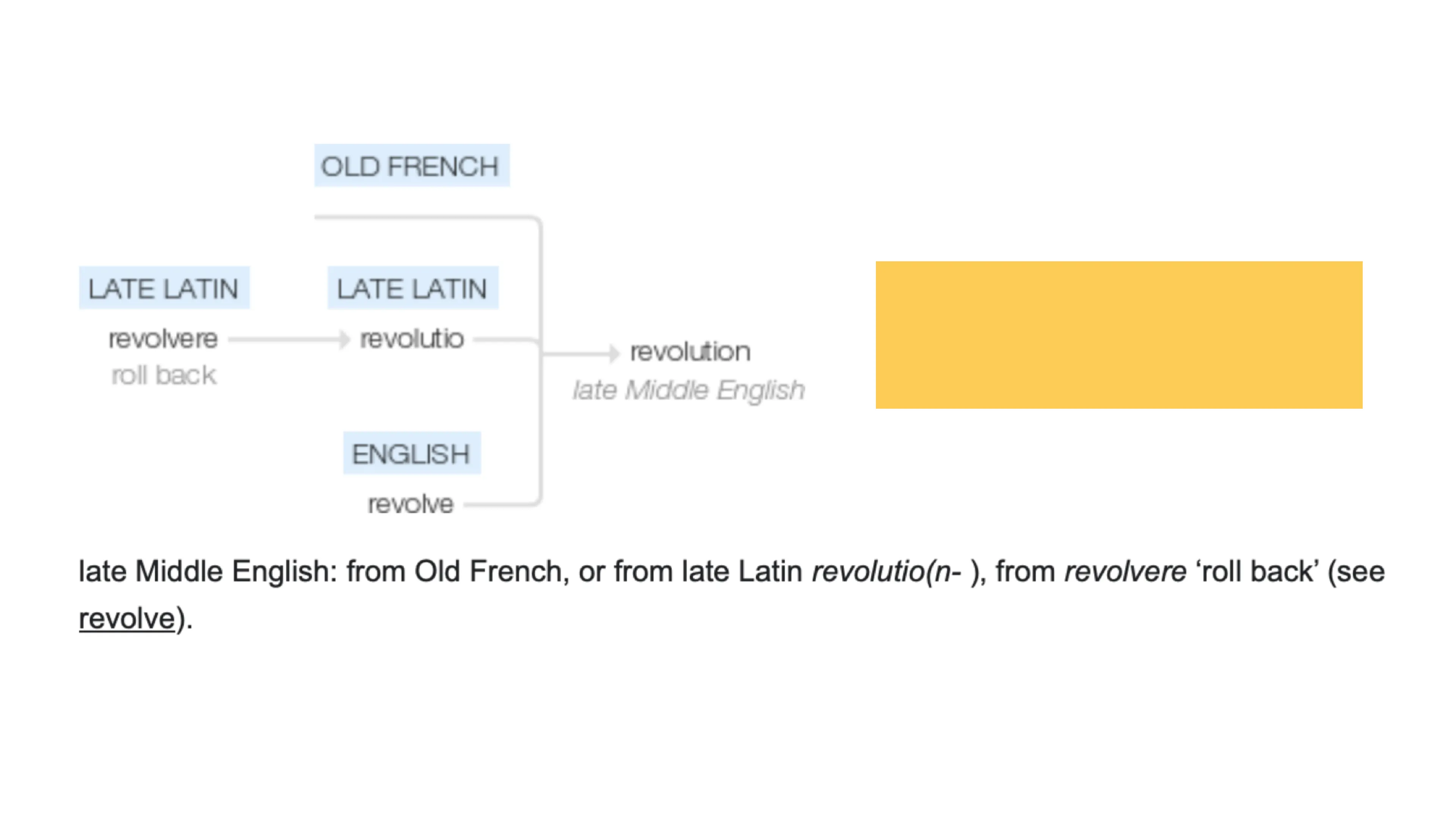
Etymology of Revolution
PROF.SSA ELENA RADAELLIOLD FRENCH LATE LATIN LATE LATIN revolvere roll back revolutio revolution late Middle English TO REVOLVE = TO CHANGE DIRECTION, TO BEND AROUND ENGLISH revolve late Middle English: from Old French, or from late Latin revolutio(n- ), from revolvere 'roll back' (see revolve).
The American Revolution (1775-1783)
Causes of the American Revolution
George III wanted to reduce the public debt due to the Seven Years' War He introduced new duties on corn, paper and tea Several American colonists had become resentful of British rule Fierce opposition in the American colonies Some taxes were repealed, but not that on imported tea They wanted to pay taxes approved by their local governing assemblies
The American War of Independence: Causes and Consequences
4. The American War of Independence Causes . The new taxes on the American colonies. Consequences . The 'Boston Tea Party' (1773): the rebels threw tea imported from Britain into the harbour; . their motto 'No taxation without representation'.
Divisions Among Americans: Patriots and Loyalists
The Americans were divided into: Patriots · wanted independence; · had no army, knew the land; . supported by the French fleet which prevented the British navy from aiding the Loyalists. Loyalists · wanted to remain part of Britain; . their army was too small both to attack and defend what it had won; · their army was distant from supplies and orders. A.LOYAL . THREE . MADE. STRONGER-IN-ONE
1776 American Declaration of Independence
written by Thomas Jefferson stated that Į the colonies = a new nation all men have a natural right to 'life, liberty, and the pursuit of happiness' governments can claim the right to rule only if they have 'the consent of the governed'
Treaty of Versailles (1783) and the Birth of the USA
HABITANTS THEREOF LEV XXXXX PROC ORTHE STATE HOUSE IN PHILADA BYONS PASS AND STON PHYLADA DCCLEI TREATY OF VERSAILLES 1783 Britain recognised the independence of its former colonies. The republic of the United States of America adopted a federal constitution in 1787. George Washington became the first President in 1789.
Treaty of Paris Painting by Benjamin West
5 Treaty of Paris, by Benjamin West (1783), depicts the American delegation at the Treaty of Paris (left to right): John Jay, John Adams, Benjamin Franklin, Henry Laurens, and William Temple Franklin. The British delegation refused to pose, and the painting was never completed.
The French Revolution (1789-1815)
Influence of American Independence on France
Ideas of the Enlightenment stated openly in the American Declaration of Independence encouraged intellectual rebellion in France; . French rebelled, abolished the monarchy and declared a republic; . intellectuals supported the revolution at first but the excesses of the Reign of Terror caused horror and disillusionment.
The Napoleonic Wars (1792-1815)
The Napoleonic Wars (1792-1815) · France declared war on Britain and Holland in 1793; . the French army under the command of General Napoleon Bonaparte dominated the European continent; . the British navy dominated the sea; . the great hero of the British navy was Admiral Horatio Nelson who defeated the French-Spanish fleet off Cape Trafalgar on the Atlantic coast of southern Spain in 1805.
Battle of Waterloo and its Consequences
The Napoleonic Wars (1792-1815) BATTLE OF WATERLOO The war ended with the defeat of Napoleon in 1815 at the battle of Waterloo in Belgium where the British and their allies overcame the French. The consequences 1. enormous financial costs; 2. Britain was on the verge of starvation, bankruptcy and revolution; 3. internal unrest was put down savagely by the army.
The Industrial Revolution (1760-1840)
Technological Inventions of the Industrial Revolution
EXTRAORDINARY TECHNOLOGICAL INVENTIONS!D . F FIG. 26 .- Watt's Engine, 1774. James Watt's steam engine: · factories were built on coal and iron fields of Lancashire, Yorkshire, South Scotland and South Wales; · cloth was manufactured more cheaply. Changes in transport . transport was made more efficient; . new waterways were built; . road conditions were improved.
Key Inventions and Their Impact
The most important inventions were: . Thomas Newcomen's steam engine made pumping water out of mines possible. Later improved by James Watt; . James Hargreaves's Spinning Jenny: a worker could work eight spools at once; . Edmund Cartwright's loom: linked cloth manufacture to water and steam power. A 11 1ª A A Spinning Jenny.
Life and Working Conditions in Industrial Society
THE INDUSTRIAL SOCIETY Life expectancy of the poor below twenty years due to incessant toil disease heavy drinking to bear fatigue and alienationWorking conditions: · low wages; · women and increasingly children were employed because they were paid even less and were easier to control; · long working hours; · cruel discipline, routine and monotony characterised the work of industrial labourers.
Urbanization and Industrial Cities
'Mushroom towns': small towns built near the factories to house the workers. Industrial cities: . lacked elementary public services; . the air and the water were polluted; · houses built in endless rows; · were overcrowded. Philip James de Loutherbourg, Coalbrookdale by Night (1801).
The Luddites and Peterloo Massacre
UNIVERSA SUFFRAG Richard Carlile, Peterloo Massacre. · A group of workers called 'Luddites', after their leader Ned Ludd, began destroying factory machinery, blaming this for their lack of jobs; . the army was used to suppress any public protests; . in 1819, during a peaceful public meeting in Manchester, soldiers fired into a crowd and eleven people were killed: this was ironically named the 'Peterloo Massacre' after the victory over Napoleon at Waterloo.
The Regency and Decades of Reform
The Regency . The period between 1811 and 1820 was called the Regency; . the Prince Regent, later to become George IV, acted as monarch during the illness of his father George III (1760-1820); . during the reign of George IV (1820-1830) trade unions were legalised and the Metropolitan Police was created; · William IV (1830-1837) succeeded his brother and his short reign saw a new political awareness leading to the new age of reforms.The Decades of Reform . The Whig Prime Minister, the Earl of Grey, wanted to bring in electoral reform; . the Great Reform Act was passed in 1832 with the support of the king. It: - extended the vote to almost all male members of the middle classes; - abolished 'rotten boroughs'; - redistributed parliamentary seats on a more equitable basis. . These changes made later social reforms possible. Charles Grey @ THE REFORM ACT, 1832 The Correspondence of the Late Earl Grey With His Majesty King William IV. And With Sir Herbert Taylor; From Nov; 1830 to June 1832 Vol. 2 of 2 IT OPENED THE WAY TO UNIVERSAL SUFFRAGE !! tten Books
Can’t find what you’re looking for?
Explore more topics in the Algor library or create your own materials with AI.