Fall 2024 ODB: Motivation - From Concepts to Application, Cunef Universidad Notes
Document from Cunef Universidad about Fall 2024 ODB: Motivation - From Concepts to Application. The Pdf explores motivation from conceptual and practical perspectives within an organizational context, discussing factors influencing employee motivation, compensation systems, and the effectiveness of benefits and recognition programs in Economics for University students.
See more33 Pages

Unlock the full PDF for free
Sign up to get full access to the document and start transforming it with AI.
Preview
Motivation: From Concepts to Application
Fall 2024 ODB: Motivation- From Concepts to Application CUNEF UNIVERSIDAD Topic 6 [Organizational Design and Behavior 2024-25] [CUNEF University]
Understanding Motivation in the Workplace
In this session Why are you reading this SWAY? Would you prefer playing computer games or hanging out with friends? Is it because you know this content will enter the partial and final exams, or are you genuinely interested in motivation and want to know more? Without motivation, you will quickly stop reading and put the book away. We all need motivation to do work. Yet, despite its importance, motivation and engagement are widely reported as critical problems businesses face. According to a Gallup survey in 2017, only 15 percent of full-timeadult employees worldwide (and in East Asia, only 6%) feel highly involved and enthusiastic about their work. Another survey by management consultants stated that 51-year-olds said they were 77 percent motivated, whereas 20-year-olds said they were only 59 percent motivated. For millennials, a lack of work-life balance and the inability to work remotely were two vital motivating factors (Hashlett, 2017). Furthermore, a 2018 Gallup survey revealed that only 20 percent of employees strongly agree that their performance is managed in a way that motivates them to do outstanding work (McDonald, 2018).
Motivation is a powerful force that can motivate employees to accomplish challenging goals through encouragement and reward. It can also drive employees to cheat when they experience injustice or are threatened by unattainable goals. As a manager, navigating and attempting to predict these forces becomes a challenge, but knowing more about different theories of motivation can help increase an understanding of how motivation may operate and how employees become motivated.
This section will review the basics of motivation and see an integrative model that brings these theories together. However, knowing how to use them as a manager or employ them from an employee's perspective is also essential. In this session, we apply motivation concepts to specific practices relevant to organizational behavior, including job design and rewards and benefits.
Defining Motivation
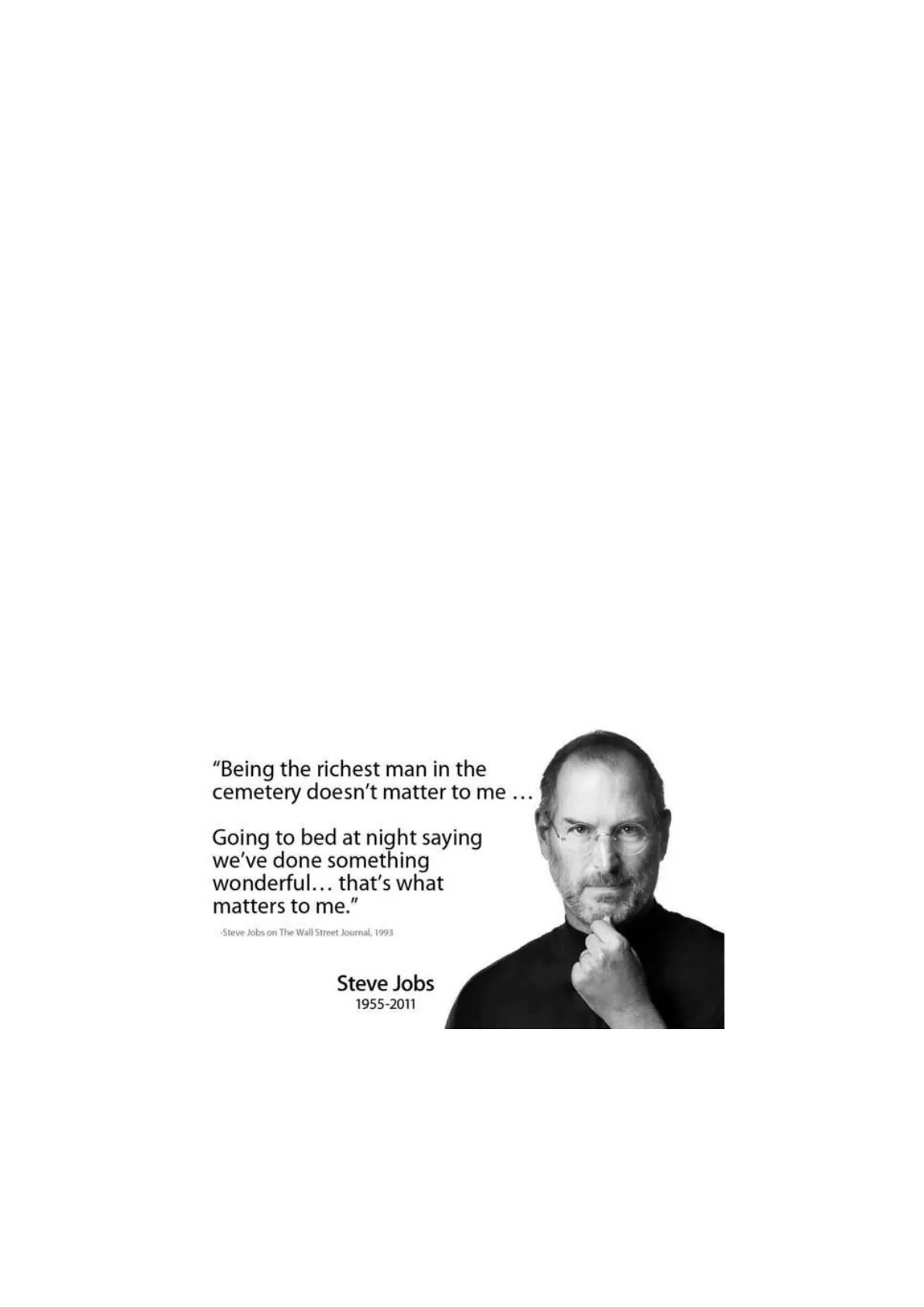
Motivation defined "Being the richest man in the cemetery doesn't matter to me ... Going to bed at night saying we've done something wonderful ... that's what matters to me." -Steve Jobs on The Wall Street Journal, 1993 Steve Jobs 1955-2011
Motivation is defined as the processes that account for an individual's intensity, direction, and persistence of effort toward attaining a goal (Robbins & Judge, 2018: 249). While general motivation is concerned with effort toward any goal, we will narrow the focus to organizational goals.
Key Elements of Motivation
The three key elements of our definition are intensity, direction, and persistence.a) Intensity is concerned with how hard a person tries. This is the element most of us focus on when we talk about motivation. b) Direction is the orientation that benefits the organization. c) Persistence is a measure of how long a person can maintain his/her effort. Motivated individuals stay with a task long enough to achieve their goal.
Nudge Theory and Behavioral Economics
Nudge Theory Get take stairs How do you get men to pee into the toilet rather than miss it? You put an image of a fly on the toilet bowl. Men, it seems, "cannot help but aim, saving on clean-up costs as well as alleviating unpleasantness" (Hooker, 2017). The "house fly target" was tested at Schiphol Airport, Amsterdam, and it reduced the spillage rate by around 80% (!).The fly in the toilet is an example of a new form of behavioral economics called "Nudge" (Thaler & Sunstein, 2008). Nudge theory works by altering the environment in which we make choices to produce better outcomes. It uses "choice architecture," the way choices are designed, to change our decisions. It does not remove choices but uses subtle direction to help steer people toward making a decision or taking a specific action rather than enforcing it. Managers' use of direct control is avoided as the manager leaves the choice about their behavior to employees.
Several studies report, for example, success in promoting healthier food choices for employees through alterations in the choice architecture of workplace canteens (e.g., more nutritious choices at the view, smaller plates, etc.). Other nudging interventions have led to reductions in electricity use by providing feedback to employees on the desirable behavior of peers. Further, in the ethical domain, honest employee behavior appeared to rise by reminding employees about their shared moral values at critical decision points.
Extrinsic vs. Intrinsic Motivation
Extrinsic vs. Intrinsic Motivation If we think work is dull, repetitive, and often unchallenging, we may try to avoid working hard wherever possible. If you have ever had a part-time job to earn some extra money, such as stacking shelves in a supermarket, you probably don't work for the fun of it. So, how can a manager motivate people in this case? Frederick Taylor and Henry Ford said the answer was pay:
- Taylor believed that workers had a natural laziness - they were inherently demotivated. He used piece rates (payment for the actual amount of work done) to motivate people;
- Ford similarly believed that pay motivated people, but he introduced the $5 day rather than piece rates. This was a massive increase from the previous $2.40 per day. However, the Fordist factory was rationalized and mechanized, producing highly controlled and dull working conditions. Workers disliked the conditions intensely, but the high wages motivated many job-seekers to want to work in Ford's factories.
Both Taylor and Ford had a simple, coercive view of motivation based on the assumption of homo economicus - that people are motivated by pay and economic reasons alone. They saw motivation as extrinsic, external to the individual.
The assumption about human nature here is that people are passive but motivated to avoid pain and seek pleasure, so managers need to create external motivations through punishment and rewards. Rewards and punishments are conditional, working on an "if-then" approach - that is, if you, for instance, hit a sales target, then you receive a bonus.
Motivation in Modern Workplaces: Amazon Warehouses
Motivation at Amazon Warehouses ... Such views on employees and their motivation have not disappeared. Whereas Taylor used time and motion studies and supervisors to measure and monitor staff, modern workplaces like Amazon's warehouses can provide even closer scrutiny. Amazon's patented wristband monitors where workers are, their movements, and how many items they pick and vibrates to guide individuals' actions. Rather than having a supervisor telling employees what to do, the bracelet responds to real-time body movements, directly controlling each worker.
How would you feel being monitored constantly by a wristband? Would you act differently if you were always watched?
Intrinsic Motivation Explained
Intrinsic motivation Would you keep working even if you had enough money to live off? Many lottery winners, football managers, and business executives continue to work despite having more money than they need to live off. Most people want to be involved in some form of work. Whereas extrinsic views of motivation are based on the assumption that we need to be forced (through reward or punishment) to work, intrinsic motivation theory suggests that we are more motivated to do work for its own sake. Indeed, there are many examples where people work for free, e.g., feeding Wikipedia entries (people write most entries on the online encyclopedia Wikipedia for free) or volunteering for a specific cause. The work is done out of interest, curiosity, or pleasure, out of the satisfaction that comes from the experience (de Geiter et al., 2006).
Most importantly, intrinsically motivated people usually achieve more than their reward- seeking counterparts (Pink, 2018). Also, intrinsic motivation is a renewable resource, whereas extrinsic motivation often needs to increase to remain effective
Comparing Extrinsic and Intrinsic Motivation
Extrinsic or Intrinsic Motivation? While extrinsic motivation has been demonstrated to produce good short-term boosts in output, the long-term impacts are far more contested. In a famous experiment, psychologist Lepper and colleagues examined the effect of extrinsic reward on intrinsic motivation. Most3 to 5-year-olds intrinsically enjoy drawing. Lepper and colleagues wanted to determine if rewarding the child impacted this intrinsic motivation. They placed them into three groups:
- expected reward - where they were told they would receive a gold star or red ribbon if they took part;
- unexpected reward - where they were told about the reward only after drawing;
- no reward - where the child received no reward at all.
Over the following days, the children were observed. Those with the unexpected reward produced the most drawings, closely followed by those who did not receive a reward. However, the group who had expected a reward produced significantly fewer drawings over the next few days, leading the researchers to conclude that expecting a reward significantly reduces intrinsic motivation. The undermining effect means incentives on an initially enjoyable task reduce subsequent intrinsic motivation.
So, which is better, intrinsic or extrinsic motivation? Do extrinsic incentives undermine intrinsic motivation, or can you have both?
This is a contested question. While no conclusive evidence exists, extrinsic incentives can coexist with intrinsic motivation:
- highly repetitive tasks that are not inherently enjoyable benefit from extrinsic incentives
- Tasks that require more absorption and personal investment and are more complex should not be linked to performance incentives. For example, instructors should not be paid based on their students' performance. Instead, could their work be redesigned to allow greater freedom and autonomy and room for self-expression?
Early Theories of Employee Motivation
Early Theories of Motivation Three theories of employee motivation formulated during the 1950s are probably the best known. Although they are now of questionable validity (as we will discuss in class), they represent a foundation of motivation theory, and many practicing managers still use their terminology.
Can’t find what you’re looking for?
Explore more topics in the Algor library or create your own materials with AI.
