The Brontë Sisters and the Narrative Style of Wuthering Heights
Slides about The Brontë Sisters. The Pdf introduces the Brontë sisters and analyzes the narrative style of 'Wuthering Heights', focusing on the points of view of Nelly Dean and Lockwood. This High school Literature material is concise and well-structured, ideal for online study.
See more32 Pages

Unlock the full PDF for free
Sign up to get full access to the document and start transforming it with AI.
Preview
The Brontë Sisters
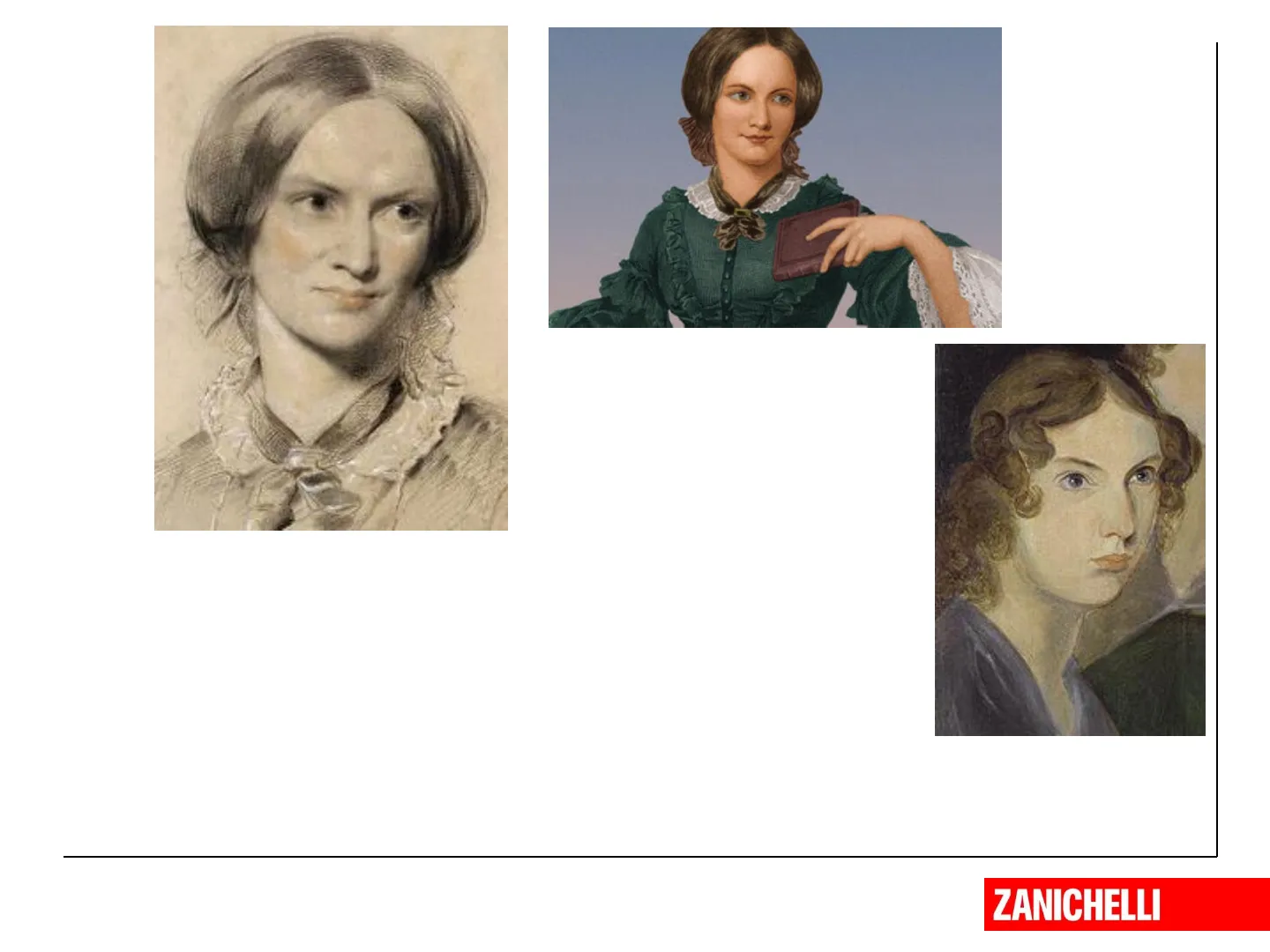
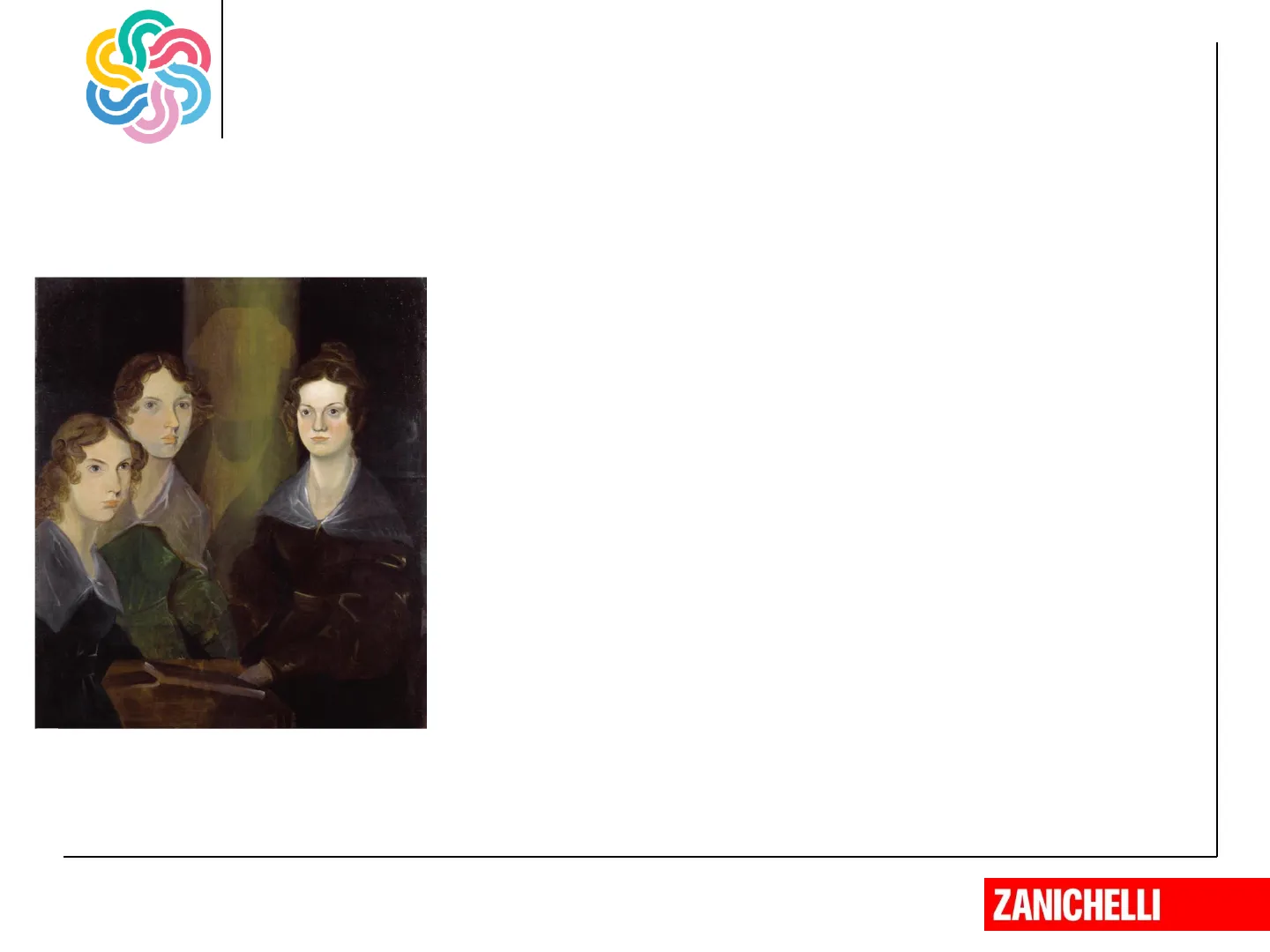
Emily Brontë (1818-1848). Charlotte Brontë (1816-1855). Anne Brontë (1820-1849).
Performer Shaping Ideas Marina Spiazzi, Marina Tavella, Margaret Layton @ 2021 ZANICHELLIThe Bronte sisters
Life of the Brontë Sisters
- Life
- Charlotte (1816), Emily (1818) and Anne (1820) were the daughters of an Anglican clergyman of Irish origin.
- Spent most of their lives in isolation in a remote part of Yorkshire, in northern England.
- Did not receive formal education. Apart from brief periods at school, they were mainly self-educated.
Performer Shaping Ideas ZANICHELLIThe Bronte sisters
Pseudonyms and Publications
- Life
Decided to use pseudonyms to publish their novels in 1847:
- Emily (Ellis Bell) published Wuthering Heights;
- Charlotte (Currer Bell) published Jane Eyre;
- Anne (Acton Bell) published Agnes Grey.
Emily died in 1848 and Anne in 1849. Charlotte married Reverend Arthur Bell Nicholls in 1854 and died the following year.
Performer Shaping Ideas ZANICHELLIJane Eyre
Jane Eyre by Charlotte Brontë
Performer Shaping Ideas ZANICHELLIJane Eyre
Jane Eyre Character Introduction
- Who is Jane Eyre?
- An orphan brought up by her cold and hostile aunt, Mrs Reed.
- Sent to Lowood School where she becomes a teacher.
- Accepts a job as a governess at Thornfield Hall.
- Falls in love with its owner, Mr Rochester.
- Refuses Mr Rochester's proposal when she finds out he is married.
Charlotte Gainsbourg as Jane Eyre.
Performer Shaping Ideas ZANICHELLIJane Eyre
Jane Eyre's Journey and Marriage
- Who is Jane Eyre?
- Leaves Thornfield and goes to live with her cousin at Moor House.
- She meets St John Rivers, a religious man who proposes to her but she refuses.
- Returns to Mr Rochester but he lives at Ferndean and has become blind after a fire in which his wife died.
- Jane finally marries him.
Charlotte Gainsbourg as Jane Eyre.
Performer Shaping Ideas ZANICHELLIJane Eyre
Jane Eyre's Ground-breaking Character
- A ground-breaking character
- She is moderately plain and poor.
- She is a governess, one of the few jobs available to educated but poor young women.
- She falls in love with a rich and married man.
- She speaks with frankness about herself.
- She is assertive, imaginative and rebellious.
- She is passionate and acts following her convictions.
Charlotte Gainsbourg as Jane Eyre.
Performer Shaping Ideas ZANICHELLIJane Eyre
The Setting of Jane Eyre
- The setting
Gateshead: the Reeds' home, the place of Jane's childhood.
Five locations in northern England.
Ferndean: Mr Rochester's rural mansion, the place for a new start.
Lowood School: the place of Jane's education.
Moor House: the Rivers' house on the moor, the place of temporary banishment.
Thornfield: Mr Rochester's house, the place of independence and young love.
Performer Shaping Ideas ZANICHELLIJane Eyre
Setting and Character Development in Jane Eyre
- Setting and character
development
- Each setting represents a new phase in Jane's development.
- She experiences the conflicts between spirit and flesh, duty and desire, denial and fulfilment.
- She struggles to get a free spirit, fighting for recognition and self-respect in the face of rejection by a class-ridden and money-oriented society.
Mia Wasikowska as Jane Eyre in 2011 film by Cary Fukunaga.
Performer Shaping Ideas ZANICHELLIJane Eyre
Mr Rochester as a Romantic Hero
- A Romantic hero
- The character of Mr Rochester is based on the figure of the Byronic hero;
- not a seducer but a nobleman of passion;
- attracted to Jane's soul and personality rather than to her physical appearance.
Toby Stephens as Mr Rochester.
Performer Shaping Ideas ZANICHELLIJane Eyre
Bertha Mason's Role
- Bertha Mason
- Mr Rochester's mad wife;
- described as a monster;
- represents what Jane is afraid of: - psychological instability; - insecurity inside the home.
Valentina Cervi as Bertha Mason in 2011 film by Cary Fukunaga.
Performer Shaping Ideas ZANICHELLIJane Eyre
Themes in Jane Eyre
- Themes
- Childhood and education (Bildungsroman);
- passionate love from a woman's standpoint;
- marriage as a relationship between equals, not as a social compromise;
- the role of women;
- the social position of a governess in Victorian society.
Performer Shaping Ideas ZANICHELLIJane Eyre
Critique and Symbolism in Jane Eyre
- Themes
- Critique of the strict Victorian social class system and gender relationships;
- symbolic use of Gothic to reveal the presence of threatening elements deep within the self.
Performer Shaping Ideas ZANICHELLIJane Eyre
Style and Narrative in Jane Eyre
- Style
- Use of the heroine as narrator gives unity to the novel.
- Everything is seen from Jane's point of view.
- Jane often addresses the reader directly explaining how she feels and makes decisions.
- Emotional use of language. Concern with the nature of human relationships. There are also repeated motifs, symbols, and images: the workings of the supernatural, important dreams, patterns of light and dark, oppositions of warmth and cold.
Performer Shaping Ideas ZANICHELLIWuthering Heights
Wuthering Heights by Emily Brontë
Performer Shaping Ideas ZANICHELLIWuthering Heights
Key Events: First Generation
- Key events
Part One - First generation
- The foundling: Heathcliff is brought to Wuthering Heights by Mr Earnshaw;
- Oppression and exploitation of Heathcliff by Hindley, Mr Earnshaw's son;
- Cathy Earnshaw and Heathcliff become twin souls;
- Cathy Earnshaw's transformation from 'savage' to 'proper lady' during her stay at Thrushcross Grange.
WIDESCREEN COLLECTION JULIETTE BINOCHE + RALPH FIENNES PARAMOUNT PICTURES PRESENTS EMILY BRONTË'S WUTHERING HEIGHTS Poster for the 1992 film version.
Performer Shaping Ideas ZANICHELLIWuthering Heights
Cathy's Betrayal and Heathcliff's Return
- Key events
- Cathy's betrayal of her 'soul mate' Heathcliff;
- Heathcliff's departure (splitting of the oak);
- Cathy's marriage to Edgar Linton;
- Heathcliff's return as a 'gentleman' intent on revenge;
- Cathy's attempts to have both Heathcliff and Edgar;
- Cathy's derangement and illness.
Top Withens.
Performer Shaping Ideas ZANICHELLIWuthering Heights
Key Events: Second Generation
- Key events
Part Two - Second generation
- Heathcliff's revenge: property, gained by marriage to Isabella Linton and expropriation;
- Degradation of Hareton, Heathcliff's and Isabella's son;
- Heathcliff loses interest in revenge;
- Heathcliff and Cathy together in death;
- Marriage of Cathy II and Hareton: property restored to rightful owner.
Near Top Withens.
Performer Shaping Ideas ZANICHELLIWuthering Heights
Two Settings: Wuthering Heights vs. Thrushcross Grange
- Two settings: opposite principles
Wuthering Heights
- the home of the Earnshaws;
- severe, gloomy, brutal in aspect and atmosphere;
- firmly rooted in local tradition and custom;
- the background for the life of primitive passion led by its owner.
Thrushcross Grange
- the home of the Lintons;
- reflects a Victorian conception of middle-class life;
- symbolises stability, kindness and respectability.
calm storm and energy
Performer Shaping Ideas ZANICHELLIWuthering Heights
The Moors: Sublime Landscape
- The moors: sublime
Sublime - - Beautiful and wild: the moors mirror the complexity of the characters.
English moors.
Performer Shaping Ideas ZANICHELLIWuthering Heights
The Moors: Symbol of Freedom
- The moors: symbol
Concept of absolute freedom beyond place or time
The moors represent the Romantic rejection of society and the desire to transcend its rules.
English moors.
Performer Shaping Ideas ZANICHELLIWuthering Heights
Main Characters: Catherine Earnshaw
- Main characters
Catherine: beautiful, wild, rebellious, a free spirit struggling between Romantic desire and social ambition
'Her spirits were always at high water-mark, her tongue always going [ ... ]. A wild, wick slip she was -but she had the bonniest eye, and sweetest smile, and lightest foot in the parish [ ... ].' (Part I, Ch. 5)
'Heaven did not seem to be my home.' (Part I, Ch. 9)
Charlotte Riley as Catherine and Tom Hardy as Heathcliff in Coky Giedroyc's 2009 TV series Wuthering Heights.
Performer Shaping Ideas ZANICHELLIWuthering Heights
Main Characters: Heathcliff's Ambiguity
- Main characters
Heathcliff:
- persistent ambiguity: Byronic hero or Gothic villain?
- unknown origins, absence of social connection;
- passionate and lonely
- dominates a world of revenge;
- totally identifies with his love, Catherine.
Timothy Dalton in Robert Fuest' s 1970 film version.
Performer Shaping Ideas ZANICHELLIWuthering Heights
Heathcliff-Catherine Relationship: Vindictive Passion
- Main characters
Heathcliff-Catherine relationship
- vindictive, violent and possessive 'They may bury me twelve feet deep, and throw the church down over me; but I won't rest till you are with me ... I never will!' (Part I, Ch. 7)
- merged identities 'If all else perished, and he remained, I should still continue to be; and, if all else remained, and he were annihilated, the universe would turn to a mighty stranger. [ ... ] Nelly, I am Heathcliff!' (Part I, Ch. 9)
Performer Shaping Ideas ZANICHELLIWuthering Heights
Heathcliff-Catherine Relationship: Freedom and Instinct
- Main characters
Heathcliff-Catherine relationship
- vitality, authenticity, freedom;
- rejection of class values;
- Heathcliff and Cathy symbolise the instinctual, unconscious forces;
- contrasted with 'civilised' characters: Edgar, Lockwood, Nelly Dean.
A scene from Coky Giedroy's 2009 TV series Wuthering Heights.
Performer Shaping Ideas ZANICHELLIWuthering Heights
Main Themes in Wuthering Heights
- Main themes
- Basic human emotions in a state of purity and concentration love vs hatred.
- Correspondence between the violent passions of the characters and the wild natural landscape.
- Death not an end, but a liberation of the spirit.
A scene from Coky Giedroyc's 2009 TV series Wuthering Heights.
Performer Shaping Ideas ZANICHELLIWuthering Heights
Gothic Elements in Wuthering Heights
- Gothic elements
- Heathcliff as a Gothic villain in his inhuman treatment of his wife and his son.
- The sinister atmosphere of Wuthering Heights surrounded by the wilderness.
- Catherine's ghost.
Performer Shaping Ideas ZANICHELLIWuthering Heights
Style: Narrative Structure
- Style: narrative structure
Non-linear narrative structure use of flashback 1 beginning in medias res binary structure elicits curiosity in the reader invites comparison between the two stories
Brontë Parsonage in Haworth, where the Brontë family lived.
implies an active reader
Performer Shaping Ideas ZANICHELLIWuthering Heights
Style: Point of View
- Style: point of view
- Two frame narrators: - Lockwood (as external narrator); - Nelly Dean (as internal narrator).
- Chinese box structure: stories within stories.
- Two interpreters; two auditors (reader and Lockwood closely identified).
Performer Shaping Ideas ZANICHELLIWuthering Heights
Nelly Dean's Perspective
- Style: point of view
Nelly Dean's perspective
- Conventional based on morality, religion and superstition.
- She thinks Cathy is 'wayward', 'ill-tempered'. 'I vexed her frequently by trying to bring down her arrogance.' (Part I, Ch. 8)
- 'She was too much fond of Heathcliff.' (Part I Ch. 5)
Performer Shaping Ideas ZANICHELLI
Can’t find what you’re looking for?
Explore more topics in the Algor library or create your own materials with AI.
