The Rebel and Dandy Oscar Wilde: Life and Works
Slides about The Rebel and Dandy Oscar Wilde. The Pdf provides an overview of Oscar Wilde's life and works, with a detailed summary of 'The Picture of Dorian Gray', suitable for high school Literature students.
See more20 Pages


Unlock the full PDF for free
Sign up to get full access to the document and start transforming it with AI.
Preview
Oscar Wilde's Life
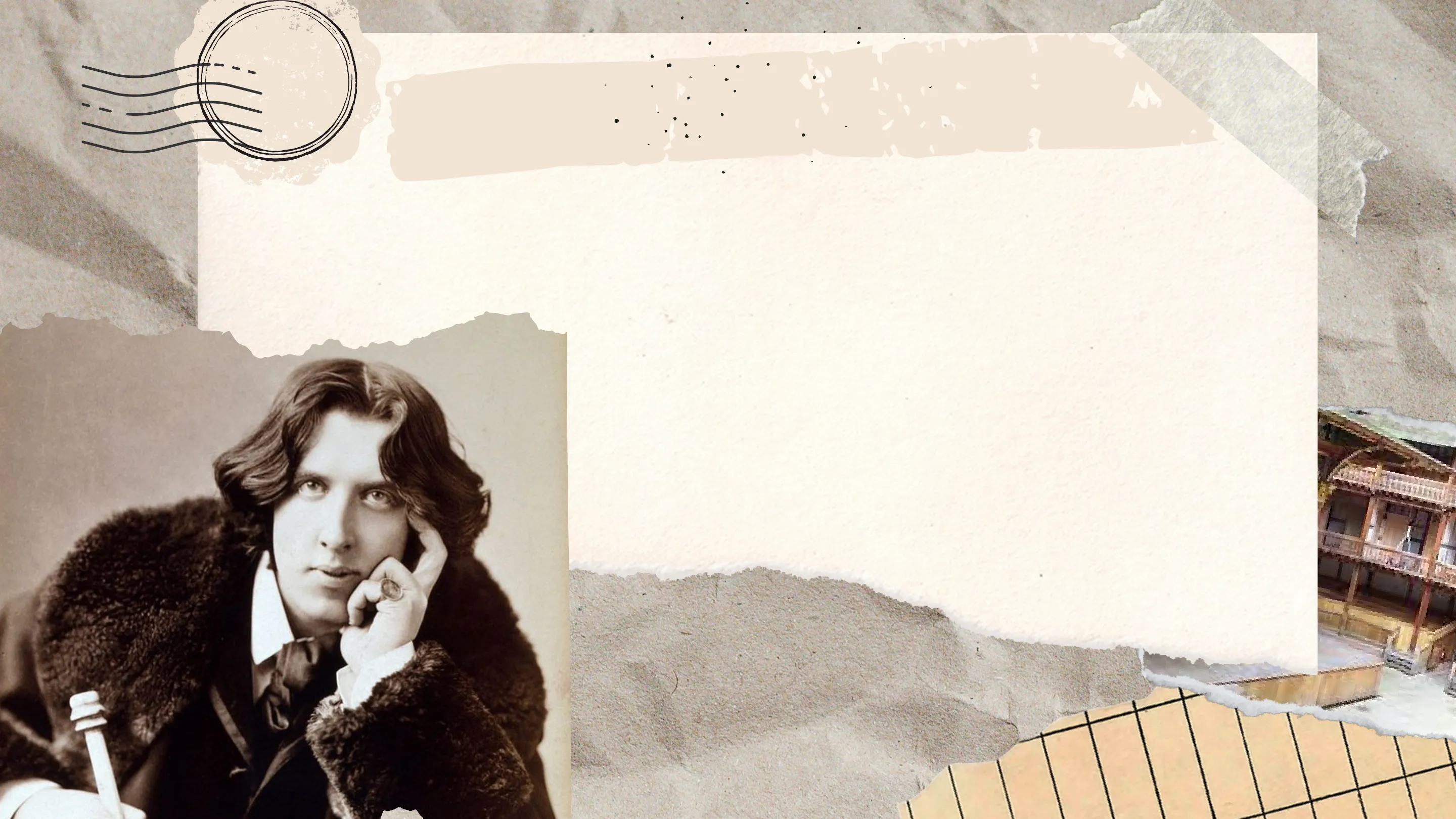
Oscar Wilde was born in Dublin in 1854. After attending Trinity College there, he was sent to Oxford, where he gained a first-class degree in Classics and distinguished himself for his eccentricity. He became a disciple of Walter Pater accepting the theory of 'Art for Art's Sake'. After graduating, he moved to London, where he soon became a fashionable dandy for his extraordinary wit and his extravagant way of dressing.
- In 1884 he married Constance Lloyd, with whom he had two sons. In 1891 he published the novel The Picture of Dorian Gray. After his first and only novel, he developed an interest in drama. He also produced four hugely successful social comedies and a tragedy in French, Salomé.
Wilde's Reputation and Downfall
However, both the novel and the tragedy damaged the writer's reputation, since they were considered immorals and obscenes.In 1891 Wilde fell in love with the much younger Lord Alfred Douglas. The young man's father forced a public trial and Wilde was found guilty of homosexual practices and sentenced to two-years' hard labour.
- While imprisoned, he wrote De Profundis, a long letter reflecting on his life. He died of meningitis in Paris in 1900.
Aestheticism and Art for Art's Sake
In the second half of the century, the traditional Victorian values of strict morality, respectability and material utility were challenged by a new artistic and literary movement, Aestheticism.
- It stated that art had nothing to do with morality and did not have to be didactic. Instead, it had to deal with the elevation of taste and the pursuit of beauty, which was the most important element in life. The famous motto, 'Art for Art's Sake', meant praising the sensual qualities of art and the sensation of pleasure art could create. This went against the Victorian belief according to which literature and art should provide important ethical rules, such as the correct behaviour to follow.
The Dandy Archetype
Oscar Wilde was the embodiment of the dandy, a refined and elegant man who combined a strong taste for elegance and an attention to his appearance, clothes and style. The dandy often used his wit and spirit to shock other people and to unmask the absurdities of Victorian moralism. Dorian Gray, too, appeared as the perfect representation of the 'dandy', a man who sought pleasure
- Dandy is an artist who comes from aristocracy, with intelligent attitudes and feelings of superiority. Moreover, his way of dressing is always elegant first of all because his aim is that of showing his superiority, but the most important reason is because he wants to shock Victorian society, in order to attract people's attention
Dandy's Behaviour and Victorian Society
- With his unconventional behaviour and his foppish way of dressing the dandy made himself as different as possible from the middle class. His witty remarks and paradoxes, which were meant to shock the bourgeois, unmasked the Victorian hypocritical conventions.
The Picture of Dorian Gray Summary
- The story begins in the art studio of Basil Hallward, who is discussing his painting with his amoral friend Lord Henry Wotton. Henry thinks that the painting, a portrait of an extraordinarily beautiful young man, should be displayed, but Basil disagrees, fearing that his ob session with the portrait's subject, Dorian Gray, can be seen in the work.
"Tell me more about Mr. Dorian Gray. How often do you see him?" "Every day. I couldn't be happy if I didn't see him every day. He is absolutely necessary to me." "How extraordinary! I your art." thought you would never care for anything but "He is all my art to me now,"
Dorian's Pact and the Portrait
- Dorian then arrives, and he is fascinated as Henry explain's his belief that one should live life to the fullest by indulging one's impulses. Henry also points out that beauty and youth are fleeting, and Dorian declares that he would give his soul if the portrait were to grow old and wrinkled while he remained young and handsome. Basil gives the painting to Dorian.
"Don't squander the gold of your days, listening to the tedious, trying to improve the hopeless failure, or giving away your life to the ignorant, the common, and the vulgar. These are sickly aims, the false ideals of our age. Live! Live the wonderful life that is in you! Let nothing be lost upon you. Be always searching for new sensations. Be afraid of nothing."
Sibyl Vane and Dorian's Cruelty
A few weeks later, Dorian tells Henry that he has fallen in love with an actress, Sibyl Vane, because of her great beauty and acting talent. Henry and Basil go with him to a dingy theatre to see Sibyl, but her performance is terrible. Sibyl explains to Dorian that now that she knows what real love is, she can no longer pretend to be in love on stage. Dorian is repulsed and wants nothing further to do with her. When he returns home, he sees a cruel expression on the face of his portrait, and he decides to seek Sibyl's forgiveness. Henry arrives the next day, however, with news that Sibyl committed suicide the previous night, and he convinces Dorian that there is no reason for him to feel badly about it.
Dorian's Pursuit of Pleasure
Once again victim to Lord Henry's selfish thoughts about love, death and women, Dorian decides to dedicate his life to the pursuit of pleasure, exploiting without limits the gift of eternal youth that Basil's portrait assures him. He will live regardless of the rules of morality; for this reason, Dorian hides the painting (that depicts him old) away from everyone's gaze and away from Basil, who also claims it to exhibit it in Paris. Furthermore, Dorian categorically refuses to pose again for his painter friend, who interprets the refusal as the end of his artistic life.
Basil's Confrontation and Murder
His lifestyle, meanwhile, has isolated him from the society, scandalized by his libertine attitudes but still fascinated by his eternal youth. One evening, after many years, Basil goes to Dorian, who is on the eve of his thirty-eighth birthday. The painter, leaving for Paris, reports to his old friend all the rumors about him, which he does not want to believe and indeed asks him to deny the rumors about him or at least to explain them. But Dorian shows the painter his painting, which had all the signs of corruption; Basil is horrified and orders Dorian Gray to repent. The protagonist, in a fit of rage, grabs a knife and kills Basil.
Concealing the Crime and James Vane's Revenge
Upset but unable to really repent, Dorian contacts an old friend, the chemist Alan Campbell, and blackmails him into destroying Hallward's corpse with nitric acid. Dorian manages to hide the crime even from his friend Lord Henry and suffocates his sense of guilt by going to an opium shop in the port area. There he has an argument with a prostitute who, while Dorian is now leaving, calls him "Prince Charming".
Dorian's Escape and James's Death
Hearing the epithet, a sailor attacks him. It's Sybil Vane's brother, James, who wants to avenge her sister. However, Dorian manages to save himself thanks to a trick, explaining to James that, despite the resemblance, he cannot be Sybil's ex-boyfriend, since eighteen years have passed and he is still very young. James lets him go but when he returns to the dive the prostitute reveals to him that Dorian Gray looks much younger than he actually is. The episode leaves a strong mark on the psyche of Dorian, who is obsessed with the idea of being killed by James; But, while a hunting trip, James is accidentally killed. Dorian so decides to change his life, confessing to Lord Wotton that he wants to become a better person.
Dorian's Despair and the Portrait's Destruction
His attempts, however, are unsuccessful. Dorian, now desperate, also receives the news of Alan Campbell's suicide, while everyone in the city is talking about Basil's mysterious disappearance. While contemplating his own portrait, determined to regain the purity of his youth, Dorian has a fit of rage and, with the knife with which he killed his friend Basil, strikes the painting to destroy it.
The Portrait's Transformation and Dorian's Death
The servants of the house, hearing a scream, force the door of the room with the help of some policemen. Hanging on the wall is a portrait of a splendid Dorian Gray in the middle of his youth, while on the ground, deformed by wrinkles, is the corpse of an old man with a dagger stuck in his heart, who will only be identified as Dorian Gray thanks to the rings he wears on his fingers.
Characters in The Picture of Dorian Gray
- Dorian Gray, the most important character of the novel, stands for the ideal of youth, beauty and innocence. Unlike the rest of humanity, Dorian stays forever young, while his painting reflects the signs of time and of his immoral acts. His last name 'Gray' suggests he is morally neither black nor white. He decides to lead a life of pleasure and sensations, but in the end, his vanity and selfishness ruin him. The portrait provides a visual representation of the degradation of his soul.
- Lord Henry Wotton is a brilliant talker and an amoral aesthete. He believes youth is the most important value and expresses criticism of institutions which are considered sacred by his contemporaries. He is a poisonous and powerful influence on young Dorian.
Basil Hallward's Role
- Basil Hallward is an artist fascinated by Dorian's beauty and youth. The portrait he paints of his young friend is his best work, but he does not want to exhibit it because he is afraid that it reflects his obsession with Dorian. When he tries to guide Dorian towards good moral conduct, he is killed by Dorian himself.
Themes in The Picture of Dorian Gray
- When the novel was published in 1890, was a shock for most Victorian readers, who believed that the purpose of art was education and moral enlightenment, as illustrated in the works by Charles Dickens and other traditional Victorian novels. The Portrait of Dorian Gray proclaimed beauty as the unique purpose of art and life, refusing the bourgeois morality. However, inspite of its aesthetic declarations, the novel teaches a moral lesson in the end, because Dorian's sins and his hedonistic life lead to his own destruction.
Can’t find what you’re looking for?
Explore more topics in the Algor library or create your own materials with AI.