Stress & Cognition: Mechanisms and Impact on Psychology
Slides from Dr Robin Law about Stress & Cognition. The Pdf explores the definition of stress, its physiological mechanisms including the neuroendocrine system and HPA axis, and its influence on cognition. This University level Psychology document details the stress response system and its health implications.
See more22 Pages


Unlock the full PDF for free
Sign up to get full access to the document and start transforming it with AI.
Preview
Brain, Mind and Behaviour Outline
- Defining (and measuring) stress
- The neuroendocrine system & HPA axis
- Stress and cognition
Caultparksunrise.com 2011
Understanding Stress
What do we mean when we are talking about stress?
Stress is a physiological & psychological response which can be encountered bu a trorat. Han happen anywhere to anyone at any time. It can be transactional, hard to cope with.
- Physiological & psychological response when encountering a threat that we feel we do not have the resources to deal with
- Perceived threat
- Perception we cannot cope
- Very subjective
- Transactional: involves person & environment Involves both factors on the individual
- Overwhelming
- Demands not able to deal with
- Overloaded, pressures
- Positive & negative? (in the literature stress generally seen as negative) - Depends on situation e.g. positive stress when you need to act immediately
Days or weeks comes and goes depending on time Adaptive response helps us build phase but can be maladaptive Acute (fight or flight) vs chronic
What is stress?
Stress arises when individuals perceive that they cannot adequately cope with the demands being made on them or with threats to their well-being (Lazarus, 1966)
Stress is a negative response
Stressors
Stress is induced by stressors Stressor: Perceived threat Vs Response to threat Stressors: Can be minor or major Can be acute or chronic Fight or flight Stress is when individuals perceive that they can't adequently cope with the demands being made or threat to their wellbeing. Stress is a negative response. Stressor are perceived treat or response to threat. Stressors can be acute or chronic miner er major
The Stress Response System
STRESS RESPONSE SYSTEM Hypothalamus Nerve Impulses Increased heart rate Dilation of bronchioles Liver converts glycogen to glucose CATECHOLAMINES Adrenal Glands Decreased digestive system activity High blood pressure
The stress response has 2 primary response systems, controlled by the hypothalamus. The (SAM ) Sympathetic adrenal medhillary which secrets adrenaline. The (HPA) hypamalmic pituarity adrenal which secrets cortisol . Cortisol magers the immune response - stress immitation. When overworked can lead to stress ( chronic ) . When malfunctioned can lead to i'll health .
Hypothalamus controls the two main stress response systems: The sympathetic adrenal medullary (SAM) axis - adrenaline The hypothalamic-pituitary-adrenal (HPA) axis - cortisol Cortisol triggers the immune response to stress - inflammation Together, these systems regulate the stress response. When they become overworked (i.e. chronic stress) these systems can malfunction and this can bring about ill health.
6
The Neuroendocrine System
high level of strew breaks the response system down. fails to recognise. More vulnerable to spess. It should be balanced.
STRESS RESPONSE SYSTEM seitregulations monitors its own function Hypothalamus CRH causes tosecrete another ACTH Pituitary gland Medulla goesinto dood Stream ACTH & around body. CORTISOL Brain stem Adrenal gland secretes cortisol goes into general blood To immune supply system
The HPA axis secretes cortisol
Brain monoamines e.g. 5HT Stress CRH Cortisol Pituitary gland Adrenal gland ACTH Hypothalamus secrets CRH (portal blood vessels of the pituitary) I Pituitary response secreted ACTH ( main blood system) Adrenal Cortisol (everywhere including saliva)
Cortisol
Cortisol is ESSENTIAL for life - but either too much or too little associated with a very wide variety of pathologies Chronic stress associated with prolonged periods of excessive cortisol secretion and enlarged adrenal glands
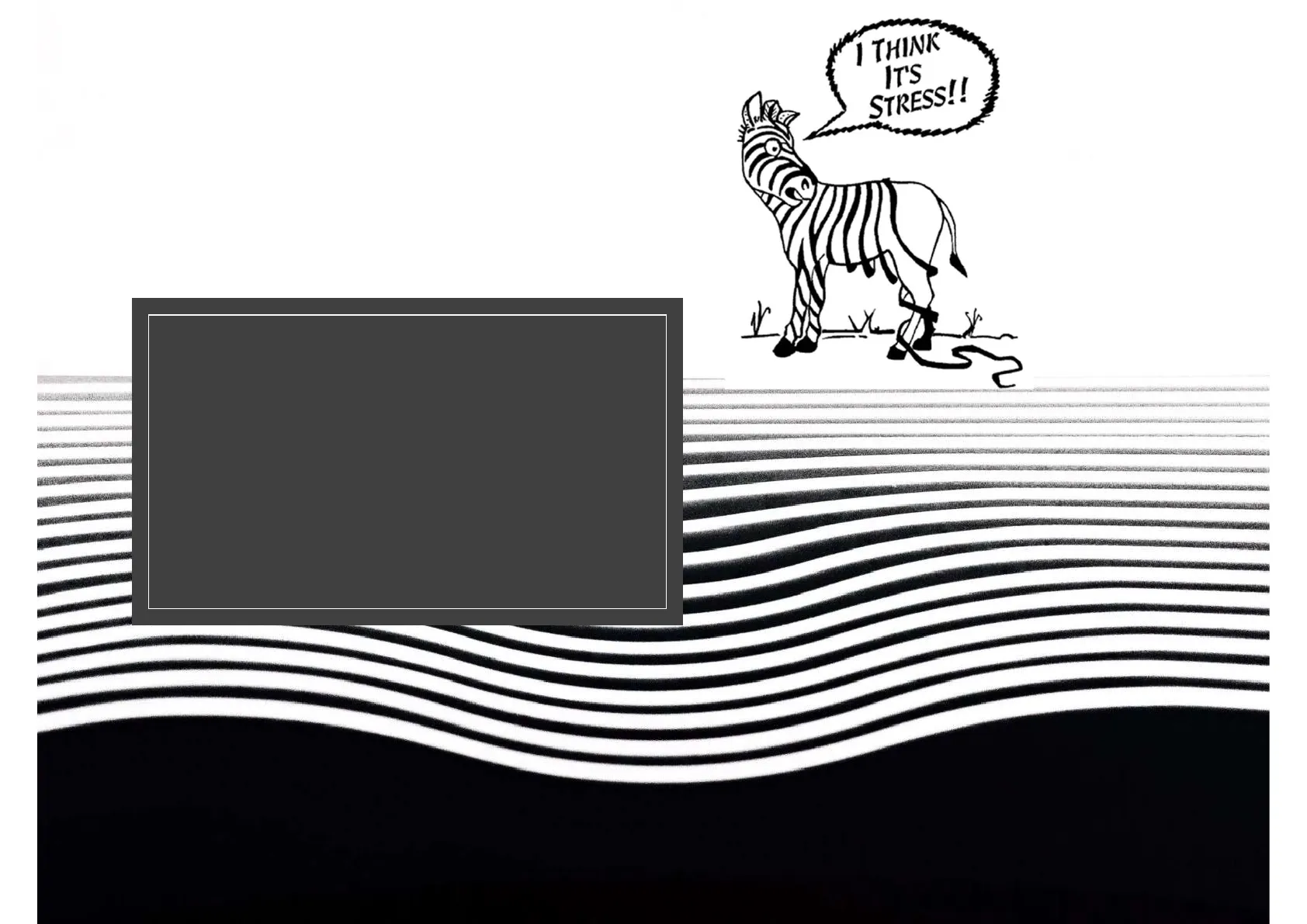
I THINK IT'S STRESS !!
High cortisol levels associated with:
- Stroke
- Depression
- High blood pressure
- Angina
- Heart attack
- allergy
- Diabetes
- Slower wound healing
- Osteoporosis
- Increased infections
- Accelerated cancer progression
- Accelerated HIV progression
- Increase in fat , physical
The cortisol stress response
11
Cortisol can be measured in saliva
goes into blood supply The Salivette >blood + direct measure - blood taking itself is stressful recorded forurine ELISA assay system
1 BE DE F: G H B
Exposure to a standardised stressor induces increased cortisol secretion
12 10 Cortisol (nmol/l) 8 T T 6 Stress 1 0 0 5 10 15 20 25 30 35 40 45 Time (minutes)
Pruessner et al, 1999
Acute/ chronic
Potency of different stressors
1.2 1.0 0.8 *** Effect size (d ) 0.6 ** 0.4 0.2 0.0 -0.2 -0.4 Passive Tasks Motivated Performance Motivated Performance with Uncontrollability Motivated Performance with Social-Evaluative Threat Performance with Social-Evaluative Threat and Uncontrollability
Figure 3. Mean (± SEM) cortisol effect size (d) for studies using passive tasks (k = 21), motivated performance tasks (k = 24), uncontrollable motivated performance tasks (k = 69), motivated performance tasks with social-evaluative threat (k = 43), and uncontrollable motivated performance tasks with social-evaluative threat (k = 51). ** p < . 01. *** p < . 001.
Example ! - o public Speaking 0 can't succeed despite their efforts Start judging them I stress . force to fail . when you combine all the factors they increase stress.
14
Dickerson and Kemeny, 2004
The Trier Social Stress Test
> Individual differences factor. o sex ( gender) -> Don't give you enough detail. -> Self report = males say they are less stressed. Thormones show males are more stressed. > setterreem - come into room, ) microphone & camera facing you ) Panel is not friendly
15
Effects of Cortisol on Cognition and Health
16
Prefrontal regulation during alert, non-stress conditions
a Prefrontal regulation during alert, non-stress conditions DMPFC · Reality testing Error monitoring DLPFC · Top-down guidance of attention and thought rIPFC Striatum · Inhibition of inappropriate actions Hypothalamus VMPFC · Regulating emotion Amygdala NA DA -) losses it's regulatory control ) no control over thinking -> amygdala hijack ALA
Amygdala control during stress conditions
Loss of prefrontal regulation 1 Emotional habits Striatum Bottom-up attention Hypothalamus Amygdala NA Emotional associations DA Emotional reflexes Also involves activation of the neuroendocrine system Major changes in brain function during a response to stress b Amygdala control during stress conditions
Stress and cognitive function
Stress has marked and varied effects on cognitive function (both acute and chronic)
- Adaptive, in the short term
- Largely attributed to the actions of cortisol
- Most evidence: hippocampal and frontal functions (Law and Clow, 2020)
High cortisol levels associated with poor physical & mental health and memory
fat deposits inner wall of artery artery blood channel- (a) (b) 8 Stroke, depression, high blood pressure, angina, heart attack, allergy, diabetes, slow wound healing, osteoporosis, increased infections, accelerated cancer progression, accelerated HIV progression
Declarative memory and the cortisol stress response
a b 12 10 Placebo 9 * Cortisol 10 # of recalled words 8 6 4 r = -. 70 n = 13 p = . 007 -10 -5 0 5 10 15 20 25 cortisol increase (nmol/l) # of recalled words DONONTON 8 7 6 5 4 3 2 1 0 declarativ non-declarativ
Kirschbaum et al. (1996)
Summary and Conclusion
- Marked changes in brain function during stress
- Stress response is adaptive, but can become maladaptive
- Chronic stress linked to impaired cognition, risk for psychiatric disorders
Further Reading
- Law, R., & Clow, A. (2020). Stress, the cortisol awakening response and cognitive function. International review of neurobiology, 150, 187-217. (Available on Blackboard in this week's lecture folder)
- Sapolsky, R. M. (2004). Why zebras don't get ulcers (3rd Ed.). New York: WH Freeman. (Available from the library)
Can’t find what you’re looking for?
Explore more topics in the Algor library or create your own materials with AI.
