Lithosphere mineral resources: geological processes and deposits
Slides about Lithosphere Mineral Resources. The Pdf explores the classification of mineral resources into metals, industrial minerals, and building materials. The Presentation, suitable for High school Science, details geological processes like hydrothermal deposition and Proterozoic marine sediments, offering a comprehensive overview of mineral formation.
See more22 Pages

Unlock the full PDF for free
Sign up to get full access to the document and start transforming it with AI.
Preview
Mineral Resources and Earth's Structure
Lithosphere -
Mineral resources
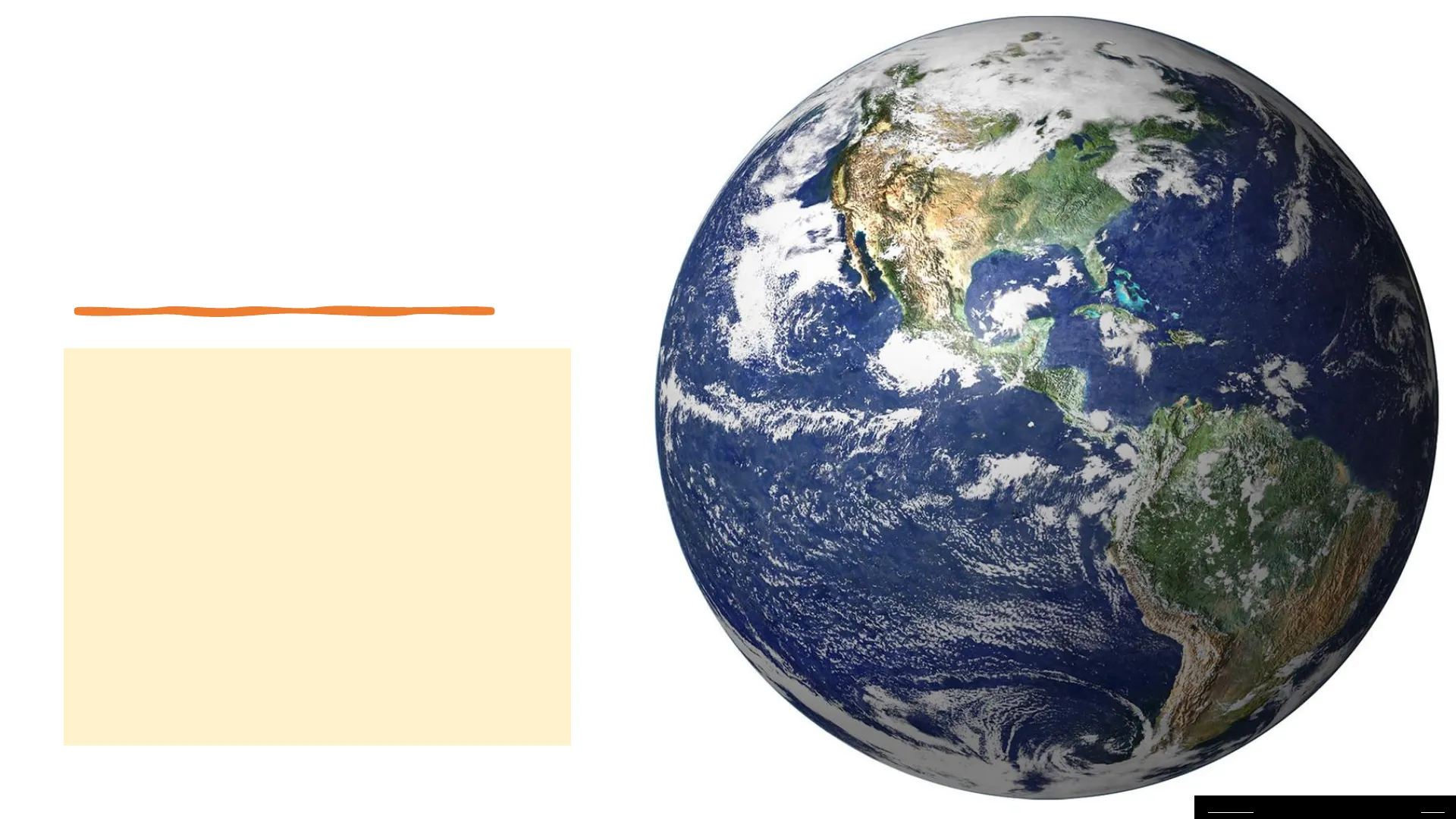
Starter - Can you
draw a diagram that
represents the
internal structure of
the Earth, labelling
each of the layers?
This Photo by Unknown Author is licensed under CC BYMineral resources
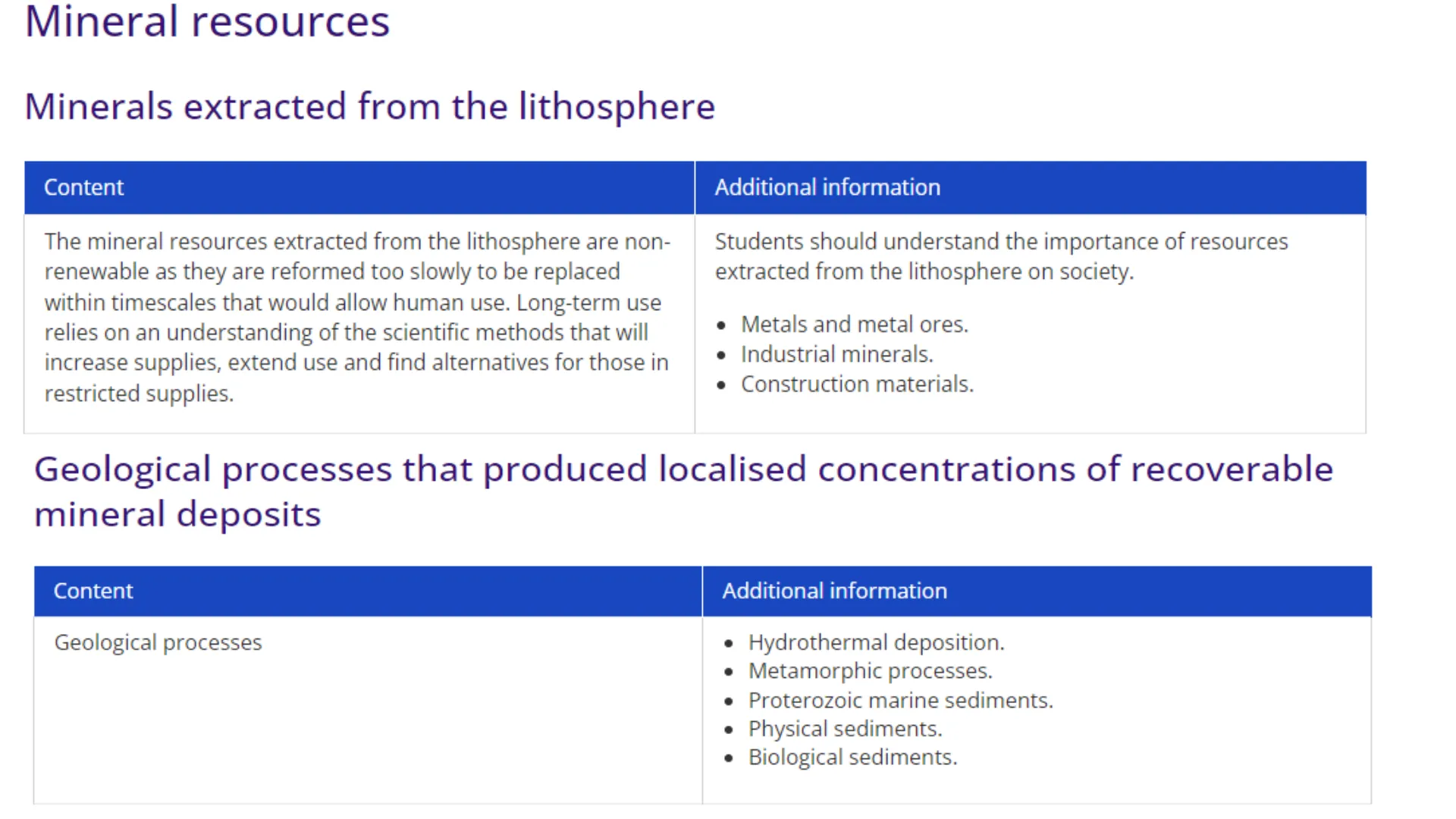
Minerals extracted from the lithosphere
Content: Non-Renewable Mineral Resources
The mineral resources extracted from the lithosphere are non-
renewable as they are reformed too slowly to be replaced
within timescales that would allow human use. Long-term use
relies on an understanding of the scientific methods that will
increase supplies, extend use and find alternatives for those in
restricted supplies.
Additional information
Students should understand the importance of resources
extracted from the lithosphere on society.
- Metals and metal ores.
- Industrial minerals.
- Construction materials.
Geological Processes for Mineral Deposits
Geological processes that produced localised concentrations of recoverable
mineral deposits
Content
Geological processes
Additional information
- Hydrothermal deposition.
- Metamorphic processes.
- Proterozoic marine sediments.
- Physical sediments.
- Biological sediments.The Lithosphere
Is the 'rocky sphere' the
layer of the Earth that is
solid above the
asthenosphere (weak
sphere) which is plastic
So the Lithosphere is the
crust PLUS the upper most
part of the mantle
Crust 0-100 km
thick
Lithosphere (crust
plus the upper
mantle)
Asthenosphere
Mantle
Mantle
2900 km
Outer Core
Liquid
5100 km
Core
Inner Core
SolidStructure of the Earth:
Crust
Relatively thin
Properties of a solid but can flow very
slowly.
Mantle
Outer core
Liquid nickel and iron
Inner core
Solid nickel and ironOcean
Crust - rigid
5 - 70 km thick
Moho
Lithosphere -
Crust & uppermost
solid Mantle
Asthenosphere
partially melted
Mantle - Solid
c. 2850 km thick
Gutenburg
discontinuity
Outer core - liquid,
c. 2200 km thick
Core -
c. 3470 km thick
Inner core - solid -
1270 km thick
Mineral Extraction from the Lithosphere
Minerals are extracted from the Lithosphere
- These are Non- renewable
- They are formed extremely slowly so cannot be replaced in the
timescale for human use. - We can only continue to use if we:
- Find alternatives
- Increase supplies
- Extend their use
- Recycle them
Mineral ore: a naturally
occurring solid material from
which a metal or valuable
mineral can be extracted
profitably:
Crust 0-100 km
thick
Lithosphere (crust
plus the upper
mantle)
Asthenosphere
Mantle
Mantle
2900 km
Outer Core
Liquid
Core
5100 km
Solid
Inner Core
Extracted Minerals and Ores
Minerals are extracted from the Lithosphere
- What do we extract?
- Metals and metal ores
- Galena - lead ore
- Cassiterite - tin ore
- Gold
- Industrial minerals
- Halite
- Kaolinite (china clay)
- Gypsum
- Construction minerals
- Limestone
- Aggregates e.g. sand and gravel
- Igneous rocks
https://www.youtube.com/watch?v=v7g4bQN4vng 3 mins
Fill in tables on work sheet
and see specimens
Crust 0-100 km
thick
Lithosphere (crust
plus the upper
mantle)
Asthenosphere
Mantle
Mantle
2900 km
Outer Core
Liquid
Core
5100 km
Solid
Inner Core
http://polarpedia.eu/wp-content/uploads/2017/07/Lithosphere.jpg
Geological Processes for Mineral Formation
The Geological processes
The geological processes that produce mineral resources are:
- Igneous processes
- Hydrothermal deposition.
- Fractional crystallisation
- Metamorphic processes.
- Sedimentary processes
- Proterozoic marine sediments.
- Physical sediments.
- Biological sediments.
- Chemical sediments
- Secondary enrichmentextrusive
igneous rocks
degassing
volcanism
erosion
dissolution
gases & salts
in solution
sedimentary
rocks
H20
andesite
mechanical and chemical
weathering
lahar
sediments
gravel, sand, silt, mud, clay
mineral
precipitation
peat
rhyolite
basalt
porphyry
gypsum
rock
salt
serpentinite
lava flows
deposition
collapse
breccia
bioaccumulation & bioturbation
diabase
planktonic ooze
disconformity
lignite
shale-
hydrothermal
veins
granodiorite
intrusive
igneous rocks
mudstone-
groundwater
siltstone
motion &
fossilization
interactions
gas
oil
diorite
granite
conglomerate-
bituminous coal
uplift
basalt
pyroxenite
intrusion
peridotite
crystallization
unconformity
metasandstone
oceanic
crust
cooling
argillite
plutonism
earthquake
subsidence
dołostone
schist
slate
anthracite coal
marble
tectonism
folding & faulting ,
metamorphism
recrystallization
melting
gneiss
continental
crust
metamorphic
subduction
mantle heat convection
ecologite
heat and pressure
increases with depth
rocks
ice
ash fall
impact
transport by wind, and moving water and ice
dust
sorting
evaporation
transpiration
dacite
volcanic tuff
waves
currents
trophic
respiration
turbidity flows
reef
buildup
lime sediments
unconformity
compaction
cementation
lithification
organic
maturation
gabbro
travertine
sandstone
pegmatite
fault breccia
chert
greenstone
mineralization
metachert
metaconglomerate
limestone
magma
(molten or near molten rock)
mylonite
quartzite
schist
The
Rock
Cycle
Illustrated
igneous
rocks
soil colluvium landsliding
extraterrestrial
materials
condensation & precipitation
Hydrothermal Deposition
Hydrothermal deposition
https://www.nationalgeogr
aphic.org/media/deep-sea-
hydrothermal-vents/
7 mins
Hydrothermal deposition = Minerals
that precipitate out of hot water
- Hot water comes from the geothermal
gradient (the rate at which temp
increases with depth) or from intruding
molten magma (molten rock under the
ground) - Water is super-heated as it is under
huge amounts of pressure it is still
liquid at temperatures far above 100
degrees C - Forms Mineral veins
Clay layer
Newly formed volcanic
rock layer
Water from
precipitation
Older volcanic
rock layer
Mineral Veins
(gold, silver, copper, etc.)
HS CO
H2OS
2 HCI
Hydrothermal fluid
Magma
Add diagram to work sheet
and fill in gaps
Resources from Hydrothermal Deposits
10 resources that can be formed in
Hydrothermal deposits
- Chalcopyrite = copper ore
- Galena = lead ore
- Cassiterite = tin ore
- Gold
- Quartz
- Calcite
- Barite
- Flourite
- Cobalite
- Sphalerite
2ºC
3He, Fe, Mn, CH4, CO2, H2S
2.05°C
HOT
350℃
WARM
2-60℃
Seawater
Axis
Seawater
Spreading
Reaction
Zone
400°C
Ocean Crust
MAGMA
1200°C
Igneous Processes: Fractional Crystallisation
gneous Processes -fractional crystallisation
Fractional crystallisation is the order in which minerals crystallise out of a molten rock.
This only happens if the magma cools very slowly.
As the melt cools the minerals with the highest melting point crystallise out first.
These minerals are often rich in elements such as iron and magnesium.
As a solid these are now denser than the melt and so sink to the bottom of the magma chamber (Gravity Settling).
This means that the Fe and Mg that would have been disseminated (spread out) in the rock if it cooled quickly is
concentrated at the bottom of the intrusion as a Cumulate Layer.
Add diagram to work sheet
and fill in gaps
Magma
Crystals form from
magma cooling and
settle to floor of
chamber
Crystals from early
cooling accumulate
Brian J. Skinner
Metamorphic Processes and Recrystallisation
Metamorphic Processes
- When a sedimentary rock is touched
by a molten rock it recrystallises to
from a metamorphic rock - When two tectonic plates collide the
temperature and pressure created is
so high it causes the rocks to
recrystallise.
Recrystallisation causes: - Limestone to become marble
- Mudstone to become slate
Metamorphic Rocks - Bing video 11mins
See limestone and marble note fossils in
limestone and crystals in marble
Fill in gaps in handout
limestone
marble
increasing metamorphism
http://geologycafe.com/images/meta_lime_marble.jpg
Proterozoic Marine Sediments: Banded Iron Formation
Proterozoic marine sediments
Remember the cyanobacteria that created
the Earth's oxygen?
The first oxygen produced by the
cyanobacteria was all used up creating iron
oxides with all the free iron in the oceans.
This produced huge quantities of iron oxide
for the BIF (banded iron formation). See
specimen and fill in gaps in worksheet
Once this was complete it could become
free oxygen in our atmosphere.
https://www.youtube.com/watch?v=E8-4IZGgfvY 3 mins
Physical Sediments and Placer Deposits
Physical sediments
- Sedimentary processes cause
minerals to be deposited and
concentrated in certain areas. - For example where a high energy
environment (velocity water)
enters a lower energy
environment. - Where the energy decreases the
water can no longer carry these
dense minerals and so they are
deposited together.
Stream flow
Placer
Behind rock bars
Stream flow
Placer
In rock holes
-
Placer
Inside meander loops
-
Placer
Downstream from a
tributary
Sea level
Prevailing
current
·Placer
Behind undulations on ocean floor
http://earthsci.org/mineral/mindep/auplace/Auplacers.jpg
Placer
Below waterfalls
Characteristics of Placer Deposit Minerals
Physical sediments
These placer deposits form only with
minerals that have certain
characteristics:
- High density - so they are concentrated
together - Hard or malleable - so they don't break
up into smaller fragments and get
washed away - Lack of cleavage (planes of weakness) -
again so they don't break up into small
particles - Unreactive - so they don't dissolve in
the water
Stream flow
Placer
Behind rock bars
Placer
Below waterfalls
Stream flow
Placer
In rock holes
-
Placer
Inside meander loops
-
Placer
Downstream from a
tributary
Sea level
Prevailing
current
·Placer
Behind undulations on ocean floor
Typical Placer Deposit Minerals
Physical sediments
- Typical minerals are:
- Gold
- Diamond
- Cassiterite - tin ore
Add diagrams to work
sheet and fill in gaps
Stream flow
Placer
Behind rock bars
Placer
Below waterfalls
Stream flow
Placer
In rock holes
-
Placer
Inside meander loops
-
Placer
Downstream from a
tributary
Sea level
Prevailing
current
·Placer
Behind undulations on ocean floor
Evaporites: Salts from Evaporation
Evaporites
During the Permian geological period Britain was
covered by an ocean which evaporated leaving
behind valuable salts such as:
- Gypsum - for plaster
- Calcite - for medicines
- Halite - your chips and industrial chemicals
- Potassium salts - for fertilisers
Copper sulphate crystallization | Crystallisation | Chemistry -
Bing video 3 mins
http://it.geol.science.cmu.ac.th/gs/courseware/205363/WWW
/Intro_files/evaporites.jpeg
Biological Sediments and Mineral Deposits
Biological Sediments
Fill in gaps in handouts
Where living organisms create
mineral deposits e.g:
- Shells of marine organisms =
limestone - Terrestrial (land) plants = coal
- Marine microorganisms
(plankton) = crude oil and gas. - https://www.youtube.com/watch?v=p_3rxnHES-M 4 mins
Can’t find what you’re looking for?
Explore more topics in the Algor library or create your own materials with AI.
