La geosfera terrestre: struttura interna e tettonica a placche
Slide sulla geosfera terrestre, la sua struttura interna e la tettonica a placche. Il Pdf esplora la geologia della Terra, focalizzandosi sulla geosfera e la tettonica a placche, con definizioni e descrizioni delle strutture interne e dei movimenti delle placche tettoniche, adatto per la scuola superiore in Scienze.
Mostra di più21 pagine

Visualizza gratis il Pdf completo
Registrati per accedere all’intero documento e trasformarlo con l’AI.
Anteprima
La Terra: Dati e Struttura
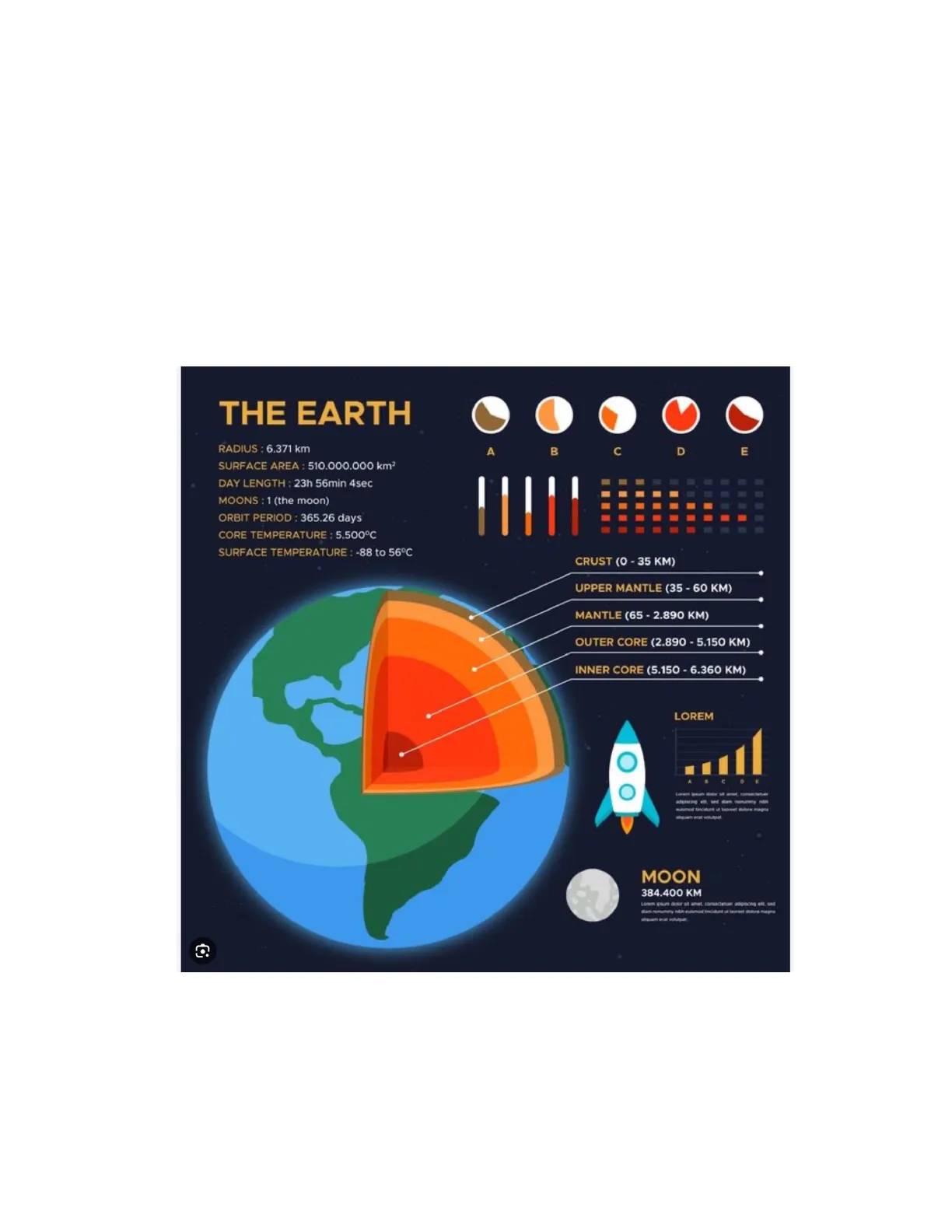
Unit 2: THE GEOSPHERE THE EARTH RADIUS : 6.371 km A B C D E SURFACE AREA : 510.000.000 km2 DAY LENGTH : 23h 56min 4sec MOONS : 1 (the moon) ORBIT PERIOD : 365.26 days CORE TEMPERATURE : 5.500°℃ SURFACE TEMPERATURE : - 88 to 56°℃ CRUST (0 - 35 KM) UPPER MANTLE (35 - 60 KM) MANTLE (65 - 2.890 KM) OUTER CORE (2.890 - 5.150 KM) INNER CORE (5.150 - 6.360 KM) LOREM A C MOON 384.400 KM Lorem porn dolor sit amet, consectetuer adipiscing eft. ved dan nonuneny nith euvhod tincidunt ut laoreet dolore magne1 .- The Structure of the Geosphere: Crust, Mantle, and Core
The geosphere is the solid part of the Earth, which includes the rocks, minerals, and landforms that make up our planet. It is divided into three main layers: the crust, the mantle, and the core. Each layer has different characteristics, including its composition, temperature, and physical state.
La Crosta Terrestre
1.1 The Crust The crust is the outermost layer of the Earth. It is where we live, and it includes all the landforms like mountains, valleys, and ocean floors. The crust is very thin compared to the other layers, like the skin of an apple. It is made mostly of solid rock and is divided into two types:
- Continental crust: This is the thick part of the crust that forms the continents. It is mostly made of rocks like granite and can be up to 70 kilometers thick in some places.
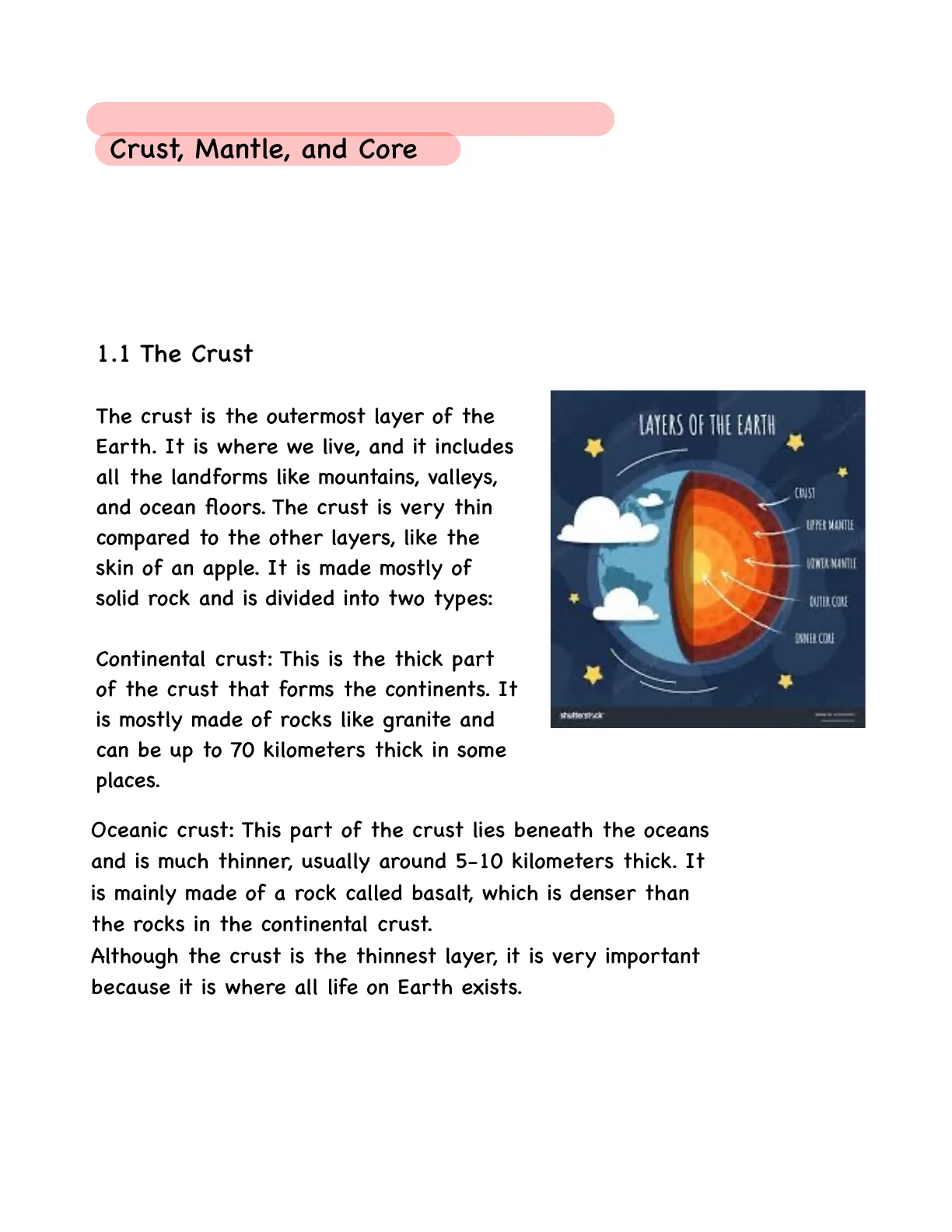
LAYERS OF THE EARTH LOYER MANTLE VONEL MANTIE DUTEA. CORE DANER COLE shutterstock
- Oceanic crust: This part of the crust lies beneath the oceans and is much thinner, usually around 5-10 kilometers thick. It is mainly made of a rock called basalt, which is denser than the rocks in the continental crust. Although the crust is the thinnest layer, it is very important because it is where all life on Earth exists.
Il Mantello Terrestre
1.2. The Mantle Below the crust is the mantle, which is the thickest layer of the Earth, extending to a depth of about 2,900 kilometers. The mantle is made of semi-solid rock, which means that it is mostly solid but can flow very slowly, like thick syrup. The temperature in the mantle increases as you go deeper, reaching up to 3,000℃ near its base.
Armarphive Lithosphere Aatkenaiphere Lower 5 Crust "Upper Lower mantle Cứne The mantle is divided into two parts:
- Upper mantle: The upper part of the mantle is solid, but below the crust, there is a softer region called the asthenosphere. This is where the rocks are hot enough to flow, which allows tectonic plates (large pieces of the Earth's crust) to move.
- Lower mantle: This part is much hotter and under more pressure, so it is solid but still capable of slow movement. The movement of the mantle causes many geological phenomena, such as earthquakes and volcanic eruptions, as tectonic plates shift and interact with each other.
Il Nucleo Terrestre
1.3. The Core The innermost layer of the Earth is the core, which is divided into two parts: the outer core and the inner core. The core is mainly made of iron and nickel, and it plays a crucial role in generating Earth's magnetic field.
- Outer core: The outer core is liquid, made of molten iron and nickel. It surrounds the inner core and extends to a depth of about 5,150 kilometers. The movement of the liquid metal in the outer core generates Earth's magnetic field, which protects us from harmful solar radiation.
- Inner core: The inner core is solid, despite the extreme temperatures, which can reach up to 5,500℃. The high pressure at the center of the Earth keeps the inner core solid, even though it is made of the same materials as the outer core. The core is the hottest part of the Earth, and it is responsible for much of the heat that drives processes in the mantle and crust.
Tettonica a Placche: Movimenti Terrestri
L2. Plate Tectonics: Understanding Our Earth's Movements The Earth's surface is not one solid piece; instead, it's broken into several large and small pieces called tectonic plates. Imagine the Earth's crust as a giant puzzle, with each piece slowly moving. These plates float on a softer layer beneath them called the mantle. The movement of these plates is very slow- just a few centimeters each year-but over millions of years, it has caused big changes in our planet.
Tipi di Movimento delle Placche
There are three main ways tectonic plates move:
- Divergent Boundaries: Plates move away from each other. This happens under the oceans and creates new crust, forming things like mid-ocean ridges.
- Convergent Boundaries: Plates move towards each other. When this happens, one plate can slide beneath the other in a process called subduction, forming mountains or causing volcanic activity.
- Transform Boundaries: Plates slide past each other. This can cause earthquakes when the plates suddenly move after being stuck.
PLATE MOVEMENT Transform Divergent dreamstim ch Convergent Activities: a) Define tectonic plate. b) Draw and describe the different ways in which tectonic plates can move.Some important effects of plate tectonics include:
- Earthquakes: These happen when plates suddenly move, causing the ground to shake.
- Volcanoes: Many volcanoes are found where plates meet. When one plate sinks beneath another, it can cause magma to rise and create a volcano.
- Mountain Formation: When two plates push against each other, they can form mountains. The Himalayas, for example, were formed this way. In conclusion, plate tectonics helps explain why we have earthquakes, volcanoes, and mountains. Even though we can't see the plates moving, their slow motion has shaped the Earth over millions of years and continues to do so today!
Attività Pratica: Puzzle delle Placche Tettoniche
Hands on activity National (NSF Science Foundation PLATE TECTONICS PUZZLE Grade Level 3-8 The Earth is divided into several layers. The surface layer we live on is called the crust, which sits on top of a lower layer called the mantle. Together, the crust and top part of the mantle make up the Earth's tectonic plates, which fit together like puzzle pieces.
Crust Mantle There are many forces which drive plate movement in the Earth. The places where tectonic plates meet are called plate boundaries.
Volcanic eruptions and earthquakes often happen at plate boundaries. Islands, mountain ranges, and deep ocean trenches also form at these boundaries.
Le 15 Placche Tettoniche
There are 15 different tectonic plates:
- Caribbean plate
- Cocos plate
- Nazca plate
- Juan de Fuca plate
- North American plate
- Pacific plate
- Philipine plate
- Arabian plate
- Eurasian plate
- Australian plate
- Antarctic plate
- Scotia plate
- South American plate
- African plate
- Indian plate Refer to these numbers and names when you are completing your plate tectonics puzzle.
Istruzioni per il Puzzle
NSF National Science Foundation Supplies Needed: scissors, tape or glue stick, colored pencils or markers or crayons Instructions: 1. Color each tectonic plate a different color. 2. Cut along the black outlines to cut out the different tectonic plates. 3. Arrange and then paste the plates on the blank page to create a world map. Hint: Use the land masses and the shape of each plate to fit the plates together.
13 9a 8 6 9b
Vulcanismo, Terremoti e Forze Terrestri
Volcanoes, Earthquakes, and Other Forces of the Earth The geosphere, or the solid part of our planet, is constantly changing because of powerful natural forces. Two of the most dramatic examples of this are volcanoes and earthquakes. These events show just how much energy is stored beneath the Earth's surface and how it can affect our lives.
I Vulcani: Montagne di Fuoco
1. Volcanoes: Earth's Fiery Mountains A volcano is a mountain that forms when molten rock, called magma, escapes from deep inside the Earth. When a volcano erupts, the magma comes out as lava, and over time, the lava cools and hardens, creating layers of new rock.
How Volcanoes Work: Most volcanoes form along cracks in the Earth's crust called tectonic plate boundaries. These plates are always moving, and sometimes magma finds a way to rise to the surface through these boundaries. When it does, it can erupt explosively or flow slowly, depending on the type of volcano.
Tipi di Vulcani
Types of Volcanoes:
- Shield volcanoes: These are wide, with gentle slopes, and their eruptions are usually non-explosive. An example is the volcanoes in Hawaii.
- Composite volcanoes: These are tall, cone-shaped mountains that can have explosive eruptions. Mount St. Helens in the U.S. is an example.
- Cinder cone volcanoes: These are the smallest volcanoes and erupt explosively, shooting small bits of rock called cinders into the air. Why Volcanoes Matter: Volcanoes can be both dangerous and helpful. While eruptions can destroy towns and forests, the ash and lava they release also make the soil very rich in nutrients, which helps plants grow.
I Terremoti: Quando la Terra Trema
2. Earthquakes: When the Ground Shakes An earthquake happens when the Earth's crust suddenly moves, causing the ground to shake. Earthquakes are usually caused by the movement of tectonic plates, the huge pieces of rock that make up the Earth's surface.
How Earthquakes Happen: Most earthquakes happen along fault lines, which are cracks in the Earth's crust where two plates meet. Sometimes, the plates get stuck and pressure builds up. When they finally move, all that energy is released, causing the ground to shake.
Measuring Earthquakes: The strength of an earthquake is measured using the Richter scale. The higher the number on the scale, the stronger the earthquake. Earthquakes are also measured by their epicenter, which is the point on the Earth's surface directly above where the earthquake starts.
What Earthquakes Can Do: Earthquakes can cause buildings to collapse, roads to crack, and even landslides. If an earthquake happens under the ocean, it can create giant waves called tsunamis.
Presentazioni su Tettonica a Placche
Assign each group or student a specific topic related to plate tectonics.
- Types of plate boundaries (divergent, convergent, and transform).
- Famous earthquakes (e.g., San Francisco 1906, Japan 2011).
- Volcanoes linked to tectonic plates (e.g., Mount Vesuvius, Mount St. Helens).
- Mountain ranges formed by tectonic activity (e.g., the Himalayas, the Andes).
- Oceanic and continental crust differences.
- The role of tectonic plates in creating continents and oceans.
- Volcanic Islands
- The Ring of Fire. Presentations should be 3-5 minutes long, clear, and focused. Each presentation must include: A) Introduction to the topic: Basic explanation of their assigned subject. Real-world examples: For example, if their topic is earthquakes, they should describe a recent or famous earthquake. B) Visuals: Encourage students to include maps, diagrams, or images. They should help clarify the information, such as a map showing tectonic plates or a diagram of how earthquakes happen.
Consigli per le Presentazioni
Presentation Tips: a) organize their presentation with a clear structure: introduction, main points, and conclusion. b) Practice public speaking: practice speaking clearly, using body language, and making eye contact with your peers. c) Time management: Emphasize the importance of staying within the 3-5 minute timeframe.
Sessione di Domande e Risposte
Q&A Session: After each presentation, there will be time for a brief Q&A session where you ask their peers questions. This helps develop critical thinking and reinforces learning.
Non hai trovato quello che cercavi?
Esplora altri argomenti nella Algor library o crea direttamente i tuoi materiali con l’AI.
