The Interwar Period 1918-1939: US Prosperity and Rise of Nazism
Slides about The Interwar Period 1918-1939. The Pdf explores the US prosperity and crisis, including the Golden Twenties, and the rise of Nazism in Germany. This High school History Pdf provides clear explanations and contextualized information for study.
See more28 Pages

Unlock the full PDF for free
Sign up to get full access to the document and start transforming it with AI.
Preview
The Interwar Period: US Prosperity and Crisis
The Golden Twenties
THE INTERWAR PERIOD 1918-1939 OThe US prosperity and crisis
- The Golden Twenties:
- After First World War the USA became the first economic and military power in the world.
- Between 1922 - 1929 there was a period of great economic growth,
known as "Golden Twenties/Roaring Twenties". Characteristics:
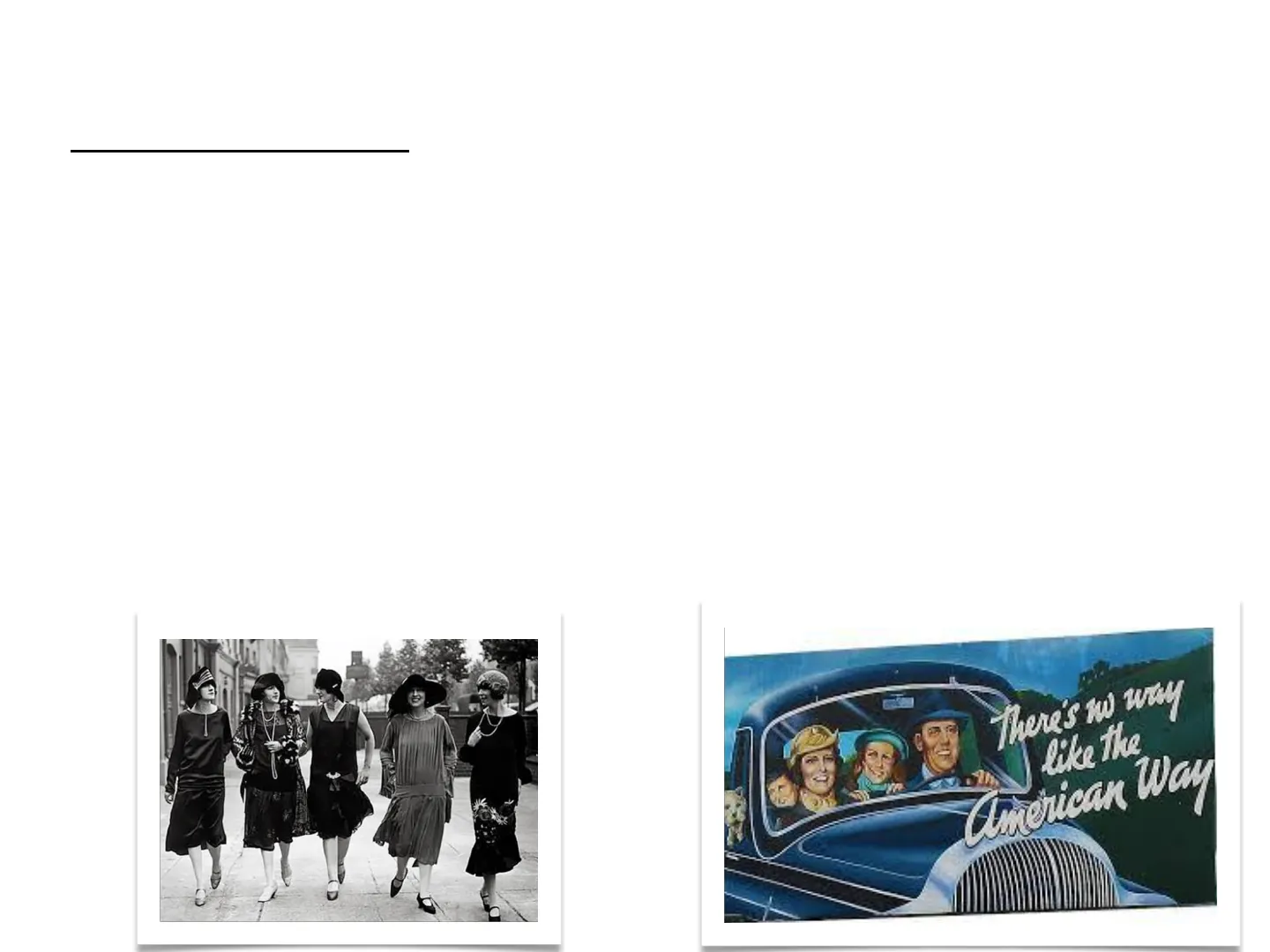
- Triumph of the "American way of life": Individual effort and success guaranteed wealth and wellbeing.
- Economic growth based on industrial production for a mass consumption society.
- Stock market boom: profits from good business rise in demand for shares.
0 There's no way like the american WayThe US prosperity and crisis
Paradox of Prosperity and Agricultural Collapse
- The paradox of prosperity: Deceleration in
production (1926 - 1927)
- Agricultural collapse: Agricultural prices increased less rapidly than industrial ones. Many farmers were unable to pay their loans.
- Stagnation of traditional industries: Overproduction generated and excess in offer. Many workers started to lose purchasing power.
ORANGE PICKERS WANTED 3 MILESThe US prosperity and crisis
The Wall Street Crash of 1929
- The wall street crash of 1929:
- Speculative bubble in the stock market: made a disconnection between real economy and productive economy.
- Price of shares rise steadily: many people ask for loans and credits to invest in the stock market.
- Mistrust spread on October 24th: rumors about a possible decrease in shares prices unleash the panic, everyone wanted to sell and no one wanted to buy shares. (Black Thursday)
- The value of shares plummeted and triggered the Wall Street Crash of 1929.
LATE NEWS THERE CESTA The Milwaukee Leader JE PAGES London but Derald BILLIONS LOST IN NEW STOCK CP -- FRIDAY 296 OCTOBER 1929 LATE PRICES And Complete Long Island News * XEW YORK CITY, FAURSDAY. OCTOBER 24, 3829. » WALL STREET CRASH! 'unish Senator for iding Tariff 1 Daily Llens The THURSDAY, OCTOBER 24, 1929 IN BRUSSELS MCB: PRINCE UNHURT -------- ---- Royal Suiker W'as About -- ------------ - 346260 Attempt Made to Kill Italy's Crown Prin- HOME EDITION BROOKLYN DAILY EAGLE CRASH CITY EDITION Black Thursday in America Stocky Plunge and Eleven FEAR 52 PERISHED PIECE OF PLANE High Commit Suicide TO SELL: VS LØST IN LAKE MICHIGAN: LIKE OITEMAN - Destroys Films WALL ST. IN PANIC AS STOCKS CRASH ------ Worth Millions FERRY IS MISSING JF PAIE ATTEMPT MADE ONLEFT Conildetel Studies Are We. -- BLACK THURSDAY! Wall St. in panic as stocks crash MEVACES [ROU'STRLAP ASSASSIN CAUGHT Hollywood Fire -------NEW YORK STOCK EXCHANGES PRICES (1925 - 1932) 220 210 200 190 180 170 160 150 140 130 120 110 100 90 80 70 . 60 50 40 30 1925 1926 1927 1928 1929 1930 1931 1932 Font: KINDLEBERGER, Ch.P .: The World in Depression, 1929-1939, 1973. Č.Aranda & J.ManereThe US prosperity and crisis
Consequences of the Crash
- Consequences of the crash:
- Many investors were ruined and panic spread.
- Citizens wanted to withdraw money from the banks, but were unable to provide cash.
- Dozens of banks were forced to close: they could not collect loans provided to individuals.
- Industry and agriculture was also affected.
- Widespread economic recession: Unemployment, decline in consumption, factories shutdown and poverty.
WORLD'S HIGHEST STANDARD OF LIVING * * * * There's no way like the american Way WHY CAN'T YOU GIVE MY DAD A JOB?The US prosperity and crisis
The New Deal Economic Program
- The New Deal:
- Economic program introduced in 1932 by president Franklin D. Roosevelt to fight the crisis.
- Based on ideas of J.M. Keynes: advocated state intervention in economy.
- Most important measures:
- Creation of public companies in strategic sectors: agriculture, construction ...
- Strict control over banks: Monitoring deposits and forcing to offer low-interest loans.
- The state promote public works programme, encouraged companies to increase wages and reduce working week to 40 hours.
FRANKLIN D. ROOSEVELT AND THE NEW DEAL WILLIAM E. LEUCHTENBURG "The best one-volume study of Franklin D. Roosevelt." Chicago Sun-Times 1932-1940
The Rise of Totalitarianisms
Causes of Totalitarianism
- Causes:
- Crisis of 1920's in Europe, aggravated by the crash of 1929 provoked more extreme positions.
- Bourgeoisie was terrified of a possible revolution like in Russia.
- Economic crisis increased social discontent and social agitation.
- The dominant groups (church, landowners, bankers, army) supported parties that proposed to impose the order.
The rise of totalitarianisms
Common Characteristics of Totalitarian Regimes
- Common characteristics:
- They reject democracy and parliamentarianism
- Existence of a single party that monopolized political activity
- Cult of a leader and extreme nationalism
- The state controlled all spheres of public life: Economy, politics, education.
- State organization based on the principles of hierarchy, force and leadership.
- Idealization of the war, youth and masculinity.
- Control of the media and use of propaganda.
- Encouraged mass movements, youth organizations and paramilitary groups ("shirts")
- Use of mechanisms of social control and repression.
Italian Fascism
Causes of Fascism in Italy
- Causes of fascism:
- Disappointment with peace agreements of 1919:
- Italy did not receive Dalmatia and Fiume, as had been agreed in 1915 by the Triple Entente.
- Political Instability:
- No political party had sufficient majority; Five different governments between 1919 and 1922.
- Economic instability:
- Due to the costs of war: high number of casualties, industries destroyed, high foreign debt ...
- Big inflation: many Italians suffer food shortage, unemployment or economic recession.
- Social tensions:
- Workers strikes widespread encouraged by the soviet example.
- Conservative classes fear of a workers' revolution.
- Disappointment with peace agreements of 1919:
-- Achinco Mar MenterraneoItalian Fascism
Origin and Rise of the Fascist Party
- Origin and rise of the Fascist Party:
- Benito Mussolini founded in 1919 the "Fasci Italiani di Combattimento": a paramilitary group that wore black shirts and violently attacked the rise of labour movement.
- In 1921 founded the "Fascist National Party", main
ideas:
- Stop revolutionary movements in Italy
- Build a strong state and guarantee private property
- Expansionist foreign policy.
- Initial supports:
- Bourgeoisie
- Catholic Church
- King Victor Emmanuelle III
- Financed by large agricultural and industrial owners.
FASCI ITALIANI DI COMBATTIMENTOItalian Fascism
Storming of Power in Italy
- Storming of power:
- In 1922 elections Fascist Party only obtained 22 deputies out of 500.
- Months later, the general strike made by socialist and anarchist, proved the government's lack of control on the situation. Mussolini demanded that the king give him the control of the government.
- The March on Rome:
- In October 1922, Mussolini organised a large demonstration in Rome, to show his power.
- The king, forced by conservatives forces, appointed him as head of government.
LESTERItalian Fascism: The fascist government
The Fascist Government Phases
- 1st phase 1922 - 1924:
- Mussolini restricted freedoms and persecuted opponents (Socialists, communists and Christian democrats)
- Kept up the pretence of a parliamentary regime.
- 2nd
phase 1924- 1940:
- Fascist party won the elections using violence and vote- coercion.
- Establishment of an authoritarian regime:
- Abolishment of political parties except the Fascist party
- The parliament was replaced by "Chamber of Fasci"
- Strikes and trade unions were banned
- Self-sufficient economy policy: supported private companies with the intervention of the state.
- Strict control over society: Censorship, cult of the leader "Duce", confessional state.
- Territorial expansion: Invasion of Abyssinia (Ethiopia), Eritrea, Libia and Somalia between 1935 and 1938.
P. N. F. ESPANSIÓN TERRITORIAL ITALIANA ALBANIA Boma iran tutela italiana desde 1927. ocupación desde 1939 DODECANESO Rodar LÍBIA ERITREA ·amara Addis Abeba. ETIOPIA OM 5 SOMALIA territorios Italianos en 1918 expansión territorial italiana en el periodo 1919-1939
Germany: The Rise of Nazism
Post-War Crisis in Germany
Germany: the rise of Nazism
- Post war crisis in Germany:
- Weakness of the Weimar Republic: Democratic government founded after the abdication of the Kaiser Wilhelm in 1918. Led by Christian Democrats and socialists. Was a democratic republic, but had weak governments that couldn't solve the social and economic problems.
- General unrest situation:
- Humiliation of Germany in the treaty of Versailles:
- Generates a feeling of revenge.
- Economic crisis due to the war debts caused high inflation, poverty and unemployment.
- Revolutionary movements arose (Spartacists and Communists) and nationalist movements (Nazis). Both, wanted to take over the power.
- Humiliation of Germany in the treaty of Versailles:
Flag of the Republic of Germany RORUEGA EL TRATADO DE VERSALLES CON ALEMANIA SUECIA ASTONIA - Fronteras de Alemania en 1914 LATVIA Territorio perdido por el Tratado de Versales DINAMARCA LITUANIA Alemania después del Tratado de Versalles Schleswig, BRETAÑA a Dinamarca PRUSIA ORIE&TAL OMIas 200 DANZIGY 0 Km PERDIDAS EN AFRICA HOLANDA BERLIN RUHA Prusia Occidental, Posen y partes de Alta Silesia. & Polonia BELGICA .WEIMAR Areas a Bélgica POLONIA LUXEMBURGQ ( RENANIA BARRE CHECOSLOVAQUIA Alsacia-Lorena, a Francia MUNICH . AUSTRIA TANGANICA .Gran Bretaña) SUIZA UNION SOVIETICA Africa Sudoccidental Alemana (Sudáfrica) ITALIA Territorial losses of Germany after the treaty of Versailles. Germany lost all its colonial empire and important territories in Europe Desempleo en Alemania 1928-1932 6000000 5000000 4000000 desempleo 3000000 2000000 1000000 0 1928 1929 Desempleo total 1390000 1890000 3070000 Desempleo % 8,40% 13,10% 15,30% 23,30% 30,10% 500 MILLIONEN C MARK Gradt Suffeldorf 621934 MILLIONE Z Children playing with bank notes. An example of the hyperinflation in the 20's when German money loss all its value. GRAN (Ciudad Libre)/ TOGO (Gran Bretaña y Francia) LOS CAMERUNES Gran Bretaña y Franciay HUNGRIA FRANCIAGermany: the rise of Nazism
The Emergence of the Nazi Party
- The emergence of the Nazi Party:
- Adolf Hitler a former soldier of WWI could not accepted the German's defeat, he joined the Nazi party and emerged as its leader in 1920.
- The NSDAP (Nazi Party) had a paramilitary force the SA (Assault Groups) and the SS (Protection Squadron)
- Hitler reinvigorated the NSDAP with his ideology, reflected in
his book "Mein Kampf" (My Struggle):
- Rejection of parliamentarism and socialism
- Superiority of Aryan race: need to build a great empire to unite all German-speaking peoples.
- Strong antisemitism: Jews were considered responsible of the crisis of Germany.
- Vindication of "Lebensraum": living space for German People in the east of Europe
OZI IS HE D A.P Unsere letzte Hoffnung: M JOLNIR HITLER
Can’t find what you’re looking for?
Explore more topics in the Algor library or create your own materials with AI.
