Molecules, Ions and Their Compounds: Hydroxides and Oxoacids in Chemistry
Slides about Molecules, Ions and Their Compounds. The Pdf, a university-level chemistry document, introduces fundamental concepts of inorganic chemistry, including chemical formulas, hydroxides, and oxoacids, with practical examples and summary tables.
See more30 Pages

Unlock the full PDF for free
Sign up to get full access to the document and start transforming it with AI.
Preview
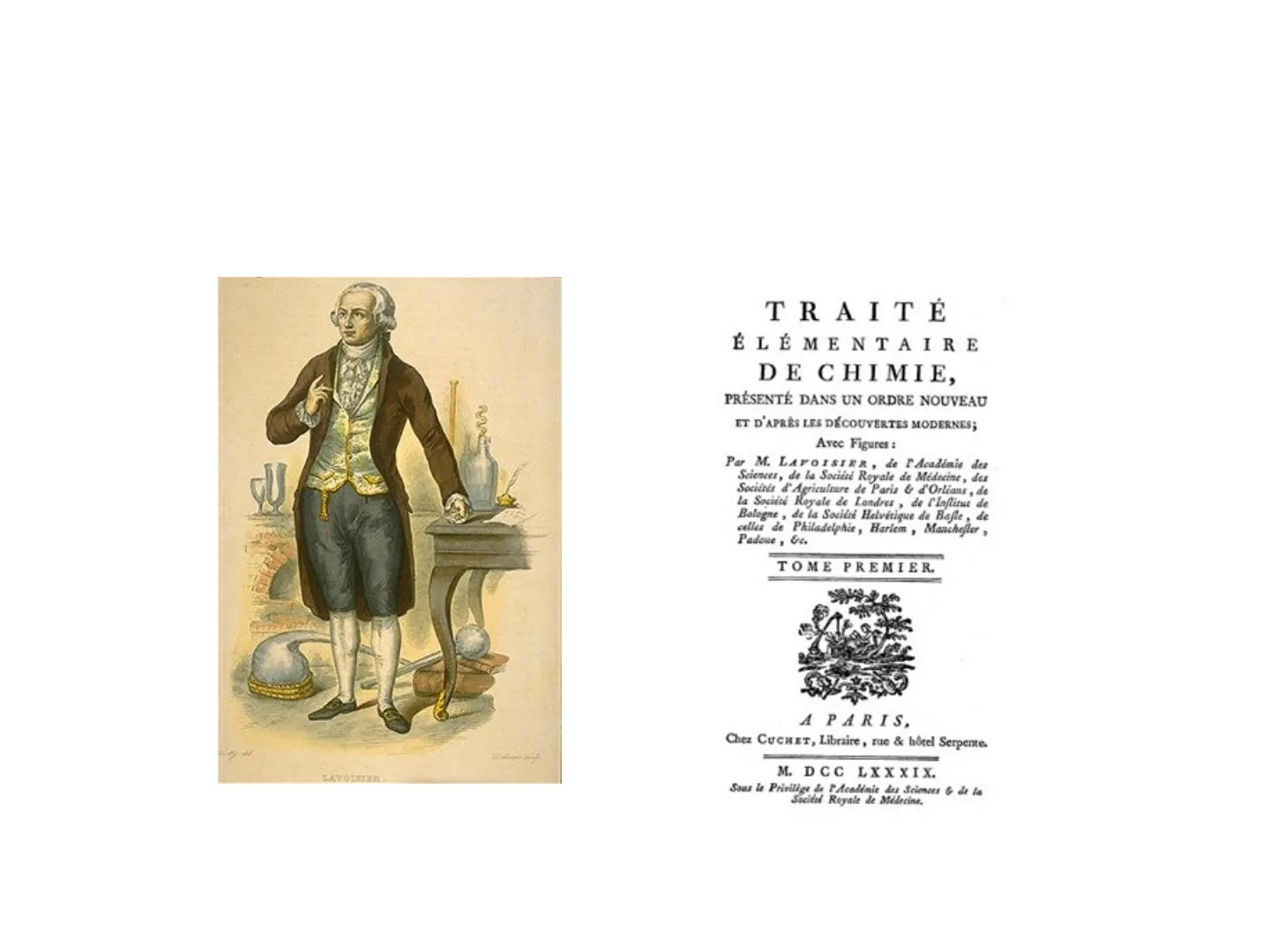
Antoine Lavoisier and Early Chemistry
Molecules, ions and their compounds.
Antoine Lavoisier
(1743-1794)
TRAITÉ
ÉLÉMENTAIRE
DE CHIMIE,
PRÉSENTÉ DANS UN ORDRE NOUVEAU
ET D'APRÈS LES DÉCOUVERTES MODERNES;
Avec Figures :
Par M. LAFOISIRR , de l'Académie des
Sciences, de la Société Royale de Médecine , des
Sociétés d'Agriculture de Paris & d'Orlians , de
La Société Royale de Londres , de l'Infitut de
Bolagne , de la Société Helvetique de Bafle , de
celles de Philadelphie , Harlem , Manchefler ,
Padoue , &c.
TOME PREMIER.
A PARIS,
Chez CUCHET, Libraire, rue & hotel Serpente.
M. DCC LXXXIX.
Sous le Privilège de E'Académie Les Sciences & de la
Socidad Royale de Médecine,
Chemical Formula Representation
Chemical formula
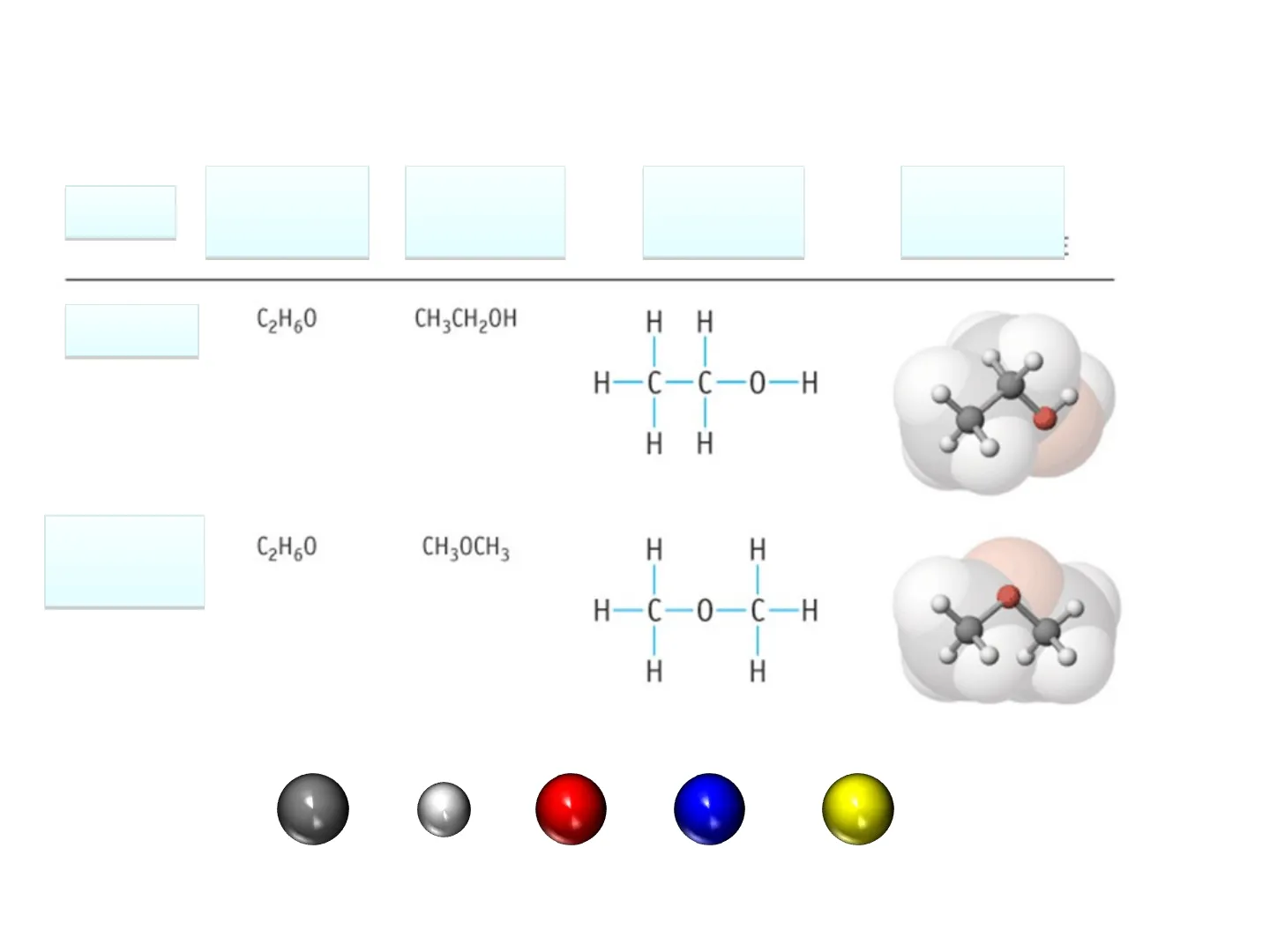
There are different ways of representing a chemical formula
Chemical Formula Examples
Name
Molecular
formula
Extended
formula
Structural
formula
Molecular
model
Ethanol
C2H60
CH3CH20H
HH
-
-
H-C-C-0-H
1
H H
Di-methyl
ether
C2H60
CH30CH3
H
H
1
1
H-C-0-C-H
1
H
1
H
Molecular Model Color Code
Colour code for atom types in molecular models
C
H
O
N
S
2
Cation and Anion Formation Prediction
Can we predict if an atom of an element will preferentially form a
cation or an anion?
- Metals generally give up their electrons giving rise to cations
- Non-metals frequently acquire electrons giving rise to anions
Periodic Table of Elements
1A
8A
1
H
2A
3A
4A
5A
6A
7A
2
He
3
Li
4
Be
5
B
6
C
N
8
O
9
10
Ne
11
Na
Mg
3B
4B
5B
6B
7B
8B
8B
8B
1B
2B
Al
14
Si
15
P
16
S
17
Cl
18
Ar
19
K
20
Ca
21
Sc
22
Ti
23
V
24
Cr
25
Mn
26
Fe
27
Co
28
Ni
29
Cu
30
Zn
31
Ga
32
Ge
33
As
34
Se
35
Br
Kr
37
Rb
38
Sr
39
Y
40
Zr
41
Nb
42
Mo
43
Tc
44
Ru
45
Rh
46
Pd
47
Ag
48
Cd
49
In
50
Sn
51
Sb
52
Te
53
54
Xe
55
Cs
56
Ba
57
La
72
Hf
73
Ta
74
W
75
Re
76
Os
77
Ir
78
Pt
79
Au
80
Hg
81
Tl
82
Pb
83
Bi
84
Pc
85
At
86
Rn
87
Fr
88
Ra
89
Ac
104
Rf
105
Db
106
Sg
107
Bh
108
Hs
109
Mt
110
Ds
111
Rg
112
113
114
115
116
metals
Transition metals
metalloids
Non-metals
F
12
13
36
I
-
7
Mono-atomic Ions
Mono-atomic ions
From elements which have lost or acquired electrons.
1A-3A form positive ions with charge equal to the number of the group.
There are no rules for transition metals.
Non-metals often form ions with negative charge equal to: 8- group number.
Mono-atomic Ion Chart
1A
7A
8A
H+
Metals
H-
3A
4A
5A
6A
Transition metals
Metalloids
N3-
02-
F
Non-metals
Na+
Mg2+
3B
4B
5B 6B 7B
8B
1B
2B
Cr2+
Mn2+ Fe2+
Co2+
Cu+
K+
Ca2+
Ti4+
Cr3+
Fe3+
Co3+
Cu2+
Zn2+
Rb+
Sr2+
Ag+
Cd2+
Sn2+
Te2-
I-
2+
Cs+
Ba2+
Pb2+
Bj3+
Hg
A[3+
p3-
S2-
Se2-
Br-
Ni2+
Hg2
.2+
2A
Mono-atomic Ion Examples
Li+group
metals
element
electrons
cation
1A
Na (11 protons, 11 electrons)
-1
Na+ (11 protons, 10 electrons)
2A
Ca (20 protons, 20 electrons)
-2
Ca2+ (20 protons, 18 electrons)
3A
Al (13 protons, 13 electrons)
-3
Al3+ (13 protons, 10 electrons)
Transition metals
7B
Mn (25 protons, 25 electrons)
-2
Mn2+ (25 protoni, 23 electrons)
8B
Fe (26 protons, 26 electrons)
-2
Fe2+ (26 protons, 24 electrons)
8B
Fe (26 protons, 26 electrons)
-3
Fe3+ (26 protons, 23 electrons)
Non-metals
5A
N (7 protons, 7 electrons)
+3
N3- (7 protons, 10 electrons)
6A
S (16 protons, 16 electrons)
+2
S2- (16 protons, 18 electrons)
7A
Br (35 protons, 35 electrons)
+1
Br (35 protons, 36 electrons)
Ionic Compounds
Ionic compounds consist of ions, atoms or groups of atoms that
have positive or negative charges.
Common Ionic Compounds
Common
name
name
formula
Ions
salt
Sodium chloride
NaCl
Na', CI-
lime
Calcium oxide
CaO
Ca2, 0%
limestone
Calcium carbonate
CaCO3
ca2, co,2-
fluorite
Calcium fluoride
CaF
Ca2, F-
plaster
Calcium sulphate
dihydrate
CaSO4 -2 H2O Ca2, SO42
ematite
Iron oxide (III)
Fe-03
Fel. 02
orpiment
Arsenic sulfide
As.S.
As3, S2-
Ionic Compound Examples
Ematite, Fe203
Calcite, CaCO3
Gesso, CaSO4 · 2 H20
Fluorite, CaF2
Orpimento, As253
Molecular Ions (Polyatomic)
Molecular ions (polyatomic)
Made up by more than one atom, electrically charged.
CO32-
PO,3-
so,2-
Calcite, CaCO3
calcium carbonate
Apatite, Ca3(PO4)2
calcium phosphate
Celestine, SrSO4
Strontium sulphate
E.g .: the carbonate ion, CO32-, is formed by 1 atom of C and 3 atoms
of O. It has 2 negative charges since it contains two extra e -.
Ionic compounds have net charge=0
Ruby is made up by ions Al3+ and oxide ions
O2 -. To achieve null charge 2 Al3+ ions [ total
charge = 2 x (3+) = 6+] are combined with 3
O2- ions [total charge = 3 x (2-) = 6+] to
yield Al2O3.
Notation for Positive Ions (Cations)
Notation for positive ions (cations).
With few exceptions (such as NH4+, ammonium) positive ions arise
from metals. They are named according to these rules.
For a positive mono-atomic ion, use the name of the metal
followed by the word "cation". E.g. Ag+ is called "Silver cation".
Cations that can have on more than one positive charge are labeled
with Roman numerals in parentheses. E.g .: Cu1+ is Copper (I) and
Cu2+ is Copper(II) ("cation copper one" and "cation copper two").
. An older, notation is to append tous or -ic to the root of the
Latin name to name ions with a lesser or greater charge: Cu2+ =
Cupric and Cu1+ = Cuprous.
Notation for Negative Ions (Anions)
Notation for negative ions (anions).
Two types of anions: monoatomic and polyatomic
The name of a monoatomic negative ione is formed by adding the -ide
ending to the name of the non-metal element. E.g. CI- is called chloride
anion.
H- Hydride
F- Fluoride
O2- Oxide
S2- Sulfide
N3- Nitride
P3- Phosphide
1-
H-
ione
idruro
3-
2
N3 -
ione
nitruro
02-
ione
ossuro
F
ione
fluoruro
p3-
ione
fosfuro
S2-
ione
solfuro
Cl
ione
cloruro
Se2-
ione di
selenio
Br-
ione
bromuro
Te2-
ione di
telluride
I
ione
ioduro
Oxyanions
Polyatomic ions that contain oxygen are called oxyanions.
. Oxyanions are named with -ite or -ate, for a lesser or greater quantity of oxygen.
- NO3 is called nitrate and NO2- is called nitrite
- SO42- is called sulphate e SO32- is called sulphite
- If four oxyanions are possible, the prefixes hypo- and per- are used:
- CIO4 is called perchlorate e CIO3 is called chlorate
- CIO2 is called chlorite e CIO- is called hypochlorite
. The modern systematic specifically names the hydrogen atom.
HPO2- is hydrogen phosphate e H2PO41- is dihydrogen phosphate
HCO3 is called hydrogen carbonate (bicarbonate) e HSO2- is hydrogen sulphate.
Common Polyatomic Anions
Formula
Name
Formula
Name
Group 4A
Group 7A
CN-
Cyanide ion
CIO-
Hypochlorite ion
CH3CO2-
Acetate ion
CIO2-
Chlorite ion
CO32-
Carbonate ion
CIO3-
Chlorate ion
HCO3-
Hydrogen carbonate
(bicarbonate)
CIO4
Perchlorate ion
Group 5A
Transition metals
NO2-
Nitrite ion
CrO4-
Chromate ion
NO3-
Nitrate ion
Cr20,2-
Dichromate ion
ic anions
PO,3-
Phosphate ion
MnO-
Permanganate ion
HPO 2-
Hydrogen phosphate ion
H2PO4-
›Di-hydrogen phosphate
Group 6A
OH-
Hydroxide ion
SO32-
Sulphite ion
SO,2-
Sulphate ion
HSO
Hydrogen sulphate ion
Formula and names of some common
Formula and names of some common polyatomic anions
Inorganic Compounds Nomenclature
Inorganic compounds nomenclature
Currently known inorganic compounds are about 6
million and their number increases by about 6000 a
week. Such a number of substances need to be
organized according to clear, simple and universally
shared rules.
The purpose of nomenclature is to provide rules for
identifying a compound, giving it a unique name and
a formula, using as few words as possible
Rules for nomenclature are published by IUPAC
(International Union of Pure and Applied Chemistry).
http://www.iupac.org/ "Traditional" nomenclature is
sometimes still in use.
Oxidation Number
Oxidation number
O.N. is the charge that would be acquired by an element in a compound
if bonding electrons were on the more electronegative atom.
The O.N. is deduced from its external electronic configuration in its
fundamental state.
O
=
O
-2
O.
H
H
H
H
H
+1
H
+1
O=C= = O : C : 0 = 0. C
-2
+4
-2
The oxidation number is not an actual charge, but it is only formally
attributed to the atom.
Calculating Oxidation Number
To calculate the oxidation number in a compound:
1. Identify the most electronegative atom
- 2. Allocate the electrons involved in bonds
. 3. the gain and loss of electrons
H2O
Z
electronegativity
Electron
configuration
Oxidation
number
H
1
2.2
1s1
+1 (1sº)
NH3
Z
electronegativity
Electron
configuration
Electron
configuration
H
1
2.2
1s1
+1 (1sº)
CO2
Z
electronegativity
Electron
configuration
Electron
configuration
C
6
2.5
1s22s22p2
+4 (1s2)
0
8
3.5
1s22s22p4
-2 (1s22s22p6)
-2
+1
+1
-3
+1
+1
+1
-2
-2
+4
Oxidation Number Rules
Oxidation number
1. In free elements (that is, in uncombined state), each atom has an oxidation number of
zero. Na, Fe, C, H2, Cl2, O2, etc.
- 2. In a monoatomic ion, it corresponds to the charge.
1.
ioni Na+, Ba2+, Fe3+, Br-, S2- n.o. +1, +2, +3, -1, - 2 - 3. Hydrogen has always oxidation number +1, with the exception of metal hydrides -1
1.
o.n. H= +1, HCI, H2O, HNO3, NH3, NH4+, etc. - o.n. H = - 1 NaH, KH, CaH2
4. Oxygen has oxidation number -2 in most compound, with the exception of peroxides,
compounds with F and superoxides.
o.n. O = - 2, H2O, Bao, H2SO4, CI2O5, etc.
o.n. O = - 1, H2O2, Na2O2, etc.
o.n. O = +2, OF2
o.n. = - 0.5 NaO2,
5. The algebraic sum of o.n. in an uncharged compound must be 0
in NaCl, o.n. Na = +1 and o.n. Cl = - 1
6. The algebraic sum of o.n. in a polyatomic ion must be the charge of the ion. (NH4+, SO42-,
PO43-) PO_3 -: o.n. O = - 2 and o.n. P = + 5
Oxidation Number Calculations
1. What is the o.n. of sulphur in sulphuric acid?
+1 x? - 2
H2SO4
n.o. S
I
2(+1) + (x) + 4(-2) =0
I
o.n. H
O atoms
O o.n.
H atoms
+1 +6 -2
x =+6
H,SO4
2. What is the o.n. in the anion carbonate?
x? - 2
CO,2-
3
x)+ 3(-2) = - 2
+4 -2
O atoms
O o. n.
x =+4
3
2-
Inorganic Chemistry Compounds
Inorganic chemistry compounds
Oxide: compounds containing oxigen
- oxides
. peroxides
. superoxides
· hydroxides (OH-)
· Acids:
· oxides + water (oxoacids)
· elements + hydrogen (hydrides)
Salts: acid + hydroxide
· Coordination compound:
. Compound in which an element is bound with more atoms than its
o.n. would allow.
Oxides of elements of Groups I and II are ionic compounds. The metal is a cation
and oxygen is in the anionic form O2 -.
Basic Metal Oxides
Most oxides of metal are basic. They react with water
yielding hydroxides.
Na2O + H2O -> 2 NaOH
Sodium hydroxide
CaO + H2O -> Ca(OH)2
Calcium dihydroxide
FeO + H2O -> Fe(OH)2
Iron dihydroxide
Fe2O3 + 3 H2O -> 2 Fe(OH)3
Iron trihydroxide
Al2O3 + 3 H2O -> 2 Al(OH)3
Aluminum trihydroxide
Oxides and Anhydrides
In oxides oxygen always has oxidation number = - 2.
IUPAC has suffixes mono-, di-, tri-, tetra-, penta-
to indicate the
number of O atoms.
NO: nitrogen monoxide (nitric oxide)
NO2: nitrogen dioxide
N2O3: dinitrogen trioxide
Oxides with non metals are also called anhydrides:
CO2 (carbon dioxide)
SO2 (sulpur dioxide)
SO3 (sulphur trioxide)
O
C
C
HC
3
C3+
Acetic anhydride
O
C
O
CO2
Can’t find what you’re looking for?
Explore more topics in the Algor library or create your own materials with AI.
