Why Advanced Biomaterials for Biomedicine? Biomedical Research Presentation
Slides from In Cell Social about Why Advanced Biomaterials for Biomedicine? Biomedical research. The Pdf explores the application of advanced biomaterials, particularly hydrogels, in regenerative medicine, tissue engineering, drug discovery, and precision medicine for University Biology students.
See more43 Pages

Unlock the full PDF for free
Sign up to get full access to the document and start transforming it with AI.
Preview
Why Advanced Biomaterials for Biomedicine?
Why advanced biomaterials for Biomedicine? Biomedical research
In Cell Social
Cellular
therapy
Material
therapy
Tissue
Engineering
Controlled
drug delivery
Immunomodulation
Genetic
engineering
Molecular
therapy
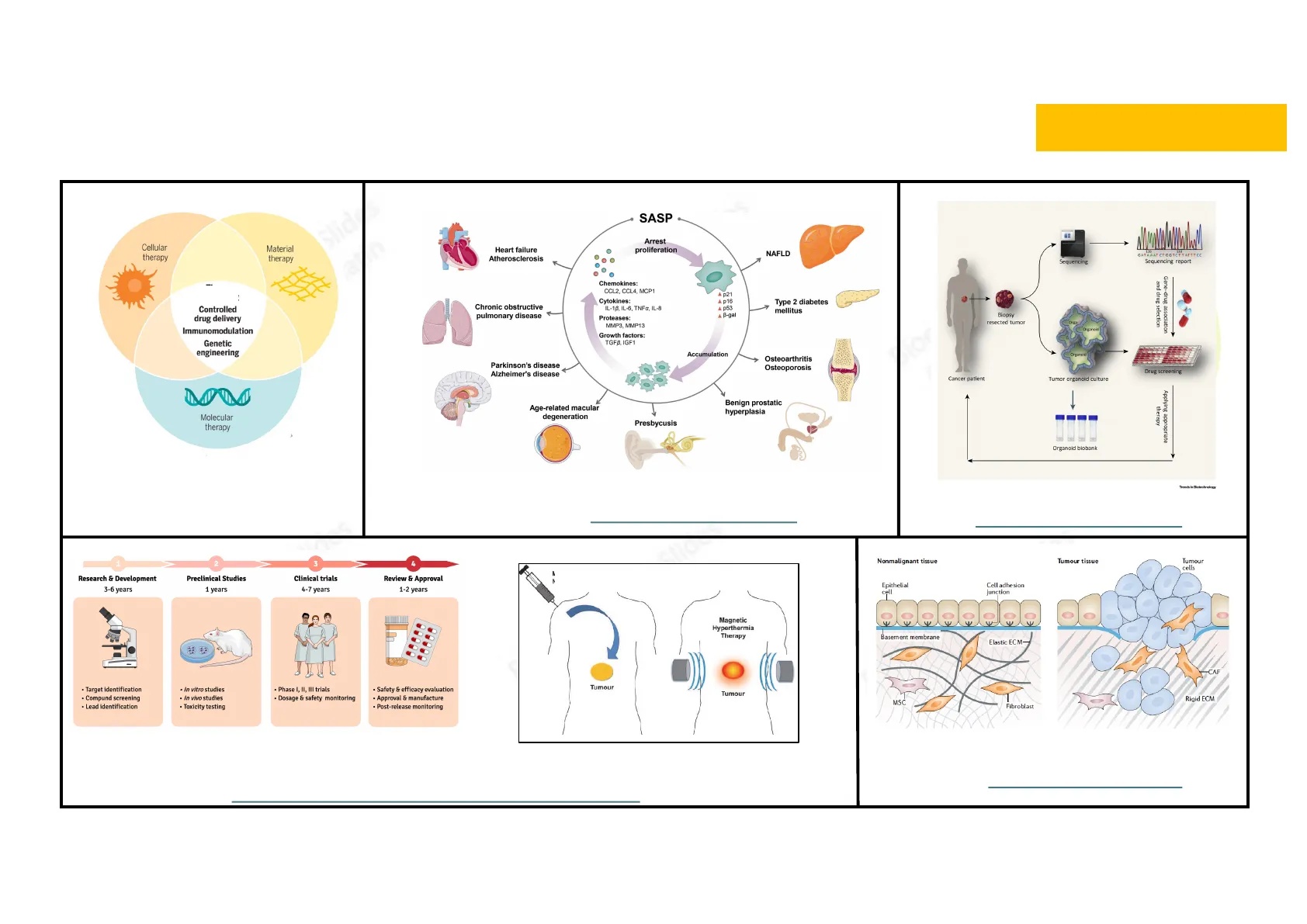
Regenerative Medicine and Tissue Engineering
Armstrong et al., Sci. Transl. Med. 12, eaaz2253 (2020)
SASP
Arrest
proliferation
Heart failure
Atherosclerosis
NAFLD
Chemokines:
CCL2, CCL4, MCP1
Chronic obstructive
pulmonary disease
Ap21
A p53
AB-gal
Type 2 diabetes
mellitus
Proteases:
MMP3, MMP13
Growth factors:
TGF6, IGF1
Accumulation
Osteoarthritis
Osteoporosis
Parkinson's disease
Alzheimer's disease
Benign prostatic
hyperplasia
Age-related macular
degeneration
Presbycusis
SASP: Senescence-associated
secretory phenotype
Aging Related Diseases
https://doi.org/10.1038/s41392-022-01251-0
Drug Discovery and Testing
Research & Development
3-6 years
Preclinical Studies
1 years
Clinical trials
4-7 years
Review & Approval
1-2 years
- Target identification
- Compund screening
- Lead identification
- In vitro studies
- In vivo studies
- Toxicity testing
- Phase I, II, III trials
- Dosage & safety monitoring
- Safety & efficacy evaluation
- Approval & manufacture
- Post-release monitoring
"Injectable hydrogel
Nanoraticles
Stimulus responsive
Magnetic
Hyperthermia< />Therapy
Tumour
Tumour
Targeted Drug Delivery
Nonmalignant tissue
Tumour tissue
Tumour
cells
Epithelial
cell
Cell adhesion
junction
Basement membrane
Elastic ECM-
CAF
MSC
Fibroblast
Cancer
https://doi.org/10.1073/pnas.22092601201
https://mindthegraph.com/infographic-templates/drug-discovery-and-validation-process/
120
Sequencing
GATA AAT CT GGTCTT ATTT CC
Sequencing report
Biopsy
resected tumor
Organoid
Gene-drug association
Organoid
Cancer patient
Tumor organoid culture
therapy
Applying appropriate
Organoid biobank
4
Trends in Biotechnology
Precision Medicine
https://doi.org/10.1002/advs.201801039
Cytokines:
IL-18, IL-6, TNFa, IL-8
and drug selection
Drug screening
Rigid ECM
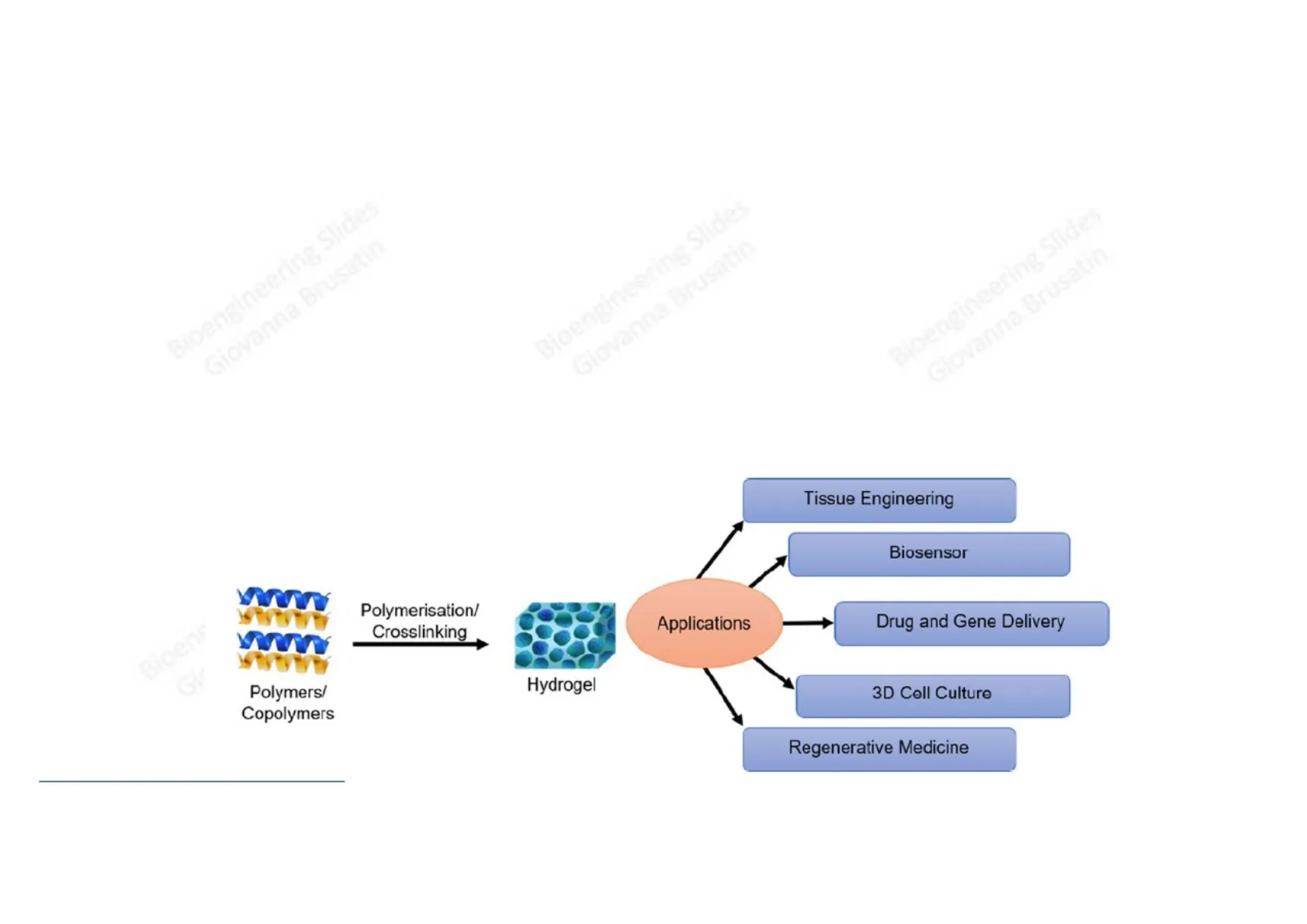
Applications of Hydrogels in Biomedicine
- The use of hydrogels in medicine represents a significant advancement in the medical field, promising
improvements in treatment methods respect to conventional biomaterials.
lide - Hydrogels are biomimetic biomaterials, compatible with biological tissues.
- In fact, they can have unique properties, among them:
- Mechanical and water absorption properties similar to natural tissues
- Biodegradability in vivo
- Ability to support cell growth and tissue regeneration (if adhesive)
- Ability to incorporate and release drugs, grow factors, small molecules ..... and recognize stimuli (pH, T .... )
For these reasons, the integration of hydrogels into medical treatments is is strongly supported by the
medical community
Tissue Engineering
Biosensor
Bioeng
Polymerisation/
Crosslinking
Applications
Drug and Gene Delivery
Hydrogel
Gir
Polymers/
Copolymers
3D Cell Culture
Regenerative Medicine
https://doi.org/10.1007/s00289-021-03864-xIN CELL SOCIAL
These biomimetic hydrogel in combination with cutting-edge technologies can allow for the development of:
- TE scaffolds able to induce tissue regeneration
- Diseases models - tissue/organospecific and organoid culture - to study the disease at a cell/tissue level, new
drugs, therapies ... - Patient specific organoids, for personalized medicine
Bioprinted scaffold for TE
Cells
Nanoparticles
Drugs & Cytokines
Light Irradiation
Application
3D Printed
Hydrogel
Bone Lesion Site
Cartilage Lesion Site
3D Bioprinted Construct
10.3390/mi13071038
Tissue regeneration
Gel precursors and bioactive agents solution
Gelation
top
100
0
+
Cells and
growth factors
B
37ºC
Tissue regeneration and scaffold degradation
C
10.1515/revce-2015-0074
Tissue specific culture
1
Organoid technology
1
6
Targeted gene editing
Bioe
Organoid
Tumor/CF organoids
2
5
Disease modeling
Transcriptome/proteome
epigenome/metabolome
analysis
E
Membrane
-
...
MICROBIOTA-ON-A-CHIP
Gut microbiota
INLET
Gel
Membrane
Secretome
10.3389/fbioe.2019.00435
http://dx.doi.org/10.1016/j.molmed.2017.02.007
Disease model
ng Sli
A
B
C
BRAIN-ON-A-CHIP
OUTLET
Neurons, Astrocytes, Microglia in gel
rus
BBB-ON-A-CHIP
Endothelial cells
Membrane
Astrocytes
IMMUNE SYSTEM-ON-A-CHIP
Macrophages and
Lymphocytes
Membrane
GUT-ON-A-CHIP
CaCo-2 calls
OC
Host-microbe interactions
Bioengin
'Biobanking' of patient
derived organoids
Giov
PHIN INTRO
Tissue Engineering and Regenerative Medicine
Why advanced biomaterials for Biomedicine?
Approaches for Tissue Engineering
TE ex-vivo: scaffolds made of biomaterials are combined
with cells and biologically active molecule, to ex-vivo
assemble functional constructs/ tissues that restore,
maintain, or improve damaged tissues or whole organs
(ex skin).
Artificial skin and cartilage are examples of engineered
tissues that have been approved by the FDA; however,
currently they have limited use in human patients.
TE in-situ: leverages the body's innate regenerative
potential. Bioresponsive materials that harness the innate
regenerative ability of the body are used. These materials
are loaded with biochemical and biophysical cues to
recruit endogenous cells for tissue healing.
Components of Tissue Engineering
Cells
Primary cells
Adult SCs
iPSCs
Stem cells
Genetic
Eng
Decellularized organ
Nanoparticles
Hydrogel
Scaffold
Growth
factors
Transcription
factors
Biofabrication
Biomaterials and scaffolds
Regulatory signals
Remember that delivering cells with or without the use of biomaterials, is costly and difficult!
Tissue Engineering and Regenerative Medicine Approaches
TE ex-vivo: the 1st - traditional - approach is based on tissues in vitro cultivation
- To generate functional tissues in vitro, biomaterials are generally required as a scaffold for
cell attachment and growth, although there are some examples of cellular self-organization
strategies that do not use materials, such as cell sheets and organoids - However, delivering cells with or without the use of biomaterials, is costly and difficult!
TE in-situ: the 2nd approach uses biomimetic and biointeractive biomaterials cultivated in vivo
- Biomaterials alone, often in combination with biological cues, is used to direct
the tissue repair and build a new tissue. Despite the complexity and multiple
signalling found in the local microenvironment in vivo, this in vivo incubation
provide innumerable biochemical and biophysical cues to support tissue growth - From the translational perspective, this approach has the advantages of more
straightforward manufacturing and less demanding regulatory pathways. - Moreover, as biomaterials become more sophisticated with respect to biological
cues, the potential for efficiently inducing in vivo tissue development and
directing repair without adding cultured cells increases
Monolayer
cell culture
Cells from a
biopsy
Generation of
a graft
Culture on a 3D
polymeric
scaffold
Expanded
cells
0
0
Slid
Embedded growth factors
(e.g. VEGF, FGF2 and TGFB)
MMP
Mechanical
stimulus
-Cryptic peptides
Bio/
MBV
C
Released
growth factors
and MBV
Integrin
Growth
factor
receptor
Vesicular uptake
Cell-
Mechanotransduction
through integrin
receptors
Activation of intracellular
signalling cascades
Nucleus_
Transcription
Secretion of new
ECM components
Evolving View of Biomaterial Interactions with the Immune System
Hydrogels for cell
encapsulation
Modern cancer vaccines and
immunotherapy
(1980s) Researchers begin to target
tumour-specific antigens and to
use specific proteins and peptides
to tune the immune response to
detecting and fighting cancer
Foreign body response
(1980s) The first detailed
description of immune rejection
of synthetic biomaterials,
including neutrophil oxidation
Tunable hydrogels and fibrous
scaffolds created with controlled
biological, chemical and physical
properties to modulate tissue
regeneration
of environment and formation
of foreign-body giant cells
Soft contact lenses
Poly(hydroxyethyl
methacrylate) hydrogels
and silicon hydrogels
developed for soft
contact lenses
Sutures and
stitches
Biting ants
used to
hold human
tissues
together
Principles of immunology
(1700s-1800s)
Development of germ
theory and the first
vaccination
Synthetic biomaterials
in ophthalmology
Intraocular lens of
poly(methyl methacrylate)
created for treating
cataracts
Wound healing and
immunity
(1980s-1990s)
Immune cells, especially
macrophages, are
observed to have a role
in wound healing
Electrospun micro-
and nanofibres
Electrospun fibres,
alone or with
hydrogels, such as
poly(ethylene glycol)
are used to facilitate
the formation of
tissue
3D printed tissues
Using 3D printers,
precise morphology of
scaffolds is programmed,
including materials with
patient-specific features
BCE
600 CE 1700
1800
1829
1886
1890
1949
1961
1980
1990
1997
2000
2002
2010
2013
Shell implants
Blue nacre
shell used to fix
damaged or
lost teeth
Metals and ceramics
(1829) Metallic sutures
tested on animal bones
Synthetic joint replacement
Hip-joint replacement achieved
with low-friction surfaces
M2 macrophages
and scaffold
remodelling
(2000s)
Metals and ceramics
(1886) Screws and plates
used to join and fix bones
Decellularized ECM
(1990s) Isolation of ECM from
native tissue to serve as a
complex biological scaffold
Immunology
Biomaterials
Using the immune system to fight cancer
(1890s) It is discovered that patients with
cancer complicated by bacterial infections
have a better prognosis. Hence, the use of
deliberate streptococcal infections to fight
cancer begins
Biodegradable scaffolds for tissue
engineering
Biomaterials as scaffolds are able to restore,
repair and maintain human body tissues
Macrophages are
found to shape the
regenerative niche;
alternatively
activated
macrophages are
participants in the
remodelling of
ECM-based
scaffolds and their
functional tissue
repair
Immune cells
and development
Beyond simple
wound healing,
research continues
in immune cells and
tissue develop-
ment. Macrophages
are defined as key
components in
regenerating the
salamander limb,
and eosinophils are
found to be
important regulators
of liver and muscle
regeneration
DOI:10.1038/natrevmats.2016.40
Can’t find what you’re looking for?
Explore more topics in the Algor library or create your own materials with AI.
