Greece, from Poleis to Empire: A Presentation on Ancient History
Slides about Greece, from Poleis to Empire. The Pdf explores the history of ancient Greece, from the formation of poleis to the empire of Alexander the Great, suitable for high school History students.
See more44 Pages


Unlock the full PDF for free
Sign up to get full access to the document and start transforming it with AI.
Preview
Did the Greeks invent democracy?
Kahoot 1 Kahoot 2CONTENTS
- What united the Greeks of Hellas? ¿Qué unió a la civilización helénica?
- Two great poleis: Sparta and Athens Dos grandes poleis: Esparta y Atenas
- How democratic was the democracy in Athens? La democracia ateniense
- The Greeks colonise the Mediterranean Los griegos colonizan el Mediterráneo
- The rule of Hellas: from Athens to Macedonia De Atenas a Macedonia
- The empire of Alexander the Great El imperio de Alejandro Magno
- Art in Greece Arte griego
Timeline of Ancient Greece
8th - 6th centuries BC Colonies founded on the Iberian Peninsula 495 - 429 BC Pericles 431 - 404 BC Peloponnesian War 356 - 323 BC Alexander the Great 499 - 449 BC Greco-Persian Wars Colonisation 10th century BC 9th century BC 8th century BC 7th century BC 6th century BC 5th century BC 4th century BC 3rd century BC 2nd century BC 1ª century BC Spartan supremacy Athenian hegemony Macedonian hegemony Hellenistic Kingdoms 477 BC Delian League 331 BC Foundation of Alexandria
Minoan Civilization
2600 BC - ~ 1400 BC: Minoan Civilization
- Flourished on the island of Crete.
- Palaces at Knossos, Phaistos, etc.
- Thalassocracy and maritime trade.
- Linear A script (undeciphered).
- Mysterious decline, possible eruption of Thera.
Mycenaean Civilization
~1600 BC - ~ 1200 BC: Mycenaean Civilization
- Flourished on mainland Greece.
- Fortified city-states (Mycenae, Tiryns, Pylos).
- Warriors and territorial expansion.
- Linear B script (early Greek).
- Trojan War (~1200 BC?).
- Collapse, Dorian invasions, end of the Bronze Age
Alexander the Great's Reign
336 BC - 323 BC: Alexander the Great
Dark Ages of Greece
~1200 BC - ~ 800 BC: Dark Ages
- Loss of writing, cultural and economic decline.
- Migrations and settlements.
- Formation of the poleis (city-states).
- Development of the Greek alphabet.
- Homeric poems (Iliad and Odyssey).
Archaic Period
~800 BC -~ 500 BC: Archaic Period
- Cultural and economic revival.
- Greek colonization of the Mediterranean.
- Development of democracy in Athens.
- Lawgivers (Draco, Solon).
- Tyrants (Peisistratos in Athens).
- Persian Wars (499-479 BC).
- Delian League, Athenian hegemony.
Classical Period
~500 BC - ~ 323 BC: Classical Period
- Age of Pericles in Athens.
- Peak of democracy, art, and philosophy.
- Peloponnesian War (431-404 BC).
- Spartan, then Theban hegemony.
- Rise of Macedon under Philip II.
- Battle of Chaeronea (338 BC), end of Greek independence.
- Conquest of the Persian Empire.
- Foundation of Alexandria and other cities.
- Spread of Greek culture (Hellenism).
- Death of Alexander, division of his empire.
Hellenistic Period
323 BC onwards: Hellenistic Period
- Successor kingdoms (Ptolemies, Seleucids, Antigonids).
- Diffusion of Greek culture in the East.
- Cultural centers: Alexandria, Pergamum, Antioch.
- Hellenistic science, philosophy, literature.
- Roman conquest of Greece (146 BC).
CHAPTER 1. What united the Greeks of Hellas?
¿Qué unió a la civilización helénica?
Map of Ancient Greece
0 MACEDONIA MACEDONIA Hellespont Mount Olympus . Troy M A R LESBOS A ASIA Gran santuario THESSALY Focea e Lesbos EUBEA E G E MINOR AETOLIA JÓNICAS Delfos Ithaca Delphi Chios .Thebes Olimpia Epidaute Corinthe PELOPONESO Mileto Olympia Mycenae Tiryns Delos ISLAS Esparta · Halicarnassus CICLADAS . Sparta Ionan DODECANESO Rhodes MAR Se a Knossos MACEDONIA region Athens polis Crete Cnosos Crete island C I.C.L. --- Limite de los territorios griegos ISLAS Phocaea Tebas ÁTICA JONIA Euboea e Corinto . Atenas Éfeso Micenas Argos SAMOS Cephallenia ATTICA. Athens n · Miletus Delos Paros Naxos 5 - RODAS 2 MEDITERRÁNEO CRETA Troya EPIRO Zonas elevadas TESALIA Ciudad Korkyra BEOCIA Samos PELOPONNESE
The ancient Greeks were a mix of peoples (pueblos): Achaeans, Dorians, etc (Acadios, Dorios), who had settled on the Balkan Peninsula and the coast of Asia Minor since the Third millenium BC.* The Greek world was organised into independent city- states, called poleis, which ruled the surrounding territory. Each polis had its own laws, army and currency.
- All the inhabitants of this region felt that they belonged to Hellas, 'the country of the Hellenes' (Greeks). Mapa de la Hélade. Cordillera de los Balcanes 539 Monte Olimpo ASIA MENOR PENÍNSULA DE LOS BALCANES Mare Egeo Micenas Mar Jónico - Límite de los territorios griegos CRETA Zonas elevadas Enossos Mar Mediterráneo Orígenes de Grecia
A. Common origins
The first civilisations that emerged in the Aegean Sea left an important mark.
- In Crete, the Minoan civilisation appeared, rising to great power in around 2600 BC. The main city was Knossos, which had many luxurious palaces.
- In the Peloponnese, the Achaeans formed the Mycenaean civilisation between 1600 and 1200 BC. Their kings lived in fortified palaces in cities such as Mycenae and Tiryns. This civilisation disappeared with the invasion of the Dorians.
The Mycenaeans
B 0 GREECE Troy AEGEAN SEA S 4 Athens MEDITERRANEAN SEA · Mycenae Pylos Sparta Knossos CRETE Map of the Mycenaean world Adopted Minoan customs Said to have fought in legendary Trojan War Setting of Greek Myths & Homer's epics Flourished 1900 - 1100 BCE German archaeologist Heinrich Schliemann discovered Troy in 1873
Minoan Frescoes
resto MinoanMinoan Fresco 3 ecsc 3Minoan Fresco
Minoan and Trojan War Resources
La ciencia detrás del mito del Minotauro - Matt Kaplan (4.41') https://www.youtube.com/watch?v=2aols-5zgol The Minotaur Explained - Greek Mythology (5.27') https://www.youtube.com/watch?v =_ fVRJXECkhY Minoan frescoes https://www.youtube.com/watch?v=Vxz-YWAwiuIhttps://www.youtube.com/watch?v=gQbZX9JEQsQ Did ancient Troy really exist? - Einav Zamir Dembin 4.37 https://www.youtube.com/watch?v=zeefbJhCOzQ The Trojan War and the Iliad - Greek Mythology (5.12) https://www.youtube.com/watch?v=v2pCwxCX2as How and why the Trojan war started 3.22 https://www.youtube.com/watch?v=Xc13wPKKHJM Troy: Myth and reality 9.41
Invasions and Migrations c. 1200 BC
Adriatic Sea Black Sea Tabikka Tyrrhenian Troy Hattusas Aegean Sardinia Thebes Fraktin Sea- lonian Sea My cenae in Miletus Carchemish Tarsos Sicily Pylos Salamis Ugarit Cyprus Kition Qadesh Byblos Ashdod Askalon Ramses Gaza Hittite Empire New Kingdom Egypt Possibly Taresh movement to Etruria & Shekelesh to Sardinia Memphis Area of conflict between Hittite and Egypt Mycenaean Greece subjected to widespread destruction Troy and Hittite cities destroyed possibly by populations coming from Europe (Phrygians ?) Amarna Meditteranean Sea Invasions and migrations c. 1200 BC . Destroyed city Sea peoples including Lukka, Sherden, Weshesh attacked unsuccefully Egypt Myceanean Greece Sea peoples including Peleset, Shekelesh, Denyen attacked unsuccesfully Egypt Sea peoples destroyed settlements in Syria and Cyprus Knossos Kydonide Crete Sea
B. The same language and culture
The Greeks spoke the same language. They used a syllabic alphabet, which introduced vowels for the first time. Literature in the Greek language helped to spread the same culture among all the Greeks. The poems of Homer (8th century BC) provided them with a common history as they described the origins and deeds (obras) of their ancestors: The Iliad (Iliada) tells of the war between the Greeks and Trojans following the abduction of Helen, wife of the king of Sparta, by Paris, a Trojan hero. The Odyssey(Odisea) tells of the adventures of Odysseus, the king of Ithaca, on his journey home from the Trojan War.
C. The same gods and rituals
The Greeks were polytheistic. Their gods were represented in human form (anthropomorphic) and guided and ordered people's lives. The gods lived on Mount Olympus, the highest mountain in Greece. The Greeks also believed in the extraordinary virtues of demigods, born from a union between a mortal and a god. To honour their gods, people celebrated religious, cultural and sporting festivals. Some of these festivals, called Panhellenic festivals, brought all the Greeks together in sanctuaries such as that of Zeus in Olympia and Apollo in Delphi. Zeus Athena Hera Paris Aphrodite Hermes
D. Similar ways of life
The Greeks shared common customs and ways of life:
- The peasants cultivated wheat, grapes and olives and raised sheep, goats and pigs. Artisans and merchants lived in cities and participated in the life of the polis.
CHAPTER 2. Two great poleis: Sparta and Athens
Dos grandes poleis: Esparta y Atenas
2.1.THE GREEK CITY-STATES
Each polis was usually protected by walls and had a similar urban structure:
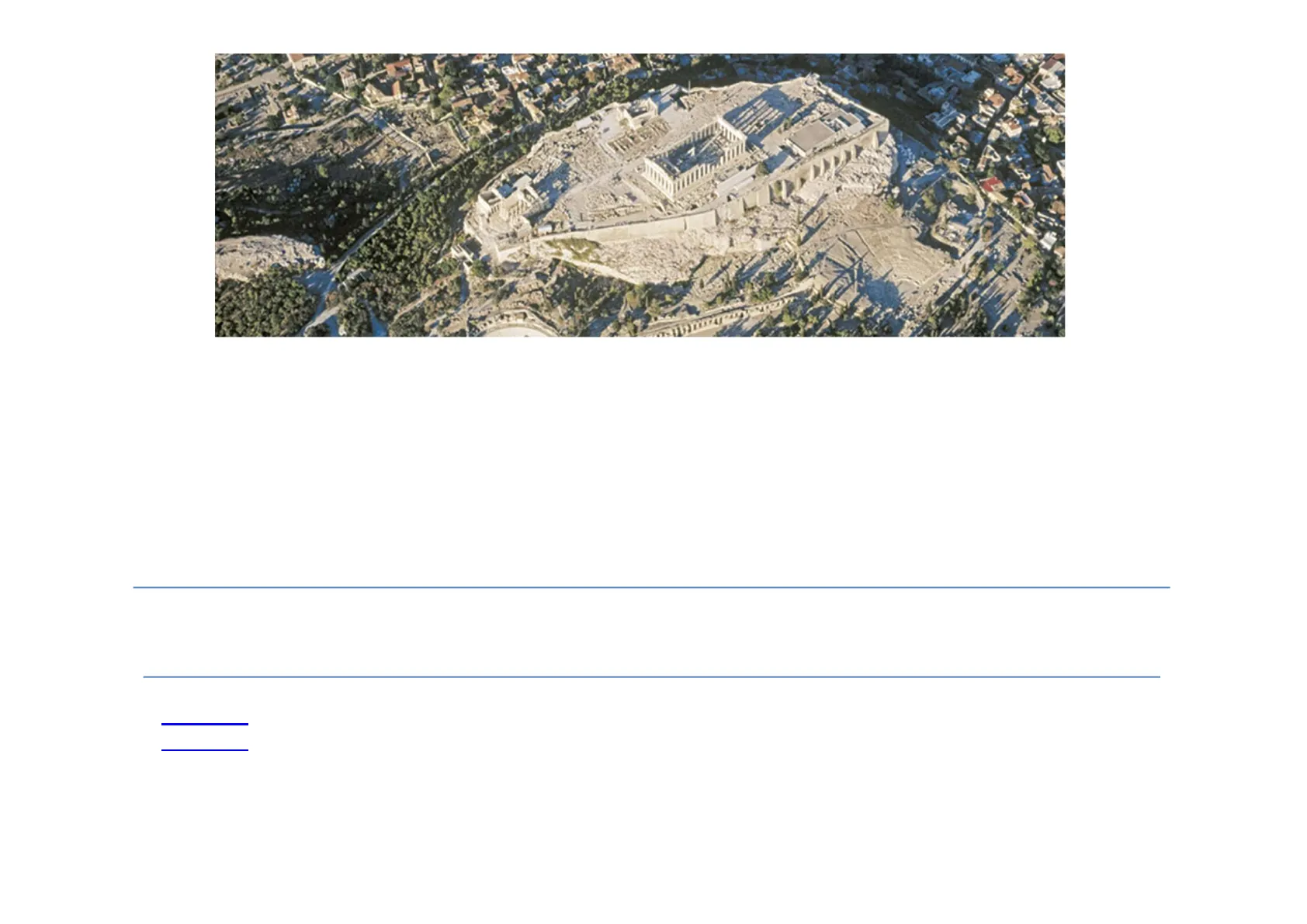
- The upper part, the acropolis, was composed of a walled citadel that included all the main religious buildings.
- The lower part contained the houses, which were grouped into neighbourhoods. In the centre was the agora, the market place, which was surrounded by religious, political and commercial buildings. The agora was the centre of community life where people met, traded and celebrated religious events. ACROPOLIS fields theatre temple stoa houses market AGORA selling slaves commercial port
Types of Government in Poleis
TYPE OF GOVERNMENT WHO HAS THE POWER Tyranny (takes power by force) One man alone Monarchy (hereditary) Oligarchy (rulers are chosen) A group of men (aristocracy) Democracy (voting or lottery) All the male citizens in the polis
2.2. SPARTA AND ATHENS
SPARTA Located in the Peloponnese Sparta was an oligarchy, which means 'government by the few'. The aristoi (meaning 'the best'), composed of landowners and the warrior elite, governed the city. The aristoi formed the Council, a body that made political decisions, imparted justice and controlled the army. The rest of the population was excluded from government. ATHENS Located in Attica Athens was a democracy, which means 'government of the people'. Its citizens gathered at an assembly, where they elected their leaders and voted for laws. At different times, some Greek cities were also ruled by tyrants, who took power by force and imposed their will.
2.3. DEFENDING THEIR POLEIS
Each polis defended their territory from other poleis and from barbarians. Ordinary men served as soldiers when necessary. The rich, who could buy their own military equipment, became hoplites, the main infantry force.
CHAPTER 3. Democracy in Athens
La democracia ateniense
Athenian Democratic Reforms
A democratic system of government was established in Athens in the 5th century. Three great legislators introduced reforms: SOLON CLEISTHENES PERICLES The participation of citizen in government represented great social progress. However, it was very different to the democracy we have today. n power people to the
Can’t find what you’re looking for?
Explore more topics in the Algor library or create your own materials with AI.
