Experimental Tectonics and Material Characterization in Physics
Slides about Experimental Tectonics. The Pdf explores the concepts of experimental tectonics and material characterization, including rigid, elastic, viscous, and Newtonian fluids, and viscoelasticity. This University Physics document combines solid mechanics and fluid dynamics for a comprehensive understanding.
See more64 Pages


Unlock the full PDF for free
Sign up to get full access to the document and start transforming it with AI.
Preview
EXPERIMENTAL TECTONICS
MATERIAL CHARACTERIZATION
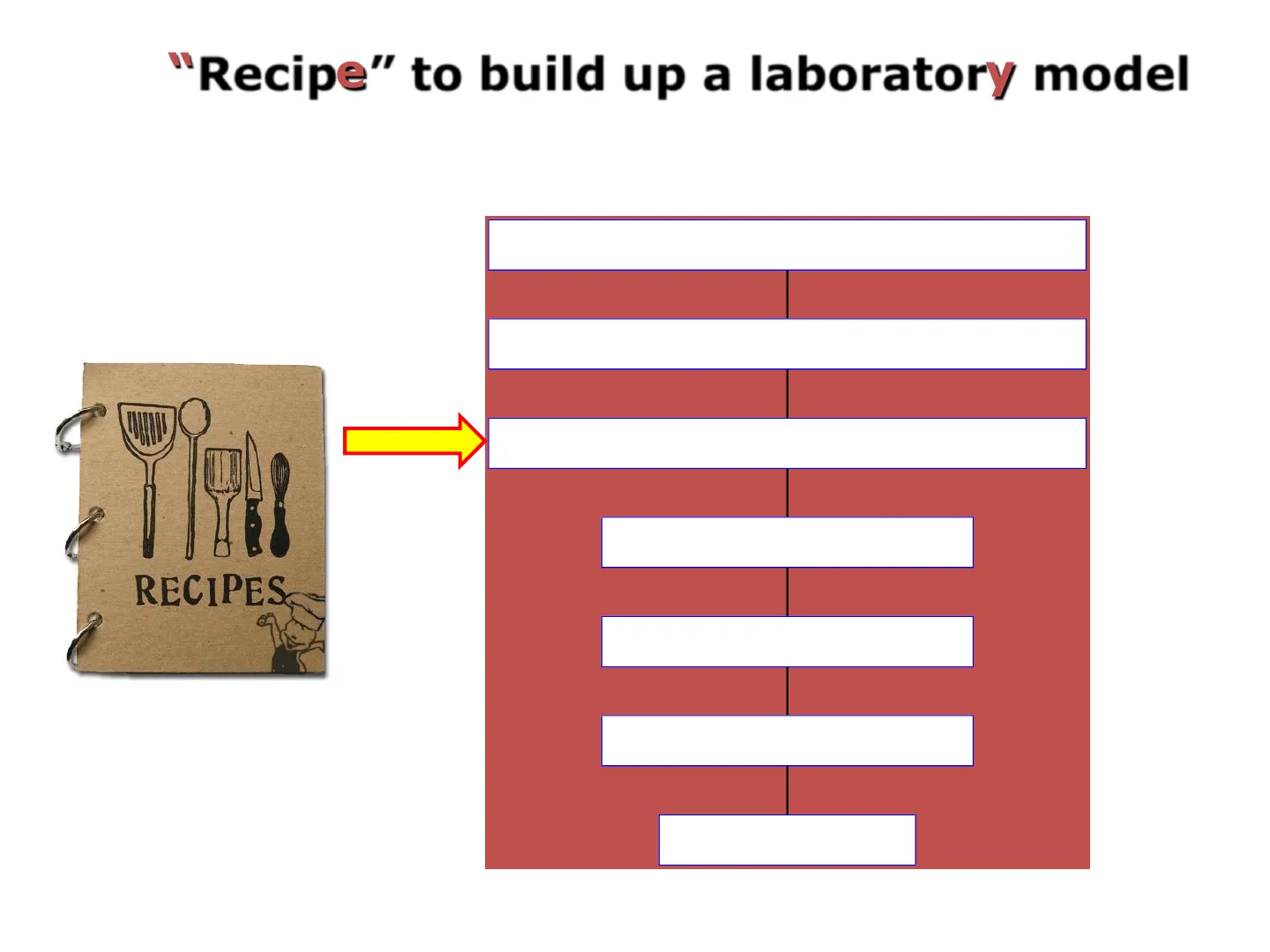
»"Recipe" to build up a laboratory model
RECIPES
- identification of the problem to study
- application of the similarity criteria
- determining materials that satisfy the similarity criteria
- running of models
- ensure repeatability
- interpretation of obtained results
- definition of a theory
MATERIALS?
Structure of simple (molecular) condensed matter
A
GAS
Loose Disordered High mobility Momentum transfer by collisions Newtonian
SOLID
Dense Ordered Fixed structure Jammed network Strong repulsions or attractions Mainly elastic
LIQUID
Dense Disordered Significant agitation Transiently jammed Network Basically Newtonian
1. SOLIDS
Metal Stone I Wood Polymer
Macroscopic behavior
F
Plastic regime
P
Ductile material
Y
F
I I
Brittle material
Elastic regime
Fracture
Δε
O O' 3
Force F 1
Deformation
Elasticity
F=k&
Yielding
F>F
2. LIQUIDS
Water S Mercury Honey Soap Oil
Macroscopic behavior
Simple shear
S
Force F Velocity V H
Shear stress : Τ = F/S Shear rate : } = V / H
Newtonian behavior
τ = μγ
μ
Viscosity (in Pa.s)
T
Int 1
Y.
In Complex fluids
Biological Systems Natural flows Cosmetics Civil engineering Food
Structure of complex fluids
Chocolate Paint Debris flow
Chocolate: fat + milk (powder) + cocoa + sugar Concrete: water + cement + sand + gravels + surfactants + colloids Paint: water + latex + pigments + polymers Mud: water + clays + sand + pebbles Blood Soft cheese Concrete
HOW TO SELECT ANALOGUE MATERIALS?
Not expensive Not toxic
Physical properties
Ingredients to select an analogue material
WHICH PHYSICAL PROPERTIES DO MATTER?
transparency density rheology dimensions (eg., elastic and/or viscous moduli, cohesion, friction, ... ) surface tenson thermal moduli
transparency density rheology dimensions (eg., elastic and/or viscous moduli, cohesion, friction, ... ) surface tenson thermal moduli
12 1 11 10 9 8
Metropolitan Life AND AFFILIATED COMPANIES MADE IN USA 2
ruler
50 60 70 30 10 10 20 80 9|0 100 110 120 130 140 4 8 1 128in 0 1 2 3 4 5 6 7 8 9 0 130 140 150 160 170 1810
compass
caliper
9 becchi 6 1 4 0 10 20 30 40 00 60 70 80 90 100 110 120 130 140 150 3 8 asta 2 cursoio 7 ganasce
VERNIER CALIPER
The nonius gives the precision of the measurement: 1/10, 1/20, 1/50 mm
4 4,7 5 6 L 4,74 AT B 4
Look here for some additional examples: http://macosa.dima.unige.it/diz/c1/calibro.htm
exercise
C L A S S W O R K # 3
1. 9 2. 0 1 3. 7 0 5 10 0 5 10 0 5 10 4. 1 2 0 5 10 0 5 10 0 5 10 7. 5 8. 7 8 0 5 10 9. 0 1 0 5 10 5. 6 6. 4 0 5 10
transparency density rheology dimensions (eg., elastic and/or viscous moduli, cohesion, friction, ... ) surface tenson thermal moduli
READ ME - READ ME READ ME
transparency density rheology dimensions (eg., elastic and/or viscous moduli, cohesion, friction, ... ) thermal moduli surface tenson
Surface tension (or energy)
Surface tension (or energy) is the elastic tendency of liquids (or solid + liquids) which makes them acquire the least surface area possible. At liquid-air interfaces, surface tension results from the greater attraction of water molecules to each other than to the molecules in the air. The net effect is an inward force at its surface that causes water to behave as if its surface were covered with a stretched elastic membrane. Surface tension has the dimension of force per unit length, or of energy per unit area. Several methods to quantify it.
O 9 A B F H H U-shaped wire W +-d- Fa T = F/2W m 0
The suggestion is to try to minimize its contribution in the models.
transparency density rheology dimensions (eg., elastic and/or viscous moduli, cohesion, friction, ... ) surface tenson thermal moduli
Thermal expansion
Thermal expansion (tendency of matter to change in shape area, and/or volume in response to a change in T, through heat transfer) Δρ 1 O= Δp 1 P AT
Thermal conductivity
Thermal conductivity (capability to transmit heat for conduction) K =- Q - 0x ∂T 1-5 W/m K
Thermal diffusivity
Thermal diffusivity (capability to transmit heat/ Info on heat diffusion time) k=K/pc
Heat capacity
Heat capacity (ratio between heat and temperature increase) CIAO At
Specific heat
Specific heat (heat necessary for 1℃ T increase) subscripts p, v c=C/m 1000 J/kg ℃ (mantle)
T is usually neglected in experimental models and only used as strenght controlling factor 10-5 K-1 10-6 m2/s
transparency density rheology dimensions (eg., elastic and/or viscous moduli, cohesion, friction, ... ) surface tenson thermal moduli
Density of a material
The density of a material is its mass per unit volume. The symbol most often used for density is p. Mathematically, density is defined as:
P = M - V kg g [ or m3 cm3 ]
20℃
OLAB !". 50 ml 96 96 AB 50am- 2080 ERICHSEN Mod.290/1 100 cm3/20°C ERICHSEN Mod.290/1 50 cm3/20°C AF02 ERICHSEN Mod.290/ V
METHOD #1: PYCNOMETER
METHOD #1: PYCNOMETER
96 96 NOLAB In DE20℃ . 50 ml Ms = P5 Vs MH20 = PH2OVH2O PH20 = 1 g/cm3 MH2O = VH2O VH2O = Vs Ms Ms Ps = = VH20 MH20
METHOD #1: PYCNOMETER
AF02 ERICHSEN Mod.290/l 100 cm3/20°C ERICHSEN Mod.290/ V AB 50 cm 2080 ERICHSEN Mod.290/1 50 cm3/20°C Ps = Ms Vpicn Ms = Mtot - Mp picn M picn = 52 g V picn = 11.5 ml
https://www.youtube.com/watch?v=5w3IKnovlng https://www.youtube.com/watch?v=StGbFkSevy0
METHOD #2: DENSIMETER
METHOD #2: DENSIMETER (equipped version for density of solids)
Archimede's principle A body immersed in a fluid undergoes an apparent loss in weight equal to the weight of the volume of fluid it displaces
1b 0 1 6 2- 5 3 4 1b 0 7 1 6 2- 5 3 4- 3 3 1b of water 1b
https://www.youtube.com/watch?v=UfMrFUIlxEs
METHOD #2: DENSIMETER (method for solids)
Start the measurement when water tem- perature becomes stable. (Ex: Display of HA) 0.0000 Press the [RE-ZERO key to reset the displayed value to zero. 3 Place the specimen on the upper pan and record its weight A in air. Press the RE-ZERO key to reset the displayed value to zero. Place the specimen on the lower pan and record its weight in water. Adjust the amount of water so that the specimen is about 10 mm below the surface of the water. Obtain the density of the water according to the temperature of water. (See Table 1-1).
METHOD #2: DENSIMETER (method for solids)
7 The density will be found by:
Significant figures is three fiqures. Significant figures is more than four fiqures.
p : Density of specimen [g/cm3] d : Density of air[g/cm3] A : Weight in air [g] B : Mesurment data [g] Po : Density of water [g/cm3]
A p = A IBI Po
p = IBI x ( Po-d) + d
Table 1 Density of water
At sea level (1 atmosphere), the density of water reaches a maximum at 3.98°C. (Unit: g/cm3).
Tempera- ture O 1 2 3 4 5 6 7 8 9 O 0 0. O. 0. 0 0 o 0 0 0 99984 99990 99994 99996 99997 99996 99994 99990 99985 99978 10 99970 99961 99949 99938 99924 99910 99894 99877 99860 99841 20 99820 99799 99777 99754 99730 99704 99403 99678 99368 99651 99623 99594 30 99565 99534 99503 99470 99437 99333 99297 99259
METHOD #2: DENSIMETER (method for liquids)
10.00
The volume of the float is stamped here. About 50 mm
Press the [RE-ZERO] key with the float hanging. 0.0000 g Pour the liquid whose density is to be measured. Adjust the amount of the liquid so that the float is about 10 mm below the surface of the liquid. 3 When the display becomes stable, note down the displayed value without its mi- nus sign. (Suppose that this value is A.) 4 The density of the liquid can be found by substituting the measured value in the following equation:
p=A +d
p : Density of liquid [g/cm3] A : Buoyancy of float (g) V : Volume of float (cm3) d : Density of air [g/cm3]
Example: If the measured value (A) is 9.9704 g, the volume of the float (V) (stamped on the float hook) is 10.01 cm3, the density of air (d) is 0.001 g/cm3), the temperature indicated by the ther- mometer is 25°℃, then we have:
9.9704 + 0.001 = 0.997 g/cm3 (25°C) 10.01
METHOD #3: STOKES FORMULA (also for viscosities!)
0 p Ap R B
A solid body will rise or fall through a fluid if its density is different from the density of the fluid. A buoyant fluid rising through a viscous fluid (Re<1) adopts the shape of the sphere (> Stokes flow)
FORCES
Buoyancy = total force arising from the action of gravity on the density difference between the sphere and its surroundings. B = - 4πr3gΔp/3
Viscous (resisting) stress = proportional to the fluid viscosity and the strain rate τ= εμυ/r R = - 4πr2 . cuv/r = - 4πcrpv
METHOD #3: STOKES FORMULA
FORCE BALANCING
B+R=0 4πεlμυ + 4πro g Δρ/3=0 v= - gΔpr2 /3μ
SEVERAL APPLICATIONS OF THIS RELATIONSHIP!
METHOD #3: STOKES FORMULA
2(Ps-Pf)gr2 V= 9u
METHOD #3: STOKES FORMULA
https://www.youtube.com/watch?v=mQwlmXtRu5k
transparency density rheology dimensions (eg., elastic and/or viscous moduli, cohesion, friction, ... ) surface tenson thermal moduli
ARE YOU ALREADY AWARE OF THE MATERIAL RHEOLOGY?
1
What is rheology?
The name was proposed by E.C. Bingham and M. Reiner. It derives from the Ancient Greek: 'ρεω' to flow; 'λογος' the study, and from Heraclitus's quote 'παντα ρει' everything flows fire & "Rheology" is the study of the deformation and flow of all forms of matter This discipline was coined in April 29, 1929
4
FLUIDS/MODELS
CLASS KEY TIME REPRESENTATIVE WORKS
a) Perfect, rigid bodies
Anti- quity
Archimedes (~250 BCE), Newton (1687)
b) Ideal elastic solids
1600s
Boyle (1660), Hooke (1678), Young (1807), Cauchy (1827)
Ideal mater- ials
c) Inviscid fluids
1700s
Pascal (1663), Bernoulli (1738), Euler (1755)
d) Newton- ian liquids
Early 1800s
Newton (1687), Navier (1823), Stokes (1845), Hagen (1839), Poiseuille(1841), Weidemann (1856)
2
Linear viscoelasticity
Linear viscoelasticity
Mid 1800s
Weber (1835), Kohlrausch (1863), Wiechert (1893), Maxwell (1867), Boltzmann (1878), Poynting & Thomson (1902)
Ideal materials From 250BC to Early 1800
3
Generalized Newtonian (viscous) liquids
Generalized Newtonian (viscous) liquids
Late 1800s- Early 1900s
Schwedoff (1890), Trouton & Andrews (1904), Hatchek (1913), Bingham(1922), Ostwald (1925) = de Waele (1923), Herschel & Bulkley (1926)
Linear Viscoelasticity Mid 1800s
4
Non-linear viscoelasticity
Non-linear viscoelasticity
Early 1900s
Poynting (1913), Zaremba (1903), Jaumann (1905), Hencky (1929)
a) Suspen- sions
Einstein (1906), Jeffrey (1922)
5
Key material descrip- tions
b) Poly- mers
Early 1900s
Schonbein (1847) Baekeland (1909), Staudinger (1920), Carothers (1929)
c) Exten- sional viscosity
Barus (1893), Trouton (1906), Fano (1908), Tamman & Jenckel (1930)
6
The genesis of rheology
The genesis of rheology
1929
Bingham, Reiner and others
Significant rheological works prior to the formal creation of the discipline of rheology in 1929
Non-Linear Viscoelasticity Early 1900s
5
Deepak Doraiswamy, DuPont
Can’t find what you’re looking for?
Explore more topics in the Algor library or create your own materials with AI.
