Breeding Varieties: Methods for the Constitution of New Varieties
Slides from University of Padova about Breeding Varieties: Methods for the Constitution of New Varieties. The Pdf explores selection schemes for self-pollinated and cross-pollinated species, including progeny tests and backcrossing. This University level Science document provides a clear overview of techniques.
See more69 Pages


Unlock the full PDF for free
Sign up to get full access to the document and start transforming it with AI.
Preview
Breeding Varieties: Methods for Constitution
UNIVERSITY OF PADOVA DAFNAE Department of Agronomy Food Natural resources Animals and Environment QUERSITA UDIIPAD UA MCCXXII UNIVERSITÀ DEGLI STUDI DI PADOVA
Methods for the constitution of new varieties
Breeding Schemes Overview
- Self-pollinated species:
- Mass selection
- Pure lines selection
- Pedigree selection
- Bulk population breeding
- Single seed descent
- Backcrossing
- Cross-pollinated species:
- Methods for synthetic varieties development:
- Mass selection
- Progeny Test:
- Half-sib selection
- Full-sib selection
- Selfing selection
- Poly cross
- Top cross
- Diallel cross
- Backcrossing
- Methods for synthetic varieties development:
- F1 hybrids
- New cultivars: assessment and registration
References for Plant Genetics and Breeding
Principles of Plant Genetics and Breeding https://onlinelibrary.wiley.com/doi/book/10.1002/9781118313718 PLANT BREEDING: Classical to Modern https://link.springer.com/book/10.1007/978-981-13-7095-3
General Features of a Breeding Plan
Few specifications General features of a breeding plan Starting point: a breeding plan may start from different source populations. See previous module ("Starting Material And Origin Of Diversity")
Breeding Plan Timeline and Actions
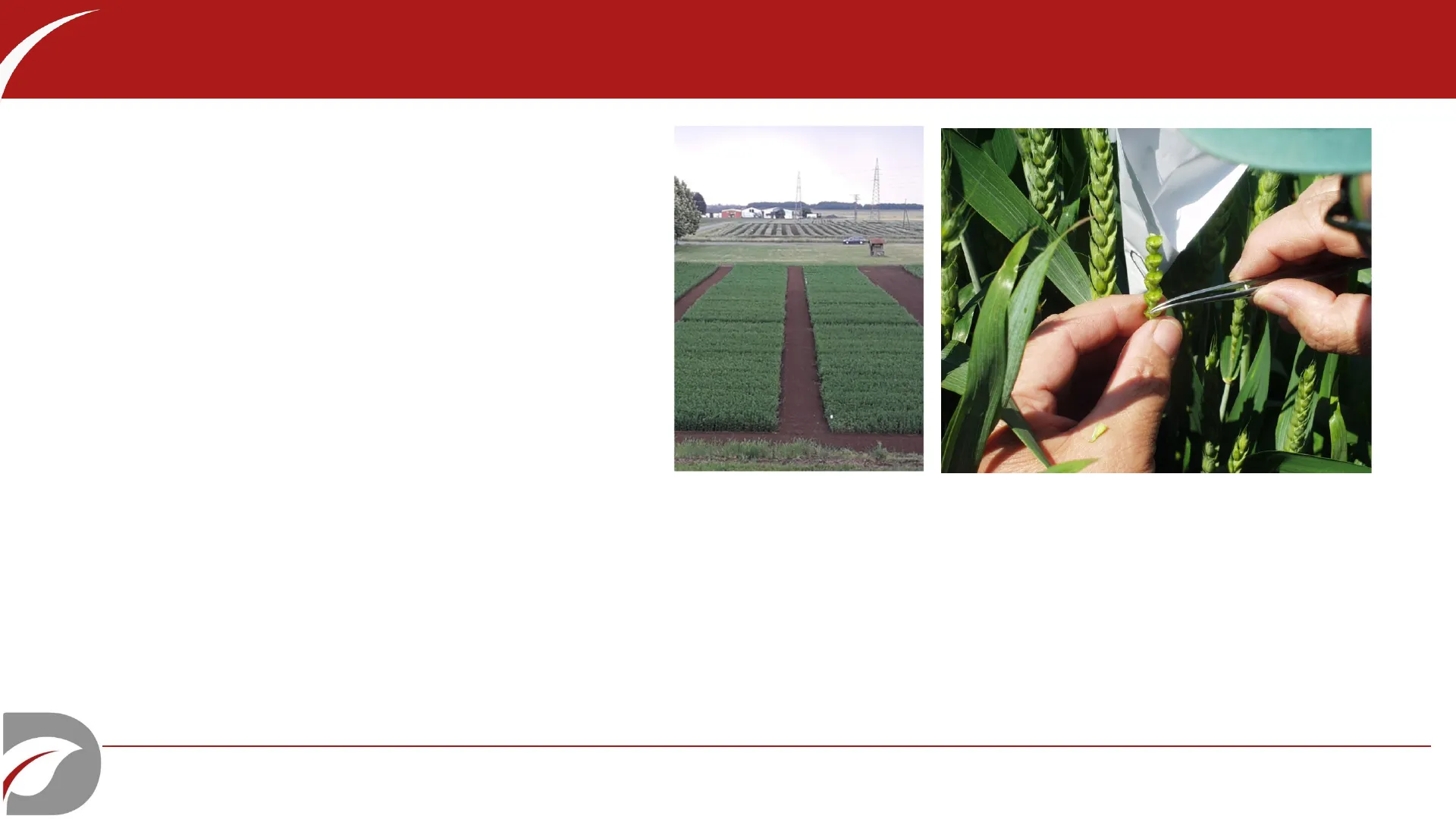
Year 1 1000 Obtain variable population; space plant; select superior plants
Reasons for Growing Plants in Rows
- Control and organization: Growing plants in rows allows for a more organized and manageable layout. This helps breeders easily track and observe different plant varieties, their traits, and how they respond to environmental factors.
- Managing pollination events.
- Maximizing space: Rows allow for efficient use of available land, optimizing the space for plant growth, and ensuring that each plant has enough room for proper development and access to sunlight, water, and nutrients.
- Reduced Disease Spread: Row planting can help reduce the spread of diseases and pests. With more space between plants, it's easier to monitor individual plants and manage any problems that arise.
- Ease of Maintenance: Tasks such as weeding, irrigation, and harvesting are more efficient when plants are grown in rows. It provides a clear pathway for workers or machinery to move through.
- Uniformity: Growing plants in rows ensures uniformity in spacing, which can help in analyzing genetic traits, growth patterns, and yield consistency.
- Simplified Data Collection: In a breeding program, it's important to gather accurate data on plant traits. Planting in rows makes it easier to measure things like plant height, flowering time, or fruiting, which helps in assessing the success of the breeding effort.
Year 2 200 Plant progeny rows of superior plants; compare Years 3-5 25-50 Select plants from superior rows to advance 1 Year 6 15 Preliminary yield trials Years 7-10 10 Advanced yield trial Release https://doi.org/10.1002/9781118313718.ch16 Number of plants Action
Breeding Plan Specifications and Actions
Few specifications General features of a breeding plan Starting point: a breeding plan may start from different source populations. See previous module ("Starting Material And Origin Of Diversity")
Breeding Plan Stages
Number of plants Action Year 1 1000 Obtain variable population; space plant; select superior plants
Benefits of Row Planting
- Control and organization: Growing plants in rows allows for a more organized and manageable layout. This helps breeders easily track and observe different plant varieties, their traits, and how they respond to environmental factors.
- Managing pollination events.
- Maximizing space: Rows allow for efficient use of available land, optimizing the space for plant growth, and ensuring that each plant has enough room for proper development and access to sunlight, water, and nutrients.
- Reduced Disease Spread: Row planting can help reduce the spread of diseases and pests. With more space between plants, it's easier to monitor individual plants and manage any problems that arise.
- Ease of Maintenance: Tasks such as weeding, irrigation, and harvesting are more efficient when plants are grown in rows. It provides a clear pathway for workers or machinery to move through.
- Uniformity: Growing plants in rows ensures uniformity in spacing, which can help in analyzing genetic traits, growth patterns, and yield consistency.
- Simplified Data Collection: In a breeding program, it's important to gather accurate data on plant traits. Planting in rows makes it easier to measure things like plant height, flowering time, or fruiting, which helps in assessing the success of the breeding effort.
A180-4 https://doi.org/10.1002/9781118313718.ch16
New Variety Release Process
Few specifications General features of a breeding plan
Breeding Plan Actions by Year
Number of plants Action Year 1 1000 Obtain variable population; space plant; select superior plants 200 Year 2 Plant progeny rows of superior plants; compare Years 3-5 25-50 Select plants from superior rows to advance Year 6 15 Preliminary yield trials Years 7-10 10 Advanced yield trial Release
Pre-Release Trials and Registration
Before the release of a new variety, some fundamental trials (preliminary and advance) are necessary to assess DUS, AUV, performance in multiple environments, etc. > last part of this module. Before the release, it is generally necessary to multiply the seed for commercialization and register it with authorized bodies in order to protect the result of many years of work. https://doi.org/10.1002/9781118313718.ch16
Self-Pollinated Cultivars: General Overview
Constitution Methods for Self-Pollinated Species
- Mass selection
- Pure-line selection
- Pedigree selection
- Bulk population breeding
- Single seed descent
- Backcrossing
Homozygosity Increase Over Generations
Generations Homozygous plants (%) Heterozygous plats (%) F1 0,00 1600 +m 100,00 F2 50,00 400 ++ 800 +m 400 mm 50,00 F3 75,00 400 ++ 200 ++ 400 +m 200 mm 400 mm 25,00 F4 87,50 600 ++ 100 ++ 200 +m 100 mm 600 mm 12,50 93,75 700 ++ 50 ++ 100 +m 50 mm 700 mm 6,25
Characteristics of Self-Pollinated Cultivars
These methods allow the development of cultivars in self- pollinated species. The resulting cultivars: · are homogeneous in phenotypes · are homozygous (through a series of self-pollination) · have a narrow genetic base. · produce seed that may be saved (where legal and applicable) for planting the next season's crop, without loss of cultivar performance, regarding yield and product quality. However, in some cases, intellectual property rights prohibit the re-use of commercial seed for planting the next season's crop, thus requiring seasonal purchase of seed by the farmer from seed companies.
Theoretical increase (without considering crosses or mutations) in homozygosity over generations in self-pollinating lines. https://doi.org/10.1002/9781118313718.ch16
Self-Pollinated Cultivars: Mass Selection
Constitution Methods for Self-Pollinated Species
- Mass selection
- Pure-line selection
- Pedigree selection
- Bulk population breeding
- Single seed descent
- Backcrossing
Mass Selection Procedure and Results
Starting point How Why Results Starting material: source population constituted by multiple lines The general procedure in mass selection is: to rogue out off-types or plants with undesirable phenotypic traits (negative mass selection) - - Select and advance several plants that are desirable and uniform for the phenotypic trait(s) of interest (positive mass selection). Mass selection can be used for: • Developing a new cultivar • Purifying an existing cultivar The cultivar is (more or less) phenotypically uniform even though it is a mixture of pure lines.
Mass Selection for Cultivar Development
(a) Mass selection for cultivar development Source population Select and bulk seed of desired plants OR Rogue out undesired plants and bulk Plant replicated trials of bulk seed Release best performer
Mass Selection for Cultivar Purification
(b) Mass selection for purification of a cultivar Plant source population Year 1 Source population + consisting of about 500-1000 desirable plants Grow about 200 plants Year 2 + or heads in rows; rogue out off-types Year 3 Bulk harvest https://doi.org/10.1002/9781118313718.ch16
Self-Pollinated Cultivars: Pure-line Selection
Constitution Methods for Self-Pollinated Species
- Mass selection
- Pure-line selection
- Pedigree selection
- Bulk population breeding
- Single seed descent
- Backcrossing
Characteristics of Pure Lines
Each pure line released has a very narrow genetic base and tends to be uniform in traits of interest (e.g., height, maturity). In case of proprietary dispute, lines are easy to unequivocally identify.
Pure-line Selection Process
Year 1. select superior plants from the variable population Year 2. Grow progeny rows of selected plants. Rogue out any variants. Harvest selected progenies individually. Year 3-5. As year 2 Year 6. Conduct preliminary yield trials of the experimental plants including appropriate check cultivars. Year 7-10. Conduct advanced yield trials at multi-locations. Release highest yielding line as new cultivar. Pure-line selection is used for constituting a highly uniform line
Pure-line Selection Timeline
Number of plants Action Year 1 1000 Obtain variable population; space plant; select superior plants Year 2 200 Plant progeny rows of superior plants; compare Years 3-5 25-50 Select plants from superior rows to advance Breeding line 1 Check cultivar Year 6 15 Preliminary yield trials Breeding line 2 Breeding line 3 Years 7-10 10 Advanced yield trial Single pure line Release https://doi.org/10.1002/9781118313718.ch16 Starting material: variable base population (e.g., landrace)
Pure-line Selection in Self-pollinated Cultivars
Constitution Methods for Self-pollinated Species
- Mass selection
- Pure-line selection
- Pedigree selection
- Bulk population breeding
- Single seed descent
- Backcrossing
Barley Pure-line Selection Case Study
Starting material: landrace Case study: Developing new pure lines in barley (Hordeum vulgare ssp. distichum) through pure-line selection The flower structure of barley: - Monoecious with perfect flowers - high rate of self-pollination, close to 100%
Pure-line Selection Actions and Genetic Similarity
Number of plants Action Ycar 1 1000 Obtain variable population; space plant; select superior plants 1 Leonessa1, Leonessa2 Plaisant] Plaisant2 0.63 0.75 0.88 1.00 https://doi.org/10.1002/9781118313718.ch16 Genetic similarity coefficient Local variety Agordino 100 QA18, OA19 · Cometa/Baraka QA89' OA32. OA34 · Barberusse OA27 Primus OA02, OA03, OA15, O Casanova 90 · Scandella OA38, OA44 OA20' OA30, OA46, OA52 OA50 Concertol, Concertoz Alba Scarlet1, Scarlet2 Braemar1, Braemar2, Tunika Kangoo Saxsonia1, Saxsonia2 Ardal 100 Atomo1, Atomo2, 90 Flanelle Ì Flanelle2 100 Barakal, Baraka2 Barberusse1, Barberusse2, Primus Casanova1, Casanova2 Scandella1, Scandella2 100 OA01 · Agordino OA04, OA13, OA17, · Concerto OA57 · Alba OA07, OA21, OA22, OA23, OA29 Scarlett 100 O Braemar OA05, OA14, OA16, OA24, OA37, OA47, OA51, OA59, OA60 · Saxsonia 8432 · Arda Hordeum vulgare ssp. distichum field 100 O Sfera · Calanque · Atomo OA06, OA09, OA10, OA11, OA12, OA26, OA33, OA35, OA36, OA39, OA41, OA49 OA53, OA55 · Flanelle 100 QAQ8' OA25, OA43, OA45, OA54 100 · Leonessa 100 O Plaisant · Marjorie · Tunika Sfera Marjorie, Calanque, Arda2 Cometa1, Cometa2, Commercial varieties OA28, OA48, OA56 · Kangoo
Can’t find what you’re looking for?
Explore more topics in the Algor library or create your own materials with AI.
