Introduction to IoT: History, Architecture, and Technologies
Slides from University about Introduction to IoT. The Pdf, a digital presentation, covers the definition, historical evolution, and underlying technologies of IoT, including 3 and 5-layer architectures, device categories, and essential communication protocols for computer science students.
See more13 Pages


Unlock the full PDF for free
Sign up to get full access to the document and start transforming it with AI.
Preview
Introduction to IoT
The last decade has witnessed a surge in attention towards the Internet of Things (IoT), a paradigm that involves the connection of physical objects to the internet. These objects, encompassing machinery, automobiles, structures, and various items, collectively form the Internet of Things, equipped with firmware, internet connectivity, and sensor technologies. This era marks a transformative shift, enabling machines to communicate not only with people but also with each other, courtesy of the IoT concept. The application of IoT technology extends to diverse domains such as smart homes, smart cities, industrial machinery, and wearable technologies. Industries are experiencing a profound impact from the increasing integration of IoT. Reshaping sectors like manufacturing, transportation, agriculture, and healthcare, the IoT is ushering in unprecedented changes. Its influence on the future is undeniable, promising significant transformations.
History of IoT
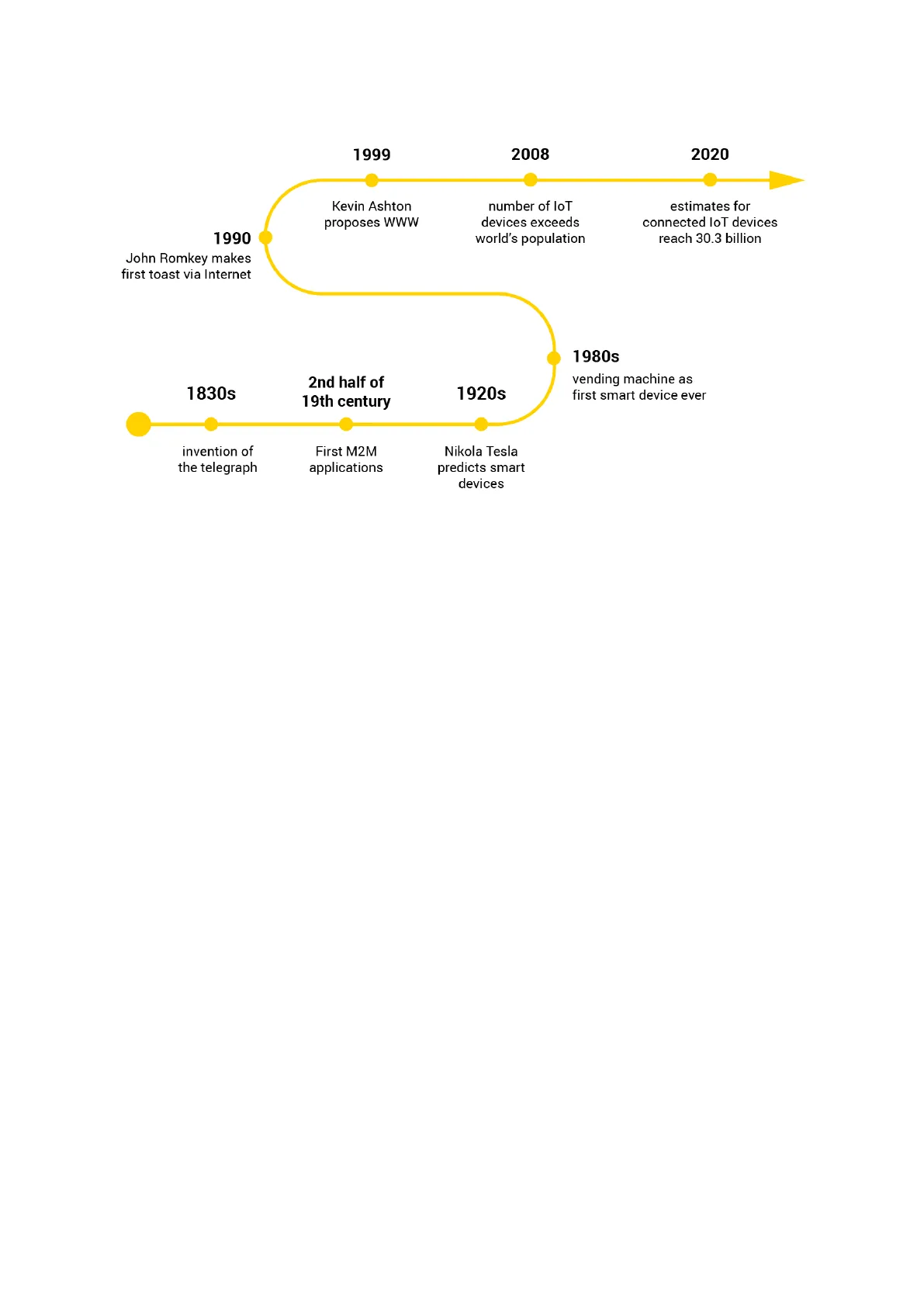
The emergence of the first devices with internet connectivity in the early 1980s marked the beginning of the Internet of Things. Wi-Fi and Bluetooth's invention made it possible for devices to connect wirelessly (without any cable connections). IoT's first stages were mostly RFID (Radio Frequency Identification) technology. RFID makes it possible to monitor and identify anything via radio waves. RFID tags were fixed to items, and they could be scanned to get data and find out where they were. Kevin Ashton, who was working in supply chain optimization, wanted to attract senior management's attention to this exciting new technology. Because the internet was the hottest new trend in 1999, he called his presentation "The Internet of Things".1999 2008 2020 Kevin Ashton proposes WWW number of loT devices exceeds world's population estimates for connected loT devices reach 30.3 billion 1990 John Romkey makes first toast via Internet 1980s 1830s 2nd half of 19th century 1920s vending machine as first smart device ever invention of the telegraph First M2M applications Nikola Tesla predicts smart devices
Types of IoT Devices
The Internet of Things is an extension of the internet we already know and use, further into our physical world. This is achieved by the use of sensors, actuators, and effectors. These devices are a subset of connected devices that are designed to collect and exchange data with minimal human intervention for various applications. IoT devices can generally be grouped into 3 categories: namely- Consumer IoT, Enterprise IoT, and Industrial IoTloT Devices G Consumer Enterprise Industrial Consumer IoT devices are physical personal devices like wearables and home appliances that gather data and then use that data to provide insights or take automated action. Enterprise loT devices refer to the use of physical 'things', thus loT devices in business processes for reducing manual work and increasing overall business efficiency. A typical example will be the use of IoT devices in logistics and the automatic tracking and logging of the whereabouts of shipments. Industrial IoT refers to interconnected sensors, instruments, and other devices networked together with computers for industrial applications, including manufacturing and energy management.
IoT Domains
The Internet of Things (IoT) encapsulates a transformative vision, weaving a web of interconnected devices that communicate seamlessly, gather data, and drive innovation across diverse sectors. This overarching concept extends its influence into various realms, fundamentally altering the landscape of industries and everyday life. As we delve into specific applications within agriculture, health, energy, and transportation, the holistic IoT scope emerges as a force shaping a more intelligent, efficient, and interconnected future. This section explores the transformative potential of IoT, providing insights into its overarching impact and the specific breakthroughs it brings to key sectors.
IoT in Agriculture
The scope of IoT in agriculture is nothing short of revolutionary, promising a future where precision and efficiency converge to redefine farming practices. By deploying advanced sensors, automated machinery, and real-time data analytics, IoT enables farmers to monitor crop health, optimize irrigation, and precisely manage resources. Smart agriculture facilitates timely decision-making, minimizes waste, and maximizes yield. From remote sensing technologies to smart drones, the integration of IoT in agriculture not only boosts productivity but also promotes sustainable and resource-efficient farming methods. As the world grapples with the challenge of feeding a growing population, the transformative potential of IoT in agriculture emerges as a beacon of innovation, offering a path towards resilient, data-driven, and eco-friendly farming practices.
IoT in Energy Sector
In the energy sector, IoT catalyzes transformative change, revolutionizing how power is produced, distributed, and consumed. The interconnected network of devices, sensors, and grids enables real-time monitoring, optimizing energy use for both consumers and providers. Empowered by IoT, smart grids dynamically respond to demand fluctuations, enhancing overall grid reliability. The impact extends from intelligently managing energy consumption in smart homes to streamlining operations in industrial setups. IoT not only boosts energy efficiency but also paves the way for seamless integration of renewable sources, aligning with global sustainability goals. The marriage of IoT and energy signifies not just innovation but a fundamental reimagining of our approach to power in a connected, intelligent future.
IoT in Healthcare
In the dynamic landscape of healthcare, IoT unfolds as a catalyst for profound change, ushering in an epoch where personalized, data-centric health management takes center stage. With an array of connected devices, wearables, and intelligent healthcare systems, real-time monitoring becomes not just a possibility but a personalized reality for individuals. Empowering patients to actively engage in their well-being, IoT in health extends its reach to healthcare providers, offering precise insights and timely interventions. Beyond individual care, the impact reverberates across the healthcare spectrum, influencing infrastructure with remote patient monitoring, predictive equipment maintenance, and optimized operations. This technological revolution signifies not only an improvement in diagnostics and treatment outcomes but also a paradigm shift towards preventive healthcare, making IoT a transformative force in shaping the future of well-being.
IoT in Transportation
In transportation, the IoT promises unparalleled efficiency and safety. By connecting vehicles and infrastructure, real-time data analytics optimize traffic flow, enable predictive vehicle maintenance, and enhance safety measures. This translates into reduced congestion, lower emissions, and streamlined supply chains. From smart logistics to connected cars improving route efficiency, the benefits of IoT in transportation are tangible, steering us towards a future where mobility is not only connected but also smart, safe, and environmentally conscious.
Applications of IoT
- Wearable technology is a hallmark of loT applications and is one of the earliest industries to have adopted IoT technologies. These wearables provide real-time insights, promoting healthier lifestyles and enabling remote healthcare monitoring and analysis.
- Smart home applications monitor and/or control home attributes such as lighting, climate, entertainment systems, and appliances. It is the highest IoT application on all measured channels.
- Health care loT applications can turn reactive medical-based systems into proactive wellness-based systems. IoT opens doors to a sea of valuable data through analysis, real-time field data, and testing.
- Smart city applications include traffic management, water distribution, waste management, urban security, and environmental monitoring to solve traffic congestion problems, reduce noise and pollution, and help make cities safer.
- Agricultural applications enhance not only conventional, large-scale operations but also support trends like organic, family, and transparent farming. Smart farming can also provide more efficient water usage or optimization of inputs and treatments. Now, let's discuss the major applications of IoT-based smart farming that are revolutionizing agriculture.
- Industrial automation is one of the fields where both faster developments and the quality of products are critical factors for a higher ROI. With IoT applications, one could even re-engineer products and their packaging to deliver better performance in both cost and customer experience. The following shows some of the activities and advantages of IoT in industrial automation.
IoT Applications in Industrial Automation
- Creates Digital Factories
- Improves Line-of- Command in work units
- Smart tracking for products in-transit
- Monitors in near real-time through out the supply chain
- Notifies users on deviations in delivery plans
- Provides cross channel visibility into inventories
- Product Quality testing in various stages of Manufacturing cycle
- Packaging Optimization O O
Challenges Facing IoT
- Security The interconnected nature of these devices creates a vast attack surface, making them susceptible to cyber threats. Issues such as insufficient encryption, weak authentication, and the sheer volume of devices make safeguarding IoT networks complex, requiring robust security measures to protect against potential breaches and unauthorized access.
- Regulations - Lack of Strong Regulations Without stringent guidelines, the industry faces issues related to privacy, data protection, and standardization. This lack of oversight can lead to inconsistent security practices, making it difficult to address potential risks and vulnerabilities effectively. Establishing clear and comprehensive regulations is crucial for ensuring the responsible development and deployment of IoT technologies.
- Availability of skilled Talent As the demand for professionals with expertise in areas such as cybersecurity, data analytics, and IoT architecture increases, a shortage of qualified individuals hinders the seamless development and maintenance of IoT systems. Bridging this skills gap is essential for effectively addressing the complexities of IoT implementation and ensuring the continued innovation and security of interconnected devices.
- Compatibility The diverse array of devices, protocols, and standards within the IoT ecosystem often leads to interoperability issues. Ensuring seamless communication and integration among various devices becomes challenging, hindering the potential for a unified and efficient IoT infrastructure. Addressing compatibility concerns is crucial for fostering a cohesive and interconnected environment that maximizes the benefits of IoT technology.
- Bandwidth The increasing number of connected devices generates substantial data traffic, placing strain on existing network infrastructures. Limited bandwidth can result in slower data transfers, latency issues, and potential disruptions in communication between IoT devices. Overcoming bandwidth
Can’t find what you’re looking for?
Explore more topics in the Algor library or create your own materials with AI.
