English Language Course: Basic Concepts of Music Theory and Notation
Slides from Conservatorio Santa Cecilia- Roma about English Language Course Biennium. The Pdf introduces fundamental concepts of music theory, focusing on notation, dynamics, and the circle of fifths, suitable for university students of Music.
See more19 Pages


Unlock the full PDF for free
Sign up to get full access to the document and start transforming it with AI.
Preview
CORSO LINGUA INGLESE BIENNIO
CONSERVATORIO SANTA CECILIA- ROMA Α.Α. 2023/24 Docente: MIRELLA DI VITA
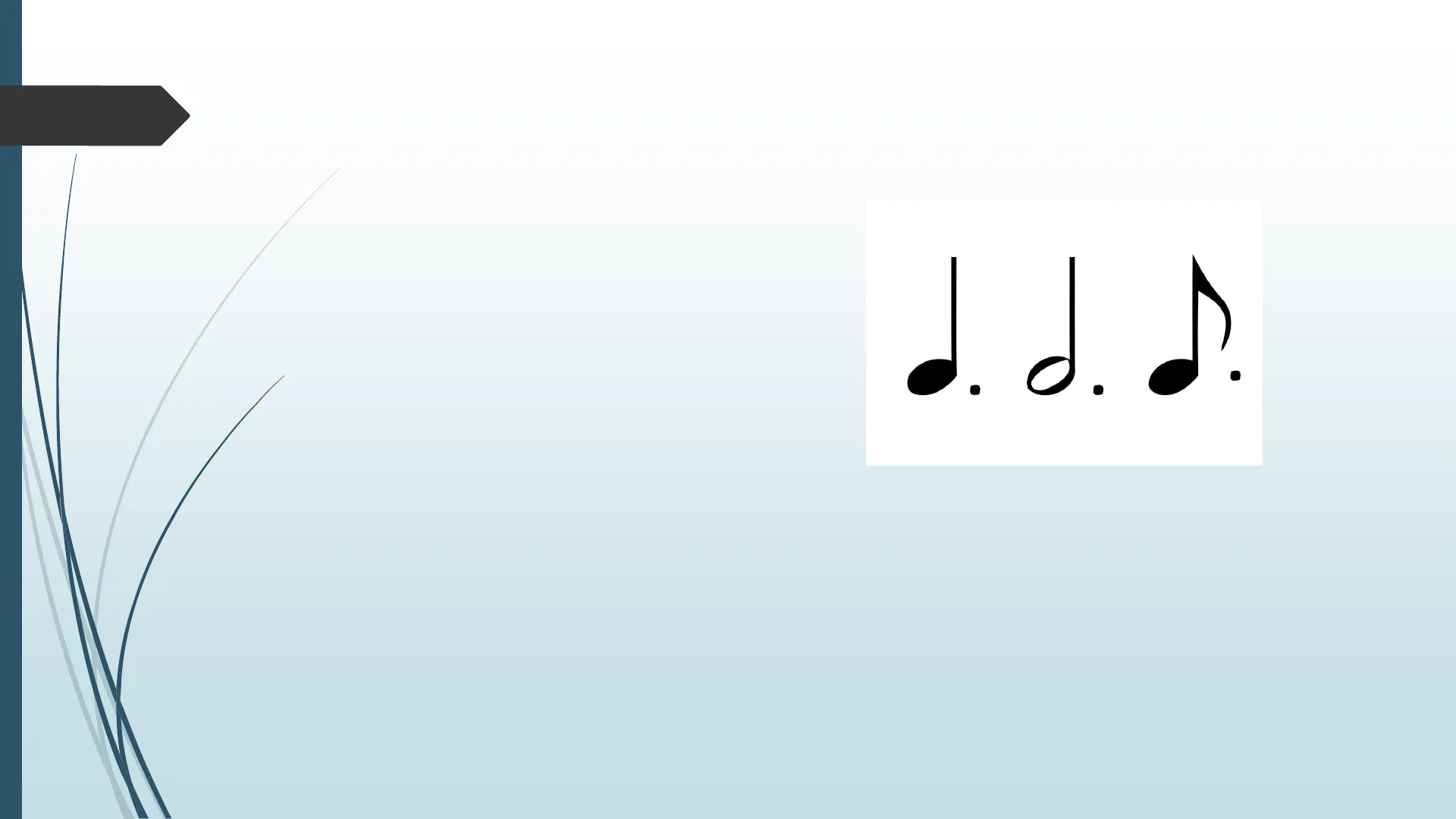
A dot (on an augmentation dot) on any note or rest adds half the duration. A second augmentation dot can be found in music: it adds half the first dot's value (double dotted notes). d. d.
Prof. Mirella Di Vita Conservatorio Santa Cecilia - Roma- A pause (or fermata) sign tells you to hold the note or rest for slightly longer than its written value.
Prof. Mirella Di Vita Conservatorio Santa Cecilia - Roma- A TIE connects two notes of the same pitch and indicates that they are to be performed like one note equal in length to the two linked notes.
- A SLUR joins notes of different pitches which need to be played legato (smoothly).
- A PHRASING SLUR can delineate the extent of a phrase line and indicate the legato performance of melodies or broken chords.
Slurs
3 mp 0. Ties
Prof. Mirella Di Vita Conservatorio Santa Cecilia - Roma
ARTICULATION
Directions to a performer typically through symbols and icons on a musical score that indicate characteristics of the attack, duration, and decay of a given note. These directions are often interpreted by the conductor for the ensemble.
Prof. Mirella Di Vita Conservatorio Santa Cecilia - Roma
Tenuto
Hold the note in question its full length (or longer, with slight rubato), or play the note slightly louder.
Marcato
Indicates a short note, long chord, or medium passage to be played louder or more forcefully than surrounding music.
Staccato
Signifies a note of shortened duration or detached (not legato)
Legato
Indicates musical notes are to be played or sung smoothly and connected.
Articulation and modes of attack
- Arco - bowed ( for a stringed instrument). This direction only appears after pizzicato. Otherwise, it is assumed that the bow will be used.
- Col legno - using the wood of the bow, rather than the hairs (for stringed instruments)
- Glissando, glis - slide
- Legato - smooth and connected
- Marcato, marc. emphatic, accented
- Naturale, nat. - In the ordinary was, a direction to resume the normal method of performance (e.g. after a col legno passage in string music)
- Pizzicato / pizz - plucked, a direction for plucking the strings of a bowed instrument.
- Portamento - slide from one note to the next
- Ponticello, pont. - bridge (on a stringed instrument) - sul pont. - play on the bridge
- Sforzando, sforzato, sfz, sf - accented, forcing, forced
- Sordino, sord .- mute (con sord. with mute; senza sord. without mute)
- Staccato, stacc. - short and detached
- Tasto, tast .- fingerboard (on a stringed instrument) - sul tast. - play on the fingerboard
Percussive accents
short long detached A > pressure accent legato -
Time Signature
- The time signature is written at the beginning of the stave, after the clef and the key signature;
- it indicates the number and type of rhythmical units each bar will contain.
indicates number of beats per bar indicates value of each beat
Prof. Mirella Di Vita Conservatorio Santa Cecilia - Roma
Time signature types
V SIMPLE V COMPOUND V DUPLE, TRIPLE, QUADRUPLE etc ... meaning two, three, four ... beats (either simple or compound) per bar.
Prof. Mirella Di Vita Conservatorio Santa Cecilia - Roma
SIMPLE TIME SIGNATURES
- Simple time signature = the pulse is divided into 2 inner beats (or sub-beats).
Simple Time Signatures
Type Of Beat
Duple Time Triple Time Quadruple Time
Crotchet Beat
3 4 . 2
Minim Beat
2 3 2 0 dd 2 dddd
Quaver Beat
6700 1 3 8 1 400
Prof. Mirella Di Vita Conservatorio Santa Cecilia - Roma
COMPOUND TIME SIGNATURES
- Compound time signature = the pulse is divided into 3 inner beats (or sub-beats).
- In compound time signature (3/8- 6/8- 9/8) the top number indicates the number of inner beats per bar while the bottom number indicates the rhythmic value of each inner beat.
Compound Time Signatures
Type Of Beat
Duple Time Triple Time Quadruple Time
Dotted Crotchet Beat
6 8 . 9 8 . . 12 8
Dotted Minim Beat
6 d. . d. 4 d. d. d. 12 4 d.d.d.o.
Dotted Quaver Beat
6 16 9 16 12 16
Prof. Mirella Di Vita Conservatorio Santa Cecilia - Roma
TEMPO
Beethoven: "Moonlight" Sonata
- TEMPO = it is used to explain how fast a piece is meant to be played.
- Tempo can be specified:
- using a number and a note duration (BPM = Beats Per Minute or Metronome Mark)
- using an italian tempo term such as Andante, Largo, Allegro etc ...
Tempo
= 48 Adagio sostenuto 3 3 3 3 3 3 3 3 3 3 3 3 O ℮ $ 1$
Prof. Mirella Di Vita Conservatorio Santa Cecilia - Roma
Basic tempo directions
These normally appear at the start of the music above the stave:
- Largo - very slow
- Adagio - slow
- Andante - literally, 'walking pace' - fairly slow
- Andantino - slightly faster
- Allegretto - slightly slower
- Allegro - fast and lively
- Presto - very fast
- Prestissimo - extremely fast
Prof. Mirella Di Vita Conservatorio Santa Cecilia - Roma
Tempo qualifications
Sometimes tempo directions can be qualified by a second term to modify the speed or describe the piece.
- Agitato - agitated
- Alla marcia - like a march
- Animato - animated, lively
- Assai - as much as possible
- Cantabile - in a singing style
- Giocoso - playful, humorous
- Maestoso - majestic
- Marcato - emphatic, accented
- Molto - a lot
- Poco - a little
- Risoluto - bold, strong
- Rubato - with some freedom of time
Prof. Mirella Di Vita Conservatorio Santa Cecilia - Roma
Changes in Tempo
- Accelerando - gradually getting faster
- Allargando - broadening
- A tempo - in time or back to the original speed
- Meno mosso - less movement (slower)
- Più mosso - more movement (faster)
- Rallentando, rall. gradually getting slower
- Ritardando, ritard., rit. gradually getting slower
- Ritenuto, riten., rit. held back
- Stringendo - gradually faster
- Vivace - lively
Prof. Mirella Di Vita Conservatorio Santa Cecilia - Roma
Dynamics
Dynamics = the loudness or the variation in loudness.
- ff - fortissimo - very loud
- f - forte - loud
- mf mezzo forte - moderately loud (lit. 'half loud')
- mp - mezzo piano - moderately soft (lit. 'half soft')
- p - piano - soft
- pp - pianissimo - very soft
Prof. Mirella Di Vita Conservatorio Santa Cecilia - Roma
Changes in Dynamics
The most common indication of changes in dynamics are hairpins:
Crescendo hairpin = gradually getting louder
Diminuendo hairpin = gradually getting softer
0 0 0 mf f
Common expression indicating dynamics or changes in dynamics:
- Calando - getting softer
- Morendo - dying away
- Niente - to nothing
- Sottovoce - in a undertone
0 f mf
Prof. Mirella Di Vita Conservatorio Santa Cecilia - Roma
KEY SIGNATURE
- The key signature comes right after the clef symbol on the stave; it is a list of all the sharp, flat and natural signs in the key (Tonality).
Key signatures: major and relative minor
1 - C major G major A minor E minor D major B minor A major E major F#minor C# minor B major G# mnor F# major D# minor C# major A# minor C major A minor F major D minor Bb major G minor Eb major C minor Ab major F minor Db major Bb minor Gb major Eb minor Cb major Ab minor
Prof. Mirella Di Vita Conservatorio Santa Cecilia - Roma
Circle of Fifths
Major
C F G 1 b 1# a d e D
Minor
2# g b Eb 3b C f# 3# A f c# 4b 4# Ab bb g# E 9 5b/7# 7b/5# DI B Gb/F# C# 85Cb
The Circle of Fifths is a scheme that connects all 12 chromatic pitches used in Western music. It is used to show the relationship between the different keys. Proceeding clockwise, the pitches ascend by fifths. Proceeding counterclockwise the pitches descend by fifths.
eb/d# 6b/6# Bb 2b
Can’t find what you’re looking for?
Explore more topics in the Algor library or create your own materials with AI.
