Light and Photosynthesis: Chlorophylls and Carotenoids Chemistry
Document from University about Light and Photosynthesis. The Pdf explores the process of photosynthesis, focusing on the molecular structure of chlorophylls and carotenoids and their absorption spectra. This University Biology document provides detailed explanations for self-study.
See more22 Pages

Unlock the full PDF for free
Sign up to get full access to the document and start transforming it with AI.
Preview
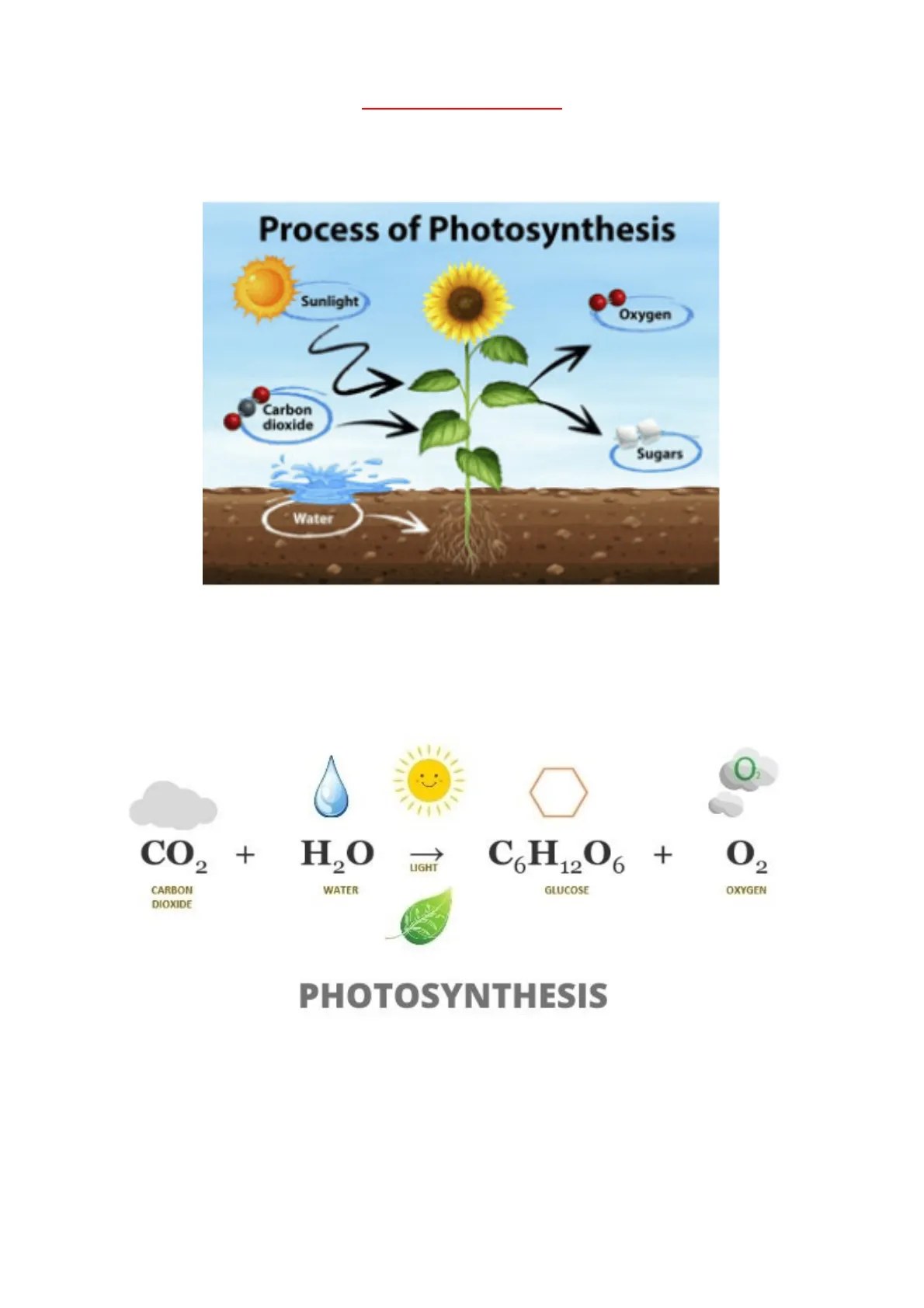
Process of Photosynthesis
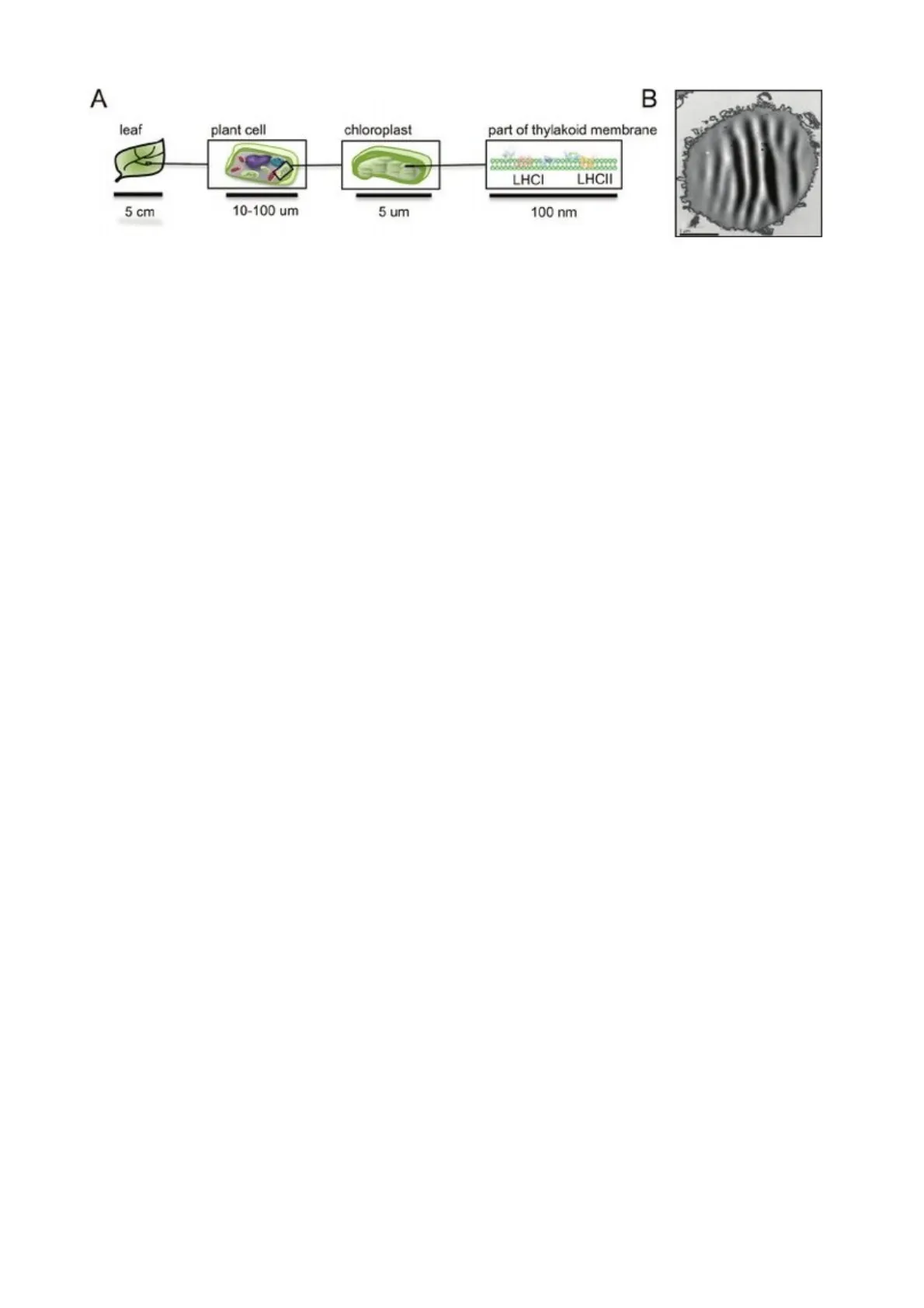
Light and photosynthesis Process of Photosynthesis Sunlight Oxygen Carbon dioxide Sugars Water O CO 2 + H2O LIGHT C6H1206 GLUCOSE + 2 OXYGEN CARBON DIOXIDE WATER PHOTOSYNTHESISA B leaf plant cell chloroplast part of thylakoid membrane LHCI LHCII 5 cm 10-100 um 5 um 100 nmA C S Lam G S S 2 um B 0.5 um D 0.5 um 0.5 um0.20
- Dark, 15.72 +/- 0.44 nm (n=55)
- Light , 20.92 +/- 0.45 nm (n =57) t-test : p <0.001
0.15 - Membrane Lumen Abundance Membrane 0.10 0.05 0.00 5 10 15 20 25 30 Stroma lamella (nm) 15.7nm 20.9 nm Membrane Lumen Thylakoid membrane Thylakoid lumen I DARK LIGHT 30 nm Granum LamellaPlastocyanin Stroma Plastoquinone I Cytochrome b6f Lumen NADP reductase Photosystem I Ferredoxin Photosystem II Oxygen-evolving complex Dark Light ? 1.9 nm 1.3 nm 10 nm PSII sandwich membrane lumen stromal gap OPM structure -- hydrophobic core border ATP Synthase I IIphotosynthetic membrane (thylakoid membrane) H+ 2 H+ + 1/2 O2 lumen H2O H+ photo- system photo- system II 2e 2e- ATP synthase electron carriers H+ NADP+ + 2H+ ATP ADP) + P stroma NADPH + H+ H+ to Calvin cycle light or dark reaction Merriam-Webster, Inc. hv [Re] [Re]* ScCO2 C6F13(H2C)3- (a) sunlight absorption by BGNSCs and CO2 and proton reduction by photogenerated hydrides and reduced complexes sųģars CO2 '2 1 atm CO2 > 20 atm carbon fixation_ Ha light H2 hy 1 e GaN/ZnO ferredoxin ATPase h+ chlorophyll H20 O2 ,2+ 2+ 6 + 2H* + 2H* tBu PS II HNER OH water O2 + H+ H+ R. N I cytochrome b.f plastocyanin thylakoid membrane -5 1-6 Me > [RuV=O]& HO HC e'/H+ „e"/H" H [Ru"-OH]2+ [Ru"-OOH]2+ e"/H+4 _H2O [Ru"-OH2]2+ [Run_OO]2+ e e' e 2 2 5 PS I 14+ H+ NOH FRUANH 5HH 6HH (c) proton and electron ransport, e.g., photogeneration of M-H and C-H hydride donors H ATP NADP ADP NADPH H+ light = [Re] metal complexes CBF 13(H2C)3 H Me (b) water oxidation by Ru complexes and metal hydrous oxide „e“/H+/O2FORMULA OF PHOTOSYNTHESIS LIGHT DEPENDENT LIGHT INDEPENDENT C6H1206 + 602 WATER CARBON DIOXIDE GLUCOSE OXYGEN thedailyECO ATMOSPHERE CO2 C C C CO2 Strikes water That makes carbonic acid H H 1 or 2 acidic H+ ions break away 1 C H H 2 C - H H OCEAN + H+ + H+ Ken Costello 6 H2O + 6 CO2+ H,O 2 water CO. 2 carbon dioxide H.CO 2 3 carbonic acid
Electromagnetic Radiation and Solar Energy
The electromagnetic radiation The Earth is one of the planets in the solar system and receives the solar energy dispersed by this yellow star continuously in the surrounding space. We cannot examine in detail the atomic reactions which are at the basis of solar emission; at the same time, we cannot consider the effect of the presence of atmospheric gases around the Earth which interfere with the amount and quality of solar radiation which arrives down to the Earth surface. The students are invited to search for news regarding these two topics. Here we will give only a summary of the major components of solar radiation and will start by showing the amount of solar energy that could be converted into plant biomass through photosynthesis. Sun Energy loss 1000 kJ 487 513 Outside photosynthetically active spectrum 438 49 Reflected and transmitted 372 66 Photochemical inefficiency C3 C4 126 246 85 287 Carbohydrate synthesis 65 61 85 0 Photorespiration 46 19 60 25 Respiration Biomass 46 KJ Biomass 60 KJ Current Opinion in Biotechnology. All solar energy arriving on the Earth is called electromagnetic radiation or radiant energy. It is characterized by particles (quanta) that travel with different wavelengths. Therefore, it is necessary to define wavelength.
CO2 Fixation and Wavelength
450 400 Flux of CO2 fixation(mmol.gDW-1.hr-1) 350 300 250 C4 model 200 -C3 model 150 100 50 0 0 100 380 550 800 1000 CO2 concentration in air (ppm) Wavelength (2) Peak Trough Velocity (c) Measurement point for frequency (v)1. Fotochimica (assorbimento luce) Electric-field component Direction of propagation Magnetic-field component Wavelength (2) PLANT PHYSIOLOGY, Third Edition, Figure 7,1 0 2002 Sinauer Associates, Inc. C=2 v 2 = c/ v v= c/ 2 E = hv E = h c/ 2 h= costante di Planck = 6.6 x 10⁻³⁴ J.s c = 3 x 10⁸ m/s (velocità della luce nel vuoto) By considering that a particle of energy moves as a wave, we call wavelength the measurement of the distance from one peak of the wave to the next one. The frequency is the time interval between two consecutive waves. The velocity is the number of waves passing in a unit of time. The particles of energy leaving the sun are characterized by different wavelengths. The range of wavelengths extends from radio waves that are thousands of meters long (long wavelengths on the right side of the below figure) to gamma rays with wavelengths as short as a million-millionth (10-12) of a meter (short wavelengths on the left side of the below figure).Short wavelengths Violet Blue Green Yellow Orange Red UV IR 1 300 400 500 600 700 800 Wavelength in nm 1 10 102 103 104 105 106 Visible light X rays Infrared (IR) Ultraviolet (UV) - Increasing Frequency (v) 1024 1 1022 1 1020 1018 1016 1 1014 1012 1010 1 108 10º - 104 102 10º v (Hz) 1 ? rays X rays UV IR Microwave FM AM Long radio waves Radio waves - 1 I 1 10-16 10-14 10-12 10-10 108 :10-6 10 4 10-2 10º 102 104 105 108 2. (m) Increasing Wavelength (1) - Visible spectrum 400 500 600 700 Increasing Wavelength (2.) in nm -+ Long wavelengths 1 Blue-green Yellow-green -Lunghezza d'onda (nm) Colore della luce energia (KJ/mol fotoni) Frequenza (THz) 400 violetto 298 700 440 blu 271 650 500 Blu-verde 238 590 600 giallo 199 520 650 rosso 183 480 700 rosso lontano 170 400 L'energia per rompere un legame (KJ/mol) Bond Length Energy Bond Length Energy H -- H 74 436 H -- C 109 413 C -- C 154 348 H -- N 101 391 The amount of energy required to break a bond is called bond energy fotoni con 2 = 300 nm (UV) hanno energia sufficiente per rompere i legami
Light Perception in Plants
Photoreceptors and Wavelengths
Light perception in plants UV-B UV-A / BLUE RED / FAR-RED UVR8 Cryptochromes: CRY1 & CRY2 Phytochromes: PHYA - PHYE PHR CCT PAS GAF PHY PAS PAS HKR Phototropins: PHOT1 & PHOT2 LOV1 LOV2 KD Zeitlupe family : ZTL, FKF1, LKP2 LOV F KELCH In summary, from the above figures, it is possible to understand that the radiant energy travels in the space in form of quanta (particles of energy) which move with different wave movements forming together the electromagnetic radiation (or radiant energy) as it has been said above.Fortunately, over this long span, the only particles that stimulate living things are those indicated in the figure as comprised between 1 and 106 nm in wavelength which are called (from right to the left): infrared (heat), visible light, ultraviolet and x-rays. These different forms of solar energy sometimes could harm living organisms. For example, the UV and X-rays are absorbed by the DNA molecules which are damaged and could give rise to negative mutations. However, the names indicate the quality of the electromagnetic radiation but it is important also to indicate the relative quantity of the particles which interact with living organisms. 1.0-1.9 2.0-2.9 30-3.9 4.0-4.9 50-59 6.0-6.9 Midpoint of zone value The upper figure shows the solar radiation distribution on Earth in Kwh/m2/day. Regarding this we must say that approximately one-half of the total energy reaching the Earth from the sun is visible light; that is, it is within the visible portion of the spectrum. The particles of energy forming the visible light have wavelength comprised between 400-700 nm. The remainder of the electromagnetic spectrum interacting with living organisms arrives as heat and a small amount of ultraviolet light (which can, however, have a large effect on the ageing of skin and the development of skin cancer).Solar Radiation Spectrum 2.5- Spectral Irradiance (W/m2/nm) UV Visible Infrared 2- Sunlight at Top of the Atmosphere 5250℃ Blackbody Spectrum 1.5 1 - Radiation at Sea Level H2O 0.5- H2O Absorption Bands 102 H2º CO2 103 H20 0- 250 500 750 1000 1250 1500 1750 2000 2250 2500 Wavelength (nm) It is interesting to recall very briefly the major physics characteristics of light. Visible light The particles with wavelengths ranging approximately from 400 (extreme violet) and 700 (extreme red) nm cause the sensation of vision in animals but are also capable of exciting the pigments contained inside chloroplasts. These particles form the light or PAR (photosynthetically active radiation). The energy contained in a particle of light is related to the frequency of its associated electromagnetic wave v by the Planck-Einstein equation: E=hv where E is energy, h is Planck's constant Energy = (6.626196 * 10^-34 Joule-seconds) Since the frequency v, wavelength 2, and speed of light c are related by 2v = c, the Planck relation can also be expressed as: E=hc/2 By looking at the above equation, it seems evident that there is an inverted relation between energy and wavelength so that particles with short wavelengths have higher energies whereas those H2O 1characterized by long wavelengths have lower energies. In simple words, we can say that there are photons characterized by high energy content and short wavelengths and photons characterized by low energy content and long wavelengths. In plant science, light is usually expressed in terms of photon flux or irradiance and is expressed with units of pEinstein where 1 microeinstein (mE) m-2 sec-1 = 6 x 10¹⁷ quanta m-2sec-1. 1 Einstein is defined as a mole of photons. Light travels at various speeds in different media, producing a frequency which is characteristic of a certain environment. Photosynthesis pigments see the light. Long-wavelength radiations, such as infrared and microwaves, have so little energy per quantum that they cannot appreciably boost an electron's energy. Instead, they make the pigment molecule warmer, as in a microwave oven, but this is not especially useful for chemical synthesis. Visible light contains just the right amount of energy per quantum which can be absorbed by a specific type of photosynthesis pigments initiating that chain of events named "light reaction" of the photosynthesis process. A pigment molecule absorbs one quantum at a time of light Pigments are complex molecules present in plant kingdoms able to be excited by visible light and for this behavior, they are called: photoreceptors. The most important pigments involved in the light reaction of the photosynthesis process are chlorophylls, carotenoids, phycoerythrin and phycocyanin. The figure below shows what happens when the light with the whole spectrum runs across the pigment. Some of the particles are absorbed by the pigment. The light transmitted by the pigment will lack some of its components. Thus, if the light was white before the pigments because it contained all the particles characterized by different wavelengths when the light is transmitted then is of green colour and this explains why the pigment is perceived as a green-coloured molecule. The chloroplasts which are the organelles containing the photosynthesis pigments have a green colour, and green is also the colour of the leaves which contain chloroplasts.
Can’t find what you’re looking for?
Explore more topics in the Algor library or create your own materials with AI.
