Respiratory System Gas Exchange, Teded Presentation
Slides from Teded about Respiratory System Gas Exchange. The Pdf explains the diffusion process of oxygen and carbon dioxide between blood, tissues, and cells, and the internal respiratory reactions involving hemoglobin. The Presentation is suitable for University students studying Biology.
See more23 Pages


Unlock the full PDF for free
Sign up to get full access to the document and start transforming it with AI.
Preview
Gas Exchange Overview
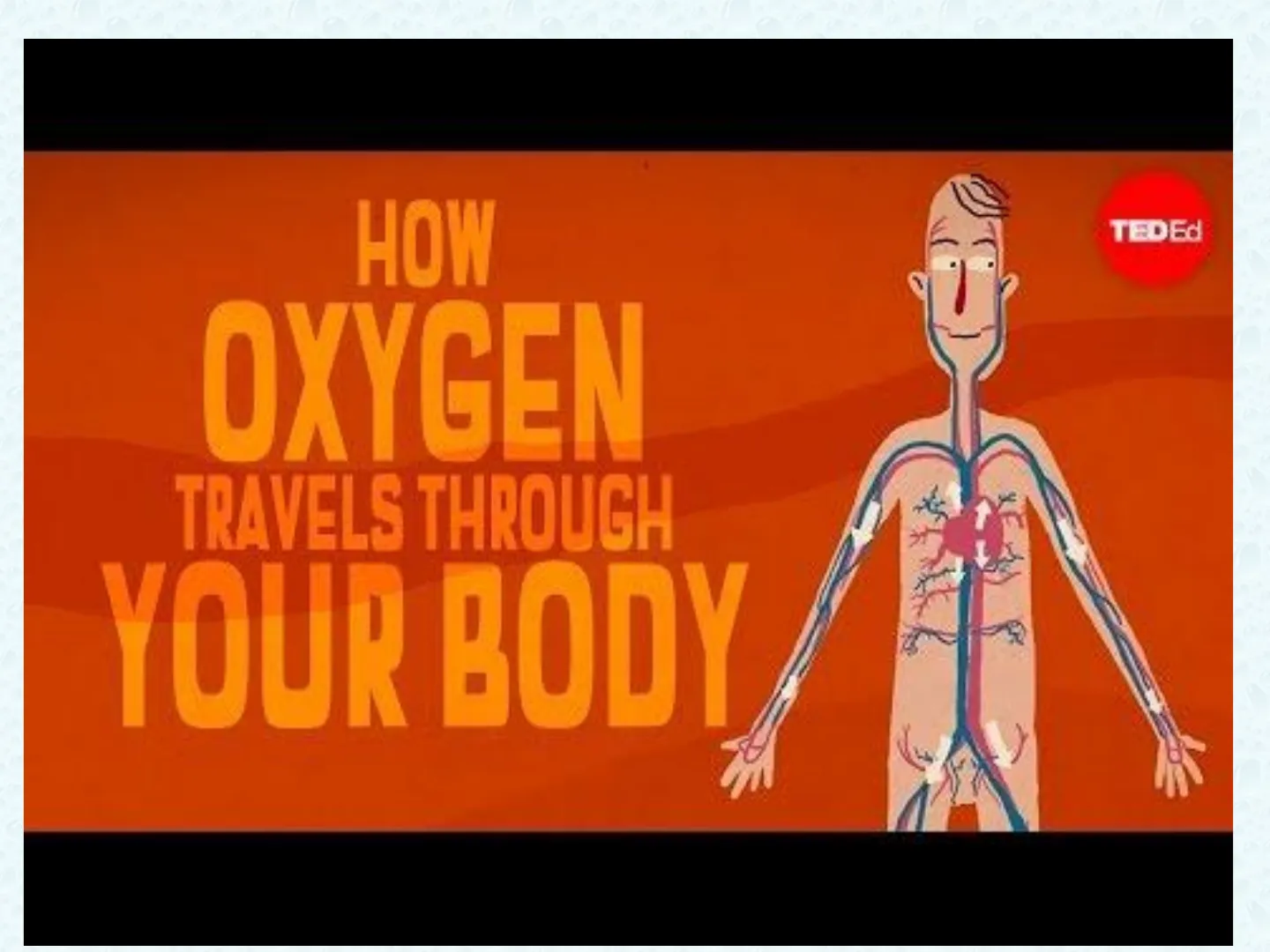
Respiratory System Gas Exchange 1TEDEd HOW OXYGEN TRAVELS THROUGH YOUR BODYAlveoli: Gas Exchange Science Sauce Oxygen in . Oxygen awayGas Exchange Oxygen and carbon dioxide gases are exchanged at the lungs - external respiration at the tissues - internal respiration
External Respiration Process
4External Respiration · Gas exchange between the lung alveoli and the blood capillaries that surround the alveoli. · Called external because does not involve the body cells. · Since both the capillaries and alveoli have a single layer of cells, gases can easily diffuse through cell membranes.
Gaseous Exchange in the Alveolus
5Gaseous Exchange in the Alveolus Carbon dioxide to be exhaled Oxygen-rich blood Inhaled oxygen alveolus (which will go back to the heart and enter the systemic circulation) Deoxygenated blood carrying carbon dioxide Carbon dioxide Oxygen C capillary
6· Lung alveoli contain atmospheric air, which has 21% O, gas and little CO .. · O2 gas diffuses OUT of the lung alveoli and INTO the blood capillaries, to be taken to all body cells.
7· Blood capillaries that enter the lungs are high in CO, gas (waste from cellular respiration in all of the body cells) and low in O2 (~16%) · CO 2 gas diffuses OUT of the blood capillaries and INTO the lung alveoli, to be breathed out.
Respiratory Reactions in External Respiration: Oxyhemoglobin Formation
8#1. Respiratory Reactions in External Respiration Hb + O2 - Hbo, 2 hemoglobin + oxygen gas -> oxyhemoglobin As O, diffuses into the blood, it is picked up by the hemoglobin in red blood cells, forming oxyhemoglobin.
Respiratory Reactions in External Respiration: Carbaminohemoglobin Release
9#2. Respiratory Reactions in External Respiration HbCO 2 → Hb + CO 2 carbaminohemoglobin -> hemoglobin + carbon dioxide · The blood that arrives at the lungs is high in CO2. . Some of this CO, is carried by the hemoglobin as carbaminohemoglobin. . The CO, must be released from the 2 hemoglobin so that it can diffuse into the lung alveoli and be breathed out.
Respiratory Reactions in External Respiration: Reduced Hemoglobin
10#3. Respiratory Reactions in External Respiration HHb -> Hb + H+ reduced hemoglobin -> hemoglobin + hydrogen ions · Because excess H+ ions would lower the blood pH, most of the H+ ions are carried attached to hemoglobin, forming reduced hemoglobin. · When the blood reaches the lung capillaries, then the reduced hemoglobin releases its H+ ions so that they can combine with bicarbonate ions and release CO, gas to be breathed out.
Respiratory Reactions in External Respiration: Carbonic Acid Breakdown
11#4. Respiratory Reactions in External Respiration H+ + HCO2 - H CO2-> H2O + CO 2 hydrogen ions + bicarbonate ions -> carbonic acid -> water + carbon dioxide . Most of the CO, carried in the blood is NOT carried by the hemoglobin but is carried as H+ ions and bicarbonate ions (HCO2). · So when blood reaches the lung capillaries, the H+ and HCO - join to form carbonic acid, which then breaks down into water and CO, gas.
12Remember the goal of external respiration is to release CO 2 gas!
Internal Respiration Process
13Internal Respiration Gas exchange between the blood capillaries and the body cells (via the interstitial fluid)
Internal Respiration Diagram
14Blood plasma Interstitial fluid CO2 co 2 CO2 2 Tissue cell CO2 CO. 2 Detached from hemoglobin CO2 2 Red blood cell O2 O2 O2 (dissolved in plasma)
15• 2 diffuses OUT of the blood capillaries, into the tissue fluid and then INTO the body cells. · CO diffuses OUT of the cells, into 2 the tissue fluid and then INTO the blood capillaries.
Respiratory Reactions in Internal Respiration: Oxyhemoglobin Dissociation
16#1. Respiratory Reactions in Internal Respiration HbO 2 → Hb + O. 2 oxyhemoglobin -> hemoglobin + oxygen gas Oxygen needs to be released from the oxyhemoglobin so it can diffuse out of the blood capillary into the tissue fluid and then into the body cells.
Respiratory Reactions in Internal Respiration: Carbaminohemoglobin Formation
17#2. Respiratory Reactions in Internal Respiration Hb + CO2 - 2 HbCO 2 hemoglobin + carbon dioxide -> carbaminohemoglobin · The CO, that is formed by the body cells diffuses into the tissue fluid and then into the blood. · Some of the CO is picked up by the hemoglobin as carbaminohemoglobin, which carries the CO, to the lungs to be expelled.
Respiratory Reactions in Internal Respiration: Carbonic Acid Formation
18#3. Respiratory Reactions in Internal Respiration CO. + HO -> 2 3 H CO → H " + HCO. - 3 carbon dioxide + water -> carbonic acid -> hydrogen ions + bicarbonate ions Most of the CO that enters the blood at the 2 tissues combines with water in the plasma and is transformed into carbonic acid, which then dissociates into H+ ions and HCO,- 3 (bicarbonate) ions.
Respiratory Reactions in Internal Respiration: Reduced Hemoglobin Formation
19#4. Respiratory Reactions in Internal Respiration Hb + H+ -> HHb hemoglobin + hydrogen ions -> reduced hemoglobin . Since the CO, is being carried as free H+ ions and HCO,ions, there are more hydrogen ions in the blood plasma, which would lower the pH of the blood (that's bad!) · Since not all of the hemoglobin is occupied by CO2, some of it combines with H+ ions to form reduced hemoglobin.
Other Factors Affecting Hemoglobin
20Other factors: · Hemoglobin dissociates from oxygen in the warmer, slightly more acidic pH of the tissues. (Tp = 38℃, pH 7.38) · Hemoglobin combines with oxygen in the cooler, more neutral pH of the lungs. (Tp = 37℃, pH 7.4)
External Respiration Partial Pressure
21EXTERNAL RESPIRATION Po, = 40 Pco, = 45 Respiratory membrane Alveolus O2 Po, = 100 Pco, = 40 External respiration CO2 Po, = 100 Pulmonary Pco, = 40 capillary (a) The partial pressure of O2 (PO2 ) in the lungs is 2 100mmHg and the hemoglobin is 98% saturated with oxygen. The PO, in the tissues is about 40mmHg, and so the hemoglobin is only 60-70% saturated.
Respiratory System Part 2
22Respiratory System, Part 2: Crash Course A&P #32 02 2 RESPIRATORY SYSTEM part 2 32 GAS EXCHANGE
Can’t find what you’re looking for?
Explore more topics in the Algor library or create your own materials with AI.
