Diversity of Autotrophy: Radioautotrophic Organisms, Rhul.ac.uk Presentation
Slides from Rhul.ac.uk about Diversity of Autotrophy. The Pdf explores the diversity of autotrophy, with a focus on radioautotrophic organisms and their use of melanin to convert ionizing radiation into energy, preventing DNA damage. This University Biology material includes learning objectives and outlines key concepts.
See more25 Pages


Unlock the full PDF for free
Sign up to get full access to the document and start transforming it with AI.
Preview
Learning Objectives
By the end of this session, you should be able to:
- Evaluate what autotrophy is
- Understand the difference between different forms of autotrophy which have been discovered
- Evaluate what different forms of autotrophy could mean for life on other planets.
What is Autotrophy?
- Autotrophy is the ability for an organism to convert abiotic energy into storable and usable chemical energy.
- Photosynthesis is the commonly used example for autotrophy as: 6CO2 + 6H20 -> C6H1206 + 602 Fuelled by the absorption of light
Energy Utilization in Autotrophy
- This energy can be used to:
- Generate energy currency molecules (such as ATP)
- Generate energy storage molecules (such as glucose and starch)
- Generate structural molecules (such as proteins and lipids)
- Fuel biochemical processes
- Therefore, autotrophy is associated with organic primary production with autotrophic organisms being the base of food chains.
Autotrophy and Plants
- Terrestrial plant species are described as: Photoautotrophic Using photons Sourcing nutritional molecules By itself
- So, they produce their own biological molecules sourcing energy from the absorption of photons of light.
Photosynthesis Reminder
- Plants absorb photons via their photosynthetic chlorophyll
- These photons provide a form of chemical energy known as excitation energy. This energy is used to break down water and to actively pump H+ ions across the chloroplast membrane and produce NADPH.
- The H+ ion formed chemiosmotic gradient fuels ATP synthase
Photoautotrophic Food Chain
- Source of Energy
- Primary Producer
- Primary Consumer
- Secondary Consumer
- Third Level Consumer
- Apex Predator
Prokaryotic Photoautotrophs
- Prokaryotic Photoautotrophs can be split into two groups: Aerobic Uses the hydrolysis of H2O as the source of H+ ions and electrons to form the chemiosmotic gradient Produces oxygen as a byproduct of hydrolysis Examples: Cyanobacteria Anaerobic Uses the breakdown of a range of different compounds as the source of H+ ions and electrons to form the chemiosmotic gradient Produces elemental sulphur and Iron as a byproduct of hydrolysis Examples: Pseudomonadota, Chloroflexota and Acidobacteriota
Cyanobacterial Photosynthesis
- Cyanobacteria have similar photoautotrophic capacities as eukaryotic plants and algae, sharing general structural, metabolomic and genetic traits.
- This due to modern cyanobacteria and chloroplasts, sharing a common ancestor, with eukaryotic plants undergoing an endosymbiotic event ~ 2 billion years ago.
- 6 CO2 + 6 H2O = C6H1206 + 6 02
Green Sulphur Bacteria
- Green Sulphur Bacteria (GSBs) utilise a type I photosynthetic reaction centre (similar to the P700 with aerobic photoautotrophs).
- They do not have a PSII homologue, thus have a much shorter ETC.
- GSBs absorb photons at the Far Red of the spectrum which is used to reduce NAD+, which in turn fixes CO2 via a reverse TCA cycle -> synthesising pyruvate
Green Sulphur Bacteria Electron Sources
- Electrons can be accepted from a range of different sources, including H2S, S2O32-, and Fe2+ ions.
- As GSB have a much shorter ETC, they use the cytochrome bc1 complex to pump the H+ ions across the inner membrane to form the electrochemical gradient
- 12H2S + 6CO2 -> C6H1206 + 12S + 6H2O
Chemoautotrophs
- Chemoautotrophs are organisms which obtains the energy for their overall function via the oxidation of electron donor molecule which are present within their environment.
- Chemoautotrophs species can derive their biological energy from a
range of different organic or inorganic sources, including but not
limited to the oxidation of:
- H2S
- Ferrous Iron
- Ammonia
- Methane
Types of Chemoautotrophs
- Chemoautotrophs are commonly described as prokaryotic extremophiles, living in highly hostile environment such as deep-sea volcanic vents.
- These environments are high-temperature, and low pH. These provide sources of H2S and other electron sources and high temperature to aid in speeding up reactions
Nitrifying Bacteria Research
- Growing research has discovered a range of nitrifying bacteria (such as Comammox) which utilise the breakdown of ammonia as their source of electrons.
- Nitrifying bacteria are fundamental source of nitrogen for soil, providing usable nitrogen to aid in plant development and growth
Chemoautotrophic Environments
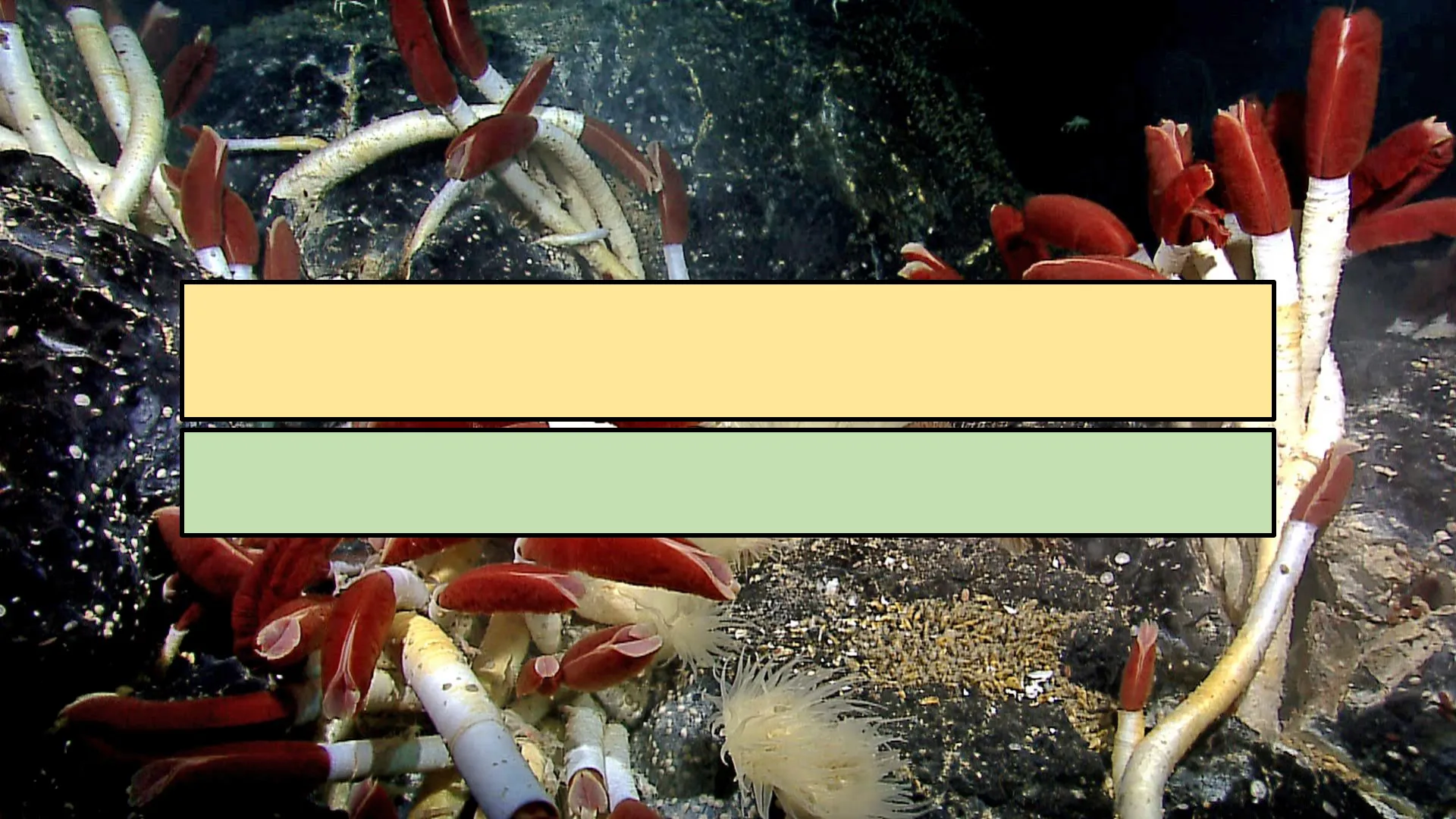
- Chemoautotrophs within and around deep-sea vents provide the basis for light-independent environments which are ~10,000 to 100,000 times more organism dense than none deep-sea vent adjacent sea-floor environments.
- As chemoautotrophic organism grow, this attracts and sustains amphipods and copepods which graze on the bacteria. This sustains snails, shrimps, crabs, tube worms etc.
Thermal Vent Chemoautotrophs Food Chain
- T
- 0
- Source of Energy
- Primary Producer
- Primary Consumer
- Secondary Consumer
- Third Level Consumer
- Apex Predator
Ammonia Chemoautotrophs
1/2 O2 NO2 NO3 NH + 11/2 O2 2 H+ + H20 NO2 Electron transfer + proton motive force ATP CO2 Biosynthesis Macromolecules
The Nitrogen Cycle
Nitrogen gas N2 Denitrification Organic N in proteins, etc. Assimilation Nitrogen fixation Anammox Nitrate NO3 Decomposition Bacteria and Archaea Nitrification Assimilation Nitrite NO2 Nitrification Ammonia NH3
Radioautotrophic Organisms
- Radiosynthesis, or the process of using ionizing radiation such as alpha, beta, and gamma radiation as a sources of energy to drive metabolic reactions and the synthesis of biological molecule has been hypothesised since the 1950s.
- Scientists had previously concluded that radiosynthesis was not
viable because:
- Radioactive material was too spread out to be a sufficient and reliable food source
- Ionizing radiation is very damaging to organic material such as DNA, increasing the risk of uncontrolled raditation
Chernobyl Discovery
- However, in 1986, Chernobyl Nuclear Power Station in Ukraine had a violent meltdown, releasing radioactive material into the surrounding area.
- By the mid 1990s, researchers aiding in the clean-up of the area discovered over 200 species of fungi growing rapidly in areas of high radioactive material.
Fungi and Radiation
- These species of fungi were shown to be able to use the excess ionizing radiation to fuel metabolic processes by use high concentrations of melanin within their tissues.
- Not only was melanin the site of radiolysis of water to provide electrons for the electron transport chain, but it was capable of preventing DNA damage.
- Three different species from Chernobyl were shown to have growth rates ~3-fold higher when introduced to radiation levels ~500x that of the general background radiation.
Autotrophs and the Hunt for Life
- Autotrophs are fundamental in the formation of complex life, as without autotrophs there is no way to convert abiotic compounds and energy into biotically active molecules and energy.
- These biotically active molecules act as sources of energy for predator species allowing for more complex organisms to survive.
Extraterrestrial Life Perspective
- Autotrophic life has been shown to much more diverse than first thought, with abiotic energy being provided by a wide range of different sources.
- This alters the perspective of where extraterrestrial lifeforms may exist within our universe.
Europa: A Candidate for Life
- Europa, one of the moons of Jupiter, has been hypothesised as having
the greatest chance of extraterrestrial life in our solar system due to:
- The presence of liquid water (under a protective multi-kilometre thick ice sheet)
- Geological Activity with deep-ocean thermal vents
- A purely oxygen atmosphere (although very thin)
Learning Objectives Review
Now you should be able to:
- Evaluate what autotrophy is
- Understand the difference between different forms of autotrophy which have been discovered
- Evaluate what different forms of autotrophy could mean for life on other planets.
Can’t find what you’re looking for?
Explore more topics in the Algor library or create your own materials with AI.
