Sistemi chemosensoriali e introduzione al sistema olfattivo in Biologia
Slide di Università sui Chemical Systems and Intro to the Olfactory System. Il Pdf esplora i sistemi chemosensoriali, in particolare il sistema olfattivo, le vie neurali e le connessioni cerebrali, utile per lo studio della Biologia.
Mostra di più21 pagine


Visualizza gratis il Pdf completo
Registrati per accedere all’intero documento e trasformarlo con l’AI.
Anteprima
Sistemi Chimici e Introduzione al Sistema Olfattivo
Physiology II #26.2 - Prof. Pellicciari - Chemical Systems and Intro to the Olfactory System Page 1 of 9 Physiology II #26 Chemical Systems and Intro to the Olfactory System Prof. Pellicciari - 23/04/2021 Alessandra Romano - Chiara Romano
I Sistemi Chimici
Now I will introduce the olfactory system, but before starting talking about it, I want to talk about the chemical systems. When we talk about the chemosensory systems, we can refer to three different systems dedicated to the detection of chemicals in the environment. These sensory systems associated with the nose, mouth, and face are: Smell - Olfaction - Olfactory system Taste - Gustation - Gustatory system Trigeminal - General chemosensory system All these chemosensory systems rely on specific receptors that interact with the relevant molecules and generate action potentials, transmitting information about chemical stimuli to appropriate regions of the CNS. The sensation of taste and smell are closely related, indeed in association with food intake, they both can influence the flow of digestive juices and affect appetite. The stimulation of both taste and smell receptors in the gustatory and olfactory system can induce pleasant or unpleasant sensations, can signal the presence of something to seek (a nutritionally useful, good-tasting food) or to avoid (a potentially toxic, bad-tasting substance).
Sistema Olfattivo
The olfactory system detects airborne molecules called odorants. In humans, odors provide information about food, self, other people, animals, plants, and many other aspects of the environment. The olfactory information can influence feeding behavior, social interactions, and, in many animals, reproduction. However, the smell is the least understood of our senses because it is a subjective phenomenon and poorly developed in humans.
1Physiology II #26.2 - Prof. Pellicciari - Chemical Systems and Intro to the Olfactory System Page 2 of 9
Sistema Gustativo
Differently, the taste system detects ingested, primarily water-soluble molecules called tastants. Tastants provide information about the quality, quantity, and safety of ingested food.
Sistema Chemosensoriale Trigeminale
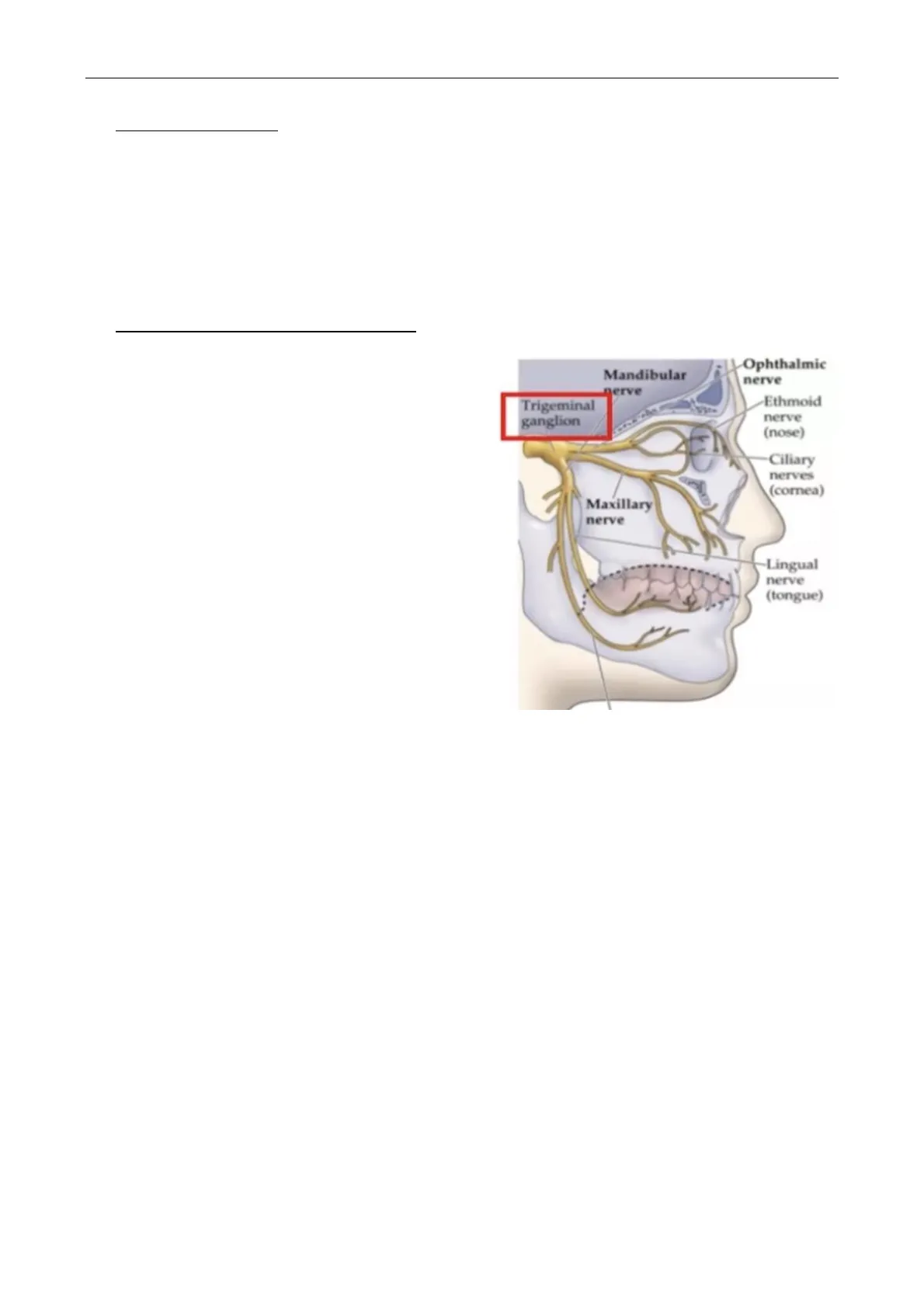
The trigeminal chemosensory system provides information about irritating or toxic molecules that come into contact with skin or mucous membranes of the eyes, nose, and mouth. This system consists of: - Polymodal nociceptive neurons and their axons in the trigeminal nerve (cranial nerve V) - (to a lesser degree) nociceptive neurons whose axons run in the glossopharyngeal and vagus nerves (cranial nerve IX and X) These neurons and their associated ending are typically activated by chemicals classified as irritants, including: Ophthalmic nerve Mandibular nerve Trigeminal ganglion Ethmoid nerve (nose) Ciliary nerves (cornea) Maxillary nerve Lingual nerve (tongue) - Air pollutants (e.g., sulfur dioxide) - Ammonia (smelling salts) - Ethanol (liquor) - Carbon dioxide (in soft drinks) - Menthol (in various inhalants sensation) - Capsaicin (the compound in hot chili peppers that elicits the characteristic burning sensation) Irritant-sensitive polymodal nociceptors alert the organism to potentially dangerous chemical stimuli that have been ingested, respired, or come in contact with the face and are closely linked to the trigeminal pain system. Trigeminal chemosensory information from the face, scalp, cornea, and mucous membranes of the oral and nasal cavities is relayed via the three major sensory branches of the trigeminal nerve: the ophthalmic nerve, the maxillary nerve, and the mandibular nerve.
2Physiology II #26.2 - Prof. Pellicciari - Chemical Systems and Intro to the Olfactory System Page 3 of 9 The central target of these afferent axons is the component of the trigeminal nucleus, which relays this information to the thalamus and to the somatic sensory cortex and other cortical areas that process facial irritation and pain. A variety of physiological responses mediated by the trigeminal chemosensory system are triggered by exposure to irritants. These include: increased salivation, vasodilation, nasal secretion, sweating, decreased respiratory rate, bronchoconstriction.
Il Sistema Olfattivo
Olfaction is related to taste; it has a protective function from dangerous odors like gases and may also produce sexual and psychogenic effects. The receptors of olfaction are chemoreceptors (moderately adapting) and they are true neurons, close to the external environment. The olfactory epithelium, within the nasal cavity, contains olfactory receptor cells, which have specialized cilia extensions. The cilia trap odor molecules as they pass across the epithelial surface. Information about the molecules is then transmitted from the receptors to the olfactory bulb in the brain. Chemoreceptors Sensory system Modality Stimulus energy Receptor class Receptor cell types olfactory smell chemical chemoreceptor Olfactory sensory neuron Olfactory epithelium Bowman's gland olfactory nerve fibre lamina propria 6 O -basal cell olfactory epithelium olfactory receptor cell supporting cell lumen of nasal cavity
3Physiology II #26.2 - Prof. Pellicciari - Chemical Systems and Intro to the Olfactory System Page 4 of 9
Strutture del Sistema Olfattivo
Our sense of smell is a complex process that depends on sensory organs, nerves, and the brain. Olfactory bulb Olfactory nerves and olfactory epithelium Frontal sinus Superior nasal concha Sphenoidal sinus Cribriform- plate Middle nasal concha Inferior nasal concha Air Hard palate Lip Soft palate The structures that compose the olfactory system are: - Nose: opening containing nasal passages that allow outside air to flow into the nasal cavity. - Nasal cavity: cavity divided by the nasal septum into left and right passages. It is lined with mucosa. - Olfactory epithelium: specialized type of epithelial tissue in nasal cavities that contains olfactory nerve cells and receptor nerve cells. These cells send impulses to the olfactory bulb. Cribriform plate Olfactory bulb CF - Cribriform plate: a porous extension of the ethmoid bone, which separates the nasal cavity from the brain. It is a spongy and light bone that includes thousands of small holes through which the axons of the olfactory neurons pass into the brain. If for example there is a sudden blow in front of the head, there will be damage of the cribriform plate, causing the delicate olfactory axons to shear off and so the loss of smell. Olfactory bulb Olfactory tract Cribiform- plat Olfactory nerves Nasal cavity - Olfactory nerve fibers extend through the holes in the cribriform plate to reach the olfactory bulb. - Olfactory nerve: the first cranial nerve involved in olfaction. Its fibers extend from the mucous membrane, through the cribriform plate, to the olfactory bulb. - Olfactory bulb: bulb-shaped structure in the forebrain where olfactory nerves and the olfactory tract begin. - Olfactory tract: a band of nerve fibers that extend from each olfactory bulb to the olfactory cortex of the brain. - Olfactory cortex: area of the cerebral cortex that processes information about odors and receives nerve signals from the olfactory bulbs. - Olfactory mucosa: 3 cm2 of mucosa in the ceiling of the nasal cavity.
4Physiology II #26.2 - Prof. Pellicciari - Chemical Systems and Intro to the Olfactory System Page 5 of 9
Organizzazione del Sistema Olfattivo
Olfactory bulb Cribriform plate Olfactory epithelium Nasal cavity The olfactory system is responsible for our sense of smell. This sense, also known as Olfactory bulb olfaction, involves the Cribriform plate detection and identification of Olfactory nerve molecules in the air. The stimuli (molecules that can be smelled) called odorants, interact with Olfactory epithelium olfactory receptor neurons Airborne odors found in an epithelial sheet - the olfactory epithelium - that lines the interior of the nose. The axons arising from the receptor cells project directly to neurons in the olfactory bulb, which in turn sends projections to the pyriform cortex in the temporal lobe as well as other structures in the forebrain. Differently from other systems that we have seen, in the olfactory one, we have no thalamic relay from primary receptors to the neocortical region that processes the sensory information. Olfactory bulb Afferent nerve fibers (olfactory nerve) Brain Olfactory bulb Bone Olfactory tract -Nasal cavity Basal cell Olfactory receptor cell Supporting cell palate Olfactory mucosa Mucus layer -Cilla contact with the olfactory mucosa.
Localizzazione e Struttura delle Cellule Recettoriali Olfattive
When we are in resting condition, during quiet breathing, odorants typically reach the sensitive receptors only by diffusion because the olfactory mucosa is above the normal path of airflow. Differently, the act of sniffing enhances this process by drawing the air currents upward within the nasal cavity so that a greater percentage of the molecules in the air come into A peculiarity of the olfactory receptors in the nose is that they are specialized endings of renewable afferent neurons. Olfactory epithelium Frontal lobe of cerebrum Olfactory tract Mitral cell Olfactory bulb Olfactory tract Glomeruli Nasal conchae Cribriform plate of ethmoid bone Filaments of olfactory nerve Route of inhaled air Olfactory gland Lamina propria connective tissue Axon Basal cell Olfactory epithelium Supporting cell Dendrite Mucus Olfactory cilia Route of inhaled air containing odor molecules
Classificazione degli Odoranti
A normal individual can discriminate more than 10000 odors, even if the smell is not highly developed in humans as in some animals. Since this number is very large, there have been several attempts to classify them. The most widely used classification was developed in the 1950s by John Amoore who divided odors into categories based on their perceived quality, molecular structure, and the fact that some people, called anosmic, have 5 Olfactory receptor cellPhysiology II #26.2 - Prof. Pellicciari - Chemical Systems and Intro to the Olfactory System Page 6 of 9 difficulty smelling one or another group. Amoore classified odorants as: pungent, floral, musky, earthy, ethereal, camphor, peppermint, ether, and putrid. These categories are still used to describe odors, to study the cellular mechanisms of olfactory transduction, and to discuss the central representation of olfactory information. But this classification remains entirely empirical: a further complication in rationalizing the perception of odors is that their quality may change with concentration.
L'Epitelio Olfattivo
SC Ciliated surface Olfactory cell Oc Basal cell BC Olfactory cells processes Olfactory tract Olfactory bulb neuron KE Cribriform plate Olfactory (1) nerve Connective tissue Olfactory gland Basal stem cell Developing olfactory receptor cell Offactory epthelium Olfactory receptor cell Supporting cell Dendrite Mucus Olfactory hair Pellicciari - Physiology Odorant molecule The olfactory epithelium contains 3 cell types: - Olfactory receptor cells are bipolar neurons with cilia or olfactory hairs, derived from CNS. ORNs and their cilia are generated continuously from dividing stem basal cells of the olfactory epithelium. - Supporting (sustentacular) cells that create a columnar epithelium and are devoted to secreting mucous to detoxify potentially dangerous chemicals. - Stem basal cells are the precursors of new olfactory receptor cells. They replace receptors monthly. (We have seen that a characteristic of olfactory receptor cells is that they are renewable so these basal cells work to produce new of them). Another component of the olfactory epithelium is the Bowman's gland (not to be confused with the Bowman capsule in the kidney) that produces mucous. 6 Support cell
Non hai trovato quello che cercavi?
Esplora altri argomenti nella Algor library o crea direttamente i tuoi materiali con l’AI.