Civil Rights Are Human Rights: Colonization, Racism, and Legacies
Slides about Civil Rights Are Human Rights. The Pdf explores civil and human rights, focusing on British colonization of India and racism in the UK. The Pdf, suitable for high school History students, also examines the legacies of slavery and colonialism, including the case of Edward Colston in Bristol.
See more32 Pages

Unlock the full PDF for free
Sign up to get full access to the document and start transforming it with AI.
Preview
The UK
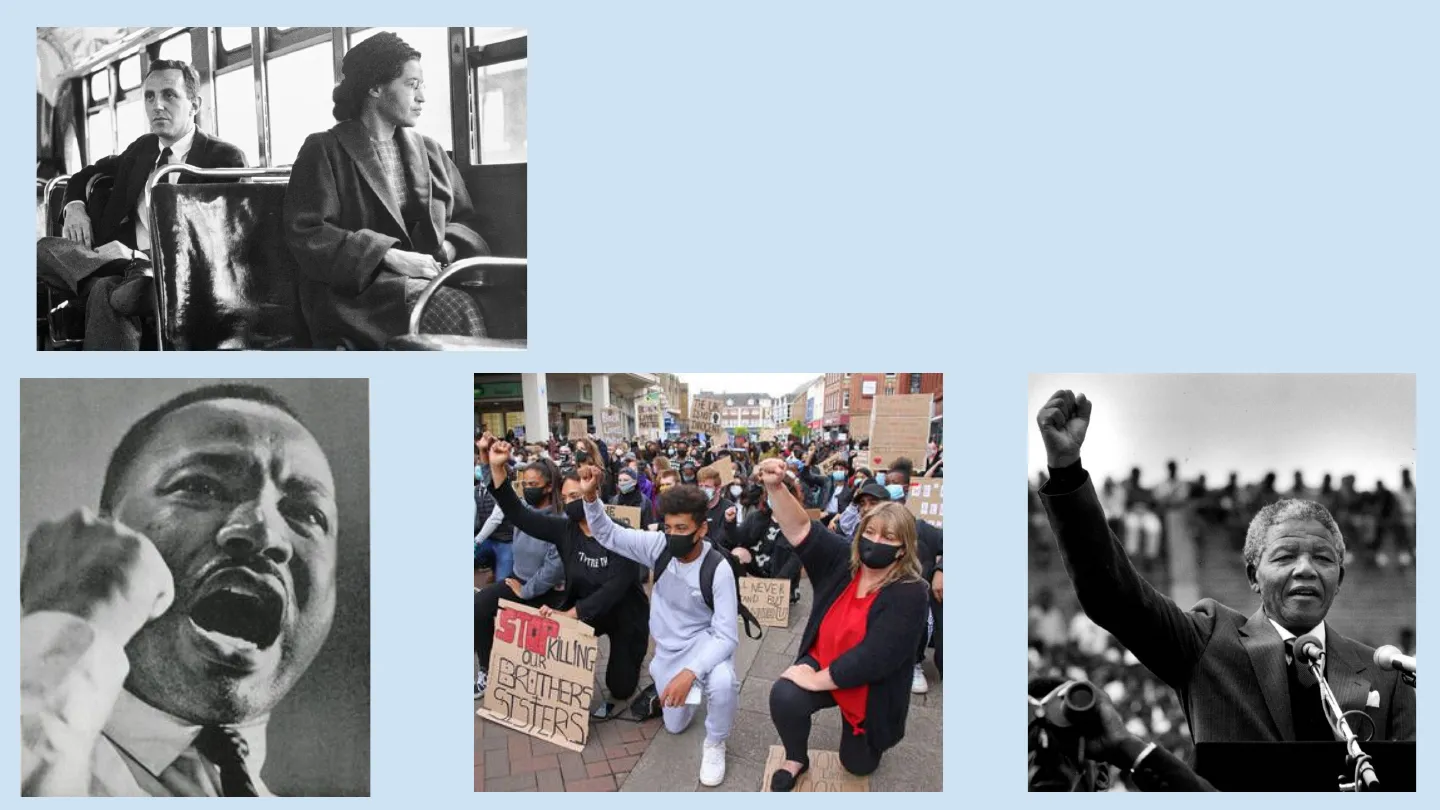
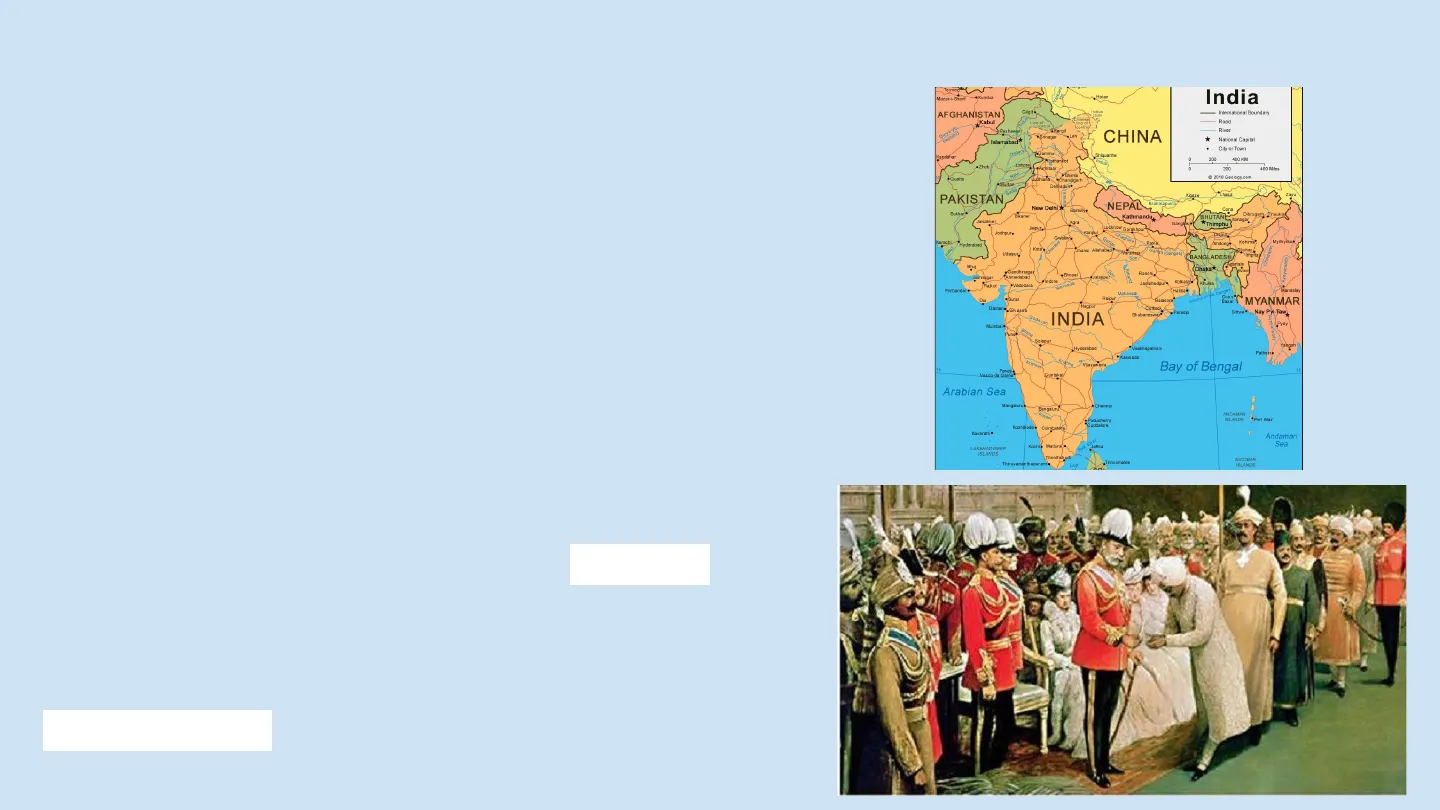
NEVER STRKLING OUR BROTHERS SISTERSBRITISH COLONISATION OF INDIA 'Colonisation' is when one nation has direct control over another nation, using military, economic, and political methods. The British rule in India was called 'the Raj'. It started in 1757, and the British influence in India changed many parts of the culture and political structure. Consequences of British rule, which was sometimes ineffective and ignorant, were famines and increased religious tensions. Gandhi was very popular among the Indian population because he wanted independence for the nation.
India Map
Terme2M Term ~ Mazar-i-Sharil · Kunduz Hatan India AFGHANISTAN Gilgite International Boundary Road Datya-YS Peshawar +Srinagar Leh * National Capital Islamabad* City of Town -Jammu Shiquanhe Kandahar Pathankot 0 200 400 KM Lahore Amritsar · Quetta Ludhiana Chandigarh Multan- Dehradun PAKISTAN amuna New Delhi Bareilly+ NEPAL Bra Com Sukkur Akuner Kathmandu BHUTAN *Thimphu Dibrugarh Tinsuker Jaisalmer Jaipure Ghaghers Pana Shillong Kohima" Myitkyina Hyderabad Kota Jhansi Allahabad Silchar . Udaipur [BANGLADESH Timphal Chingwenn Ayeyarwady *Sakot ·Vadodara Narmada Jamshedpure Khulna Porbandar+ Haldia+ Basuths of the G30065 MYANMAR Damane.Sivassb Nagou Cuttack ·Paradip Sittwe" Nay Pyi Taw Bhubaneswar" Pyay Mumbai Godavari INDIA "Ayeyal wady Yangon Hyderabad "Visakhapatnam Pathein . * Kakinada Vijayawada Bay of Bengal 15 Vasco da Gama Cuntakal Arabian Sea Mangaluru Chennai Kaven ANDAMAN ISLANDS Port Blair Kozhikode # Coimbatore Kavaratti * Andaman Sea LAKSHADWEEP ISLANDS Kochi Madurai" Pal- Jaffna Thoothakudi NICOBAR Thiruvananthapuram. Trincomalee SLANDS Mandalay Mahonso Cox's*A Raipu Balasore Dhaka* .Gandhinagal Ahmedabad ·Bhopal Jabalipur Rthàng Ranchle Jamnagar Indore Gangt Lucknow Gorakhpur Jodhpur. Gwalor Karachi Ganga varanası Ganga (Ganges) harf 400 Miles Shimla 2018 Geology.com Xigaz *Lhasa Brahmaputra Chinese Kabul Ling Ortal control Rive CHINA .Puducherry Cuddalore Bengaluru Krishna 15 Panap Kolkata NC.Itanagar ·Zhob
Mahatma Gandhi (1869 - 1948)
- Gandhi was born in India in 1869, to a Hindu family.
- He qualified as a lawyer in London, but returned to India in 1915 to fight for the country's independence.
- In 1919, Gandhi started to encourage civil disobedience towards the British rule. He encouraged boycotts and peaceful protest, but he was arrested for this 'rebellion'. In reaction to the arrest of Gandhi, many Indians protested peacefully in a park in Amritsar. The British soldiers surrounded them and fired - it was a massacre, many people died.
- Gandhi joined the Indian National Congress in 1920, and the Congress tried to declare India as independent in 1930. However, Britain did not accept this.
Indian Independence
- In 1947, the British government agreed to Indian independence. However, they divided the territory into two parts according to the religion of the population: India for the Hindu population, and Pakistan for the Muslim population.
- Large riots in both India and Pakistan happened in reaction to the Partition. Gandhi asked Hindus and Muslims to live peacefully together.
- In 1948, Gandhi was assassinated by a Hindu extremist who disagreed with his goal for peace between the Hindu and Muslim believers.
Rosa Parks (1913 - 2005)
- Born on 4th February, 1913, Tuskegee, Alabam
- Married at the age of 19 to Raymond Park.
- In 1943, she joined the NAACP (National Association for the
Advancement of Coloured People):
- to "advance the interest of coloured citizens"
- voting rights
- legal matters
- education and employment
- She was involved in representing black men and women in legal cases.
The Montgomery Bus Boycott
- Rosa Parks famously refused to give up her seat to a white man on a bus in 1955, in Montgomery.
- By law, if there were no seats left for white people, a row of seats for black people had to be freed.
LICE SOMERY
- Rosa's peaceful protest against the segregation laws inspired an organised 1-day boycott on the day of her trial.
- It turned into a 381 day boycott which ended when the Supreme court ruled that the segregation laws on buses were unconstitutional.
Martin Luther King Jr. (1929 - 1968)
- Born January 15th 1929 in Atlanta, Georgia.
- He finished high school aged 15, and graduated from Morehouse college aged 19. Then, he studied Theology at Crozer seminary, and he received a Bachelor's degree in Divinity in 1951.
- At the seminary he discovered the writings of Mahatma Gandhi, which inspired him to promote peaceful protest.
- In 1954 he became a minister of a small church for black people in Montgomery, Alabama.
"I Have a Dream" Speech
At the end of the March on Washington for Jobs and Freedom, Martin Luther King gave his famous "I have a dream" speech.
Key Events of 1964-1968
1964: . Congress passed the Civil Rights Act . King won the Nobel Peace Prize 1965: Congress passed the Voting Rights Act 1968: On April 4th, MLK was assassinated
Excerpts from "I Have a Dream"
"I have a dream that ... "
- One day [ ... ] the sons of former slaves and the sons of former slave owners will be able to sit down together at the table of brotherhood
- My four children will one day live in a nation where they will not be judged by the colour of their skin but by the content of their character
- One day down in Alabama, little black boys and little black girls will join hands with little white boys and little white girls as sisters and brothers
John F. Kennedy (1917 - 1963)
- Kennedy became President of the United States of America in 1960. From the start of his presidency, he promoted civil rights for black Americans.
- He employed black officials in his government.
- He tried to change the law, to make segregation impossible and unconstitutional.
- On June 11th 1963 the governor of Alabama blocked two black students from entering their university. That night, Kennedy gave a speech on national television in which he said that America should be a free country, so why was America safer for white people than for black people?
- Before the laws were changed, Kennedy was assassinated in 1963 by a gunman.
President Kennedy's 1963 Speech
"This nation was founded by men of many nations and backgrounds. It was founded on the principle that all men are created equal, and that the rights of every man are diminished when the rights of one man are threatened. Today we are committed to a worldwide struggle to promote and protect the rights of all who wish to be free ... and when Americans are sent to Vietnam or West Berlin, we do no ask for Whites Only ... "
Malcolm X (1925 - 1965)
- Malcolm Little, born in 1925, was an African-American Muslim minister and human rights activist.
- Malcolm had a difficult childhood. Around 1950 he joined the Nation of Islam organisation and chose the name Malcolm X. His aim was 'Black Power' - he thought the civil rights movement was too slow and peaceful.
Muhammad Speaks man Powell Says: OUR FREEDOM CAN'T WAIT! Truth Is The Best Guidance Hits Slow Pace At Big Rally Randolph Warns on
- In 1952, he quickly became one of the most important leaders of Nation of Islam. However, he lost his belief in the ideals of the NOI and started to criticise them. He wanted to create a new organization.
- In 1965 prepared a speech for the creation of the OAUU (Organization of Afro-American Unity). Moments before he gave the speech, he was assassinated - he was shot many times by 3 members of NOI.
Differences between MLK and Malcolm X
Malcolm X promoted Black empowerment, Black supremacy, and the separation of black and white Americans. · WHAT DIFFERENCES DO YOU SEE IN HIS OPINIONS ABOUT CIVIL RIGHTS FOR BLACK AMERICANS? He criticised the civil rights movement for its emphasis on nonviolence and racial integration. Malcolm is a controversial figure because sometimes his views seemed to encourage violent rebellion.
Nelson Mandela (1918 - 2013)
- Born Rolihlahla Mandela on 18th July 1918, in the Madiba clan in the Eastern Cape Africa).
- Nelson attended the University of Fort Hare and he was expelled for participating in a boycott against university policies.
- In 1944 he joined the ANC (African National Congress), a group which fought for the liberation of black south-Africans.
- In 1952 he established the first black Law firm in South Africa specialising in Apartheid-related cases.
- Mandela led a national campaign of civil disobedience (peaceful protest) against the apartheid laws, using boycotts, marches, demonstrations etc.
Turning Towards Violence
- In 1960, in Sharpeville, the South African police reacted to an anti-apartheid protest with terrible violence. They opened fire on the crowd and killed 69 black protesters.
- This horrific massacre caused the ANC and Mandela to lose hope in purely peaceful protests. Nelson left the country and trained in guerilla warfare in Algeria.
"It would be wrong and unrealistic for African leaders to continue preaching peace and nonviolence at a time when the government met our peaceful demands with force. It was only when all else failed, when all channels of peaceful protest were blocked, that we made the decision to begin to use violent forms of political struggle."
From Prison to President
- Nelson Mandela went on trial with other members of the ANC for sabotage, treason and violent conspiracy.
- He famously admitted his participation in some crimes, while he was defending his actions.
● "I believed in the ideal of a democratic and free society in which all persons live together in harmony and with equal opportunities. It is an ideal which I hope to live for and to achieve. But if necessary, it is an ideal for which I am prepared to die."
- He was found guilty and sentenced to life in prison.
- He spent 27 years in prison, including 18 years on Robben Island.
The Day of Mandela's Release from Prison
OCBS NEWS CBSNEWS.COM.PRESIDENCY AND NOBEL PEACE PRIZE
- While in prison, Mandela remained the symbolic leader of the anti-apartheid movement.
- President De Klerk ordered Nelson Mandela's release soon after his election, and he had talks with ANC leaders to create a new Constitution.
FORUM AL M ENIG 19
- Together, De Klerk and Mandela won the Nobel peace prize in 1993 for their work to reunite South Africa through many negotiations.
- Mandela won South Africa's first free election and became the country's first black president, from 1994 to 1998.
Can’t find what you’re looking for?
Explore more topics in the Algor library or create your own materials with AI.
