Immunology course introduction for Medicine & Surgery at UniBo
Slides from Alma Mater Studiorum Università Di Bologna about Immunology. The Pdf, a presentation for University students in Biology, introduces the human immune system, its functions, and its history, covering topics like protection from infectious diseases and the system's purpose.
See more32 Pages

Unlock the full PDF for free
Sign up to get full access to the document and start transforming it with AI.
Preview
Suggested Textbooks
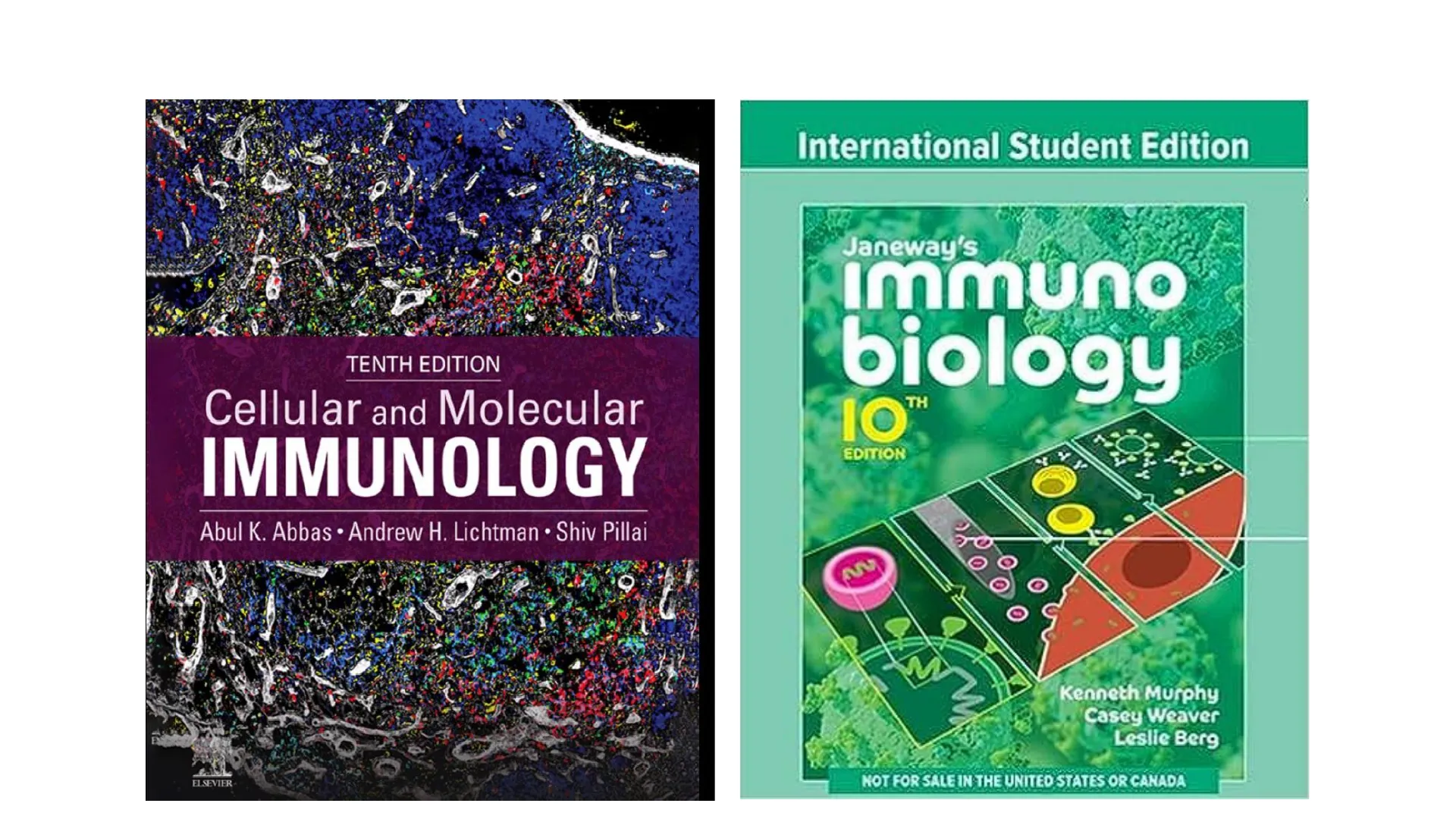
TENTH EDITION Cellular and Molecular IMMUNOLOGY Abul K. Abbas . Andrew H. Lichtman . Shiv Pillai ELSEVIER International Student Edition Janeway's Immuno biology TH EDITION 0 O Kenneth Murphy Casey Weaver Leslie Berg NOT FOR SALE IN THE UNITED STATES OR CANADAJaneway's Immuno biology TH EDITION Kenneth Murphy Casey Weaver Leslie Berg
The Program
Prof. M. Capri's Topics
- Introduction to huma IS
- Organs, Tissues and Cells
- Leucocytes circulation and diapedesis
- Natural Immunity: anti-microbials peptides, PRRs
- Natural Immunity: monocytes/macrophages, neutrophils, phagocytosis and cytokines Le molecole MHC
- Natural Immunity: NKs
- TCR and Ag processing and presentation through DCs (APCs)
Prof. S. Salvioli's Topics
- Antibodies, Antigens. BCR
- T and B activation. Germinal center reaction
- All T lymphocyte subpopulations
- The complement system
- Comprehensive overview of IS against bacteria, fungi, viruses and, metazoi. Vaccines/vaccinations.
- Tolerance to self-molecules: mechanisms
- Immunology of Transplants
- Immunopathology: Hypersensitivity (I)
- Hypersensitivity II-IV and autoimmune disease
- Primary Immunodeficiency
- Secondary Immunodeficiency (HIV)
- IS and cancer
Questions and Knowledge
Basic mechanisms of inflammatory process How does Natural IS work ? Which are the cells? How does Natural IS activate itself? What are the molecular mechanisms of regulation? How does Natural IS «see» the pathogens? How does Specific IS work ? Which are the cells? How does Specific IS activate itself? What are the molecular mechanisms of regulation? How does Specific IS «see» the pathogens? A bridge between Natural and Specific IS Overview on IS function and translational application How does IS react against non-self molecules in transplantation? Immunopathology/Immunotherapy
Assessment Methods
- Student learning will be valutated at the end of the Integrated Course "Basic Mechanisms of Diseases" by an oral exam. Students may decide to take Immunology first and then, in a second session, to take General Pathology, General Physiopathology and General Pathology Laboratory or to take the exam completely including Immunology in the same day (date).
- Seven exam dates are foreseen during the academic year. A passing grade in each question (i.e. mark above or equal to 18/30) is required to obtain the final assessment. A mark of 30 with laude will be considered 31 for the weighted mean
- The final mark will be calculated as the weighted mean (based on CFUs) of the four marks.
- Marks below 18 (failing grades) will not be recorded. Marks equal to 30 in all the Disciplines will be awarded with a 30 cum laude (30 with honors).
Introduction to Human Immune System
Immunity is derived from the Latin word Immunitas referred to the protection from legal prosecution offered to Roman senators during their tenures in officeO Protection from infectious diseases Greece, 5th century B.C: Thucydides describes the plague that spread to Athens and recovered individuals, who were defined "immune" to the disease.
What the Immune System is for?
To counteract the invasion of pathogens, i.e. bacteria, viruses, fungi, protozoa, and parasites. To protect us from microbiome which usually inhabits the body To eliminate senescent cells, damaged cells, and cancer cells (immune surveillance). To keep health status/tolerance to self- molecules To favor embryonal engraftment
Body Microbiome
Mouth, Pharynx, Respiratory System Streptococcus viridans Neisseria sicc Candida albicans Streptococcus salivarius Pityrosporum oval Staphylococcus epidermidis Corynebacterium jeikeium Trichosporon Staphylococcus haemolyticus Skin Stomach Helicobacter pylori Bacteroides fragilis Streptococcus thermophilus Lactobacillus reuteri Intestines Lactobacillus case Escherichia coli Ureaplasma parvum Lactobacillus gasseri Bacteroides thetaiotaomicron Urogenital tract Corynebacterium aurimucosum Immune system is crucial for individual life and human species.
Immune System Pioneers
Ilya Ilyich Mechnikov (May 16th 1845 - July 15th 1916) Innate Immunity (native/natural/non-specific) Adaptive Immunity (Specific/acquired/clonotypical) Paul Ehrlich (March 14th 1854- August 20th 1915) Mechnikov received the Nobel Prize in Medicine in 1908, shared with Paul Ehrlich
Immune System Components
Innate Immunity
Physical/Anatomical/Mechanical and Chemical Barriers Intact Skin Respiratory tract Mucosal surfaces: Mucus/mucins Ciliary Clearance Up to bronchioles Lysozima (tears, saliva) Low Stomach pH Gastrointestinal and genitourinary tracts: mucosal surfaces, peristalsis
Innate Immunity Cells
Leucocytes Eosinophils Basophils Neutrophils ILCs Natural Killer Cells Natural Killer T Cells Cells Macrophages Mast Cells
Innate Immunity Humoral Molecules
Circulating molecules Mannose Binding Lectin Complement Antimicrobial Peptides LPS Binding Protein Defensins; Cathelicidins C-Reactive Protein Ficolins
Adaptive Immunity Cells
T cells B cells Dendritic Cells Lymphocytes
Adaptive Immunity Humoral Molecules
Antibodies antibody-mediated immunity
Immunologic Networks
Humoral Immune Response
Opsonization, Neutralization of Toxins/Viruses Response Allergy/ Type-1 Hypersensitivity Precipitation, Neutralization of Toxins/Viruses, Type-II Hypersensitivity Complement Fixation Opsonization & ADCC Mucosal Immunity MHC-1/11 IL-12 Immune Response AICD through Fas Engagement Follicular Dendritic Cell 11 BCR Ag Cross Linking Inflammatory Responses IL-18 Hypothalamus ICOSL MHC-It Cell lgG2ar- lgG3 lg G2b IgA CXCL 13 CD40 MHC-II :IgM lgG1 Inhibition of Intracellular Pathogens and Tumors IgE Class Switch Fibroblasts Neutrophil IL-12 Apoptosis/ Epithelial Shedding Cell-mediated Immunity Inflammation, Defense against Cancer/ Intracellular Pathogens Plasma Cell Plasma Cell Plasma Cell L-4 IL-13 Asthma CICOS STAT3+ c-Matt BLIMP1. TNF, IL-1 GATA3 STAT6 T bet STAT 1/4 IFN- Epithelial Cells TH2 TH1 CD132 Antigen Presenting Cell (Activated) IFN-Y TH2/TH17 Cell Function ROR STAT3 IL-17 Growth Prolonged Survival Immune Response 87-112 TH17 MHCII TH1 Cytokines B-Cell Proliferation IL-13 IL-18 IL-12 TGR IL-9 CDE IFN-Y TGF- IRF2 RF 1/4/8 GATA3 STAT6 STAT1/4 T-bet IL-3, IL -4, IL-5, IL-6 IL-2, IFN- Activated B-Cell" TH2 IL-10 OXP3 NO IL-13 IL-22 GATA3 STAT6 nTreg TH1 Function IL-27 TNF-P IL -4 TGF-B TM2 IFN-Y Macrophage Activation Infected Cell! APC'S IFN- TNF-a FOXP3 IL-12 - CD8 Macrophage Cell Adhesion TER TH2 Activation Eotaxin-1,2,3 and MCP4 Keratinocytes Type-I Response & Response to Intracellular Infection, Autoimmunity IL-17A, IL-17F. IL-21. IL-22 IL-23R IL-23 from Dendritic Cell Defense against Cancer? Fibroblasts Proinflammatory Cytokines IL-6. PGE2, Nitric Oxide Inflammatory Responses Eosinophil Basophil Prolonged Survival and Cell Recruitment Synergy with IL-1B, TNF-u. IFN -. Neutrophil .T-bet STAT1/4 GATA3 STAT6 FOXP3 Granulocyte Recruitment, Chronic Inflammation, Tissue Remodeling. Angiogenesis, Tumor Invasion/Metastasis Immune Response TH1 TH2 ITreg Endothelial Cells Epithelial Cells Dendritic Cell G-CSF. GM-CSF Hematopoietic Growth Factors Chemoattractant Molecules, IL-8. MCP1, GRO-0 ICAM1 T-Cell Activation ROR 1 STATIY Fibroblasts Epithelial Cells Monocyte and Neutrophil Recruitment IL-6, IL-17 Expansion of Myeloid Lineage Stromal Cells Cells Hematopoiesis Dial An nand lanan VV Dial anand CHRana DIF Dial a nand fUns www.biolegend.com Interactive Poster: biolegend.com/immunologicnetworks With the contribution of Dr. Vijay K. Kuchroo (Harvard Medical School) We would like to thank Dr. Vijay K. Kuchroo of Harvard Medical School for his contributions to this poster. Email: customerserv@Diolegena.com, tecnserv@piolegena.com Created by ProteinLounge.com in Sep 2011 mezovumy mzc33 - >Pcrrm2 IgM/ IgD IFN-Y TNF-CL FasL MHC 4 Termination of Intracellular Pathogens CDa L-9 IL-13 IL-4 IL-10 IL-1; IL-25 IL-17 Epithelial poptosis & Shedding Endothelial Cells FOXP3 Epithelial Cells IL-9 IL-10 Inflammation Treg (Endothelial cells) TH9 Treg Smooth Muscle Cell Apoptosis Mucous Production TGF-B IL-6 IL-21 Contact Hypersensitivity MHC-I. IL-6, IL-8 TGF-B IL-2 Induction of Acute/Chronic Inflammation IL-6, IL-8. & Other Chemokines Eosinophil Mast Cell Basophil Response to Allergy Autoimmune diseases Eradication of Fungal and Bacterial infection CXCL 1/2/5, CCL2/5, NOS2, MMPs, G-CSF, GM-CSF, IL-1, IL-6, Fibroblasts IL-17 Macrophage INF-a Activation of Leukocytes & Mesenchymal Cells Tu17 TEH TH1/TH2 Activation -TGF-p Inflammatory Responses IL-8, TNF Activates Osteoclasts (Bone Resorption) Endothelial Reduced Clonal Expansion Plasma Cell Cell-Mediated Cachexia, Fever and Stress Response Immunity Antibodies Dendritic Cell Follicular B-Cell Inflammation CD80786 Inflammation/ Organ Specific Immunity Keratinocytes IL-10 Ag Co4 PD TGR Endothelial Cells IL-1, IL-6 TNF-0. Response to Allergy CD28 IFN-7. TNF. Lymphotoxin IFN-7 IL-2 IL-8 TNF-U IL-6 gp130 TGF-B. PDGF CXCRP IL-21R OXP3 Eosinophil Granulocytes Monocyte Differentiation/ Fibroblasts Epithelial Cells CCL3.4.5 L-5 IL-13 GM-CSF THE. MIP-1a MIP-10 RANTES CD28 CD4 IL-1, IL-6, IL-8, IFN-a/B/7: TNF- IL-4 IL-10 TGF-B CDA CDS ICOS Mast Cell Growth .. & .. Function IFN-Y IL-12 IL-18 CO2 IL-4 IL-33 L-5 IL-9, IL -10, IL-13 IFN- TNF-B CD28 IL-6, IL-23 TNF-0 CD4+ Valve T Cell Delayed Hypersensitivity & IL-4, IL-5, IL-13 IL-4, IL-13 Tissue homing of TH2 Cells FOXP3 IL-10 IFN-Y IRF CD8 TH1 Activation IL-3,IL-4,IL-5 IL-10, TGF-B1, IL-35 Sensitization TH22 Oxygen Radicals muzovumD mzc Plasma Cell IL-6R Perforin/ Granzymes, Fas, FasL TGF-B/ IL-23 CXCL13 CD.84/Ly9 ICOSL Tren IL-21 TCRAG CD4 IL-10, IL-12, IL-15 TNF. IL-1 Cellular Immunity M 04-0018-09 CD3 STAT3 ROR 1 IRF4 RORO Maf TH17 L-6/CYTOKINES: DIFFERENT CLASSES/NAMES · SOURCES e.g. Lymphokines, Adipokines, Myokines . FUNCTION e.g. Colony Stimulating Factors, Growth Factors, Chemokines, Mitokines, Interferons (IFNs) .... · Intercellular action e.g. Interleukins (IL)
Can’t find what you’re looking for?
Explore more topics in the Algor library or create your own materials with AI.
