Respiratory Regulation of the Acid-base Balance, University Presentation
Slides from Dr Ana Checa-ros, Md, Phd Department of Medicine & Surgery Ana.checaros@uchceu.es about Respiratory Regulation of the Acid-base Balance. The Pdf explores the fundamental principles of pH and acid-base balance, respiratory pH regulation, and acid-base disorders, focusing on respiratory acidosis. This University Biology material includes causes and clinical distinctions of disorders, with tables and diagrams.
See more44 Pages


Unlock the full PDF for free
Sign up to get full access to the document and start transforming it with AI.
Preview
Physiology Lectures: Acid-Base Balance
RESPIRATORY
REGULATION OF
THE ACID-BASE
BALANCE
PHYSIOLOGY LECTURES
2nd year of Physiology
2024/2025
Dr Ana Checa-Ros, MD, PhD
Department of Medicine & Surgery
ana.checaros@uchceu.es
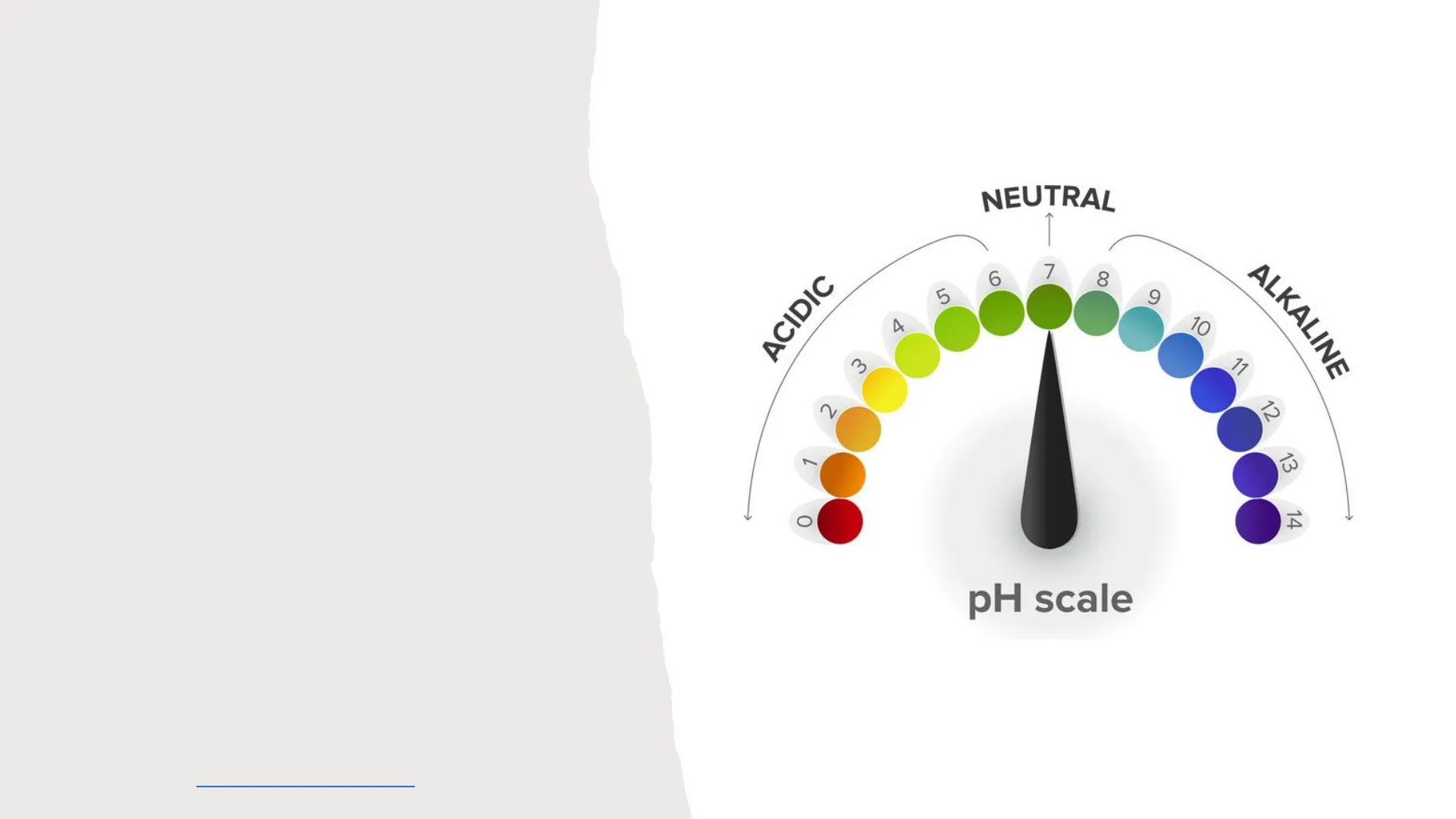
NEUTRAL
T
7
6
8
5
9
4
10
3
11
ALKALINE
2
12
1
13
0
14
pH scale
ACIDICROADMAP
Principles of pH and Acid-Base Balance
Principles: pH, Acid-Base
Physiologic pH and Cellular Survival
. The physiologic pH quantifies the balance of acids and bases in our
body
. For the cells to survive and for the enzymatic reactions to take place
in our body, the physiology pH has to be kept within a narrow range:
7.35 - 7.45
-
CELL
(
@~ENZYME
Extracted from: www.osmosis.org
pH and Hydrogen Ion Concentration
· The physiologic pH depends on the concentration of hydrogen ions in
our body as per the equation
pH = - log [H ]
pH = negative logarithm to the base 10 of H+ concentration
· From the previous formula we deduce that the relationship between
the pH and the concentration of H+ is inverse: as H+ concentration
increases, pH decreases, and viceversa
Extracted from: www.osmosis.org
Non-linear Relationship of pH and H+ Concentration
120
100-
(7/634)[+H]
80.
-0.2
60
+23
+0.2
40 -
-15
20-
7.0
7.2
7.4
7.6
7.8
8.0
PH
Non-linear relationship between pH and H+
concentration: inverse relationship
Extracted from: www.osmosis.org
Acids, Bases, and H+ Concentration
. H+ concentration, and therefore the pH, depends on the balance
between the concentration of acids and bases in our body:
. An acid is a molecule that releases H+ (H+ donor)
. A base is a molecule that binds H+ (H+ acceptor)
ACID
my H+
BASE
BODY -
L
ACID
BASE
->
ACID
BASE
Extracted from: www.osmosis.org
Main Acid in the Organism: Carbon Dioxide
. The main acid in our organism is carbon dioxide (CO2), which reacts
with water, forming the carbonic acid (H2CO3), which dissolves into
bicarbonate ion (HCO3-) and H+
· This reaction is catalysed by the enzyme carbonic anhydrase
. The bicarbonate ion produced generally forms NaHCO3- after binding
Na+
) +
+
+< />CO2
H2O
CARBONIC
ACID
HYDROGEN
ION
BICARBONATE
ION
Not
ENZYME ~ CARBONIC ANHYDRASE
NaHCO3-
Extracted from: www.osmosis.org
Main Base in the Organism: Bicarbonate Ion
. The main base in our organism is bicarbonate ion (HCO3-), as it is able
to bind H+ to form H2CO3
. This reaction is catalysed by the enzyme carbonic anhydrase
+
+
14
+< />CO2
H20
1
CARBONIC
ACID
HYDROGEN
ION
BICARBONATE
ION
ENZYME ~ CARBONIC ANHYDRASE
Extracted from: www.osmosis.org
Henderson-Hasselbach Equation and pH
. Therefore, we say that the physiologic pH depends, at the end of the
day, on the concentrations of CO2 and HCO3- in our body
· This relationship is expressed through the formula Henderson-
Hasselbach equation
1
FUNCTION
DEPENDS on
PH
BASES~[HCO3]
ACIDS~ [CO2
HENDERSON -
HASSELBALCH EQUATION: PH = 6.1+ 1og
(
[HCO3]
0.03 PCO2
Extracted from: www.osmosis.org
Acid-Base Map: pCO2 and HCO3- Relationship
100
7.45
80
7.35
PCO2 (mm Hg)
NORMAL PH.
60-
40
20
0
1
12
24
36
48
60
[HCO3] (MEq/L)
Acid-Base Map:
It shows the relationship between pCO2
(mmHg) and HCO3- concentration (mEq/L)
to maintain a physiologic pH
Physiologic pCO2 = 40 - 45 mmHg
Physiologic HCO3- = 22-26 mEq/L
Extracted from: www.osmosis.org
Mechanisms for pH Homeostasis
. We have two important mechanisms to maintain pH homeostasis:
Lungs:
They control CO2 concentration
through ventilation
Kidneys:
They control HCO3- concentration
through tubular reabsorption
Compensatory Mechanisms for pH Disturbances
. Disturbances in pH are followed by compensatory mechanisms carried
out:
1
2
Within minutes:
. By the lungs, which regulate CO2
concentration by controlling the
rate and depth of breathing
Within hours/days:
· By the kidneys, which regulate
HCO3- excretion within a matter
of hours or even days
Extracted from: www.osmosis.org
Respiratory Regulation of pH
Regulatory Respiration of pH
Pulmonary Expiration and pCO2 Regulation
· Pulmonary Expiration Regulates pCO2 :
. If the rate of pulmonary ventilation 1
CO2 is blown off from the lungs, and pCO2 in blood
H+ binds HCO3- to form CO2
CO2 exhaled
-
H+ levels V >
PH
0°
+
7
CO2
H2O
1
CARBONIC
ACID
HYDROGEN
ION
BICARBONATE
ION
If CO2 decreases, the equation
moves to the left
ENZYME ~ CARBONIC ANHYDRASE
Extracted from: www.osmosis.org
+
1l
Impact of Pulmonary Ventilation on CO2 and pH
· Pulmonary Expiration Regulates pCO2 :
. If the rate of pulmonary ventilation
Fewer CO2 is exhaled, and pCO2 in blood
1
More CO2 reacts with water
H+ concentration
pH
7
CO2 exhaled
+
+
T CO2
H2O
CARBONIC
ACID
HYDROGEN
ION
BICARBONATE
ION
If CO2 increases, the equation
moves to the right
ENZYME ~ CARBONIC ANHYDRASE
Extracted from: www.osmosis.org
+
IL+0.3
Alveolar Ventilation Rate and pH Change
C
2
pH change in body fluids
+0.2
+0.1
-
0 -
Normal
-0.1
-0.2
-0.3
-0.4
-0.5
0.5
1.0
1.5
2.0
2.5
Rate of alveolar ventilation
(normal = 1)
Relationship between the speed of
alveolar ventilation and the change
produced in the physiologic pH
Extracted from: Guyton & Hall Physiology
Bidirectional Relationship: Alveolar Ventilation and H+ Concentration
. The relationship between alveolar ventilation and H+ concentration
is bidirectional:
. If H+ concentration 1 p
pH
Stimulation of respiratory system
Alveolar ventilation rate
1
pCO2
T[H+] -> ÎAlveolar ventilation
IPCO2
Inhibition of Respiratory System and pH
. The relationship between alveolar ventilation and H+ concentration
is bidirectional:
. If H+ concentration V > PH T
Inhibition of respiratory system ->Alveolar ventilation rate
pCO2
1
{ [H+] -> Alveolar ventilation
+
TPCO2This graph is to show how the alveolar
ventilation rate also changes in response to
changes in the pH
II
5
=
Alveolar ventilation (normal = 1)
4
3
2
1
0
7.0
7.1
7.2
7.3
7.4
7.5
7.6
pH of arterial blood
Extracted from: Guyton & Hall Physiology
Acid-Base Disorders
Acid-Base Disorders
Acidosis and Alkalosis Definitions
. The clinical situation that we
have when the body pH drops <
7.35 (excessive concentration of
H+) is called acidosis/acidemia
· When the body pH is >7.45
(huge reduction of H+
concentration), the situation is
called alkalosis/alkalemia
120
100-
(7/3gu)[+H]
80
ACIDEMIA
Physiologic pH (7.35-7.45)
6
40 -
ALKALEMIA
20-
7.0
7.2
7.4
7.6
7.8
8.0
PH
Extracted from: www.osmosis.org
Classification of Acid-Base Disorders
· Classification of acid-base disorders:
. Depending on the cause, the previous disorders can be classified
into:
1) Respiratory, when the cause is a change in pCO2 levels; therefore,
we can have respiratory acidosis or respiratory alkalosis
2) Metabolic, when the cause is a change in HCO3- concentration;
therefore, we can have metabolic acidosis or metabolic alkalosis
Extracted from: www.osmosis.org
Overview of Acid-Base Disorders
Acid-Base
Disorders
Respiratory
(change in pCO2
levels)
Metabolic
(change in
HCO3- levels)
Acidosis
Acidosis
H
Alkalosis
Alkalosis
Respiratory Acidosis: Increased CO2
1) Respiratory acid-base disorders (changes in pCO2):
· If CO2
1
More CO2 reacts with water > H+ ]> pHL
Respiratory Acidosis
1 = PH
CO2+
H2O
2
HCO3- + H+
+
If CO2 increases, the equation moves to the right
Extracted from: www.osmosis.org
Respiratory Alkalosis: Decreased CO2
1) Respiratory acid-base disorders (changes in pCO2):
· If CO2
H+ V -
> pH
1 -
Respiratory Alkalosis
CO2 + H2O
HCO3-
1 = pH 1
+ H+
If CO2 decreases, the equation moves to the left
Extracted from: www.osmosis.org
Metabolic Acidosis: Decreased HCO3-
2) Metabolic acid-base disorders (changes in HCO3-):
· If HCO3- levels
More CO2 reacts with water to form HCO3-
H+ concentration
1-> PH V -
Metabolic Acidosis
1 = pH
+
CO2 + H2O =
HCO3-
H+
If HCO3- decreases, the equation moves to the right
Extracted from: www.osmosis.org
Metabolic Alkalosis: Increased HCO3-
2) Metabolic acid-base disorders (changes in HCO3-):
· If HCO3- levels
More HCO3- binds H+ to form CO2
H+ concentration
> PH ->
Metabolic Alkalosis
1 = PH 1
CO2 + H2O
HCO3-
H+
+
If HCO3- increases, the equation moves to the left
Extracted from: www.osmosis.org
Summary of Acid-Base Disorders
Acid-Base
Disorders
Acidosis
Alkalosis
Respiratory:
pCO2 T
Respiratory:
pCO2
Metabolic:
HCO3-
Metabolic:
HCO3-
Four Acid-Base Disorders and Parameters
So we have four different acid-base disorders, produced by diverse
causes and which can be distinguished according to the following four
parameters:
1 METABOLIC ACIDOSIS
2 RESPIRATORY ACIDOSIS
3 METABOLIC ALKALOSIS
4 RESPIRATORY ALKALOSIS
4 PARAMETERS
1
PH
2
PCO2
HIGH
YIELD
3 HCO3-
4 COMPENSATORY RESPONSE
Extracted from: www.osmosis.org
Causes and Clinical Distinction of Acid-Base Disorders
· Causes and clinical distinction of acid-base disorders:
1) Respiratory Acid-Base Disorders:
1A) Respiratory Acidosis (pCO2 ): the main cause is hypoventilation and
shallow breathing due to:
Airway obstruction (i.e. pneumonia, COPD)
Impaired gas exchange (pulmonary oedema, fibrosis)
Alterations in the diaphragm or chest wall (neuromuscular disorders, obesity)
Problems in the respiratory centres in the brain (sedatives, opioids)
Causes of Hypoventilation
CAUSES of HYPOVENTILATION
HIGH
YIELD
AIRWAY OBSTRUCTION
HIGH
YIELD
DIAPHRAGM or CHEST WALL
MUSCLES DON'T WORK PROPERLY
Pneumonia
Foreign body
STOP
SEVERE TRAUMA
OBESITY
CHEST WALL TOO
HEAVY to LIFT
(OSMOSIS.org
2022 Edition
Impaired Gas Exchange and Respiratory Centers
CAUSES of HYPOVENTILATION
ditõ
IMPAIRED GAS EXCHANGE
PROBLEM in RESPIRATORY
CENTERS
STROKE or
HIGH
YIELD
MEDICATION OVERDOSE
(opioids, sedatives)
HIGH
YIELD
CHRONIC OBSTRUCTIVE
PULMONARY DISEASE
HIGH< />YIELD
ACUTE CONDITIONS
(e.g. pulmonary edema)
Extracted from: www.osmosis.org
Clinical Features of Acute Respiratory Acidosis
· Causes and clinical distinction of acid-base disorders:
1) Respiratory Acid-Base Disorders:
1A) Respiratory Acidosis (pCO2 ):
· Clinical features in the acute phase:
pH
PH
< 7.35
pCO2
> 45 mmHg
pCO2
HCO3-
22-26 mEq/L
HCO3- normal
Compensatory Response in Respiratory Acidosis
· Causes and clinical distinction of acid-base disorders:
1) Respiratory Acid-Base Disorders:
1A) Respiratory Acidosis (pCO2 ):
· Compensatory response after a few days: the kidneys try to
compensate and increase the pH by increasing HCO3- absorption
After a few days
I
HIGH
YIELD
ABSORPTION
of HCO3
OSMOSIS.OY
Extracted from: www.osmosis.org
Respiratory Alkalosis: Hyperventilation Causes
· Causes and clinical distinction of acid-base disorders:
1) Respiratory Acid-Base Disorders:
1B) Respiratory Alkalosis (pCO2 ): the main cause is hyperventilation,
which may occur in:
Panic attacks, anxiety
CO2
CO2
3
CO2
CO2
Intoxication with salicylates (aspirin)
Extracted from: www.osmosis.org
Clinical Features of Acute Respiratory Alkalosis
· Causes and clinical distinction of acid-base disorders:
1) Respiratory Acid-Base Disorders:
1B) Respiratory Alkalosis (pCO2V):
· Clinical features in the acute phase:
pH
PH
> 7.45
pCO2
< 40 mmHg
pCO2
L
HCO3-
22-26 mEq/L
HCO3- normal
Can’t find what you’re looking for?
Explore more topics in the Algor library or create your own materials with AI.
