Second language acquisition: theories and models from University of Jaen
Document from University of Jaén about second language acquisition. The Pdf explores how we learn languages, covering behaviorist, mentalist, and cognitive approaches, useful for University students studying Languages.
See more9 Pages


Unlock the full PDF for free
Sign up to get full access to the document and start transforming it with AI.
Preview
Second Language Acquisition
Dr. Gloria Luque (University of Jaén) Dr. Aquilino Sánchez (University of Murcia)
Contents
- Introduction: how we learn (languages)
- Acquisition and learning of languages. From behavioral to constructivist approaches. A brief historical account.
- Language learning in behavioral models
- Language learning in mentalist models
- Language learning from cognitive perspectives
Introduction: How We Learn Languages
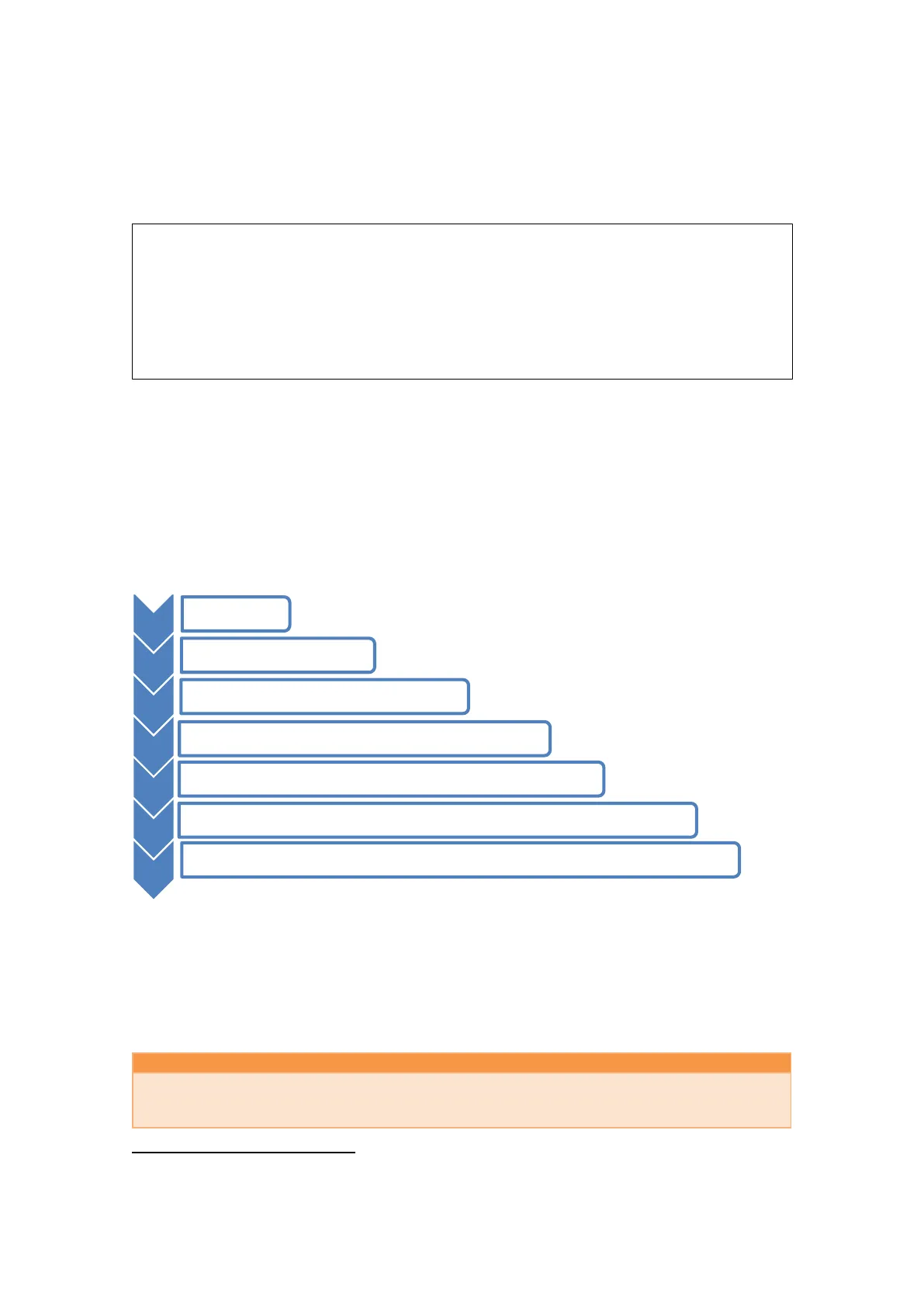
How do we learn?
- of what we READ 10 %
- of what we HEAR 20 %
- of what we SEE 30%
- of what we SEE and HEAR 40%
- of what is DISCUSSED with OTHERS 50 %
- of what is EXPERIENCED PERSONALLY 80%
- of what we TEACH TO SOMEONE ELSE 90%
Figure 1. How we learn (adapted from Glasser1)
How Do We Learn Languages? Questions to Reflect
Questions to Reflect
Questions to reflect A brief explanation Your thoughts Nature or nurture Is language something inherited, such as a hardware inside the brain, or is it 1 William Glasser, available at http://principalcowart.blogspot.com.es/2009/02/how-we-learn-william- glasser.htmlsomething children learn interacting with the environment? Continuous or discontinuous Is language learning a fluid, continuous process or a series of discontinuous, irregular stages? Universal competence or individual variation Is language an ability all human beings share or is an individual ability that changes from one individual to another? Structure or function Does the individual learn the language structure first and then its function or, alternatively, are linguistic function learnt before their attached structure? Autonomous or dependent Is language an independent ability within the brain or is language associated to other cognitive developments? Rules or associations Does the child learn a set of abstract cognitive principles in the form of rules, or, alternatively, does he associate concepts with labels?
Table 1. Issues to consider for language learning.
Acquisition and Learning of Languages: Behavioral to Constructivist Approaches
From the last century to the present day, there has been an increase in the interest devoted to how learning, and in particular, language learning, takes place. This interest has arisen partly for a number of reasons: A number of economic, political, social and technological events have led to a globalized word, in which a need to speak languages, particularly English, has arisen. As a consequence, more and more people need to learn a lingua franca common to different countries and cultures. This fact has triggered a wide field of research about how learning takes place, and, consequently, how learning can be optimized through the study of both learning and teaching processes. This subject will focus on the first issue: learning.Global word
- Political, social & technological advances
Speak a common language
- Lingua Franca
. How does learning occur? Learn that language . How can it be optimised?
Figure 2. Causes for the development of language learning theories
The search for the comprehension of learning/acquisition processes that take place for language is parallel to the evolution of general learning theories. In fact, most of the models that will be considered in this section are based on implicit assumptions regarding the similarity between learning, language learning, and second language learning.
Learning Language learning Second language learning
Figure 3: The connection between different learning outcomes
In answer to the question about how language learning can be understood, several accounts will be considered, from behaviorist models to cognitive and constructivist ones (see Ertmer & Newby, 1993; Lightbown, Spada, Ranta, & Rand, 1993; Larsen-Freeman & Long, 2014).
Language Learning in Behavioral Models
This theory evolved throughout time from the beginning of the last century to the Second World War. Three stages, including Classic Conditioning, Operant Conditioning and Social Learning, will be briefly taken into consideration.
- Classic Conditioning (Pavlov, 1927, in Craig, 2001) dealt with simple behaviors, such as those of a dog. When a non conditioned stimulus such as meat was presented to a dog, the dog produced a non-conditioned response, salivating. When the stimulus was associated to a sound -conditioned stimulus-, the result was producing aconditioned response, even when meat was not presented. In this way the sound was associated with the meat. In the case of language, a baby bottle as a word would be the stimulus that the baby associates with the concept (baby bottle full of milk). Non-conditioned stimulus (meat) non-conditioned response (salivating) Conditioned stimulus (meat+ sound) conditioned response (salivating) Conditioned stimulus (meat) conditioned response (salivating)
Table 2. Classic conditioning
- In a second stage, what has been termed Operant Conditioning was developed, with Skinner as its major supporter (Craig, 2001). In this model positive answers are reinforced and tend to be thus repeated later on. With language it would be the same. For instance, selective reinforcement is produced if parents smile when the baby says a correct word, and do not do anything -negative reinforcement or absence of reinforcement- or keep on asking until the baby says something (water!) and the parents give it to him in the form of positive reinforcement (the baby is able to drink his/her milk).
- In a third stage, Social Learning was developed to explain more complex behaviors (Bandura, 1987; in Craig, 2001). According to this position, learning takes place through imitation and repetition, and positive and negative reinforcement also occur, but individuals are also aware of their own behavior, its consequences, and take their past experience into account.
In general behaviorist theories consider the individual has a very small role in his/her cognitive development, because the environment that surrounds him constitutes the basis for his learning process, which is mainly focused on conditioning, and associating stimuli to responses through habit formation, repetition and reinforcement. The way learning is considered within this approach has been very effective in modelling, reinforcing or eluding (un)wanted behaviors in schools, with handicapped children and/or teenagers. Nevertheless, one of the main drawbacks of behaviorist theories is that they have been unable to explain successfully internal processes such as thoughts, feelings, personality or how language is developed. Precisely, children are able to produce words they have not heard before, and they do not produce other words frequently used in parents and caretakers' speech, such as articles.
Language Learning in Mentalist Models
The lack of a satisfactory explanation of the mechanisms that account for learning gave way to new learning models. Rejecting previous emphasis on observable and measurable outcomes, learning was considered as 'a process that allows the acquisition of knowledge', specifically aimed at organizing in memory the information processed by the learner. Contrary to the previous position, these cognitive operations were considered to have a genetic component, triggered by the input or incoming information. Moreover,the learning process was metaphorically compared to the way computers process the incoming input. A series of assertions were put forward as a reaction to the previous position:
Lack of stimuli Children do not receive frequent and sufficient stimuli. In other words, their encounters with new words (stimuli) are very scarce; however, they learn those words. Negative evidence Children do not receive negative feedback when they make mistakes. Projection problem Learners know more than what they listen in the input. Hypothesis testing The input learners listen to is only used to confirm or reject the rules children form about a language. Independent language development The development of language is independent of the rest of the developments (intelligence, mathematics ... ) and it always takes place, no matter the intelligence, motivation, personality of the learner. Language Acquisition Device Children are innately endowed with a specific mechanism for learning a language: the Language Acquisition Device (LAD) (see Chomsky, 1969). The roots of language are pre-programmed in the minds of children when they are born, so that they would be able to acquire a language innately when the LAD is triggered by input regardless of the environment. Universal Grammar There is a Universal Grammar, which is a set of principles, conditions and rules that form part of the features of all the languages Developmental stages All children develop their language around the same age, no matter the concrete language, so that language mechanisms are innate. They also go through a series of common stages in their linguistic development, and there is a critical period, ideal for language learning. Beyond this period language learning is nearly impossible.
Table 3: Main tenets in language learning for mentalist approaches
Language Learning from Cognitive Perspectives
The interest in complex cognitive activity -that is to say, what happens in the brain when we process or learn new information-, and the development of the semantic component in the linguistic discipline gave way to a more encompassing view of language learning, in which both external or contextual and internal or innate factors were considered. Within this period, language learning evolved from Piaget's (1970) view of accommodation of knowledge rather than assimilation, to Ausubel's (1963) meaningful learning -that arises from the learners' background knowledge-, later still with Vigotsky's (1962) zone of proximal development, and then Bruner's (1983) scaffolding, where social or environmental factors were again considered to fulfill an important role in the learning process, together with internal -cognitive- features and a more humanistic, learner-based view of learning. Novice and expert learners were distinguished according to their ability to organize information in an optimal way. Expert learners
Can’t find what you’re looking for?
Explore more topics in the Algor library or create your own materials with AI.
