Thinking Like an Economist: Key Concepts and Behavioral Insights
Slides about Thinking Like an Economist. The Pdf explores key economic concepts like scarcity and sunk cost, along with behavioral economics, mentioning Daniel Kahneman and Amos Tversky. This University level material in Economics also discusses common decision pitfalls to avoid.
See more14 Pages


Unlock the full PDF for free
Sign up to get full access to the document and start transforming it with AI.
Preview
Economics: Choices Under Scarcity
CHAPTER 1Economics is the study of how choices are made under conditions of scarcity
- People have unlimited wants
- Resources are limited
- Economists try to understand the optimal way to allocate limited resources (constrained optimization)
What is Economics?
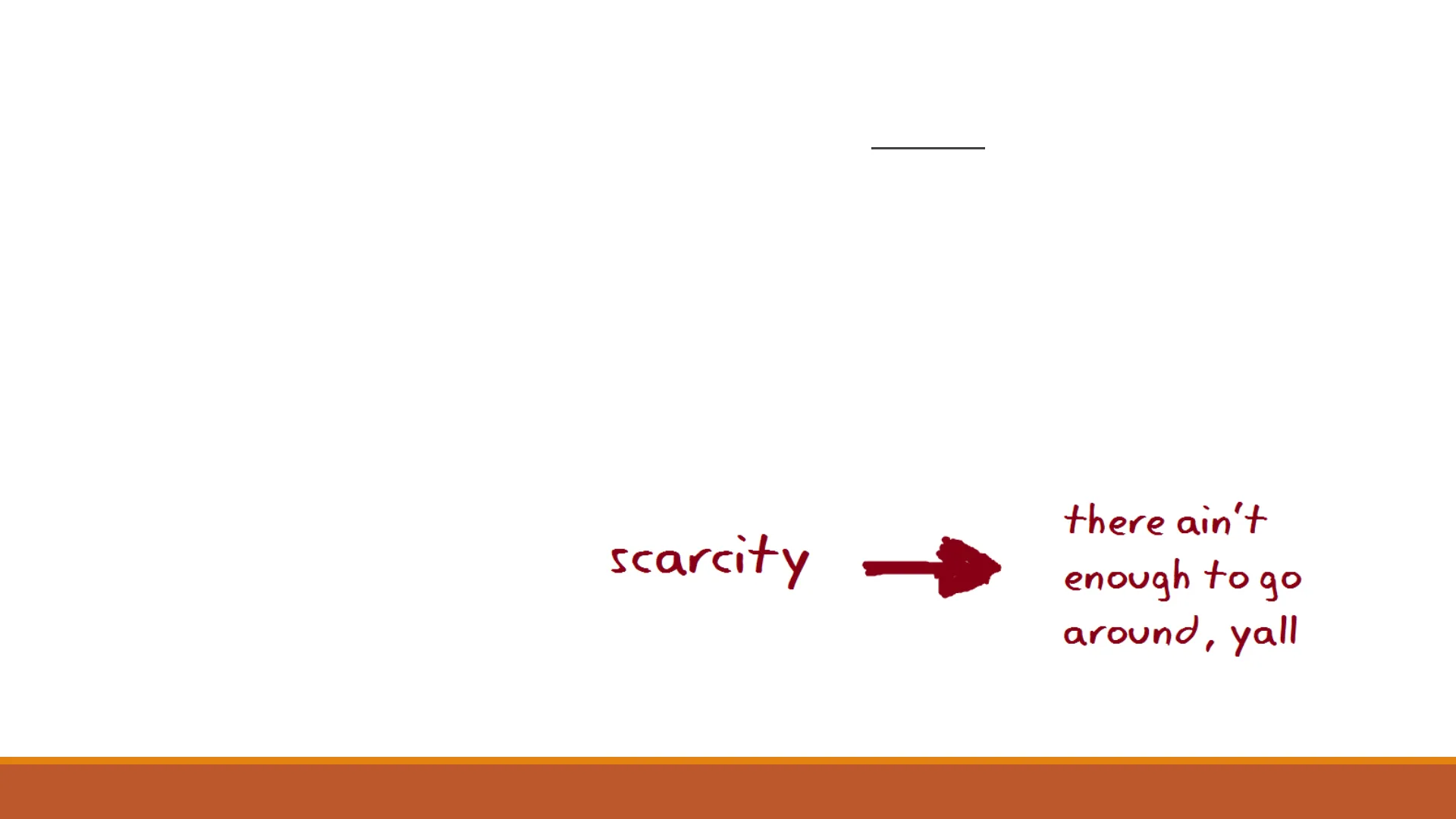
scarcity there ain't enough to go around , yall
Scarcity Leads to Trade-Offs
Scarcity Principle: Having more of one thing means having less of something else. . Means that all economic decisions have costs.
Cost-Benefit Principle
Cost-Benefit Principle: A rational decision-maker should take an action if and only if the benefits outweigh the costs.
- Economic surplus
- Costs may be implicit . Which costs should be included in the cost-benefit analysis?
Cost-Benefit Example
- Would you walk 30 minutes to save £10 on a £25 video game?
- Would you walk 30 minutes to save £10 on a £1000 laptop?
Decision Pitfalls to Avoid
Measuring Costs and Benefits
Measuring costs and benefits as proportions rather than absolute money amounts
Opportunity Cost Example
Example
- A farmer can earn £60,000 in yearly profit by growing corn.
- Should she do it?
- What if that farmer could earn £100,000 by growing wheat?
- Opportunity Cost: The value of the next best alternative that is foregone by taking a particular action.
- The opportunity cost of growing corn is £100,000 in foregone profit, compared to the £60,000 benefit ...
Ignoring Opportunity Costs
Decision Pitfalls to Avoid Ignoring Opportunity Costs
Opportunity Cost Scenario
Opportunity Cost Suppose you decided to go to your 1-hour Econ workshop instead of staying in your room to watch Netflix. On the way to your Econ workshop, you ran into your good friend Dr Who. You started chatting until you realised that you have missed your class. What is your opportunity cost of chatting with Dr. Who?
A) Zero (unless Dr. Who charged you for the conversation). B) The value from watching Netflix. C) The value from going to the workshop. D) The value from going to workshop plus the value of watching Netflix.
Concert Ticket Scenario
Suppose you and your friend decided to go to a concert. But when you arrived at the venue, you found that you lost the ticket. Your friend who went with you did not buy the ticket in advance, and want to purchase it at the ticket office at the venue. But when he opened his wallet, he found that he lost £30. (Suppose you and your friend have identical preference and income.) Which of the following scenario would happen?
A) You both went home without going to the concert. B) You bought another ticket, but your friend went home. C) Your friend bought the ticket, but you went home. D) Both of you bought the tickets and went to the concert.
Sunk Cost
Sunk cost A sunk cost is a cost that is not recoverable at the moment a decision is made. The only costs that should influence a decision about whether to take an action are those we can avoid by not taking the action.
Sunk Cost Fallacy
The sunk cost fallacy
Behavioral Economics
Daniel Kahneman
Behavioral Economics . Kahneman was awarded the 2002 Nobel Memorial Prize in Economic Sciences (shared with Vernon L. Smith). . His empirical findings challenge the assumption of human rationality prevailing in modern economic theory. . Thinking, fast and slow · The Undoing Project, Michael Lewis . In 2015, The Economist listed him as the seventh most influential economist in the world.
Amos Tversky
Daniel Kahneman Amos Tversky
Decision Pitfalls: Failing to Think at the Margin
Decision Pitfalls to Avoid Failing to think at the margin · When deciding how much of an activity to undertake (e.g. how much money the government should spend on road safety) the focus should always be on the cost and benefit of an additional unit of an activity
Marginal vs. Average Cost Analysis
Marginal vs. Average If the benefit of each launch is €3 billion, how many launches should the ESA make?
Number of launches (1) Total cost (€ billion) (2) Average cost (€ billion) (3) 0 0 0 1 2.0 2.0 2 4.25 2.125 3 6.75 2.25 4 10.0 2.50 5 15.0 3.0
Marginal Cost Calculation
Marginal vs. Average If the benefit of each launch is €3 billion, how many launches should the ESA make?
Number of launches (1) Total cost (€ billion) (2) Average cost (€ billion) (3) Marginal cost (€ billon) 0 0 0 1 2.0 2.0 2.0 2 4.25 2.125 2.25 3 6.75 2.25 2.5 4 10.0 2.50 3.25 5 15.0 3.0 5.0
Microeconomics and Macroeconomics
- Microeconomics . the study of individual choice under scarcity, and its implications for the behaviour of prices and quantities in individual markets
- Macroeconomics . the study of the performance of national economies and the policies that governments use to try to improve that performance
Positive and Normative Economics
- Positive economics is independent of the ethical value system of the economist. · The incentive principle
- Normative economics consists of statements in economics that reflect or are based on the ethical value system of the economist, implicitly, explicitly or by omission.
Can’t find what you’re looking for?
Explore more topics in the Algor library or create your own materials with AI.
