Lecture 16a: Rhabdoviridae, Rabies, and HIV Origin by Abbott
Slides from Abbott about Rhabdoviridae, rabies, and the origin and spread of HIV. The Pdf provides a detailed overview of the Rhabdoviridae family, focusing on rabies, its structure, clinical presentation, and immunizations, alongside the history and global prevalence of HIV, including early AIDS observations in the USA, suitable for University Biology students.
See more63 Pages


Unlock the full PDF for free
Sign up to get full access to the document and start transforming it with AI.
Preview
Rhabdoviridae and Rabies
Lecture 16a: RhabdoviridaeLecture 16a: Rhabdoviridae
Learning Objectives for Rabies
Learning objectives: LO1: Describe the structure and unique features of rabies LO2: Describe the clinical presentation of rabies LO3: Describe the roles of passive and active immunizationsDiseases
Rhabdoviridae
- RabiesPolling question: A man has fever, RUQ pain, nausea and jaundice. Serological tests for HBsAg and HBsAb are negative. Which serological test would confirm infection with Hepatitis B? A. Anti-HBC antibody positive B. Elevated liver enzymes positive C. Dark urine and pale stool D. HBe antigen negative E. Elevated levels of Picornaviral RNA
Rhabdoviridae Structure
Rhabdoviridae RNA d RNA pol G glycoprotein VAP Lipid bilayer M protein Negative ssRNA N (Nucleoprotein) https://microbewiki.kenyon.edu/index.php/Rabies
Unique Features of Rhabdoviruses
Unique features of Rhabdoviruses · ss (-) RNA virus, encodes 5 proteins · Bullet-shaped, enveloped · Replication cycle typical of (-) RNA virus · Rabies is not very cytolytic so initial infection is difficult to detect
RNA d RNA pol G glycoprotein VAP Lipid bilayer M protein Negative ssRNA N (Nucleoprotein)
Rhabdovirus Learning Objectives
Rhabdovirus: Learning objectives: LO1: Describe the structure and unique features of rabies LO2: Describe the clinical presentation of rabies LO3: Describe the roles of passive and active immunizations
Zoonotic Nature and Transmission of Rhabdoviruses
Unique features of Rhabdoviruses · Zoonotic (reservoir: wild animals)
- Specific reservoirs are: · Wild carnivorous animals including skunks, raccoons · Bats · Unvaccinated dogs and cats · Transmitted by: · Saliva acquired from the bite of a rabid animal · Aerosol (in bat caves) · Transplantation of infected tissue
Percent LA - 80 + 70 - 60 Raccoon 50 - 40.6 40 Skunk 29.4 30 + Bat 14 20 + 10 Fox 5.4 Other wild animals 2.1 Wild animals 80 70+ 60 + 50 + 40 + 30 + 20 - 10 + Dog 1.6 Cat 3.9 Cattle 1.9 Other domestic animals 1.2 Domestic animals @ Elsevier. Murray: Medical Microbiology 5e - www.studentconsult.com Bottom line: Rabies is transmitted via saliva of rabid animals
Pathogenesis of Rabies
Pathogenesis of rabies Incubation phase 7 Infection of spinal cord, brain stem, cerebellum, and other brain structures . Virus binds and infects muscles through the nAChR . The virus replicates in the muscle at the site of the bite with minimal symptoms (1-2) · The length of the incubation phase depends on the infectious dose and proximity to CNS. . A person with rabies can remain asymptomatic for up to a year.
Prodrome Phase of Rabies
Prodrome phase . After weeks to months, the virus infects the peripheral alpha motor and sensory neurons through neurotrophin receptor (3-5) and travels up the spinal cord to the brain (6) • Symptoms at this stage of rabies include fever, headache, itching, burning at the bite site
8Descending infection via nervous system to eye, salivary glands, skin, and other organs 6 Rapid ascent in spinal cord 5 Replication in dorsal ganglion Virion enters peripheral nervous system 4 Passive ascent via sensory fibers 1 Virus inoculated 2 Viral replication in muscle Elsevier. Murray: Medical Microbiology 5e - www.studentconsult.(Pathogenesis of rabies
Rabies Infection in CNS
Bottom line: Rabies causes a deadly infection in CNS but has a long incubation period during which a vaccine can prevent disease.
Neurological Phase of Rabies
Neurological phase (7 - 8) . During the neurological phase, the virus is well established in the brain and spreads from the brain to the skin, eye (retina, cornea), pancreas, kidney and salivary glands from where it is transmitted (7- 8) · Symptoms before death include extreme fever, irritability, sensitivity to light and sound, depression, fatigue, inability to swallow and eventually paralysis. Inability to swallow results in hydrophobia. . This phase leads to coma and death . Once symptomatic, rabies can take as little as 5 days to kill
(7) Infection of spinal cord, brain stem, cerebellum, and other brain structures 8 Descending infection via nervous system to eye, salivary glands, skin, and other organs 6 Rapid ascent in spinal cord 5Replication in dorsal ganglion 3 Virion enters peripheral nervous system 4 Passive ascent via sensory fibers 1 Virus inoculated 2 Viral replication in muscle Elsevier. Murray: Medical Microbiology 5e - www.studentconsult.‹Pathogenesis of rabies
Cytoplasmic Inclusion Bodies in Rabies
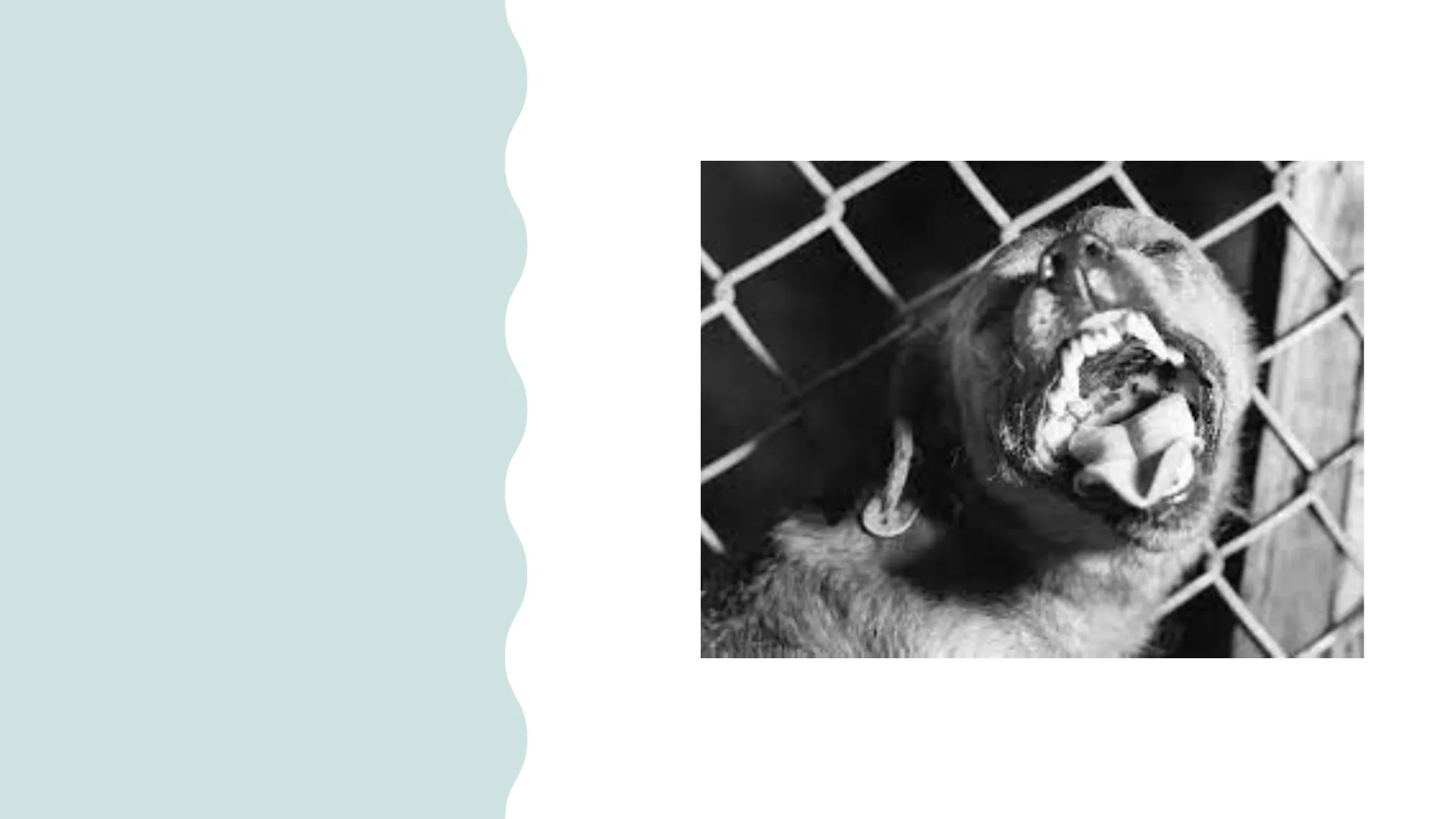
. The virus causes little CPE except for cytoplasmic inclusion bodies called Negri bodies (aggregates of nucleocapsids in cytoplasm of affected neurons).
10 um . It causes less inflammatory lesions than other viral encephalitises
Rabies Symptoms and Viral Status by Phase
Phase Symptoms Time (days) Viral status Ab status Incubation phase Asymptomatic Up to 365 Low titer in blood; virus in the muscle - Prodrome phase Fever, vomiting, nausea, headache, lethargy, pain at the bite site 2-10 Low titer in the blood; virus in CNS and the brain - Neurological phase Hydrophobia, pharyngeal spasms, anxiety, depression, CNS symptoms such as loss of coordination, paralysis, delirium, confusion 2-7 High titer of virus in the blood; virus in the brain and other sites Detectab le Ab in serum and CNS Coma Cardiac arrest, hypotension, hypoventilation 0-14 High titer of virus in the blood; virus in the brain and other sites
Immune Response to Rabies
Immune response to rabies · Rabies infection does not elicit a neutralizing antibody response until the virus has reached the brain . Cell mediated response plays only a minor role · By the time rabies virus has spread from CNS to other sites and it's too late to block the virus
Rabies Learning Objectives Review
Learning objectives: LO1: Describe the structure and unique features of rabies LO2: Describe the clinical presentation of rabies LO3: Describe the roles of passive and active immunizations
Treatment and Protection Against Rabies
Treatment/Protection against rabies Because the virus has a long incubation period, a good immune response that eliminates the infection can be achieved using a killed vaccine after viral infection.
Post-Exposure Rabies Treatment
Post-exposure rabies treatment: · Passive immunization with anti-rabies antibodies administered to the site of the wound (HRIG) · Active immunization (killed vaccine) administered to a site away from the wound . This is unusual, since vaccines are typically administered before exposure. Unless a person is vaccinated, rabies is fatal.
Bottom line: Rabies can be prevented by administering passive immunization and active killed vaccine POST exposure
Polling question: In a chronic carrier state, a person would be: HBsAg HBsAb ; HBcAb A. Positive; positive; negative B. Positive; negative; positive C. Negative; positive; negative D. Negative; positive; positive E. Negative; negative; negative
Retroviridae and HIV
Lentivirus Genus and HIV Species
Retroviridae Lentivirus(genus) Human Immunodeficiency Virus (species) HIV - AIDS
Global Deaths by Cause 2019
Number of deaths by cause, World, 2019 Our World in Data Change country or region Cardiovascular diseases 18.56 million Cancers 10.08 million 3.97 million Respiratory diseases 2.56 million Digestive diseases 2.49 million Neonatal disorders 1.88 million Dementia 1.62 million Diabetes 1.55 million Diarrheal diseases 1.53 million Liver diseases 1.47 million Kidney diseases 1.43 million Road injuries 1.2 million Tuberculosis 1.18 million HIV/AIDS 863,837 Suicide 759,028 Malaria 643,381 Homicide 415,180 Parkinson's disease 362,907 Nutritional deficiencies 251,577 Drowning 237,242 Meningitis 236,222 Protein-energy malnutrition 212,242 Maternal disorders 196,471 Alcohol use disorders 168,015 Drug use disorders 128,083 Fire 111,292 Hepatitis 79,176 Poisonings 77,162 Conflict and terrorism 62,985 Heat (hot and cold exposure) 47,461 Natural disasters 6,076 Source: IHME, Global Burden of Disease (2019) OurWorldInData.org/causes-of-death . CC BY Covid was third in number of deaths during pandemic Lower respiratory infections
HIV/AIDS Prevalence, New Cases, and Deaths (1990-2019)
Prevalence, new cases and deaths from HIV/AIDS, World, 1990 to 2019 Our World in Data To fit all three measures on the same visualization the total number of people living with HIV has been divided by ten (i.e. in 2019 there were 36.8 million people living with HIV). Change country or region All together V 3.5 million Number of people living with HIV (x10) 3 million 2.5 million 2 million New infections of HIV/AIDS 1.5 million 1 million Deaths from HIV/AIDS 500,000 0 1990 1995 2000 2005 2010 2019 Source: IHME, Global Burden of Disease (2019) OurWorldInData.org/eradication-of-diseases . CC BY
Global HIV Prevalence and Statistics 2022
Global HIV Prevalence = 0.8% N/A <1% (93 countries) 1-5% (36 countries) 5-10% (3 countries) >10% (8 countries) NOTES: Data are estimates. Prevalence includes adults ages 15-49. SOURCES: Kaiser Family Foundation, based on UNAIDS, AIDSinfo, Accessed July 2019. KFF HENRY J KAISER FAMILY FOUNDATION People living with HIV in 2022: 39 million world-wide (23 mill have access to antiretroviral therapy (62% of people with HIV) New HIV infections in 2022: 1.3 million world-wide (was 2.2 mil in 2010) Deaths due to AIDS in 2022: 630,000 (was 1.5 mil in 2010)
USA HIV Statistics 2021
USA 2021 1.2 m people living with HIV ** ·Estimated new HIV infections declined 12% from 36,500 in 2017 to 32,100 in 2022. n/a adult HIV prevalence (ages 15-49)* 32,100 new HIV infections 12,000 AIDS-related deaths n/a adults on antiretroviral treatment* | Ending | the HIV | Epidemic Overall Goal: Decrease the estimated number of new HIV infections to 9,300 by 2025 and 3,000 by 2030. There were 32,100 estimated new HIV infections in the US in 2021. Of those: 70% (22,400) were among gay, bisexual, and other men who reported male-to-male sexual contact* 22% (7,100) were among people who reported heterosexual contact 8% (2,500) were among people who inject drugs "Includes infections attributed to male-to-male sexual contact and injection drug use (men who reported both risk factors).
Origin of HIV-1 and HIV-2 in Africa
Central Africa CHAD -10 SUDAN Addis Ababa ETHIOPIA CENTRAL AFRICAN REPUBLIC Mergst Butwe' CAMEROONY Dole Od Malsbe Yaound EQUATORIAL GUINEA Gernena Lake Rudolf Lake Tartanal Bight of Biafra CongoUna Punta UGANDA EQUATORIAL QUINTA SOMALIA Fot Portal KENYA Libreville Detnde REPUBLIC OF Manyukl GABON THE CONGO ,LE Thần Victoria ** DEMOCRATIC REPUBLIC RWANDA Tehibanp OF THE CONGO Livin BURUNDI Loubore Mandingo-Kayer Pointe Noire Kinshasa ANGOLA (Cabinda) Isoma Kananga TANZANIA Zaneiber South Atlantic Ambriz Ocean Laanide Indian Ocean Porto Amboim) Lake Scale 1: 12,400,000 at 0° Mercator Projection ANGOLA 100 200 300 Kilometer Huande ZAMBIA MALAWI MOZAMBIQUE Pumba Boundary representation is not necessarily authoritative 802550 4802414) 6-9 Both HIV-1 and HIV-2 originated in non- human primates in west-central Africa
Abbott Research on HIV Control
Abbott BREAKING NEW RESEARCH COULD UNLOCK A CURE FOR HIV WE'VE DISCOVERED A LARGE GROUP OF PEOPLE IN THE DEMOCRATIC REPUBLIC OF CONGO WHO CAN NATURALLY CONTROL HIV - WITHOUT MEDICINE.1 76 MILLION PEOPLE GLOBALLY HAVE BEEN INFECTED WITH HIV.2 38 MILLION PEOPLE GLOBALLY ARE LIVING WITH HIV TODAY .? 26 MILLION PEOPLE IN AFRICA ARE LIVING WITH HIV TODAY.3 Marsib SAO TOME AND PRINCIPE São Tomé Lake Mai-Ndombe Kongolo Myande Lats Lacage 150 NIGERIA
Can’t find what you’re looking for?
Explore more topics in the Algor library or create your own materials with AI.
