Grammar Unit 6: Understanding modal verbs must, have to, can, should
Slides about Grammar Unit 6: Understanding modal verbs must, have to, can, should. The Pdf, a presentation for middle school students in Languages, explains the use of modal verbs like 'must', 'have to', 'can', and 'should', providing practical examples and outlining their negative and interrogative forms.
See more8 Pages

Unlock the full PDF for free
Sign up to get full access to the document and start transforming it with AI.
Preview
Grammar Unit 6
GRAMMAR UNIT 6
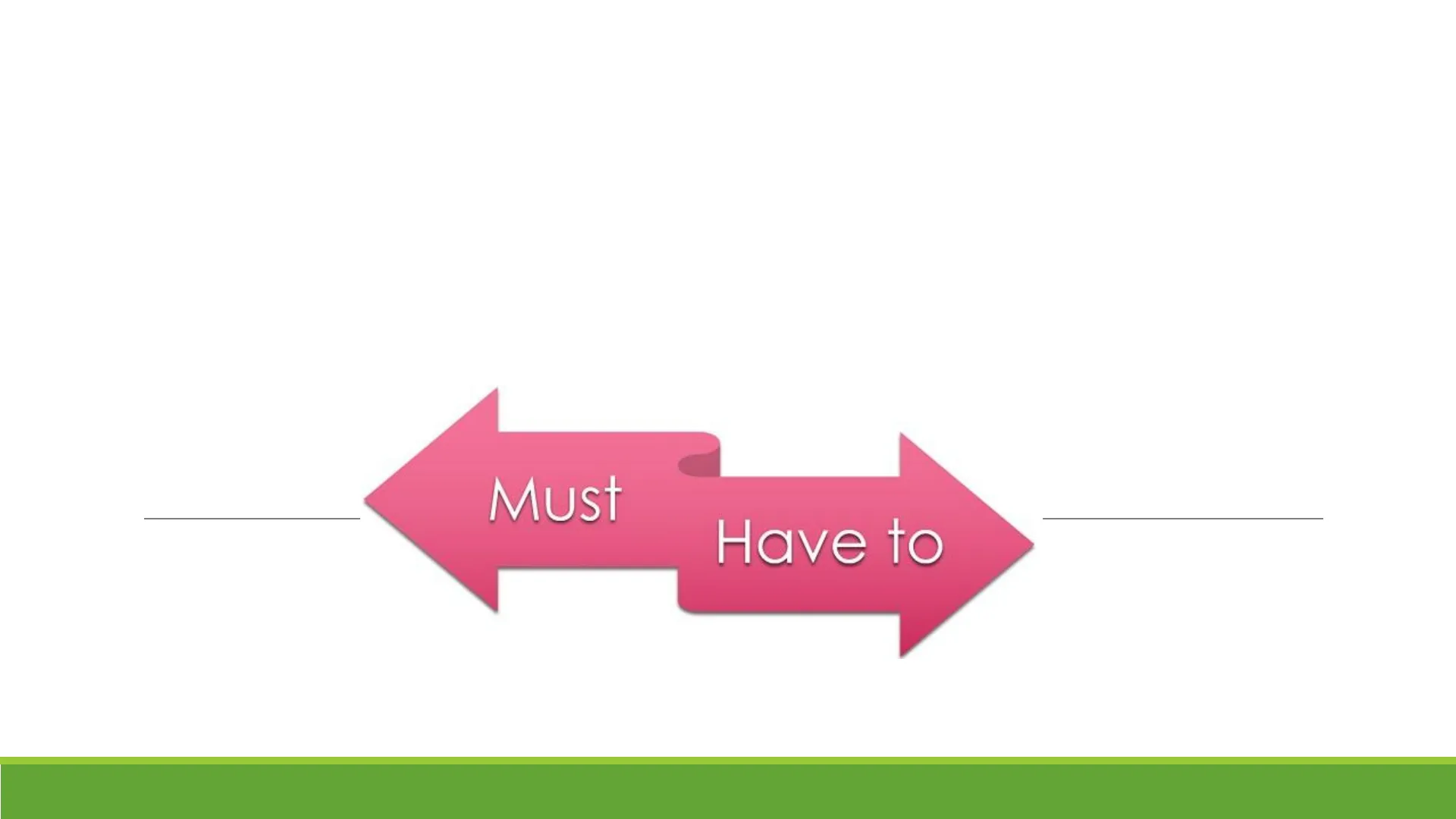
Must
Must Have toMUST È un verbo modale come can e come tale: Non prende la -s o -es alla terza persona singolare del Present Simple He can play volleyball ·È seguito dalla forma base del verbo ·È ausiliare di se stesso He can't sing Can he play the guitar?
Must / Have To
MUST / HAVE TO Must e have to hanno lo stesso significato = dovere She must do the washing up every day = She has to do the washing up every day Must però è usato solo alla forma affermativa e negativa e al presente Negli altri tempi verbali e alla forma interrogativa è sostituito da have to He had to vacuum the floor once a week Do you often have to dust the furniture?
Esercizio: Scegli l'alternativa corretta
Scegli l'alternativa corretta She musts / must study harder Mary has do /to do_the ironing I has to / have to do the cooking Must they / Do they have to feed the pet?
Esercizio: Scrivi domande con have to
Scrivi domande con have to e i suggerimenti dati, poi dai risposte brevi. 1 I / do / my homework? X 2 John / tidy / his room? V 3 Liz and Mark / take / the dog for a walk? X
Mustn't / Don't- Doesn't Have To
MUSTN'T / DON'T- DOESN'T HAVE TO . Must e have to hanno un significato simile alla forma affermativa, ma completamente diverso alla forma negativa · Mustn't = divieto / proibizione ! You mustn't go out without the face mask · Don't / doesn't have to = non necessità You don't have to wear a face mask at home . https://www.youtube.com/watch?v=i vLIc5NOAOS
Should
SHOULD E' un verbo modale e alla forma negativa diventa shouldn't You should eat fruit and vegetables every day. PER DARE CONSIGLI I think USA should do something to reduce pollution ESPRIMERE LA PROPRIA OPINIONE You shouldn't be so touchy PER RIMPROVERARE
Should I Stay or Should I Go?
Should I stay or should I go? CHIEDERE E DARE CONSIGLI
Differenza tra Must e Should
DIFFERENZA TRA MUST E SHOULD "You must study!", said the ... You should study said the ... "You mustn't smoke in the school toilets!" said the ... "You shouldn't smoke, it's bad for your health!" said the ... DOVERE E RISPETTO DELLE REGOLE VS CONSIGLIO E RIMPROVERO
On a School Trip
ON A SCHOOL TRIP STUDENTS ... CAN MUST MUSTN'T DON'T HAVE TO SHOULD
Can’t find what you’re looking for?
Explore more topics in the Algor library or create your own materials with AI.
