Food Governance: normative e regolamentazione OGM in UE e USA
Slide from Advantage Food Law Institutions, Trade And Quality. Il Pdf esplora la Food Governance, definendo i settori coinvolti e il contesto normativo internazionale, con un focus sulla regolamentazione degli OGM in UE e USA per il Diritto universitario.
Mostra di più38 pagine


Visualizza gratis il Pdf completo
Registrati per accedere all’intero documento e trasformarlo con l’AI.
Anteprima
Significato di Food Governance
WHAT DOES FOOD GOVERNANCE MEAN? FOOD GOVERNANCE: INTRODUCTION . The goal of the study of Food Governance is regulations of food systems; public interventions on food systems; . Food Governance is a contested space, because we observe and change the interaction between Institutional, private sector and consumers; mandatory v. voluntary; · Food Governance is a social construct, not ordained by a pre-programmed, perpetual or externally affirmed human order.
Settori Coinvolti nella Food Governance
- Food Safety: the absence of elements that do not belong to food (ex. residues from pesticides or veterinary treatments, environmental contamination), and the absence of alteration in the production and / or use and / or preservation of the product;
- Food Quality: ability to satisfy stated or implied preferences. Search attributes (color, form, size, smell, physical characteristics); experience attributes (taste, feel characteristics); credence attributes (production techniques, potential impact);
- Food Consumer Protection: protection of the consumer as a natural person, as the holder of interests and non negotiable and inviolable rights, such as health, safety, well- being, information for conscious choices.
- Nutrition: shaping consumer behavior towards healthier choices through: information, labelling and education, bans and fiscal measures;
- Supply Chain: how food gets from farmers to consumers ability to satisfy stated or implied preferences. Model of food-supply chains are changing, becoming longer and intermingled. Problems of power, concentration and control, Labour process;
- Environmental and Eco-system: long-term planetary survival. Severe stress from the cumulative effects of human activity. Effects of the industrialization of food production: chemical inputs, properties of seeds, etc.
Arena Multistrato della Legge Alimentare
A MULTI-LAYERED ARENA
- International Law: WTO agreements, Codex Alimentarius;
- European Union Law: directives, regulations;
- National Law: Statutes, national case law;
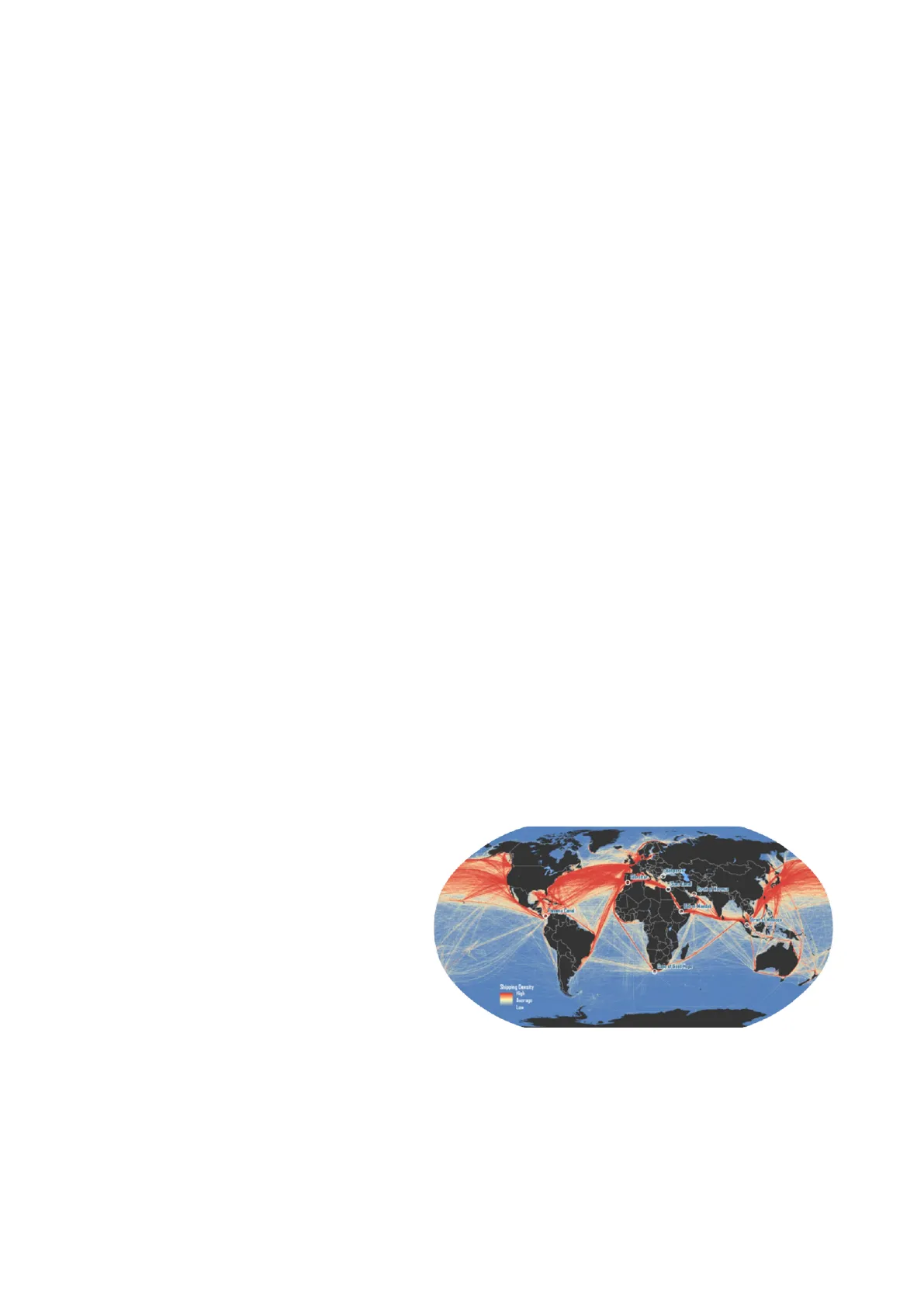
- Regulation Law: Statutes (and other). Shipping Density Average Los
Il Sistema Alimentare Globale
THE GLOBAL FOOD SYSTEM: AN INTRODUCTION
- Governed in part by international law and comprised of a series of systems on local, national and international levels that produce, manufacture, and distribute food in diverse and complicated ways and affects the lives of humans and animals in profound and unique ways.
- International Law: "consists of the rules and principles of general application dealing with the conduct of States and of international organization in their international relations with one another and with other subject."
- International Agreements relevant to food: - General Agreements on Tariffs and Trade; - Agreements on Technical Barriers to Trade (TBT); - Agreements on Sanitary and Phytosanitary Measures (SPS); - Agreements on Trade-Related Aspects of Intellectual Property Rights (Trips).
Diritto Globale e Sistemi Legali
GLOBAL LAW AND LEGAL SYSTEMS
- In the 20th century, power tended to rise up from the national to the global.
- Most national legal systems in the world can be grouped into one of two basic systems: - The Common Law System, used in England and most of the former British colonies, including the USA, India and Australia. Based on the principle of deciding cases by reference to previous judicial decisions (know as "precedent"), rather than by reference to written statues drafted by legislative bodies; - The Civil Law Systems, used by most continental Europe and parts of Latin America. The main body of law is written down in statues or codes in a more or less logical and organized (codified) way across all subject areas. In such systems, precedents are not normally recognized as binding on the court.
Diritto Alimentare e Governance Globale
FOOD LAW AND GLOBAL GOVERNANCE
- Many Legal Systems with different variables: types of legal system (civil, common law); historical precedence in regulating food, cultural orientation, available resources, etc .;
- No centralized powers and courts;
- The WTO's dispute resolution forum has been used to resolve high-profile food regulation disputes, including prohibitions of meat treated with grow hormones and a moratorium on approving the import of GMO food products.
Introduzione al Diritto Alimentare Internazionale
INTERNATIONAL FOOD LAW: AN INTRODUCTION FOOD IN A GLOBALIZED WORLD
- The tensions between the free trade rationale and regulation for the public policy interests, such as environmental or social concerns, is very apparent in the food domain;
- Eu Food Law is regional, but interwoven into international law and exposed to globalization;
- Highly integrated international supply chains. Regional food production in the EU alone cannot satisfy EU consumers' food demand. For foreign producers, access to the EU food market can mean higher revenues;
- The EU is one of the most potent players on the market and is known for de-facto setting the highest standards for foodstuffs in the world.
Diritto Alimentare Internazionale e Diritto Alimentare dell'UE
INTERNATIONAL FOOD LAW AND EU FOOD LAW
- EU primary law considers international agreements or conventions as directly binding towards the Union and its Member States when they are concluded by the Union;
- Article 3(5) of the TEU obliges the EU to contribute "to the strict observance and the development of international law, including respect for the principles of the United Nations Charter". In this sense, international law is binding on the EU institutions, and can even develop indirect effects on Food Business Operators via interpretation of provisions in EU Food Law;
- Moreover, international law is considered binding on the EU when EU law refers to provisions of international law.
Diritto Alimentare dell'UE e Diritto delle Nazioni Unite
EU FOOD LAW AND THE LAW OF THE UNITED NATIONS
- The EU is member of the UN with enhanced participation rights, but no voting rights alongside the EU's 27 Member States;
- Principles of the United Nations may influence the interpretation of provisions in EU food law and guide food law making;
- The law of the UN is of importance when the EU is party to a Treaty concerning food, for instance under the auspices of the UN's specialized agencies Food and Agriculture Organization (FAO), the World Health Organization (WHO), or the World Food Program;
- Soft law such as the model laws developed by the FAO/WHO (for example the FAO/ WHO model food law or FAO's guidance to develop food law.)
Il Sistema delle Nazioni Unite
Organi Principali delle Nazioni Unite
The United Nations System Research and Training Related Organizations UN PRINCIPAL ORGANS Subsidiary Organs Funds and Programmes™
- Disarmament Commission UNDP United Nations Development Programme
- Human Rights Council · UNCDF United Nations Capital Development Fund
- International Law Commission UNCTAD1ª United Nations Conference on Trade and Development Joint Inspection Unit (JIU) UNV United Nations Volunteers
- Main Committees UNEP" United Nations Environment Programme UNHCR" Office of the United Nations High Commissioner for Refugees Standing committees and ad hoc bodies UNFPA United Nations Population Fund UN-HABITATª United Nations Human Settlements Programme UNRWA1 United Nations Relief and Works Agency for Palestine Refugees In the Near East Peacebuilding Commission HLPF High-level Political Forum on Sustainable Development
Consiglio di Sicurezza
SECURITY COUNCIL Subsidiary Organs
- International Residual Mechanism for Criminal Tribunals Sanctions committees (ad hoc)
- Counter-Terrorism Committou
- Military Staff Committee
- Standing committees and ad hoc bodies
Agenzie Specializzate
Specialized Agencies1
- FAO Food and Agriculture Organization of the United Nations
- ICAO International Civil Aviation Organization
- IFAD International Fund for Agricultural Development
- ILO International Labour Organization
- IMF International Monetary Fund
- IMO International Maritime Organization
- ITU international Telecommunication Union
- UNESCO United Nations Educational, Scientific and Cultural Organization
- UNIDO United Nations Industrial Development Organization
- UNWTO World Tourism Organization
- UPU Universal Postal Union
- WHO World Health Organization
- WIPO World Intellectual Property Organization
- WMO World Meteorological Organization
Gruppo della Banca Mondiale
WORLD BANK GROUP"
- IBRD International Bank for Reconstruction and Development
- IDA International Development Association
- IFC International Finance Corporation
Note sul Sistema delle Nazioni Unite
Notes: 1 Members of the United Nations Systam Chief Executives Board for Coordination (CEB). UN Office for Partnerships (UNOP) is the UN's focal point vis-à-vis the United Nations Foundation, Inc. 3 IAEA and OPCW report to the Security Council and the General Assembly (GA). WTO has no reporting obligation to the GA, but contributes on an ad hoc basis to GA and Economic and Social Council (ECOSOC) work on, inter alia, finance and development issues. S Specialized agencias are autonomous organizations whose work is coordinated through ECOSOC (intergovernmental level) and CEB (inter- secretariat level). 6 The Trusteeship Council suspended operation on 1 November 1994, as on 1 October 1994 Palau, the last United Nations Trust Territory, became independent 7 International Centre for Settlement of investment Disputes (ICSID) and Multilateral Investment Guarantee Agency (MIGA) are not specialized agencies in accordance with Articles 57 and 63 of the Charter, but are part of the World Bank Group. The secretariats of these organs are part of the UN Secretariat. 9 The Secretariat also includes the following offices: The Ethics Office, United Nations Ombudsman and Mediation Services, and the Office of Administration of Justice. 10 For a complete list of ECOSOC Subsidiary Bodies see un.org/ecosoc. This Chart is a reflection of the functional organization of the United Nations System and for informational purposes only. It does not include all offices or entities of the United Nations System. @ 2021 United Nations. All rights reserved worldwide Published by the United Nations Department of Global Communications 19-00073 - July 2021
Consiglio Economico e Sociale
ECONOMIC AND SOCIAL COUNCIL Functional Commissions Regional Commissions" Other Bodies10
- Committee for Development Policy . Committee of Experts on Public Administration
- Committee on Non-Governmental . Organizations
- Permanent Forum on Indigenous Issues UNAIDS Joint United Nations Programme on HIV/AIDS
Segretariato delle Nazioni Unite
SECRETARIAT
- United Nations Forum on Forests UNGEGN United Nations Group of Experts on Geographical Names UNGGIM Committee of Experts on Globa Geospatial Information Management Departments and Offices® Research and Training EOSG Executive Office of the Secretary-General OCT Office of Counter-Terrorism ODA Office for Disarmament Affairs OHCHR Office of the United Nations High Commissioner for Human Rights OIOS Office of Internal Oversight Services DGACM Department for General Assembly and Conference Management OLA Office of Legal Affairs OOSA Office for Outer Space Affairs OSAA Office of the Special Adviser on Africa UNDRR United Nations Office for Disaster Risk Reduction DGC Department of Global Communications DMSPC Department of Management Strategy, Policy and Compliance SRSG/CAAC Office of the Special Representative of the Secretary- General for Children and Armed Conflict UNOG United Nations Office at Geneva
Consiglio di Amministrazione Fiduciaria
TRUSTEESHIP COUNCIL®
- DOS Department of Operational Support DPO Department of Peace Operations DPPA Department of Political and Peacebuilding Affairs SRSG/SVC Office of the Special Representative of the Secretary- General on Sexual Violence in Conflict Landlocked Developing Countries and Small Island Developing States DSS Department of Safety and Security OCHA Office for the Coordination of Humanitarian Affairs SRSG/VAC Office of the Special Representative of the Secretary- General on Violence Against Children UNON United Nations Office at Nairobi UNOP2 United Nations Office for Partnerships UNOV United Nations Office at Vienna
Altre Entità
- CTBTO Preparatory Commission Preparatory Commission for the Comprehensive Nuclear-Test-Ban Treaty Organization
- IAEA1-1 International Atomic Energy Agency
- ICC International Criminal Court
- IOM1 International Organization for Migration
- ISA international Seabed Authority UNSSC United Nations System Staff College
- UNU United Nations University Other Entities
- ITLOS international Tribunal for the Law of the Sea
- OPCW" Organization for the Prohibition of Chemical Weapons
- WTO14 World Trade Organization
Assemblea Generale
GENERAL ASSEMBLY
- UNOPST United Nations Office for Project Services
- UNICEF United Nations Children's Fund
- WFP World Food Programme (UN/FAQ)
- UN-WOMEN' United Nations Entity for Gender Equality and the Empowerment of Women Peacekeeping operations and political missions
- Crime Prevention and Criminal Justice
- Narcotic Drugs ECA Economic Commission for Africa
- ECE Economic Commission for Europe ECLAC Economic Commission for Latin America and the Caribbean
- Population and Development
- Science and Technology for Development ESCAP Economic and Social Commission for Asia and the Pacific
- Social Development ESCWA Economic and Social Commission for Western Asia
- Statistics UNICRI United Nations Interregional Crime and Justice Research Institute UNRISD United Nations Research institute for Social Development
Corte Internazionale di Giustizia
INTERNATIONAL COURT OF JUSTICE
- DCO Development Coordination Office DESA Department of Economic and Social Affairs UNODC1 United Nations Office on Drugs and Crime UN-OHRLLS Office of the High Representativa for the Least Developed Countries,
- Status of Women UNIDIR United Nations Institute for Disarmament Research UNITAR United Nations Institute for Training and Research ITC International Trade Centre (UN/WTO) 3
Non hai trovato quello che cercavi?
Esplora altri argomenti nella Algor library o crea direttamente i tuoi materiali con l’AI.