Modern Poetry and T.S. Eliot: The Objective Correlative
Slides about Modern Poetry by T.S. Eliot. The Pdf explores the figure of T.S. Eliot and his contribution to modern poetry, focusing on the concept of "Objective Correlative" for University Literature students.
See more12 Pages


Unlock the full PDF for free
Sign up to get full access to the document and start transforming it with AI.
Preview
Modern Poetry and T.S. Eliot
Modern poetry THOMAS STERN ELIOT . Thomas Stearns Eliot (1888-1965) · American-born poet, essayist, publisher, playwright, and literary critic · Moved to London before WWI, became a British subject · Considered one of the 20th century's major poets · Nobel Prize in Literature (1948)Modern poetry
Modern Poetry and T.S. Eliot's Perspective
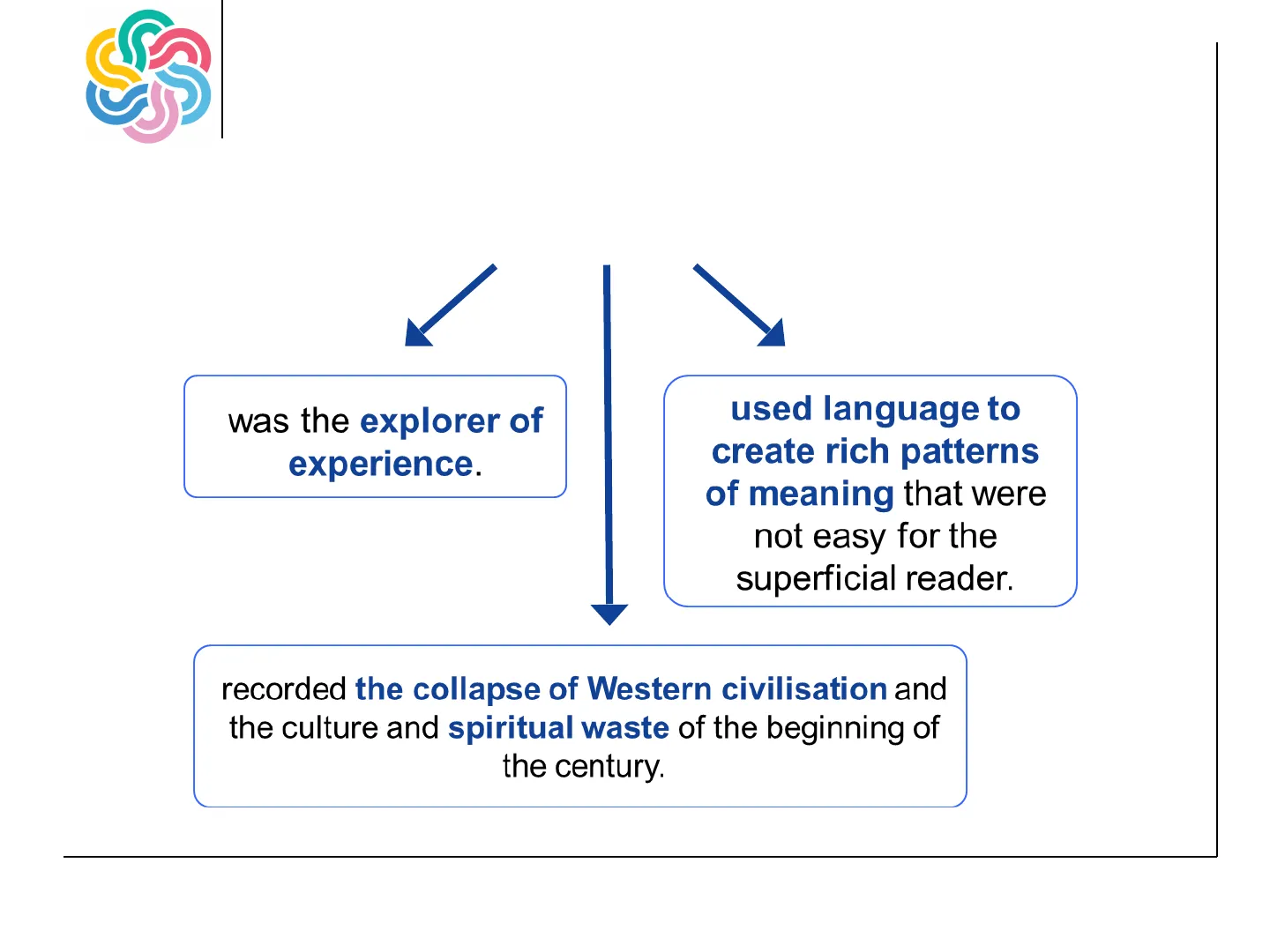
6. Modern poetry and T.S. Eliot According to T.S. Eliot, the poet was the explorer of experience. used language to create rich patterns of meaning that were not easy for the superficial reader. recorded the collapse of Western civilisation and the culture and spiritual waste of the beginning of the century.The Waste Land
The Waste Land
- A 433-line poem
- Meditation on Western civilization
- Post-World War I era
- Mixes literary allusions, religious symbolism, and references to ancient and medieval cultures
- Five parts
- The Burial of the Dead
- A Game of Chess
- The Fire Sermon
- Death by Water
- What the Thunder SaidA Visual Guide to References in T.S. Eliot's The Waste Land (1922)
A Visual Guide to References in T.S. Eliot's The Waste Land (1922)
The Waste Land Sections and References
II. A GAME OF CHESS III. THE FIRE IV. DEATH BY THE WASTE LAND Tlewie L Wedon Thomas Middleton A Care of Chem (1625) Weeen Bewere Weesen (1657] Title 77 173 317 78 174 313 Satyricon |late 1 st century! Cumaon Sibyl 79 175 314 17€ 315 177 316 82 178 317 179 318 84 180 319 85 181 320 182 321 87 183 184 Title fAngbeen Book of Common Proper 185 TAndrew Morrell To As Cey Mitreis [c. 1650;] 1 90 186 7 91 Ving1 Asceid [c. 29-19 B.C.E.] Book 188 189 94 190 V. WHAT THE THUNDER SAID {Starnbergersen, Munich, Germany 97 odise Lost (1667) 193 [Book IV 194 10 [Hofgarten, Munich, Germany 195 100 196 John Day 325 102 198 Diaro ond Adobes 326 14 Comenation with 103 199 Ballad of unknown origin 328 329 17 104 202 330 107 203 Holy Grail, French 331 108 204 Tereus and Phdumala 20 109 205 2 110 206 Charles Baudelaire Les Heer du Mal (1857) 335 23 {The Bible, Ecclesiastes 12-5 208 [Smyrna, Turkey 24 113 focus of the Greco-Turkish War | 1919-22) 25 114 210 Treding abbreviation bon 26 I.S. Elio 114 212 [Connon Straat Hotel, London, England 341 30 119 215 3.43 31 120 216 345 37 Richard Wagner Tristan und luskde |1865) Dermat 122 218 346 34 123 219 347 36 125 Ac I Scene II 350 37 126 227 127 Shakespearios Reg' [1912] 223 224 352 129 225 353 130 226 354 42 131 227 355 132 228 356 Sound of the bereitsbrush thoi [Ciot leord in Greber County 45 13.4 230 231 359 The Tempest |= 1610-11) 232 350 4F Leonardo da Vinci Women Beware Women (1657] 362 The Bile, Luke 24 51 140 236 364 5 141 237 365 147 23.8 366 54 143 239 367 5 240 368 50 145 241 369 57 146 242 370 5 1AZ 243 371 5 140 244 372 50 149 245 374 Viesse, london 63 Conto IE 152 248 64 153 249 377 65 vferno (early 14th century) Canto IN 154 250 378 66 155 251 379 meld, Ellen Kellord 3.80 68 157 The Vicar af Wokefield (1762) 38 69 158 254 387 70 159 255 383 71 160 256 WiFiow Shakespeare The Taupes |c 1610-11] Acti Score Ii 386 Jamie L Weston From Rikgal to Romence |1922) The Perfeuns Chapel 74 259 Dear Thawes, Losdos 388 7 261 389 262 390 39 French onamonogoeie convention Charch ol Se. Mogaus fre Mertyt London, England 393 394 The Gonges River, Indio 268 397 [The Himalayas, Serakrit 270 398 399 400 40 402 275 London, England 404 277 Richard Wagner, Cie Goderdiemerung (1874) 406 John Webder The Where Deut (1612| 280 Vos the Death of Elesbeff (1850 70) 408 Beihodaranyaka Upanishad 281 The Three Disciples 282 A10 Dante Alighieri 283 41 Inferro (early 14h ceskepl 284 412 285 415 Appearance and Reality (1893] 286 414 287 288 417 416 Sanskrit 291 292 Dante Alighieri 421 Jeude L Wedas From Ritual to Romvonce |1922) [The Fisher King Academic Writing 297 425 [Nursery Rhymes, "London Bridge' Art 299 427 Canto XXVI, Ital 300 Mergato, where Biot worked on [The Waste Land while on restcore 428 Tereus and Phlomalo 302 430 [Gerard de Nervol 303 304 305 306 307 [St. Augustine, Confessions (197.398) 308 Buddha, The fire Sermon 309 310 31 "I have sometimes thought of getting rid of these notes, but now they can never be unstuck .. I regret having sent so many enquirers off on a wild goose chase after Tarot cards and the Holy Grail." . T.S. Eliot, The Frontiers of Criticism [1957) CBerny Ton 61 Dante Alighieri 151 247 37 Inferno [early 14th centuryl [Closing time announced 37 [Charles Boudeloitte Kes Flew dis Moi (1857] . seçe wielardı Seint Mary Woolseth Church London, Erglend 150 252 253 384 72 161 257 385 7 162 258 Streets ruering porgliel 3.87 75 Charles Baudelaire Les Fleur div Mol (1857] Aw Lecteur', French 164 167 263 168 260 169 265 170 Wilom Shakespeare Hamlet [c. 1599.1602) Act IV Scene V 267 396 269 271 272 273 274 The River Thames at Greenwich 403 Donte Alighieri Inferno [early 14th century] Conto V Categories by Colour: Post-14th Century Literature Mythology and Antiquity Religion Personal Anecdotes 293 Purgatorio (early 14h certary) Carbo Y 294 Richeged and Kew, London, England 295 423 296 Moorgate, London, England 424 The Bible, Iunich 28:1 298 426 Pargotaria (early Lath century) Major Historical Events Popular Culture and Traditions 431 "Derd chodo | 1854) French 432 Thona Kyd 433 The Spersik Tragedie (1592) Eliot's Earlier Poems Other Languages SERMON WATER Tifle from Ritual to Foronce | 1922) The Waste Land More Tale Buddha, The fire Sermon Epigraph Dedication Edirand Spenser Prefira kamion (1596) The River Thomas Parpataria (early täth century) Canto XXV Wilon Shakespeare Antony and Ceopotro [c. 1603-07] Act Il Scene It; Cymbelse |t. 1611| Act Il Scene IV I. THE BURIAL OF THE DEAD 187 97 191 William Shakespeare The Tempest |c. 1610-11] 192 John Mion Tilla 322 323 324 German 10 197 Perfiswert of Bees [c. 1608-16), 327 104 200 Reported to Ebot in Sydney, Austrolo 105 201 Paul Verlaine, Parsed | 1888) The Bible, Job B: 16-17 333 be Bible, Morfew 26-27 22 111 207 "Le sopi vielloris" 336 209 337 211 Cior's Tee of Boyds Berk 339 28 The Death of St. Naroions (1915) 213 118 214 [Metropole Hotel, Brighton, England 344 121 217 Viwienna Haigh Wood Elor's first wife 124 220 348 Hyacinth, lever and victim of Apole Wiion Sholmspcors The Tempest Je. 1610 11| Sasphe Frogvert 149 [7th century B.C.E.) 35 128 Music: Dova Stov par [Richard Wagner Tristan and ivoide (1865) [ Aldous Huxley 229 357 Crane Yellow (1921) 133 358 William Shakespeare 134 Thomas Middleton 233 Sir Ernest Shackleton, South | 1919); 1Madonna of the Rocks [1483-88] 136 234 235 363 From A twol fo Romance (1922) Tarel Careh [World War | | 1914-18) Mangiaduring town of Brodlord England Harmons House Blick in Chase [1922]- Post World Wor I Europa Charles Boudeloire les Flowy de Moi (1857] 373 ['La sape viellerdi" 150 246 Antigase |c. 442 B.C.E. Ded par Nas |2. 429 B.C.E.] Homer Jerusalem, Alters, Alexandria Dilynsey Fiore Eth century B.C.E.I væ Goldwith [A betla is the First Furic War [between Roms and Carthage [206 B.C.E.] John Webster The While Desi (1612) 164 260 165 Closing time announced Janic columns in the 392 266 171 172 276 405 278 279 Pomar Anthony freude LHistory of gland from the Full of Wohey 407 Wilon Shakespeare Conolonus (s. 1405-08) Coriolonva, Romon war Nero 289 290 419 420 Actual Places 427 163 395 135 Ad | Scere !! 361 (The Bible, Ezekiel 2:1 334 112 338 340 John Webster The Wiste Dovi [ 1612) 98 Matamorphases [B C.E.| Tarsus ond Philovela Pomer. Panico |1677); 337 T.S. Eliot Dans le Restauronet | 19/20) The Bible, Paales 37; The Waste land while on repare 301 429 [Orthodoreryoko Uperished Sernkrit L. Wallon Dante Alighieri 3.49
The Waste Land Study
Study from page 195 to page 198 and do all exercises page 199 and 200The Objective Correlative in T.S. Eliot
The Objective Correlative in T.S. Eliot
Definition and Origin of Objective Correlative
The Objective Correlative in T.S. Eliot · Definition: The "objective correlative" is a literary technique where objects, situations, or events are used to express a character's emotions indirectly. · Who Coined It ?: The term was popularized by T.S. Eliot in his essay "Hamlet and His Problems" (1919). · Main Idea: Instead of telling readers about a character's emotions directly (like "He felt sad"), Eliot believed that a set of external objects or actions could evoke those same feelings in the reader.· How It Works:
How the Objective Correlative Works
- Emotions are "shown," not "told".
- The writer uses symbols, images, or events to represent abstract emotions.
- Purpose: It makes the reader feel the emotion instead of just being told about it.
- Why It's Important:
- It makes writing more evocative and vivid.
- It requires the reader to be more active in understanding the emotional meaning.Objective Correlative in "The Burial of the Dead" (T.S. Eliot's The Waste Land)
Objective Correlative in "The Burial of the Dead"
In The Waste Land, T.S. Eliot uses the objective correlative extensively to evoke the emotions of despair, confusion, and disillusionment associated with post-war Europe. Below are key examples of how the technique is applied in "The Burial of the Dead" (the first section of The Waste Land).
"April is the cruellest month"
1. "April is the cruellest month" · Objective Correlative: Spring (April) as a symbol of pain and suffering. · What it Means: Traditionally, spring represents rebirth and renewal, but Eliot inverts this idea. Instead, he shows that spring forces people to confront change, growth, and memories of the past, which causes emotional suffering. · Emotion it Evokes: Discomfort, anxiety, and existential unease. · Why it Works: The natural, external cycle of seasons reflects the internal turmoil of humanity after World War I. Instead of comfort, spring brings emotional distress.Summary of Objective Correlatives in "The Burial of the Dead"
Summary of Objective Correlatives in "The Burial of the Dead"
Objective Correlative Examples and Emotions
Objective Correlative External Object / Image Emotion it Evokes April as cruel Inversion of spring's meaning Anxiety, discomfort Heap of broken images Fragmented reality Confusion, disorientation Winter kept us warm Cold stillness of winter Emotional numbness Fear in a handful of dust Dust (mortality, death) Existential fear Unreal City Ghostly, surreal metropolis Alienation, detachment Fear death by water Water as destruction Anxiety, fear of change Brown fog of winter dawn Fog (loss of clarity) Uncertainty, confusion Burial of the dead Image of burial and decay Grief, anxiety, rebirth
Can’t find what you’re looking for?
Explore more topics in the Algor library or create your own materials with AI.
